 Bellingham Roofing
 Window Installation in Sunnyland: What This Neighborhood Actually Needs
Sunnyland is one of Bellingham's established residential neighborhoods, and like most of the city's older pockets, it's got a mixed bag of housing stock — mid-century homes with their original single-pane or first-generation replacement windows still in service, later remodels with newer units bolted into old openings, and the occasional addition that introduced a window size nobody stocks anymore. Whatcom County's climate doesn't treat any of those windows gently. Bellingham sits close enough to the water that homes here get real salt-influenced marine air even when they're set back from the immediate waterfront, and that air works on window hardware and frame components differently than it would somewhere drier and further inland.
We install and replace windows for homes throughout Sunnyland and the rest of Bellingham, and on this trade specifically, the installation detail matters more than most homeowners expect. A well-built window with a rushed or incomplete flashing job will let water in eventually, no matter how good the glass is. A mid-grade window installed correctly, with flashing tied properly into the surrounding wall, will typically outlast it. That's the standard we hold every installation to, whether it's one window or a whole house.
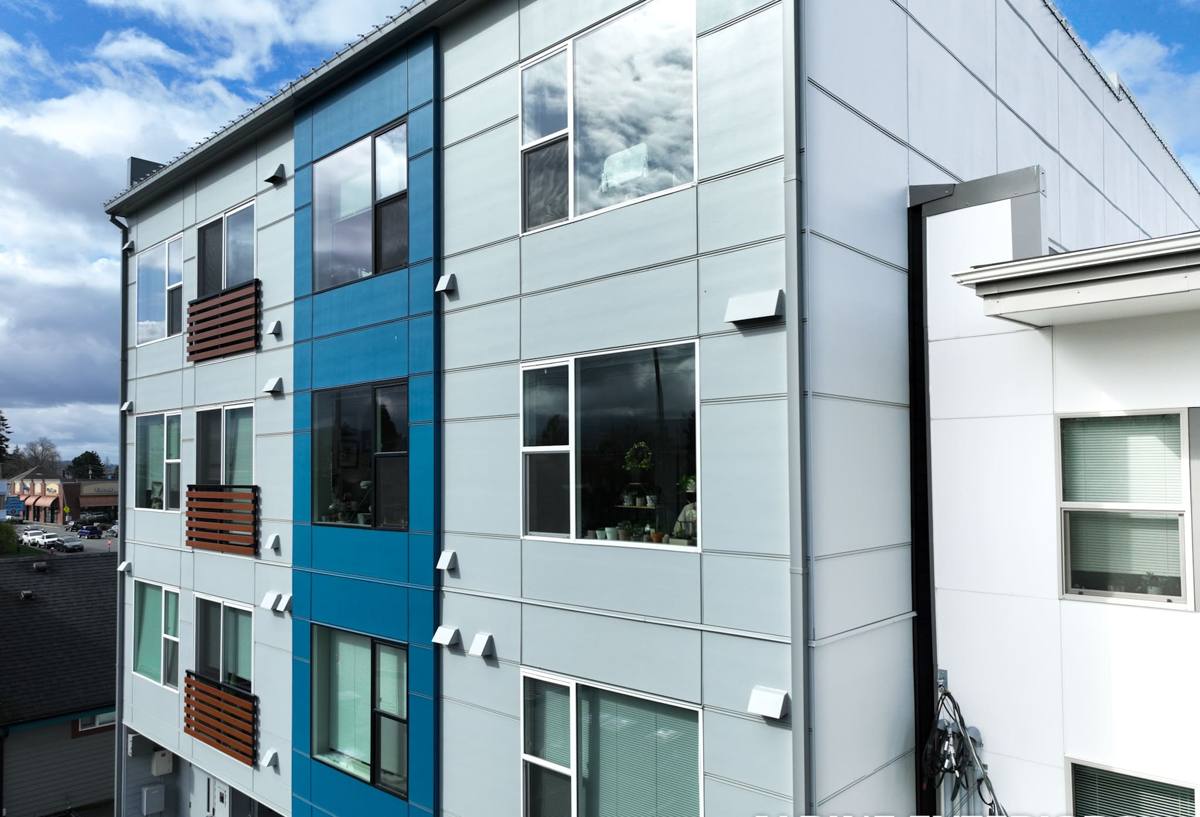
What Bellingham's Climate Does to Windows Over Time
Driving Rain
Whatcom County storms rarely fall straight down. Wind pushes rain sideways into siding and window openings, and that matters because wind-driven rain reaches seams and gaps that would stay dry in a calmer climate. The window unit is only half the equation — flashing that actually laps correctly with the weather-resistive barrier and siding is what keeps that water out of the wall assembly.
Salt Air and Hardware Wear
Sunnyland sits back from Bellingham Bay, but the whole city gets enough marine-influenced air that it shows up in window performance over time. Lower-grade hardware, fasteners, and frame components corrode or stiffen faster here than they would in a dry inland climate. It's usually not dramatic — a lock that gets harder to turn, a hinge that starts to stick — but it adds up over a decade or two, especially on older units that were never top-tier to begin with.
A Long Moss and Mildew Season
Bellingham's mild, wet stretch from fall through spring gives moss and mildew a long growing season, and window sills, trim, and the wood framing around older units are common places it takes hold. Shaded north- and west-facing walls, and windows tucked under eaves with poor drainage, tend to show it first. Anywhere water sits instead of shedding off becomes a growth surface eventually.
Condensation From Temperature Swings
The gap between a heated interior and a cold, damp Whatcom County winter puts real condensation pressure on glass and frames. Older single-pane windows and early double-pane units show this constantly — fogging, moisture trapped between panes, or water pooling on interior sills. That's almost always a sign a seal has failed, not just a cosmetic nuisance.
Signs a Sunnyland Home May Need Window Attention
- Fogging or visible moisture trapped between the panes of a double-pane window
- Noticeable drafts or cold spots near the frame even with the window fully closed and locked
- Sills or trim that feel soft, look discolored, or show visible rot
- Windows that stick, won't stay open on their own, or are hard to lock the way they used to
- Visible daylight or gaps where the frame meets the siding
- Paint or finish peeling or bubbling faster on window trim than on the rest of the exterior
- A noticeably colder room in winter or a warmer one in summer compared to the rest of the house
What a Correct Window Installation Involves
Assessment and Measurement
Every installation starts with an honest look at the actual opening — not just the window that's coming out. We check for square, level, and any hidden rot or moisture damage in the framing before ordering anything. On older Sunnyland homes, this step is also where we find out whether an opening matches standard sizing or needs a custom order, since houses from different building eras don't always line up with what's on the shelf today.
Removal and Opening Prep
The old window comes out carefully so we don't damage siding or trim that's staying in place. This is also where problems that have been hiding behind the old unit — soft sheathing, failed old flashing, past water intrusion — get found and dealt with before a new window ever goes in. Installing a new window over a compromised opening just locks the existing problem behind new trim.
Flashing and Weatherproofing
This is the step that determines whether the installation actually holds up in this climate. Correct flashing laps properly with the house wrap or weather-resistive barrier, directs water out and away from the rough opening instead of trapping it behind the trim, and gets sealed with materials rated for sustained exposure to moisture — not just caulked over and called done. Caulk has a place in the sequence, but it was never designed to be the only barrier against wind-driven rain, and treating it that way is one of the most common shortcuts we find when we're called out to fix someone else's leak.
Setting, Shimming, and Sealing
A window has to be set plumb, level, and square, then shimmed correctly so it isn't relying on the frame to hold its shape. A window that's slightly out of square will bind, won't lock cleanly, and puts uneven stress on the seals over time — problems that often don't show up for a year or two, which is exactly why they get missed on a rushed job.
Trim and Finish
Exterior trim gets integrated back into the surrounding siding so the finished job looks intentional and, more importantly, sheds water the way it's supposed to. We plan this before the window arrives rather than figuring it out on install day.
Insert Replacement vs. Full-Frame Installation
Not every window job calls for the same approach, and this is one of the more consequential decisions on a replacement project. An insert (or "pocket") replacement keeps the existing frame in place and fits a new window unit inside it — faster and less invasive, but only a sound option if that existing frame and flashing are still in good condition. A full-frame installation removes everything down to the rough opening, which takes longer and costs more, but it's the only way to actually correct old flashing, rot, or an opening that was never sized or sealed correctly in the first place.
| Factor | Insert Replacement | Full-Frame Installation |
|---|---|---|
| Existing frame condition required | Must be sound, square, and dry | Not required — old frame is removed |
| Time on site | Faster, less disruption to siding and trim | Longer, more labor-intensive |
| Access to fix hidden problems | Limited — old flashing and framing stay in place | Full access to correct rot, old flashing, or framing issues |
| Best fit | Sound openings needing a window upgrade only | Older homes with aging flashing or known moisture history |
| Relative cost | Lower | Higher, reflecting the added labor and materials |
We'll tell you honestly which approach fits your window once we've actually opened things up and looked, rather than defaulting to whichever is faster to sell.
Choosing Frame Material for This Climate
Frame material is a bigger decision here than in a drier region, since moisture and marine-influenced air work against lower-grade materials faster. We'll walk through the honest trade-offs for your specific home rather than pushing one option as the only right answer.
- Vinyl: Cost-effective and resistant to rot, and performs well in Bellingham's mild, wet conditions. A solid default for most replacement projects.
- Fiberglass: More dimensionally stable through temperature swings than vinyl, and can be painted if you want color flexibility down the road. Typically a step up in cost.
- Wood, clad or unclad: Can be the right call for matching an older home's original look, but an exterior-exposed wood frame carries a real maintenance burden in this climate unless it's properly clad or protected — that's a trade-off worth discussing honestly, not glossing over.
Whatever the frame material, we pair it with corrosion-resistant hardware, since standard-grade hardware tends to show wear noticeably faster with Bellingham's marine air working on it year-round.
Our Installation Process
- On-site assessment — we check the existing opening, frame condition, and flashing, and give you a straightforward read on insert versus full-frame
- Honest recommendation and quote — what we found, what we recommend, and why, in writing before anything is ordered
- Ordering — standard sizes are typically quicker to source; custom or non-standard openings take longer, and we'll tell you that upfront
- Removal and opening prep — old unit comes out, hidden issues get addressed before the new window goes in
- Installation and flashing — the new unit is set, shimmed, and flashed as standard practice, not an optional upgrade
- Trim and finish — exterior trim integrated cleanly with the surrounding siding
Checklist Before You Book a Window Installation
- Ask whether your home is a good candidate for insert replacement or needs a full-frame job
- Get a written scope that separates the manufacturer's product warranty from the contractor's installation warranty
- Ask how they handle flashing integration with your existing siding, specifically
- Get a realistic lead time for ordering, especially for non-standard sizes
- Confirm current Washington contractor licensing and active liability insurance
Why a Local Sunnyland Crew Matters
Manufacturer installation instructions are written for average conditions, not for a specific Bellingham neighborhood's exposure and building stock. A crew that actually works Sunnyland and the rest of Whatcom County regularly has seen how these homes were built, what tends to go wrong with older flashing here, and how much lap and sealant a given detail actually needs in this climate versus what a generic instruction sheet calls for. That experience shows up in decisions that don't come up in a sales pitch — how a flashing course gets sequenced around an odd-sized opening, when a sill needs extra attention because of how a house sits relative to prevailing wind and rain, which hardware grade is worth the upgrade given how long marine air takes to wear on it.
It also means fewer surprises with permitting or scheduling around Bellingham's wetter months, and a contractor who's going to still be around locally if a question comes up after the job is done.
If you're dealing with a drafty, foggy, or stubborn window in Sunnyland, planning a full house of replacements, or just not sure whether your current windows are still doing their job, we're glad to take a look and give you a straightforward, no-pressure read. Use the form below to get a free estimate on the schedule.