 Bellingham Roofing
 Siding Built for York's Corner of Whatcom County
York is one of Bellingham's older, established neighborhoods, and that means a lot of the homes here were sided decades ago with materials that were never engineered for what our climate actually does to a wall system. Salt-laden air off Bellingham Bay, months of driving rain, and a moss season that can run from October well into spring don't just make a house look tired — they attack the siding itself, the fasteners holding it on, and the wall assembly underneath. A siding installation done right in York has to account for all three, not just cover the walls with something new.
This page is about one job, done in one neighborhood: siding installation for York homes. We're not going to give you a generic rundown of siding types. We're going to walk through what this climate actually requires, what a correct installation looks like on the ground, and why we standardized on a single product system instead of offering a menu of options.
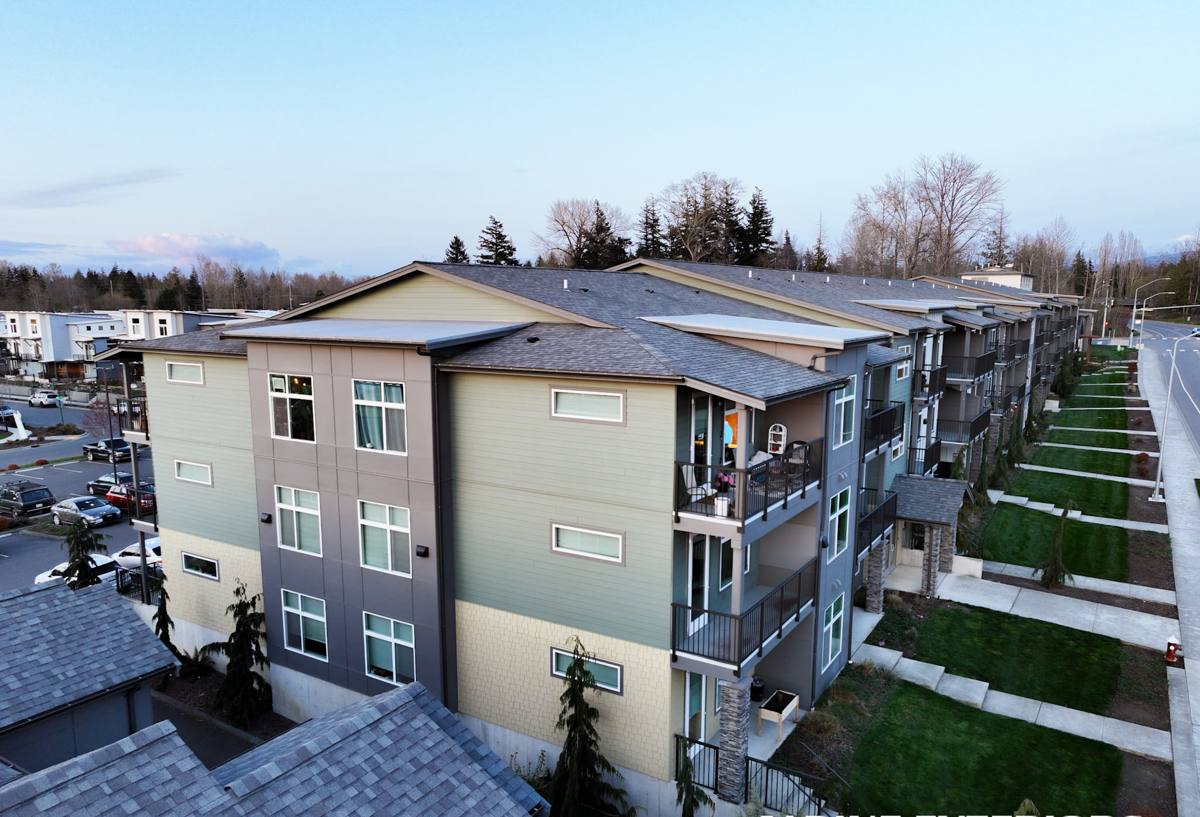
What Bellingham's Climate Does to Siding
Salt Air
Proximity to the bay means airborne salt settles on exterior surfaces year-round. Salt is corrosive to exposed metal fasteners and trim, and it accelerates the breakdown of finishes that aren't formulated to resist it. Siding with a weak factory finish will chalk, fade, and lose its seal faster near the water than it would twenty miles inland.
Driving Rain
Bellingham doesn't just get a lot of rain — a good share of it comes in sideways off Pacific storm systems, driven by wind. That kind of rain finds every gap in a wall system: unsealed seams, short flashing, siding installed too close to grade or trim. A material that's technically waterproof can still fail a home if it's installed without the right drainage plane and flashing details behind it.
Moss and Sustained Moisture
Long stretches of overcast, damp weather are exactly what moss and mildew need to take hold on north-facing and shaded walls. Some siding materials feed that growth or trap moisture against the substrate; others shed it. Over years, sustained dampness at the surface works its way into seams, fastener holes, and butt joints if those details weren't sealed correctly the first time.
Signs Your York Home's Siding Is Past Its Job
Before recommending a full replacement, we look for real evidence the siding is no longer doing its job — not just cosmetic wear. Common signs on older York homes include:
- Soft, spongy, or delaminating spots, especially near the bottom courses and around window trim
- Persistent moss or dark staining that returns within weeks of cleaning
- Visible cupping, warping, or gaps opening up between boards or panels
- Paint that won't hold — blistering, peeling, or needing repainting every two to three years
- Cracking at butt joints, corners, or anywhere fasteners were driven
- Rising energy bills with no other explanation, suggesting the wall assembly behind the siding is compromised
- Visible rot or soft trim where siding meets windows, doors, or the foundation
If you're seeing two or more of these, it's worth having someone look at the wall assembly, not just the surface.
What a Correct Siding Installation Actually Involves
Siding is a system, not a single layer. The product on top matters, but most siding failures we see in this area trace back to details underneath it that were rushed or skipped.
Moisture Management First
Before any new siding goes up, the wall needs a continuous, properly lapped weather-resistive barrier. Every penetration — outlets, hose bibs, light fixtures, vents — needs to be flashed and sealed back into that barrier, not just caulked from the outside. This is the layer that actually keeps driving rain out of the wall cavity; the siding itself is the second line of defense, not the first.
Flashing and Trim Details
Window and door flashing, kick-out flashing at roof-to-wall intersections, and proper head flashing above trim boards are what keep water moving out and away from the structure instead of pooling behind it. These details take extra time and material, and they're the first thing cut on a rushed job — and the first thing that fails when the rain comes sideways.
Fastening and Clearances
Fiber cement siding has manufacturer-specified nailing patterns, fastener types, and minimum clearances from grade, roofing, and decks. Getting these wrong doesn't just void a warranty — it's the direct cause of a lot of the moisture intrusion and premature wear we get called out to fix on other contractors' work.
Finish and Caulk Discipline
In a salt-air, high-moisture environment, the quality and placement of caulk at joints and the durability of the factory or field-applied finish determine how the siding ages over the next fifteen to thirty years, not just how it looks on installation day.
Why We Install Only James Hardie Fiber Cement Siding
We don't install vinyl, LP SmartSide, Cemplank, Allura, primed spruce, or cedar. That's a deliberate standard, not a limitation of what we're capable of installing — we've simply concluded that James Hardie fiber cement is the right product for homes in this climate, and we'd rather stand fully behind one system than offer several we don't have full confidence in.
A few reasons this matters specifically for a coastal, high-rain area like York:
- Non-combustible material — fiber cement doesn't feed fire the way wood-based products can, which matters for insurance and peace of mind alike.
- ColorPlus factory finish — a baked-on finish engineered to resist fading, chipping, and cracking, which holds up better under UV and salt exposure than field-applied paint.
- Climate-engineered HZ product lines — Hardie manufactures different formulations for different climate zones; the Pacific Northwest version is built around resisting the moisture cycling our winters put siding through.
- Dimensional stability — fiber cement doesn't swell, cup, or rot the way wood-based siding can when it stays damp for weeks at a time, which is a normal winter in Whatcom County.
- Transferable warranty — a real, well-documented warranty structure that follows the home, which matters when you eventually sell.
We're not going to tell you those other products are worthless — plenty of them have legitimate uses. But we've chosen to specialize, install one system correctly to spec every time, and be honest with York homeowners about why.
Our Siding Installation Process
1. On-Site Assessment
We look at the existing siding, the condition of the wall sheathing underneath where accessible, drainage around the foundation, and any problem areas like north-facing walls or spots with heavy moss history.
2. Measurement and Material Plan
We measure the home and plan panel and board layout, trim details, and flashing points before ordering material, so the crew isn't improvising on installation day.
3. Removal and Substrate Repair
Old siding comes off, and any damaged sheathing, framing, or trim we find underneath gets repaired or replaced before anything new goes up. Covering rot with new siding just hides a problem that keeps getting worse.
4. Weather Barrier and Flashing Installation
This is the step that determines how the home performs in a storm, and it's not visible once the job is done. We install and document it carefully because it's the part a homeowner can't inspect later.
5. Siding Installation to Manufacturer Spec
Hardie siding goes up following the manufacturer's fastening, clearance, and joint-treatment requirements — the details that keep the warranty valid and the wall dry.
6. Final Walkthrough
We walk the finished job with the homeowner, checking trim lines, caulk joints, and paint or finish consistency before calling it complete.
Comparing Siding Materials for a Coastal Whatcom County Home
| Material | Moisture Resistance | Maintenance | Typical Lifespan |
|---|---|---|---|
| Vinyl | Sheds surface water but seams and gaps can trap moisture behind panels | Low, but cracks and fades over time, especially with UV and cold cycling | 15-25 years, often replaced sooner after storm or impact damage |
| Cedar | Absorbs moisture; performance depends heavily on ongoing sealing and coating | High — regular refinishing needed to prevent rot and moss | Highly variable, often 15-20 years without diligent upkeep |
| LP SmartSide (engineered wood) | Treated to resist moisture but remains wood-based and edge-sensitive to water intrusion | Moderate — cut edges and joints need careful sealing and monitoring | Manufacturer-rated but sensitive to installation quality |
| James Hardie Fiber Cement | Dimensionally stable, does not swell or rot from moisture cycling | Low — factory finish resists fading and cracking | Often exceeds 30-50 years when installed to spec |
Why Local Installation Experience Matters
Siding manufacturers write installation specs for a national market, but a crew that regularly works in Bellingham and the York area understands how those specs need to be applied on the ground here: where moss tends to build up first, which orientations take the worst of the driving rain, and how much clearance really makes sense given our rainfall totals rather than a national minimum. That local pattern recognition is what separates a technically-compliant install from one that's actually built for this specific climate.
What Happens After Installation
Correctly installed Hardie siding is low-maintenance, but "low" isn't "none." We recommend homeowners rinse siding periodically to prevent moss and salt buildup, keep gutters clear so water isn't sheeting down walls, and have caulking and trim checked every few years — the same kind of light upkeep any exterior surface needs in this climate. None of that involves repainting the whole house every couple of years, which is one of the trade-offs we weighed heavily when we chose to standardize on this product.
If your York home's siding is showing its age, or you're planning ahead rather than reacting to a problem, we're happy to take a look and talk through what we'd actually recommend for your specific walls and exposure. Reach out for a free, no-pressure estimate using the form below.