 Bellingham Roofing
 Asphalt Shingle Roofing Built for the Puget Area's Weather
Homes in the Puget area of Whatcom County sit close enough to the water that salt air is part of daily life, and close enough to the Cascades' rain shadow gap that driving rain off Puget Sound shows up on a regular basis most of the year. Add in a moss season that can stretch from fall through spring, and an asphalt shingle roof here is working harder than the same roof would in a drier inland climate. This page covers what that means for shingle roofing specifically in the Puget area near Bellingham: what the climate actually does to a roof over time, what a correctly installed system looks like, and what to expect from a crew that installs and repairs shingle roofs in this exact corner of Whatcom County on a regular basis.
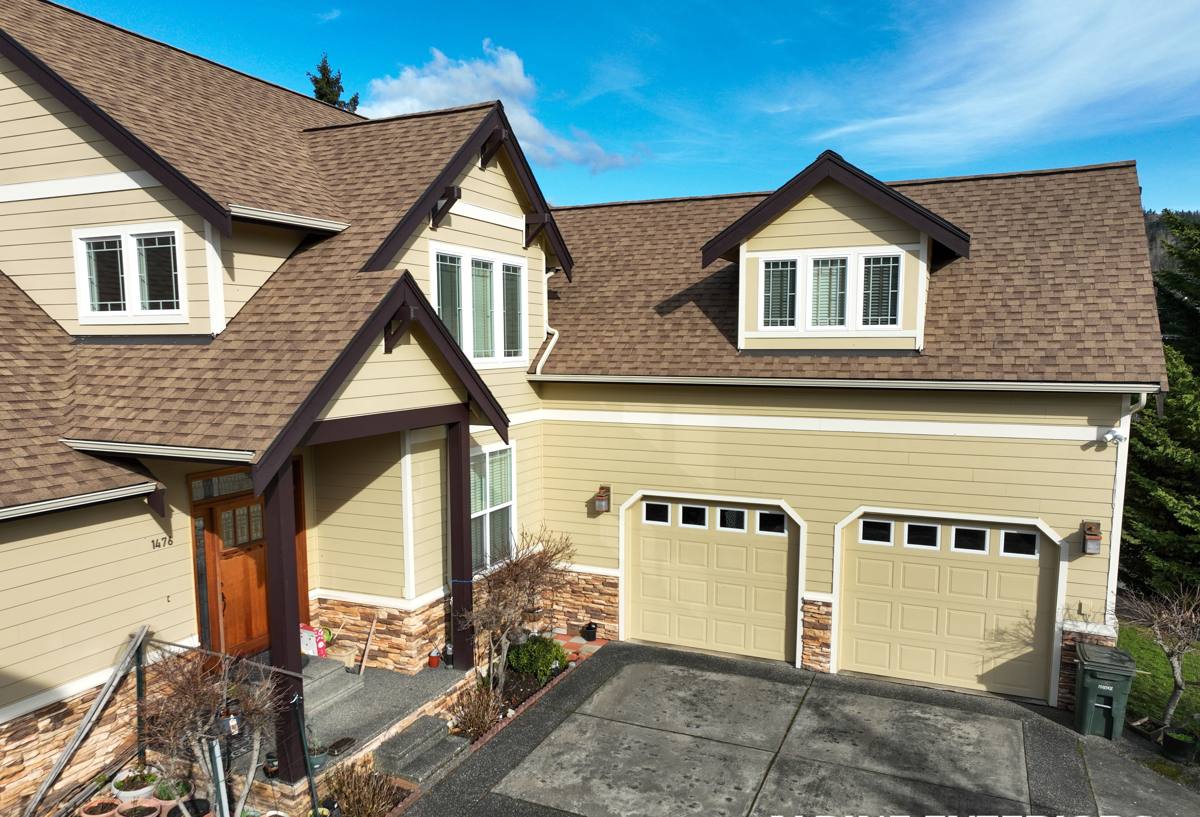
What Bellingham's Climate Does to a Shingle Roof
Asphalt shingles are a solid, proven roofing material almost everywhere in the country, but the Pacific Northwest coastal climate puts a specific set of stresses on them that a lot of generic roofing advice doesn't account for.
Salt Air and Coastal Exposure
Homes closer to Puget Sound deal with airborne salt that settles on roofing, siding, and metal components year-round. Salt exposure doesn't rot a shingle the way trapped moisture does, but it accelerates corrosion on any exposed metal — nails, flashing, vent caps, gutter hardware — and speeds up the breakdown of sealants and adhesives if lower-grade materials are used. Roofs closer to the water need corrosion-resistant fasteners and flashing details that a roof twenty miles inland can sometimes get away without.
Driving Rain and Wind-Driven Moisture
Bellingham doesn't get the heaviest rainfall totals in the state, but a lot of that rain arrives sideways, pushed by wind off the Sound. Driving rain finds weak points that vertical rain never would — under-lapped shingle courses, poorly sealed valleys, nail heads that sit slightly high, or flashing that was caulked instead of properly integrated. A roof that would perform fine in a calmer climate can leak here if these details were rushed.
Moss, Shade, and a Long Wet Season
Between tree cover, marine humidity, and a wet season that runs long, moss and algae growth is close to unavoidable on north-facing slopes and shaded roof sections in this area. Moss itself doesn't just sit on top of shingles — its root structure works into the granule layer and shingle mat, holding moisture against the roof surface long after the rest of the roof has dried out. Left unmanaged for years, that constant moisture exposure shortens shingle life and can lift edges enough for water to work underneath.
What a Correct Asphalt Shingle Installation Involves
A shingle roof is a system, not just a layer of shingles nailed to plywood. In a climate like this one, every layer underneath the shingles matters as much as the shingles themselves.
Deck Inspection and Prep
Before anything goes down, the roof deck needs to be sound — no soft spots, no delamination, no hidden rot from a prior leak. Skipping this step and roofing directly over a compromised deck is one of the most common shortcuts in the trade, and it's one of the first things we check before quoting a tear-off.
Underlayment
In a wet, wind-driven climate, underlayment is not a formality. A synthetic underlayment with strong water resistance, correctly lapped and fastened, gives the roof a real second line of defense if wind-driven rain or an ice-adjacent event gets past the shingles. Self-adhered ice-and-water membrane belongs at eaves, valleys, and around penetrations, where the risk of water intrusion is highest.
Ventilation and Moisture Balance
A roof deck that can't breathe traps moisture from both directions — humid interior air pushing up, and damp coastal air pressing down. Balanced intake and exhaust ventilation keeps the deck dry, helps prevent premature shingle aging from trapped heat and moisture, and reduces the conditions that let moss and mildew take hold in the first place.
Flashing and Valleys
Flashing around chimneys, skylights, sidewalls, and valleys is where the overwhelming majority of roof leaks actually originate — not in the open field of shingles. Proper step flashing, counterflashing, and valley metal (rather than relying on shingle-only "closed" valleys in a heavy-rain climate) make a measurable difference here.
Nailing Pattern and Fastener Choice
Manufacturer nailing patterns exist for a reason, and in a windy coastal area they're not optional. Correct nail placement, count, and depth — using corrosion-resistant fasteners — is what keeps shingles from lifting in a winter windstorm and what keeps a warranty valid if something does go wrong down the line.
Choosing a Shingle for the Puget Area's Conditions
Not every asphalt shingle product is built the same way, and in a climate with heavy moss pressure and salt air, the differences matter more than they might in a milder region. We walk homeowners through the realistic trade-offs rather than just upselling the most expensive tier.
| Shingle Type | Typical Lifespan Range | Moss/Algae Resistance | Best Fit For |
|---|---|---|---|
| 3-Tab (economy) | 15–20 years | Standard, no built-in resistance | Budget-focused projects, low-shade lots |
| Architectural / Dimensional | 25–30 years | Available with algae-resistant granules | Most homes in this climate — best balance of cost and durability |
| Premium / Designer | 30+ years | Enhanced algae-resistant granules standard | Heavily shaded lots, north-facing slopes, long-term hold |
For most homes in the Puget area, we point people toward architectural shingles with algae-resistant (often copper- or zinc-infused) granules as the practical minimum, not an upgrade. On heavily shaded lots or roofs with a lot of north-facing exposure, the premium tier tends to pay for itself in reduced moss treatment and a longer real-world service life.
Our Process for Puget-Area Roofing Projects
- On-site inspection: We look at the whole roof system — deck condition, existing ventilation, flashing details, moss and moisture patterns specific to your lot's shade and sun exposure.
- Honest scope and estimate: You get a clear breakdown of what's needed and why, including whether a repair, partial replacement, or full tear-off makes more sense for your situation.
- Tear-off and deck check: Old roofing comes off down to the deck so we can confirm what's actually underneath before installing anything new.
- System installation: Underlayment, ice-and-water membrane at vulnerable areas, proper ventilation components, flashing, and shingles installed to manufacturer spec.
- Final walkthrough: We review the completed roof with you, including care and moss-prevention basics specific to your property.
Living With a Shingle Roof in a Wet, Mossy Climate
Even a well-installed roof needs a bit of routine attention in this climate to hit its full lifespan. None of this is complicated, but it's easy to let slide, and moss especially gets harder to deal with the longer it's ignored.
- Keep gutters and downspouts clear so rain has somewhere to go, especially during heavier fall and winter storms
- Trim back overhanging branches to reduce shade and debris buildup on north-facing slopes
- Have moss treated (not scraped or pressure-washed, which can strip granules) as soon as it appears rather than after it's established
- Watch for granules collecting in gutters, a sign a shingle layer is aging and losing its protective surface
- Schedule a roof check after major windstorms to catch lifted shingles or flashing damage early
- Have a professional inspection every few years, even without visible problems, to catch small issues before they become leaks
What Affects the Cost of a Shingle Roof Here
Every roof is priced on its own specifics, but a few factors consistently move the number up or down for homes in this area.
| Factor | Why It Matters Locally |
|---|---|
| Roof pitch and access | Steeper roofs and limited access take longer and require more safety setup |
| Deck condition | Rot from long-term moisture or moss exposure can mean deck repair, not just re-roofing |
| Number of penetrations | Chimneys, skylights, and vents each need individual flashing work |
| Shingle tier chosen | Algae-resistant and premium products cost more upfront but reduce moss-related upkeep |
| Tear-off vs. overlay | A full tear-off costs more but is usually the right call given this climate's moisture demands |
We don't quote in vague ranges pulled from national averages — every estimate is based on what we actually find on your roof, walked through in person so you understand what you're paying for.
Why a Locally Familiar Crew Matters for Puget-Area Roofs
A roofing crew that regularly works the Puget area and greater Bellingham already understands which slopes tend to hold moss, how much wind exposure a given lot typically sees off the Sound, and which flashing and ventilation details actually hold up here versus what looks fine on paper. That familiarity shows up in fewer callbacks and a roof that's built for the conditions it will actually face, not a generic specification pulled from a drier climate. It also means a crew that's around for warranty follow-up and maintenance questions long after the install, not a traveling operation that's moved on to the next region.
Get a Straightforward Estimate
If you're dealing with an aging shingle roof, ongoing moss problems, or you're just planning ahead for a Puget-area home, we're happy to take a look and give you an honest assessment — no pressure, no inflated scope. Use the form below to request a free estimate and we'll walk you through exactly what your roof needs.