 Bellingham Roofing
 Barkley's Siding Problem Isn't Like Other Neighborhoods'
Barkley sits close enough to Bellingham Bay that salt-laden air is a constant, low-grade factor in how exterior materials age here — not a once-a-year storm event, but a daily condition. Add Whatcom County's long, wet, mild winters and the damp shoulder seasons that follow, and you get a stretch of the calendar — often five or six months — where siding rarely gets a chance to fully dry out between rain events. That combination of salt exposure, driving rain, and near-constant moisture is exactly the environment where the wrong siding choice shows its weaknesses fastest, and where the right one is worth paying for.
Homeowners in Barkley tend to notice the same handful of problems: green-black staining low on the walls and around downspouts, soft or swelling trim at corners and window returns, and paint that fails years ahead of schedule on the north and west-facing elevations that never see direct sun. None of that is a mystery once you understand what the climate is doing to the material underneath.
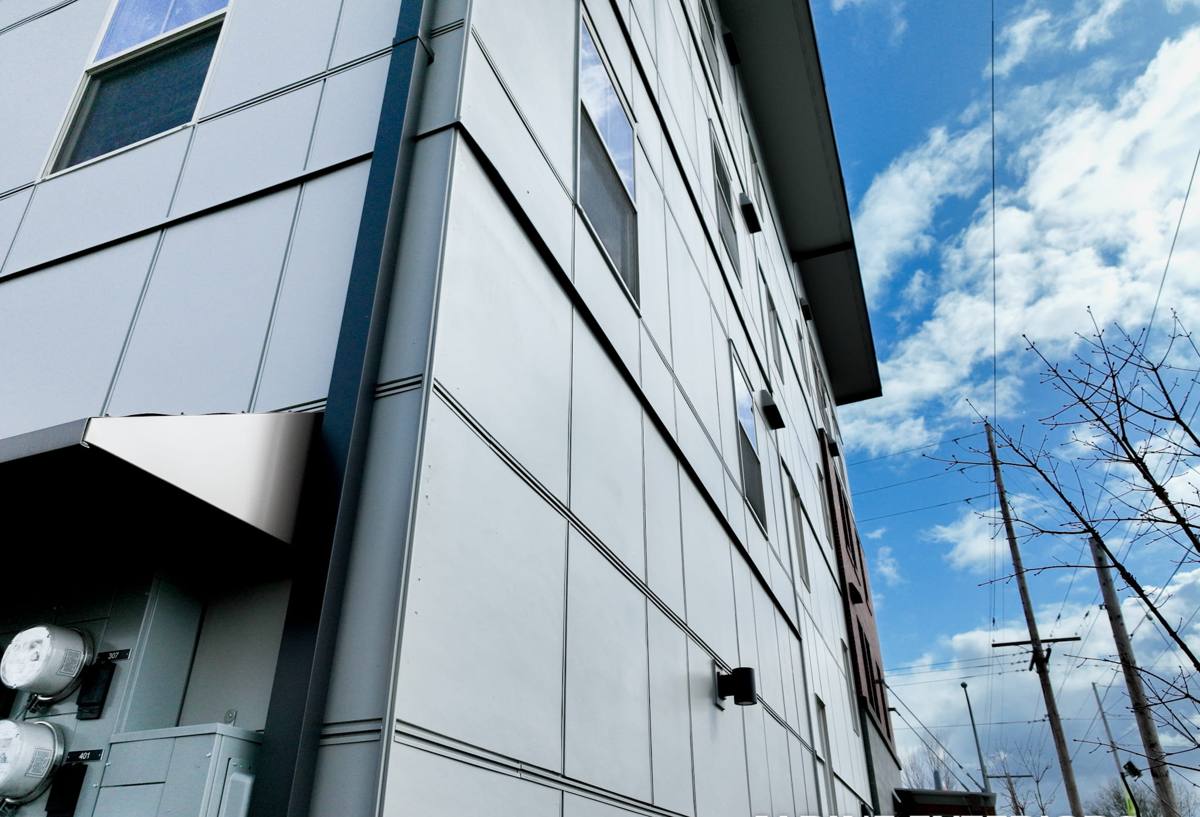
What Siding Actually Needs to Handle Here
Moisture that lingers, not just moisture that falls
Bellingham's rain isn't the heaviest in the state, but it's persistent, and it frequently arrives on a wind off the Sound that drives water sideways into wall assemblies rather than straight down. Siding in Barkley needs to shed that water at every horizontal joint and penetration, and the material itself needs to tolerate repeated wetting and drying cycles without warping, delaminating, or losing its bond with paint.
A moss and algae season that runs most of the year
Cool, damp, shaded conditions are ideal for moss and algae growth, and Barkley's mix of mature landscaping and tree cover means plenty of walls stay shaded and damp for long stretches. Porous or fibrous materials give moss something to root into; siding that resists moisture absorption gives it far less to hold onto.
Salt air's slow corrosion of fasteners and finishes
Salt air accelerates corrosion in exposed metal fasteners and can degrade lower-quality paint films faster than an inland climate would. That matters as much for the nails and flashing behind the siding as it does for the siding itself.
Why We Install Only James Hardie
We install one siding system on every job, in every neighborhood we serve, and that's James Hardie fiber cement. We don't offer vinyl, LP SmartSide, Cemplank, Allura, primed spruce, or cedar, and that's a deliberate standard, not an oversight. Each of those alternatives has real strengths — vinyl is inexpensive, wood has genuine curb appeal, engineered wood products install quickly — but each also carries a moisture, maintenance, or longevity trade-off that we're not willing to install and then stand behind in a climate like this one. Fiber cement is inorganic: it doesn't rot, it doesn't feed moss the way wood fiber does, and it holds a factory finish far longer than field-applied paint on wood or engineered wood substrates.
Climate-engineered for the Pacific Northwest
James Hardie makes its siding in climate-specific formulations, and homes in this region typically call for the company's HZ5 product line, engineered for areas with damp, moderate climates rather than the freeze-heavy or high-humidity extremes of other regions. That's not a marketing distinction — it affects how the board is formulated to handle moisture cycling over decades of service.
ColorPlus finish versus field-applied paint
Most Hardie siding on our jobs goes up with the factory-applied ColorPlus finish rather than being painted on site. That finish is baked on under controlled conditions and backed by its own warranty, which matters in a climate where field-applied paint is fighting damp air and short drying windows for a good part of the year.
How Fiber Cement Compares for Barkley Conditions
| Factor | Fiber Cement (James Hardie) | Vinyl | Wood / Engineered Wood |
|---|---|---|---|
| Moisture & rot resistance | Inorganic, does not rot | Doesn't rot, but can warp and gap | Vulnerable without diligent maintenance |
| Moss/algae susceptibility | Low — dense, non-porous surface | Low, but seams trap grime | Higher — porous fiber feeds growth |
| Finish durability | Factory finish, long service life | Color molded in, can fade/chalk | Depends entirely on paint upkeep |
| Fire performance | Non-combustible | Combustible | Combustible |
| Salt air tolerance | Strong when properly fastened/flashed | Generally stable | Weaker; finish and joints degrade faster |
What a Correct Fiber Cement Installation Involves
Fiber cement's reputation rides entirely on installation quality. A well-made board installed wrong will fail early in exactly the ways homeowners worry about — and in a wet, coastal-influenced climate, installation mistakes surface faster than they would somewhere dry.
Water management behind the boards
Correct installation starts with a drainable weather-resistive barrier and rainscreen or furring approach where the wall assembly calls for it, so any moisture that does get past the siding has somewhere to go besides the sheathing. Flashing at every window, door, and horizontal transition needs to shed water outward, not funnel it behind the cladding.
Fastening, clearances, and joints
James Hardie's installation instructions specify fastener type, spacing, and placement, plus minimum clearances from grade, roof lines, and decks — details that get skipped on rushed jobs. Butt joints need to be caulked or flashed per spec, and boards need the gap tolerances the manufacturer calls for so they can expand and contract without cracking paint or pushing joints open.
Trim and accessory compatibility
Corner boards, window trim, and soffit details all need to be compatible materials, installed to shed water the same way the field siding does. Mixing incompatible trim with Hardie siding is a common shortcut that shows up as staining and rot around openings within a few years.
- Drainable barrier or rainscreen behind the cladding
- Correct fastener type, spacing, and embedment depth
- Proper clearances from grade, roofing, and decking
- Flashed and/or caulked joints per manufacturer detail
- Compatible, properly sealed trim at corners and openings
- Factory-finished boards handled and cut to avoid exposing raw edges
Our Process on a Barkley Job
We start with a walk-around assessment of the existing exterior — looking specifically for the moisture patterns common to this area: staining low on walls, soft trim at grade, moss buildup in shaded corners, and any places where past flashing or caulking has failed. That assessment shapes the scope, because a re-side is also the best opportunity to correct water-management problems that have nothing to do with the old siding itself.
From there we handle removal, any sheathing repair the assessment turns up, water-resistive barrier and flashing work, and the Hardie installation itself, followed by a final walkthrough covering caulking, trim, and touch-up paint at cut edges. We keep the site contained and clean up debris daily rather than leaving cut fiber cement dust and packaging to sit through a rainy week.
Why local experience in Barkley specifically matters
A crew that has worked this neighborhood knows its typical lot conditions, common construction vintages, and where moisture problems tend to concentrate — shaded north walls, low areas near foundation plantings, exposure toward the water. That familiarity shortens the assessment, informs where extra flashing attention is warranted, and means fewer surprises once the old siding comes off.
Living With Fiber Cement Through Barkley's Moss Season
Even a well-installed fiber cement exterior benefits from light seasonal upkeep in this climate. Rinsing off accumulated moss and algae before it establishes, keeping gutters clear so overflow doesn't run down the wall face, and trimming back vegetation that keeps a wall shaded and damp all extend the life of the finish. None of this is heavy maintenance — it's closer to the kind of upkeep any exterior surface needs in a wet coastal climate, and it's considerably less demanding than the paint and caulk cycle wood or engineered wood siding requires here.
What Correct Installation Costs to Get Right
| Cost Factor | Why It Matters in Barkley |
|---|---|
| Water-resistive barrier / rainscreen detailing | Extra labor and material, but it's what keeps trapped moisture from reaching sheathing in a wet climate |
| Sheathing or framing repair | Common on older homes once old siding is removed and hidden moisture damage is exposed |
| Trim and flashing replacement | Corner boards and window trim often need replacing alongside the field siding |
| ColorPlus vs. field-painted finish | Factory finish costs more up front but avoids repaint cycles driven by this climate's damp conditions |
| Home size, story count, and access | Affects scaffolding, staging, and labor hours independent of siding choice |
A straight quote-to-quote price comparison across bids only makes sense once you know each bid is including the same water-management and installation details — the cheapest number on paper is often the one that's skipped the barrier, flashing, or clearance work that actually protects the house.
Why Hiring a Barkley-Familiar Crew Matters
Fiber cement siding is unforgiving of shortcuts, and a crew that only occasionally installs it is more likely to miss a clearance, a flashing detail, or a fastener spec that doesn't show up as a problem until years later. A crew that installs Hardie exclusively, and that already knows Barkley's typical conditions, brings both product-specific discipline and neighborhood-specific judgment to the job — knowing which walls need extra flashing attention, which lots hold moisture longer, and what a correct installation actually looks like once the old siding comes off.
If you're weighing a re-side in Barkley, we're glad to walk the exterior with you, point out what we see, and put together a straightforward, no-pressure estimate using the form below.