 Bellingham Roofing
 Deck Replacement in Birch Bay: Building for a Waterfront Climate
Decks in Birch Bay take a harder hit than decks almost anywhere else in Whatcom County. This is a shoreline community, and that location means salt-laden air moving off the bay almost year-round, long stretches of wind-driven rain through fall and winter, and a moss and mildew season that can run most of the year on any surface that stays shaded or damp. A deck built or maintained the way you'd build one a few miles inland often doesn't make it to year ten out here without soft boards, corroded fasteners, or a structure that's quietly losing integrity underneath a deck that still looks fine on top.
We replace decks for homeowners throughout Birch Bay, and we treat deck replacement as a structural project first and a finish-material choice second. The framing, the fasteners, the flashing where the deck meets the house, and the drainage underneath all matter more to how long a deck lasts here than which decking board gets chosen on top of it.
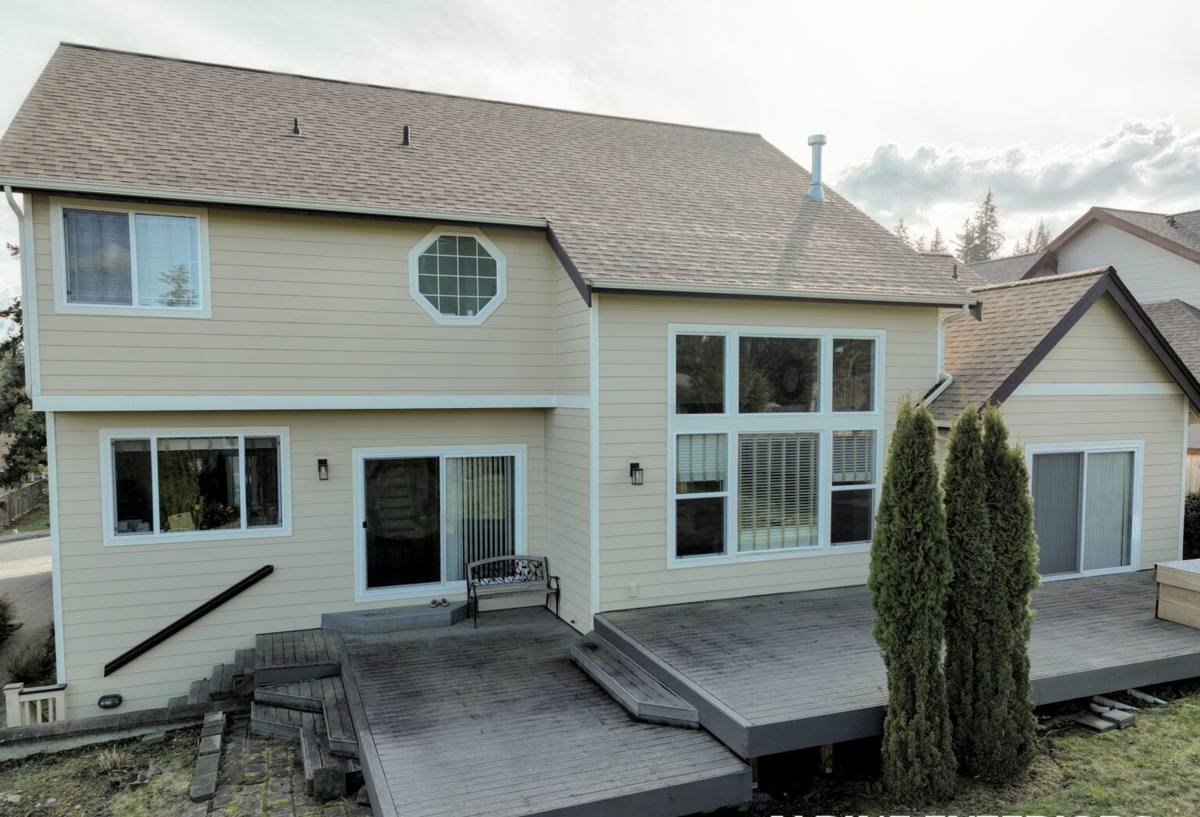
How This Climate Wears Down a Deck
Salt Air and Fastener Corrosion
Being close to the water means Birch Bay decks are exposed to more airborne salt than decks set back inland. Salt accelerates corrosion in metal — screws, joist hangers, post bases, and structural connectors all take that exposure directly, and a fastener that's rated for general outdoor use isn't necessarily rated for this level of salt exposure. When fasteners corrode, they lose holding strength long before the problem is visible from the top of the deck, which is why so many deck failures here start underneath, not on the surface.
Wind-Driven Rain and Standing Moisture
Waterfront exposure brings more wind, and wind-driven rain doesn't just fall on a deck surface — it drives into ledger connections, gets pushed under railings, and collects in any spot where drainage wasn't planned for. A deck built without attention to slope, gapping, and drainage will hold water in places that never fully dry out between storms, and that's exactly where rot and hardware corrosion start.
Moss, Algae, and a Long Growing Season
Mild temperatures and near-constant moisture add up to a moss and algae season that runs most of the year on shaded decks, especially on the north side of a house or under tree cover. Beyond making a deck slippery and unattractive, sustained moss growth holds moisture directly against the decking surface, which speeds up wood decay and can even affect the wear layer on lower-grade composite products over time.
What a Correct Deck Replacement Involves
Replacing a deck the right way in this climate means addressing the whole structure, not just swapping old boards for new ones on top of an aging frame.
- Framing inspection and, where needed, replacement: Joists, beams, and posts get checked for rot and soft spots before anything new goes on top. Reusing compromised framing under new decking just hides a problem instead of fixing it.
- Ledger board and house connection: Where the deck attaches to the house is one of the most common places water gets into a wall or rim joist. Proper flashing at this connection is non-negotiable in a climate with this much wind-driven rain.
- Corrosion-resistant fasteners and hardware: Structural connectors, joist hangers, and fasteners rated for coastal or salt-air exposure hold up where standard exterior-rated hardware can fail early.
- Proper board spacing and drainage: Correct gapping between deck boards lets water drain through rather than pool on the surface, and grading or drainage detailing underneath keeps moisture from collecting against the framing.
- Railing and stair code compliance: Railing height, baluster spacing, and stair geometry need to meet current Washington building code, which is worth confirming even on a like-for-like replacement.
Decking Material Choices for a Salt-Air Deck
There's no single right answer for every homeowner here — it comes down to how much maintenance you want to take on versus what you're willing to spend upfront, and we walk through that honestly rather than pushing one material.
Wood Decking
Cedar and pressure-treated lumber remain common choices and can look great, but they demand real upkeep in this climate — regular cleaning, sealing or staining, and closer attention to any spot that stays shaded or wet. Skipped maintenance shows up faster here than it would somewhere drier.
Composite Decking
Composite decking largely eliminates the sealing and staining cycle and resists moisture absorption better than wood, which is a real advantage given how much of the year Birch Bay stays damp. The tradeoff is a higher upfront material cost and a wear layer that, like any material, still needs occasional cleaning to keep moss and algae from taking hold on shaded sections.
PVC and Capped Composite
Fully capped composite or PVC decking offers the strongest moisture resistance of the common decking options, which matters most on decks that get heavy shade or sit close to grade. It typically costs more than standard composite, and it's worth confirming what warranty coverage actually applies to coastal salt-air exposure before deciding it's the right fit.
Comparing Decking Options for Birch Bay Conditions
| Material | Moisture & Salt Behavior | Maintenance | Typical Upfront Cost |
|---|---|---|---|
| Pressure-treated wood | Absorbs moisture readily; needs sealed cuts and connections | High; annual cleaning and periodic sealing/staining | Lowest |
| Cedar | Naturally decay-resistant but still absorbs and releases moisture | High; regular refinishing in wet, salty air | Moderate |
| Standard composite | Resists moisture absorption; shaded areas can still grow moss | Low to moderate; periodic cleaning | Moderate to higher |
| Capped composite / PVC | Best moisture and salt resistance of the common options | Low; occasional cleaning | Highest |
Framing and Fasteners: The Part You Don't See
A deck's decking material gets most of the attention, but the framing underneath is what actually determines how long the structure lasts and how safe it stays. In a salt-air environment like Birch Bay, we specify structural connectors and fasteners rated for corrosive exposure as standard practice on every deck replacement, not as an upgrade option. We also pay close attention to how the frame is built to shed water — proper slope away from the house, joist tape or flashing on top of framing members where called for, and gaps that let air circulate underneath rather than trap moisture against the wood.
Signs a Birch Bay Deck Needs Replacing, Not Just Repairing
- Soft, spongy, or spalling spots in the decking or framing when you press or probe them
- Visible rust staining around fasteners or structural hardware
- A ledger board connection that shows water staining or gaps at the house
- Persistent moss or algae growth that returns quickly after cleaning
- Railings or posts that feel loose or move under normal weight
- A deck that's approaching or past 20 years old with wood framing that's never been fully inspected
Not every one of these means a full tear-off is required — sometimes targeted framing or ledger repair is enough. But once salt-air corrosion or rot has reached the structural members, patching the visible symptoms usually just delays a bigger repair.
Why a Local Crew Matters for This Job
A contractor who works Birch Bay regularly already knows how differently this coastline behaves compared to inland Whatcom County — how much more corrosion-resistant hardware needs to be, where drainage details need extra attention, and which parts of a deck fail first in this exposure. That local familiarity shows up in the choices made before the first board is cut: fastener grade, flashing detail at the ledger, and how the frame is built to shed water. Those decisions are what separate a deck that holds up two decades from one that starts showing problems in five or six years.
A Simple Checklist Before Hiring for Deck Replacement
- Ask what fastener and hardware grade they use, and whether it's rated for coastal or salt-air exposure
- Confirm they carry current Washington contractor licensing and active liability insurance
- Ask how they'll inspect and, if needed, replace framing rather than just resurfacing over it
- Get a clear, written scope that separates framing, fasteners, ledger work, and decking material
- Ask whether railing and stair details will meet current code, especially on an older deck
Our Process
We start with an on-site inspection of the existing deck — framing, ledger connection, fasteners, and decking surface — to see how the current structure has actually held up to salt air and moisture over time, not just how it looks from a few feet away. From that inspection we put together a clear, written scope covering what needs full replacement versus what can be reused safely, along with decking material options and honest tradeoffs for each. Corrosion-resistant hardware, proper ledger flashing, and correct drainage detailing are standard on every deck we build here, not optional add-ons.
If your deck in Birch Bay is showing its age or you're planning ahead for a replacement, we're happy to take a look and give you a straight assessment of what it needs. Reach out below for a free, no-pressure estimate.