 Bellingham Roofing
 Windows Built for Columbia's Coastal Climate
Columbia sits close enough to Bellingham Bay that homes here take a different kind of weather beating than houses further inland. Salt-laden air drifts in off the water, driving rain comes sideways during winter storms, and the long gray stretch from fall through spring keeps every exterior surface damp for months at a time. Windows are one of the first components of a house to show the effects. Frames swell, seals fail early, hardware pits and sticks, and moss finds a foothold in any spot where water sits instead of shedding.
A window that performs fine in a drier part of the state can struggle here. That's why custom windows for Columbia homes need to be selected and installed with this specific climate in mind, not treated as an off-the-shelf product dropped into any opening. This page covers what local homes actually need, what a correct installation looks like, and how we approach the job when we work in this neighborhood.
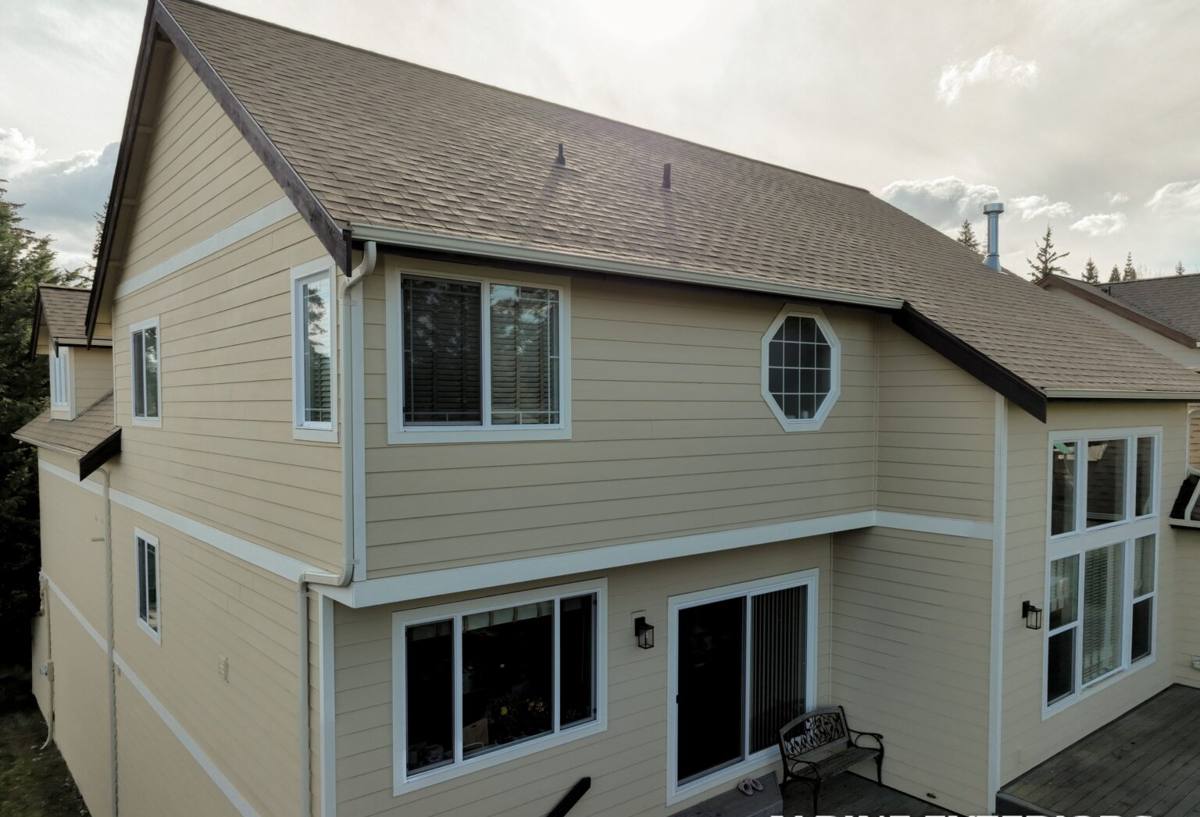
What Actually Wears Out a Window in Whatcom County
Understanding why windows fail here helps explain why the details matter so much on a replacement or new installation.
Moisture Intrusion at the Frame
Bellingham's rainfall isn't just frequent, it's often wind-driven, which pushes water sideways against the building envelope rather than letting it run straight down. Any gap in flashing, sealant, or fit gives that water a path into the wall cavity. Once moisture gets behind a window frame, it doesn't dry out quickly in our climate, and rot or mold can set in before anyone notices from inside the house.
Salt Air and Hardware Corrosion
Proximity to the bay means airborne salt settles on exterior surfaces over time. Standard hardware, cheap fasteners, and lower-grade finishes corrode faster in this environment. Locks stiffen, hinges seize, and finishes chalk or pit years ahead of schedule if the materials weren't chosen with coastal exposure in mind.
Moss and Organic Growth
Our long wet season, roughly October through May, keeps humidity elevated for extended stretches. Moss, algae, and mildew don't just grow on roofs here — they'll colonize window sills, frame joints, and any horizontal surface that holds moisture. Beyond the appearance issue, sustained organic growth traps moisture against the frame material and accelerates whatever deterioration is already underway.
Seal and Glazing Failure
Insulated glass units rely on a sealed gas-filled space between panes. Constant temperature swings, moisture cycling, and age all stress that seal. Once it fails, fogging between the panes shows up and the window's insulating performance drops, even though the glass still looks intact from a distance.
Signs Your Columbia Home's Windows Need Attention
Most window problems don't show up overnight. Here's what we look for, and what homeowners should watch for between inspections:
- Fogging or condensation trapped between the panes of double-pane glass
- Soft or discolored wood at the sill, jamb, or interior trim
- Windows that are difficult to open, close, or lock, especially after rain
- Visible gaps, cracked caulk, or daylight showing around the frame
- Persistent moss, algae, or black staining on sills that keeps returning after cleaning
- Noticeably higher heating bills or a draft you can feel near the frame in winter
- Paint or finish peeling from the frame itself rather than just the surrounding trim
- Musty smell or visible staining on interior drywall near a window
Any one of these on its own isn't necessarily an emergency, but a few showing up together on the same window is usually a sign the unit or its installation has reached the end of its useful life.
Choosing the Right Window Type for This Neighborhood
There's no single "best" window material for every home. The right choice depends on the home's exposure, its architectural style, and the homeowner's priorities around maintenance and budget. Here's how the common options stack up for a coastal Whatcom County property:
| Material | Salt Air / Moisture Resistance | Maintenance | Typical Cost Range |
|---|---|---|---|
| Vinyl | Strong — won't rot or corrode | Low, occasional cleaning | Lower |
| Fiberglass | Very strong, stable in temperature swings | Low | Mid to upper |
| Aluminum-clad wood | Good on the exterior face; wood interior still needs protection | Moderate | Upper |
| Solid wood | Weakest without diligent upkeep in this climate | High | Varies, upkeep adds cost over time |
We generally steer coastal-exposed homes toward vinyl or fiberglass frames, or a clad wood option where the homeowner wants a wood interior look. This isn't a knock on solid wood windows as a product — they can look great and perform well in a drier climate with consistent upkeep. It's a reflection of what a driving-rain, high-humidity, salt-air environment does to an unprotected wood exterior over the years, and we'd rather set expectations honestly up front than sell a homeowner a maintenance schedule they didn't ask for.
What a Correct Installation Actually Involves
The window unit itself is only part of the equation. In our experience, most premature window failures in this area trace back to installation shortcuts, not the product itself.
Flashing and Water Management
Proper flashing directs any water that gets past the exterior siding back out of the wall assembly instead of letting it pool at the sill. This includes sill pan flashing, correctly lapped house wrap, and head flashing above the unit. Skipping or rushing this step is the single biggest cause of hidden rot behind a window that otherwise looks fine.
Precise Sizing and Fit
A window opening that's slightly out of square or oversized for the new unit leads to gaps that get filled with excess foam or caulk instead of a proper mechanical fit. That's a weak point from day one. We measure and, where needed, adjust the rough opening so the window sits correctly rather than compensating with sealant.
Sealing and Insulation
Low-expansion foam and the right sealant at the right points around the frame prevent both air infiltration and moisture entry, without bowing the frame out of square, which can happen with the wrong foam product or too much of it.
Interior and Exterior Finish Work
Trim, casing, and any exterior cladding tie-in need to be finished so water sheds away from the window rather than toward it. This is also where a mismatched or rushed job becomes obvious cosmetically, even when the structural work underneath was done correctly.
Our Process, From Estimate to Finished Install
- On-site assessment: We look at the existing windows, the condition of the surrounding wall and trim, and the home's specific exposure to wind, rain, and sun before recommending anything.
- Product recommendation: Based on that assessment and your priorities, we recommend materials and styles suited to the home, not a one-size-fits-all package.
- Written estimate: You get a clear, itemized estimate before any work is scheduled, with no pressure to decide on the spot.
- Removal and prep: Old units are removed carefully, and we inspect the opening for any hidden rot or damage before installing anything new.
- Installation: Flashing, sizing, sealing, and finish work are done in that order, with attention to the details that matter most in this climate.
- Final walkthrough: We check operation, seals, and finish work with you before considering the job complete.
Cost Factors Worth Understanding
Custom window projects vary widely in price depending on a handful of factors, and it's worth understanding what actually drives the number before you get an estimate:
- Number of windows being replaced or installed and whether it's a full-home project or a targeted repair
- Frame material chosen — vinyl and fiberglass generally cost less upfront than clad or solid wood
- Whether the rough opening needs repair due to hidden rot or structural issues found during removal
- Custom sizing or non-standard shapes versus stock sizes
- Energy-efficient glass packages, which cost more upfront but reduce heating costs over time
- Complexity of trim and exterior finish work required to match the existing home
We're not going to quote a number here without seeing the home, since the range for a single-window repair versus a whole-house replacement is enormous. What we can promise is a straightforward, itemized estimate with no surprise add-ons once the work has started.
Why Hiring a Crew That Already Works in Columbia Matters
A window installer who mostly works drier, inland parts of Washington may not think twice about flashing details or hardware grade that matter enormously here. Working regularly in Bellingham and the surrounding Whatcom County neighborhoods means we've seen firsthand how salt air, driving rain, and moss season affect windows over the years, not just at the moment of installation but five and ten years down the road. That local pattern recognition shapes which products we recommend, how we detail the flashing, and what we flag during an inspection that a generalist crew might miss entirely.
It also means we're accountable locally. If something isn't right after the install, we're not a crew that drove in from out of the area for one job. We're working in this community regularly, and we'd rather do it right the first time than field a callback.
Maintaining Your Investment After Installation
Even the right window installed correctly benefits from a little seasonal attention in this climate. A quick rinse of sills and tracks after the worst of the moss season helps prevent buildup from taking hold. Checking that exterior caulk lines stay intact, especially after a hard winter, catches small gaps before they become water intrusion problems. None of this is intensive work, but skipping it entirely is how a well-installed window ends up looking neglected years before it should.
If you're weighing custom windows for a home in Columbia, we're glad to take a look and talk through what actually makes sense for your house and budget. Reach out for a free, no-pressure estimate using the form below.