 Bellingham Roofing
 Custom Decks in Blaine: Building for a Coastal Border Town
Blaine sits at the northern edge of Whatcom County, close enough to Semiahmoo Bay and Drayton Harbor that salt-laden air reaches most homes in town, not just the ones with a water view. Add in Blaine's exposed position where Pacific storm systems come ashore with real force, and you have one of the more demanding places in the county to keep an outdoor structure sound. A deck is more exposed to weather than almost anything else attached to a house — it sits low, catches standing water, and takes direct sun, rain, and salt spray with no roof overhang to shield it. We work across Whatcom County regularly, and Blaine decks tell a consistent story when we get called out for repairs: the failures almost always trace back to a shortcut taken during the original build, not bad luck.
This page is about one thing: building or replacing a custom deck in Blaine the right way, given what this specific climate does to wood, fasteners, and footings over time. It's not a general "why choose us" pitch — it's what we've learned building and repairing decks in this exact stretch of coastline.
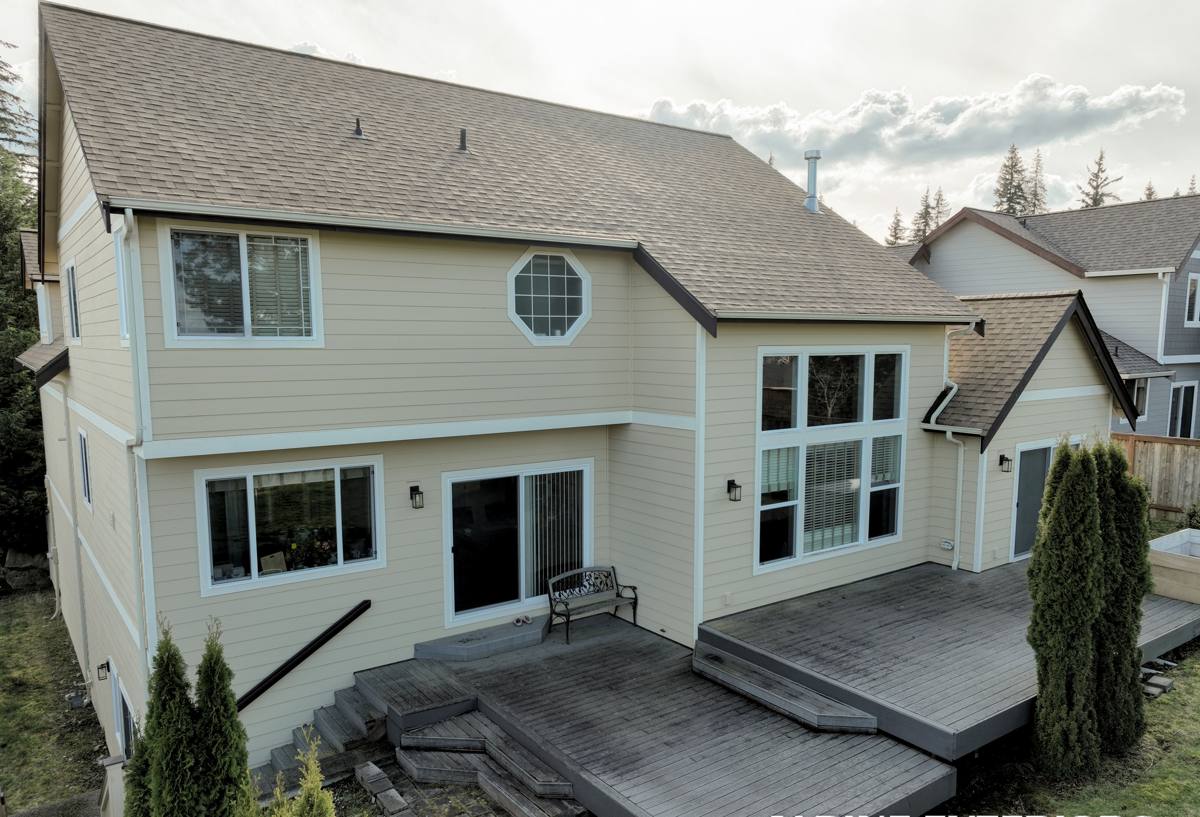
What Blaine's Climate Does to a Deck
Salt Air, Close to the Water
Homes near the bay or harbor take a steadier dose of salt-carrying air than towns further inland, and a deck sits right in that airflow with no wall cavity or siding to buffer it. Salt accelerates corrosion on any exposed metal — nails, screws, joist hangers, railing hardware — faster than a dry inland climate ever would. On a deck, corroded fasteners aren't just a cosmetic problem; they're a structural one, since the whole assembly depends on those connections holding under load.
Driving Rain Off the Water
Storms coming off the water don't fall straight down — wind pushes rain sideways into ledger boards, railing posts, and the gaps between decking boards. That sideways load finds any weak point in flashing or fastening faster than a calm, dry climate would ever expose it. On a deck, the single most common failure point is the ledger board where the structure attaches to the house, and Blaine's wind-driven rain patterns make correct flashing there a non-negotiable detail, not an optional upgrade.
A Long Moss Season
Mild temperatures and near-constant moisture add up to a moss and mildew season that can run most of the year on shaded decks or ones tucked under trees. Moss doesn't just look bad — it holds moisture against the decking surface and turns walking boards slick and dangerous underfoot, especially on wood surfaces with any texture or grain to trap growth. Decks with poor airflow underneath or heavy tree cover overhead show this earliest and worst.
Choosing the Right Decking Material for This Climate
There's no single "correct" decking material for every homeowner — budget, maintenance appetite, and how long you plan to stay in the house all factor in. But in a coastal, high-moisture town like Blaine, some materials handle the conditions with a lot less maintenance than others.
| Material | Upfront Cost | Maintenance | Coastal/Moisture Performance | Typical Lifespan |
|---|---|---|---|---|
| Pressure-treated lumber | Lowest | Annual cleaning, re-staining every 1-2 years | Fair — needs consistent upkeep to resist rot and moss near water | 10-15 years with regular maintenance |
| Cedar | Moderate | Regular sealing and cleaning to hold color and resist moisture | Good natural rot resistance, but salt air and rain still wear finishes faster here | 15-20 years with diligent upkeep |
| Composite / capped composite | Highest | Occasional washing, no staining or sealing | Very good — engineered to resist moisture absorption, salt, and moss growth | 25-30 years, often with a manufacturer warranty |
We'll build with whichever material fits your budget and expectations, but we're upfront with every Blaine homeowner: wood decks in this climate need real annual attention to reach their full lifespan, and composite decking's higher upfront cost is mostly a trade for maintenance time saved over the years, not a marketing upsell. That's a maintenance and moisture-behavior trade-off, and it's one we lay out honestly rather than push one direction.
What a Correctly Built Deck Involves
A deck's finish material matters, but the structure underneath it is what actually keeps it safe and long-lasting in a wet, salt-exposed climate. A few details we won't skip on a Blaine build:
Footings Set Below Frost Depth
Footings need to be sized and set to local code depth so seasonal ground moisture and freeze-thaw cycling don't shift or heave the structure over time. Skipping this is invisible on day one and shows up years later as a deck that's noticeably out of level.
Properly Flashed Ledger Board
Where the deck attaches to the house is the single spot most likely to trap water against the structure if it's not flashed correctly. We install flashing that sheds water away from the house band board, not toward it, which matters more here given how much wind-driven rain this stretch of coastline gets.
Corrosion-Resistant Hardware Throughout
Joist hangers, structural screws, and post connectors need a coating rated for the moisture and salt exposure a coastal deck actually sees, not just a generic exterior-rated fastener. This is one of the most common corners cut on older decks we're called to repair in Blaine.
Airflow Underneath
Decks built low to the ground or over poorly drained soil trap moisture underneath, which speeds up rot on the framing and gives moss a head start. Correct grading and clearance underneath the structure lets air move and keeps that hidden framing drier.
Railings, Fasteners, and Hardware: Where Corrosion Starts
Railings take direct wind and rain exposure with essentially no shelter, which makes them one of the fastest-aging parts of any deck in a coastal town. Metal railing systems and hardware need a corrosion rating that matches the environment — standard zinc-coated fasteners that hold up fine in a drier inland town can start showing rust within a couple of seasons this close to the water. We spec stainless steel or heavily coated hardware for structural connections and railing posts on Blaine builds specifically because of that gap in performance, not as a blanket upgrade we push on every job regardless of location.
Our Process From Design to Finished Deck
- On-site consultation: We walk the property, talk through how you'll actually use the space, and look at sun exposure, drainage, and how exposed the location is to wind off the water.
- Design and material selection: We lay out size, layout, and railing style, and go over decking material trade-offs honestly, including what each option will actually require from you in upkeep.
- Permitting: We handle the permit application and inspection scheduling required for the build, so you're not left navigating that process alone.
- Site prep and footings: Layout, excavation, and footing placement set to the depth and spacing the structure needs to stay level over time.
- Framing and structural connections: Ledger attachment, joists, and hardware go in with the corrosion-resistant fasteners this climate calls for.
- Decking and railing installation: Surface material and railings go on last, with attention to board spacing that allows for drainage and seasonal movement.
- Final walkthrough: We go over the finished deck with you, plus what maintenance it needs going forward given the material you chose.
Maintenance: What Blaine Homeowners Should Do Every Year
Even a well-built deck needs some regular attention in this climate. A simple annual routine goes a long way toward avoiding costly repairs down the road:
- Clear leaves and debris from between boards and along the perimeter before fall rains set in
- Wash the surface to remove algae and moss buildup, especially on shaded sections
- Check railing posts and structural hardware for early rust or corrosion
- Inspect the ledger board area for any staining or soft wood that suggests trapped moisture
- Re-seal or re-stain wood decking on the schedule the material requires, not just when it visibly fades
- Confirm gaps between boards haven't closed up from swelling, which can trap water on the surface
- Look underneath the deck for standing water or poor drainage after a heavy storm
Warning Signs Your Existing Deck Needs Attention
Deck failures rarely happen suddenly — they show early signs that are easy to miss until they become a safety issue. Worth checking for:
- Soft or spongy decking boards, especially near the ledger board or in shaded corners
- Rust staining around fasteners, joist hangers, or railing posts
- Visible gaps, staining, or dark streaking where the deck meets the house
- Railings that feel loose or flex more than they used to
- Persistent moss or slick, slippery patches even after cleaning
- A deck surface that's noticeably out of level compared to when it was built
Any one of these on its own might be minor, but they're worth a professional look before they turn into a larger structural repair, particularly given how much moisture this stretch of coastline puts on an exposed structure year-round.
Why a Local Crew That Already Works Blaine Matters
A crew that builds and repairs decks across Whatcom County regularly sees how salt air, driving rain, and moss actually affect real structures over a full year, not just how a material performs on a spec sheet. That experience shapes real decisions on a build: how deep to set footings given local soil and drainage, which hardware grade is worth the extra cost, and where extra flashing attention at the ledger board pays off after the next storm off the water. Blaine's exposed, coastal position isn't the same as more sheltered towns further inland in the county, and a deck built without accounting for that difference tends to show problems years earlier than it should.
Get a Free, No-Pressure Estimate
If you're planning a new custom deck in Blaine, or an existing one is showing signs of wear, we're glad to take a look and walk you through what a correct build or repair involves for your specific property. Reach out using the form below to schedule a free estimate — no pressure, no upsell script.