 Bellingham Roofing
 Blaine sits right on the water at the top of Whatcom County, close enough to the Canadian border and the open marine air off Semiahmoo Bay and Drayton Harbor that its homes take a different kind of weather beating than houses just a few miles inland in Bellingham. Board and batten siding — with its crisp vertical lines and strong shadow reveal — is a popular look out here, but it only holds up if it's built for this specific climate. This page covers what a correct board and batten installation looks like for a Blaine home, why we install it exclusively in James Hardie fiber cement, and how our process is built around the realities of salt air, driving rain, and a moss season that runs longer here than in drier parts of the state.
Why Blaine's Marine Climate Is Hard on Vertical Siding
Board and batten siding has more seams and more exposed fastener lines per square foot than standard horizontal lap siding, which makes material choice and installation detail more important, not less. Blaine's location right on the water adds three specific stresses that a siding system and installer both need to be built for.
Salt Air and Fastener Corrosion
Homes close to Semiahmoo Bay and Drayton Harbor deal with airborne salt that accelerates corrosion on unprotected metal. Over years, corroding fasteners or trim flashing can telegraph through paint, stain the face of the siding, and eventually loosen boards. Fastener material and flashing choices matter more here than they do a few miles inland.
Wind-Driven, Horizontal Rain
Storms coming off the water tend to push rain sideways rather than straight down, which drives water directly into vertical seams and butt joints instead of letting it run off a horizontal lap. A board and batten system that isn't detailed correctly at the seams and terminations will let that wind-driven rain find its way behind the cladding.
A Long Moss and Algae Season
Whatcom County's damp, mild winters and shaded, tree-lined lots keep siding surfaces wet for long stretches, which is exactly the environment moss and algae need to take hold. On a batten profile, the small ledges created by the vertical strips are natural spots for organic growth and standing moisture if the siding doesn't shed water cleanly.
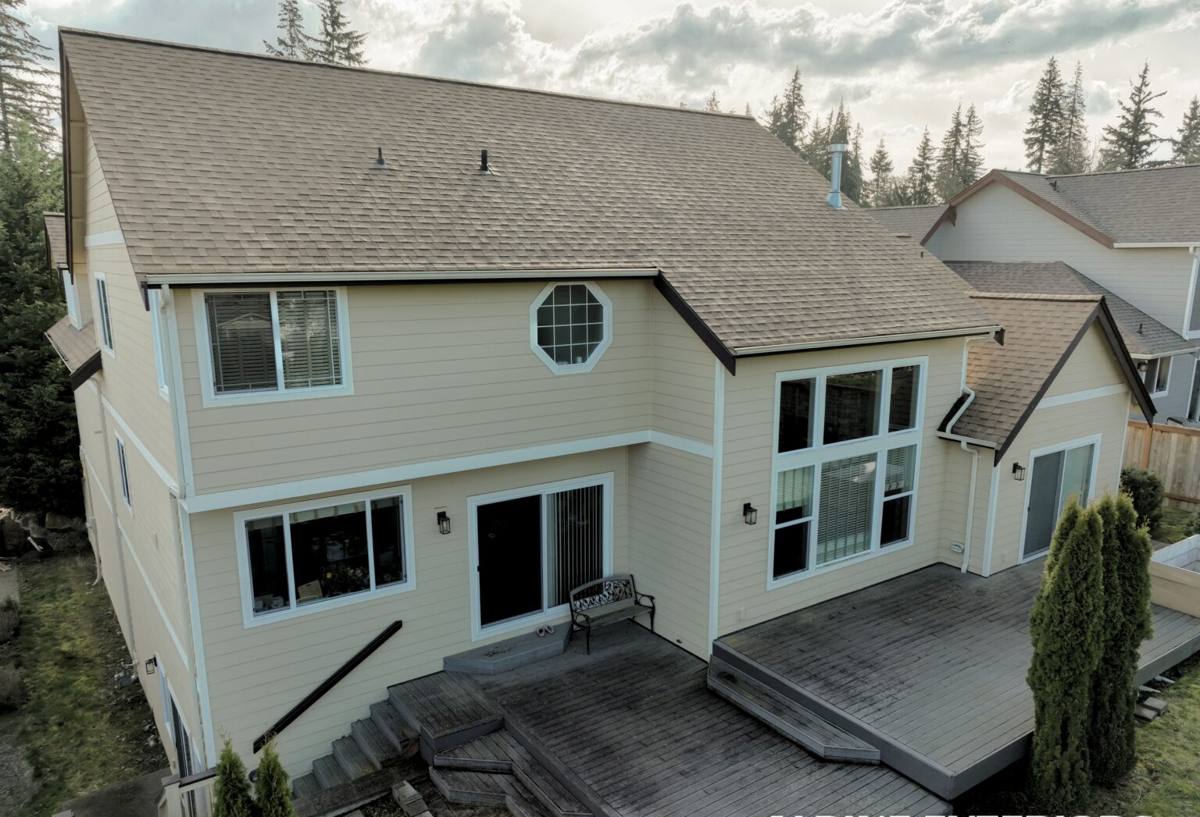
What a Correct Board & Batten Installation Actually Involves
Board and batten looks simple from the curb, but the assembly behind it does most of the real work. A correct install for a coastal Whatcom County home includes:
- A weather-resistive barrier installed and lapped correctly behind the panels, with all penetrations sealed before siding goes on
- A rainscreen air gap between the barrier and the siding, so any water that gets past the face has somewhere to drain and dry out
- Correct fastener spacing and placement per the manufacturer's engineering, not a generalized nailing pattern
- Properly flashed window and door openings, with head flashing that actually directs water out and away from the wall assembly
- Batten strips fastened through to framing, not just into the panel, so the vertical joints stay tight over time
- Sealed and back-primed cut edges, especially at corners and around penetrations, since a cut edge is the most vulnerable point on any siding board
Skipping any one of these doesn't usually show up in year one. It shows up in year eight or ten, as trapped moisture, staining, or boards that have started to cup or separate at the seams.
Why Board & Batten Fits Certain Blaine Homes So Well
Board and batten works particularly well on farmhouse-style, craftsman, and modern coastal homes, and it's a common choice for accent walls, gables, and dormers even on houses that use a different siding profile on the main body. The strong vertical lines and deep shadow reveal give a home real texture and dimension, which reads well against the muted, overcast light that's typical for this part of Washington much of the year. It's also a practical choice for homeowners who want a distinct architectural statement without switching to a completely different siding material for accents.
Why We Install Only James Hardie Fiber Cement
Our crew installs James Hardie board and batten exclusively — we do not install vinyl, LP SmartSide, Cemplank, Allura, primed spruce, or cedar board and batten. That's a deliberate standard, not a limitation of what we're capable of installing.
Fiber cement is non-combustible, which matters in a region that has seen its share of wildfire smoke and drought summers even this far north and west. James Hardie's ColorPlus factory-applied finish is baked on under controlled conditions rather than field-applied, which gives far more consistent coverage and adhesion than a job-site paint or stain job, especially on a profile like board and batten where UV and moisture hit every seam. Hardie also engineers its HardieZone products by climate: the HZ5 formulation used in wetter, freeze-thaw-prone regions like ours is built with this kind of weather in mind, rather than a one-size-fits-all product sold nationwide. Backed by a strong, transferable manufacturer warranty, it's a system we can stand behind for the long haul rather than one we have to caveat.
Wood board and batten can look great new, but it demands an ongoing repainting and sealing schedule to keep moisture out of end grain and seams — a bigger ask in a climate this damp. Vinyl and engineered wood products bring their own trade-offs in heat sensitivity, moisture behavior at seams, or long-term appearance that we're not willing to put our name behind. We'd rather install one product correctly and stand behind it than offer several and hedge on all of them.
Our Board & Batten Installation Process
- On-site assessment of the existing wall assembly, moisture conditions, and any rot or water damage that needs to be addressed before new siding goes on
- Careful removal and disposal of the old siding, with the sheathing inspected and repaired as needed
- Installation of a new weather-resistive barrier and rainscreen furring to create a drainage gap behind the panels
- Flashing of all windows, doors, and penetrations before a single piece of siding is installed
- Installation of James Hardie panels and batten strips per manufacturer fastening specifications
- Detailing of corners, trim, and transitions, with all cut edges sealed
- Final walk-through with the homeowner and job-site cleanup
Board & Batten Material Comparison
| Material | Moisture Behavior | Maintenance | Fire Rating | Long-Term Appearance |
|---|---|---|---|---|
| James Hardie Fiber Cement | Engineered HZ5 formulation for wet, freeze-thaw climates | Low — factory finish, no repainting cycle for years | Non-combustible | Holds color and profile with correct install |
| Vinyl | Can trap moisture behind panels at seams | Low, but can fade, warp, or crack over time | Combustible | Can look visibly worn or brittle with age |
| Cedar / Primed Spruce | Absorbs moisture at end grain and seams | High — regular repainting and sealing required | Combustible | Needs consistent upkeep to avoid graying, cupping |
| Engineered Wood (e.g. LP SmartSide) | Resin-treated but still wood-based at core | Moderate — field-applied finish needs upkeep | Combustible | Performance depends heavily on sealed edges and joints |
Cost Factors for a Blaine Board & Batten Project
| Factor | Why It Affects Price |
|---|---|
| Home size and number of stories | More surface area and higher wall heights mean more material and labor, plus added equipment for access |
| Tear-off and disposal of existing siding | Removing and hauling away old material adds labor and disposal costs on top of the new install |
| Trim, corner, and gable complexity | Homes with more architectural detail require more precise, time-intensive detailing around every transition |
| Site access | Tight lots, slopes, or limited driveway access can slow staging and require extra scaffolding |
| Color and finish selection | Standard ColorPlus color options are priced differently than custom or premium finishes |
Maintenance Checklist for Coastal Board & Batten Siding
- Rinse siding annually to clear salt residue and airborne grime, especially on walls facing the water
- Inspect caulking at seams, corners, and trim yearly, and have any cracked or missing sealant redone promptly
- Keep gutters and downspouts clear so water isn't overflowing onto the siding face
- Trim back vegetation and tree cover where possible to reduce shade and moisture that encourage moss and algae growth
- Address any bubbling, staining, or soft spots quickly rather than waiting — small moisture issues are far cheaper to fix early
Why Hiring a Crew That Already Works in Blaine Matters
Whatcom County's building requirements, inspection process, and typical wall assemblies aren't identical to what you'd find in other parts of the state, and a crew that already works in Blaine and the surrounding Bellingham area knows those local expectations without a learning curve on your project. Just as important, we've seen firsthand how homes on this stretch of coastline perform over time — which details hold up against the salt air and driving rain, and which ones don't. That local track record is worth more than a general contractor's siding brochure.
If you're considering board and batten siding for a home in Blaine, we're happy to come take a look, walk the exterior with you, and put together a straightforward, no-pressure estimate. There's a form below this page — reach out and we'll get a visit scheduled.