 Bellingham Roofing
 Board & Batten in Sunnyland: A Look That Needs to Actually Work Here
Board and batten has become a favorite look in Sunnyland — the vertical lines read as clean and a little more modern than standard lap siding, and it pairs well with the mix of older bungalows and newer infill homes in the neighborhood. But board and batten is also one of the least forgiving siding styles when it's installed wrong. The vertical boards create dozens of extra seams running straight up the wall, and every one of those seams is a spot where Bellingham's weather can find its way in if the details aren't right.
This page is about doing board and batten correctly for a Sunnyland home specifically — not a generic overview of the style. Whatcom County's climate, and the particular exposure homes get near Bellingham Bay, changes what "correct" means here compared to a drier inland market.
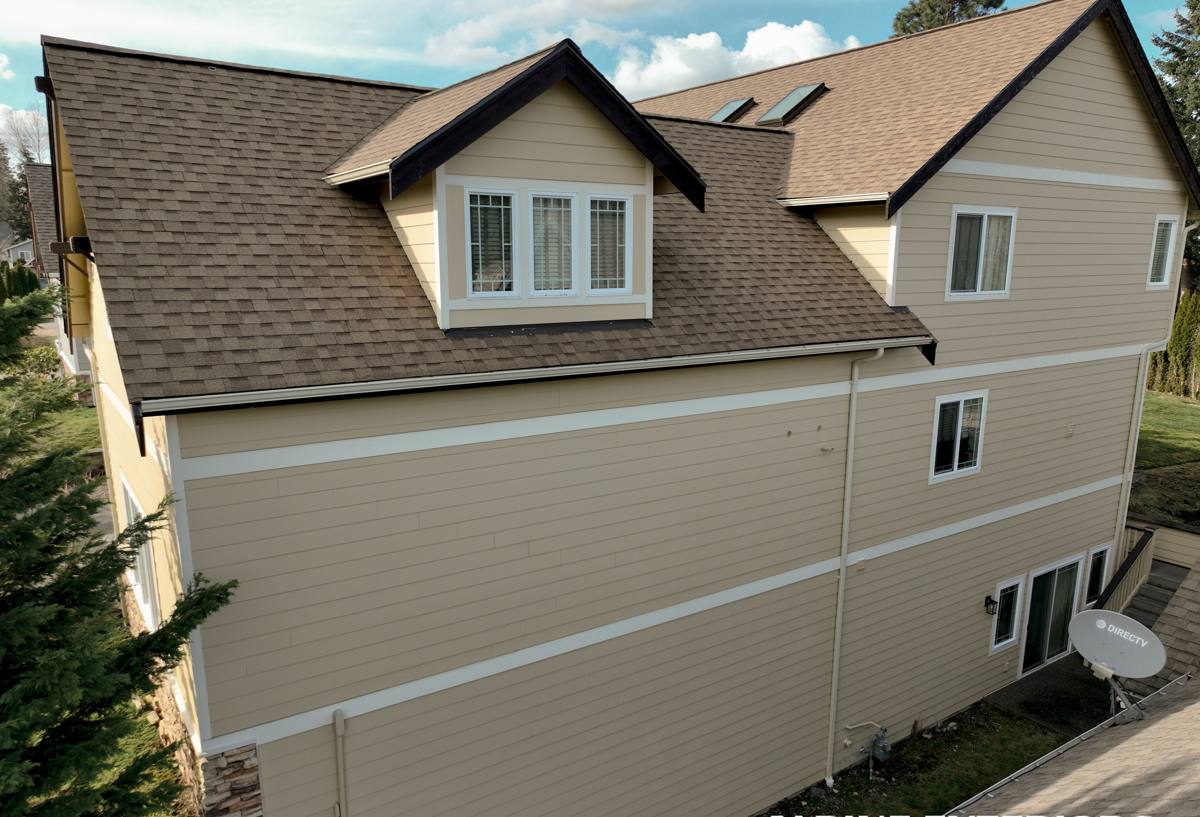
What Bellingham's Climate Does to Vertical Siding Over Time
Three things work against board and batten siding in this part of Washington, and they compound each other:
Salt Air
Homes closer to the water pick up airborne salt that accelerates corrosion on fasteners, flashing, and any metal trim components. Vertical siding has more exposed fastener lines than lap siding, so the quality of the fasteners and trim metal used matters more here than it would on a house thirty miles inland.
Driving Rain
Bellingham doesn't just get a lot of rain — a good share of it comes in sideways off wind driven storms. On a lap-sided wall, gravity does a lot of the work shedding water. On a board and batten wall, wind-driven rain can push moisture sideways into the vertical seams between boards and battens, which is exactly why the water-resistive barrier and flashing details behind the siding matter as much as the siding itself.
A Long Moss Season
Shade, moisture, and mild temperatures give moss a long growing window in Whatcom County. Moss holds water against a wall far longer than open air does, and on a north-facing or heavily shaded elevation — common on tree-lined Sunnyland lots — that constant dampness is hard on any siding material that isn't built to tolerate it.
What a Correct Board & Batten Installation Involves
The finished look of board and batten hides almost everything that determines whether it will hold up. The real work is underneath.
Water-Resistive Barrier and Rainscreen
A properly lapped and taped weather-resistive barrier goes on the wall sheathing first, with every penetration and seam sealed before a single board goes up. On homes with heavier moss or shade exposure, we build in a rainscreen gap behind the siding so any moisture that does get past the surface can drain and dry out instead of sitting against the wall.
Batten Spacing and Fastening
Batten spacing has to be planned around the wall dimensions before installation starts, not adjusted on the fly — uneven spacing is one of the most common giveaways of a rushed job. Fasteners need to land in solid framing or blocking, at the spacing and edge distance the manufacturer specifies, using corrosion-resistant fasteners appropriate for a coastal-influenced climate.
Trim, Flashing, and Terminations
Every horizontal transition — window heads, roof-to-wall intersections, the base of the wall — needs proper flashing, not just caulk. Caulk is a maintenance item; flashing is the actual water management. This is where driving rain finds shortcuts if it wasn't detailed correctly the first time.
Why We Install James Hardie Fiber Cement — Not Vinyl, Not Wood, Not LP
We only install James Hardie fiber cement siding, including in board and batten configurations. That's a deliberate standard, not a lack of options. Here's the honest comparison for the products homeowners in Sunnyland most often ask about:
| Material | What it gets right | Why we don't install it |
|---|---|---|
| Vinyl board and batten | Low upfront cost, no painting | Softens and warps in heat, becomes brittle in cold, and moss/algae staining is hard to fully clean off textured vinyl |
| LP SmartSide (engineered wood) | Lighter weight, easier to install than fiber cement | Wood-based core is more vulnerable to prolonged moisture exposure than fiber cement, which matters in a long moss season |
| Primed spruce or cedar boards | Traditional, authentic wood look | Requires ongoing repainting and sealing to survive coastal moisture; failure shows up as rot, not just cosmetics |
| James Hardie fiber cement | Non-combustible, factory-cured finish, engineered for Pacific Northwest moisture | Heavier and more installation-sensitive, but this is what we choose to install |
Fiber cement isn't magic — it still needs a correctly built wall assembly behind it to perform. But the material itself doesn't rot, doesn't attract insects, and holds its factory finish far longer in wet, shaded conditions than wood-based alternatives. That combination is why it's the only siding we put on homes.
Our Process for Sunnyland Projects
The steps don't change much from house to house, but the details we pay closest attention to are shaped by what we've seen work — and fail — on homes in this specific area.
- On-site assessment: we look at sun exposure, tree cover, and how close the wall in question sits to prevailing wind and rain direction.
- Existing wall inspection: old siding comes off and we check the sheathing and framing for hidden moisture damage before anything new goes on — this step matters more on homes that have had moss buildup for years.
- Weather barrier and rainscreen install: the water management layer goes in before any siding, with attention to shaded or low-airflow elevations.
- Board and batten installation: boards, then battens, fastened to spec with corrosion-resistant hardware.
- Trim, flashing, and caulking: all terminations sealed and flashed correctly, not just caulked over.
- Final walkthrough: we go over the finished siding with the homeowner and explain any maintenance specific to their lot's sun and shade pattern.
Style and Color Options
James Hardie's board and batten systems pair HardiePanel vertical siding with HardieTrim battens, giving a clean, consistent reveal without the board-to-board inconsistency that comes with real wood. Colors are available through Hardie's ColorPlus factory finish system, which is baked on and UV-cured rather than field-painted — a real advantage in a climate where field-applied paint has to fight moisture and mildew from day one. Board and batten also mixes well with lap siding as an accent on gables, entries, or dormers if a homeowner wants the vertical look without covering the whole house.
Maintenance in a Moss-Prone, Salt-Air Neighborhood
Fiber cement is low-maintenance, not no-maintenance. A short seasonal routine goes a long way toward protecting the investment:
- Rinse siding annually, focusing on shaded or north-facing walls where moss and algae take hold first
- Trim back tree limbs and shrubs that keep siding in constant shade or trap moisture against the wall
- Check caulking at window and trim joints every year or two and re-caulk any cracked or separated seams
- Look at ground-level boards for splashback staining, especially near sprinklers or downspouts
- Inspect after major windstorms for any loosened trim or fasteners, particularly on wind-exposed elevations
Cost Factors for Board & Batten Siding in Sunnyland
Board and batten typically costs somewhat more than standard lap siding on the same wall, mainly due to the added batten material and labor. Actual pricing depends on the specifics of the home:
| Factor | Why it affects cost |
|---|---|
| Wall condition underneath old siding | Rot or moisture damage found during removal adds repair scope before new siding goes on |
| Amount of board and batten vs. lap siding | Full board and batten costs more than using it as an accent on gables or entries |
| Trim and flashing complexity | Homes with more windows, roof intersections, and wall transitions need more detail work |
| Rainscreen assembly | Adding a drainage gap behind the siding is extra labor but pays off on shaded, moss-prone walls |
| Access and site conditions | Tight lots, mature landscaping, or multi-story walls affect labor time |
We give a firm, itemized quote after seeing the actual wall condition — not a phone estimate — because the wall assessment is what drives most of the real cost variables above.
Why a Crew That Already Works Sunnyland Matters
Every neighborhood in Bellingham has its own quirks — tree cover, sun exposure, how close homes sit to the water, how the wind tends to move through. A crew that's worked houses in Sunnyland before isn't guessing about how much shade a north wall gets or how aggressive moss can be on this side of town; they've already seen it and built the install around it. That local pattern recognition is worth more than it sounds like, because it's the difference between a siding job that looks right on install day and one that's still performing correctly five and ten winters later.
If you're considering board and batten siding for a home in Sunnyland, we're happy to take a look and give you a straightforward, no-pressure estimate — just fill out the form below.