 Bellingham Roofing
 Building Decks for Columbia's Coastal Conditions
Columbia is one of Bellingham's older, established neighborhoods, and that means a lot of the decks here were built decades ago under very different expectations than what the climate actually delivers year after year. A deck in Columbia isn't just outdoor furniture — it's a structure that sits exposed to Bellingham Bay's salt-laden air, months of driving rain off the Sound, and a moss and algae season that can stretch from October well into spring. Materials, fasteners, and framing choices that work fine in a drier inland climate often fail early here. Building a deck that actually holds up in Whatcom County means designing for the weather this neighborhood gets, not the weather a generic building guide assumes.
This page focuses specifically on new deck construction and full rebuilds for homes in Columbia. If you're dealing with an aging deck that's starting to show soft spots, rust streaks, or a slick green film underfoot, most of what's below applies directly to your situation, since those are the exact failure patterns our regional climate produces.
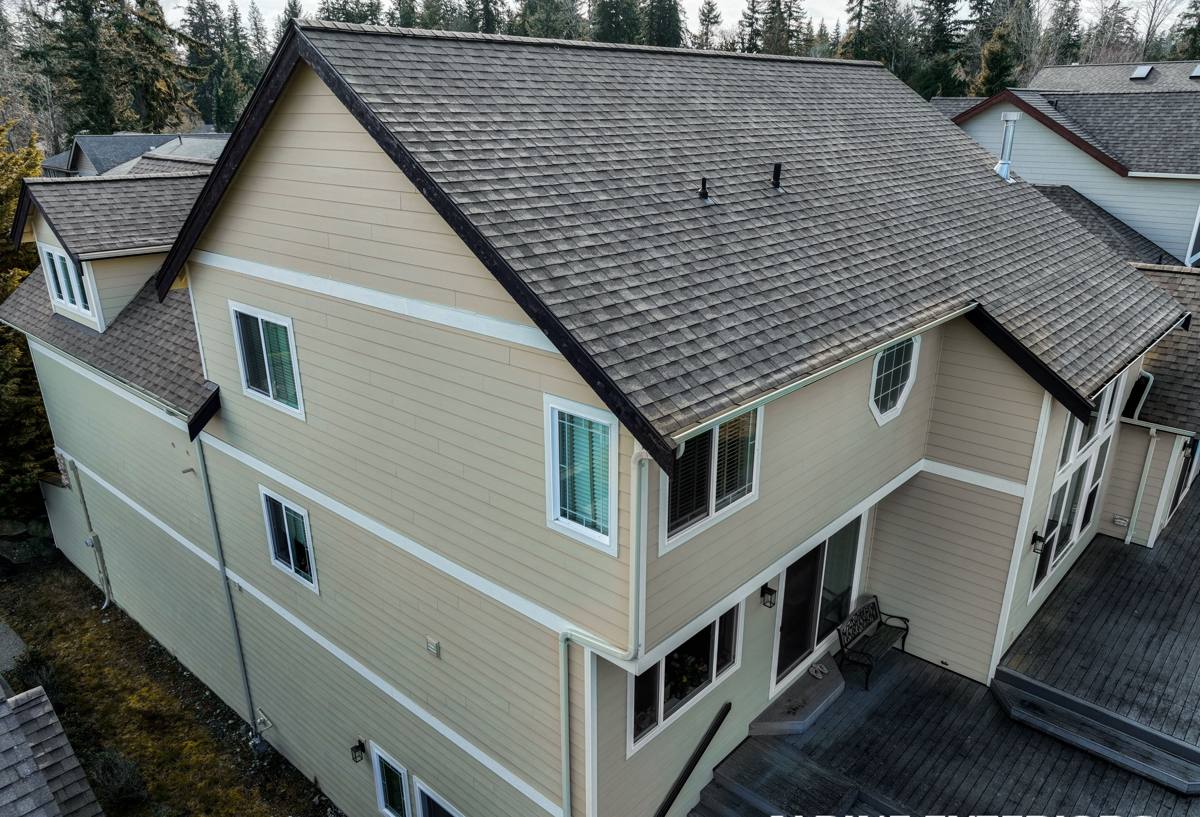
What Bellingham's Climate Does to a Deck
Three things drive nearly every deck problem we see in this part of Whatcom County, and they compound each other.
Salt Air
Proximity to Bellingham Bay means airborne salt is a constant, low-level presence, even blocks inland. Salt accelerates corrosion in fasteners, joist hangers, and railing hardware. Standard zinc-coated screws and nails that would last for years in a dry climate can start rusting and staining the wood around them within a couple of seasons near the water.
Driving Rain
Rain here doesn't just fall straight down — wind-driven rain gets pushed sideways and up under railings, ledger boards, and stair stringers. Any gap, unsealed joint, or missing flashing becomes a water entry point. Over time that moisture finds its way into end grain, fastener holes, and the ledger connection to the house, which is where we see the most serious structural rot.
Moss and Algae
Long stretches of damp, low-light weather turn deck boards, especially north-facing or shaded sections, into a growing surface for moss and algae. Beyond looking bad, this buildup holds moisture against the wood and creates a genuinely slick, dangerous walking surface — a real concern on stairs and near door thresholds.
None of this means a deck in Columbia can't last. It means the details of material selection, fastening, drainage, and finishing have to account for these three forces from day one.
Choosing Decking Material for This Climate
There's no single "best" decking material — there's a best material for your budget, your maintenance appetite, and how exposed your particular lot is to sun, shade, and weather. Here's how the common options actually perform under Bellingham conditions.
| Material | Moisture Behavior | Maintenance | Typical Lifespan Here |
|---|---|---|---|
| Pressure-treated wood | Absorbs and releases moisture; prone to cupping and splitting if not sealed | Annual cleaning and re-sealing recommended | 10-15 years with upkeep |
| Cedar | Naturally rot-resistant but still needs sealing against driving rain | Periodic cleaning and finish maintenance | 15-20 years with upkeep |
| Composite decking | Doesn't absorb water into the board itself; core matters for edge performance | Occasional washing to keep moss from taking hold | 25+ years |
| PVC/capped polymer | Fully sealed surface, best resistance to moisture and staining | Lowest maintenance of the group | 25-30+ years |
In a neighborhood like Columbia, where salt air and shade-driven moss are both realistic concerns, we lean toward recommending composite or capped polymer boards for most homeowners who want to minimize long-term upkeep. That's not a knock on wood — a well-built, well-maintained cedar or pressure-treated deck performs fine here too. It's a matter of how much sealing, cleaning, and inspection you're realistically going to keep up with. We'll walk through the honest trade-offs for your specific lot and budget rather than pushing one product line.
What a Structurally Correct Deck Requires
The decking surface is the part everyone sees, but the framing underneath is what determines whether the deck is safe and whether it lasts. This is also where a lot of older Columbia decks were built to a lower standard than current code requires.
Ledger Board Attachment
Where the deck connects to the house is the single most common failure point we find on rebuilds. It needs proper flashing that sheds water away from the house sheathing, correct lag bolts or through-bolts (not just nails or deck screws), and a drainage gap so water isn't trapped between the ledger and the siding.
Footings and Post Support
Whatcom County's frost depth and soil conditions determine how deep footings need to go. Undersized or shallow footings are a common shortcut on older builds, and they show up later as a deck that feels bouncy or has started to settle unevenly.
Joist Spacing and Hardware
Joist spacing needs to match the decking material's span rating — composite and PVC boards often require tighter joist spacing than solid wood. Galvanized or stainless joist hangers rated for coastal exposure matter more here than in a drier inland climate.
Drainage Beneath the Deck
Water needs somewhere to go once it passes through the gaps between boards. Grading, or in some cases a below-deck drainage system for lower decks close to grade, keeps moisture from pooling against posts and framing.
Our Deck Building Process
- On-site assessment — We look at sun and shade exposure, drainage patterns, proximity to the water side of the property, and the condition of anything being replaced.
- Design and material selection — We talk through decking material, railing style, and layout based on how you actually use the space and how much maintenance you want to take on.
- Permitting — We handle the permit application with the City of Bellingham or Whatcom County, as applicable, and make sure the design meets current structural code, including height and railing requirements.
- Demolition, if needed — Removal of the old deck, with an honest look at whether the existing ledger, footings, or posts can be reused or need to be replaced.
- Framing — Footings, posts, beams, and joists built to current code with corrosion-resistant hardware appropriate for our air quality near the bay.
- Decking, railing, and stairs — Installed per manufacturer spacing and fastening specs, with attention to end-grain sealing and flashing at every transition.
- Final walkthrough — We go over care instructions specific to the material you chose, so you know what upkeep, if any, is expected.
Railings, Fasteners, and Hardware That Hold Up Near the Water
Hardware choice matters more here than in most inland markets. Standard electro-galvanized fasteners can start showing rust bleed within a year or two of consistent salt air exposure. For decks in Columbia, we typically spec stainless steel or heavy hot-dip galvanized fasteners and hidden fastening systems rated for coastal use, along with railing hardware finished to resist corrosion rather than just standard exterior-grade coatings. It costs a bit more up front. It's substantially cheaper than replacing rusted-out hardware and the stained wood around it five years in.
Realistic Maintenance by Material
Every deck needs some level of care — the differences are in how much and how often. Use this as a general guide for what you're signing up for with each option:
- Pressure-treated wood: Annual wash, inspect for cupping or splitting, re-seal every 1-2 years, check fastener heads for corrosion staining.
- Cedar: Wash annually, re-oil or re-stain every 2-3 years depending on sun exposure, watch for graying and moss in shaded areas.
- Composite: Wash 1-2 times a year to prevent moss and pollen buildup, check board ends and fastener points, no sealing or staining required.
- PVC/capped polymer: Occasional rinse, minimal inspection needs, most resistant to moss and staining of the group.
- All materials: Keep gutters and downspouts near the deck clear so runoff isn't dumping directly onto the structure.
Permits and Local Code in Whatcom County
Most new decks and significant deck replacements require a building permit, with specific requirements around railing height, guard spacing, and structural connections tied to current code. Requirements can differ slightly depending on whether your property falls under City of Bellingham jurisdiction or unincorporated Whatcom County, and whether you're near any shoreline setback zones given Columbia's proximity to the bay. We handle this as part of the project rather than leaving it for the homeowner to sort out, since a deck built without the correct permit can create problems later at resale or insurance time.
Why a Crew That Already Works Columbia Matters
A contractor who builds decks across a wide range of climates will default to generic specs — standard fasteners, standard sealing schedules, standard framing details. A crew that regularly works in Columbia and along Bellingham's waterfront-adjacent neighborhoods already knows which fastener grades hold up to this air, which framing details actually keep driving rain out of a ledger connection, and which decking materials are worth the added cost here versus where you can save money without regretting it. That local pattern recognition is the difference between a deck that needs major hardware repairs in year four and one that's still solid at year twenty.
If you're planning a new deck or replacing one that's showing its age, we're happy to come take a look and talk through honest options for your specific property — no pressure, no upsell script. Use the form below to request a free estimate.