 Bellingham Roofing
 Windows Built for Cordata's Weather, Not Just the Showroom
Cordata sits close enough to the Salish Sea that salt-laden air, wind-driven rain, and long stretches of gray, damp weather are just part of owning a home here. Windows in this part of Bellingham don't fail because homeowners picked an ugly color or the wrong grid pattern. They fail because moisture worked its way into places it was never supposed to reach, over years, quietly, until a sill goes soft or a frame starts fogging between the panes. A custom window job done right in Cordata has to account for that from the start, not patch around it later.
"Custom" doesn't have to mean exotic or expensive. It means the window is sized, flashed, and specified for your actual opening and your actual exposure, instead of forcing a stock unit into a rough opening and hoping the trim covers the gaps. On a lot of Cordata homes, especially older ones with settled framing or additions built over multiple decades, that precision is the difference between a window that lasts twenty-plus years and one that's causing problems again in five.
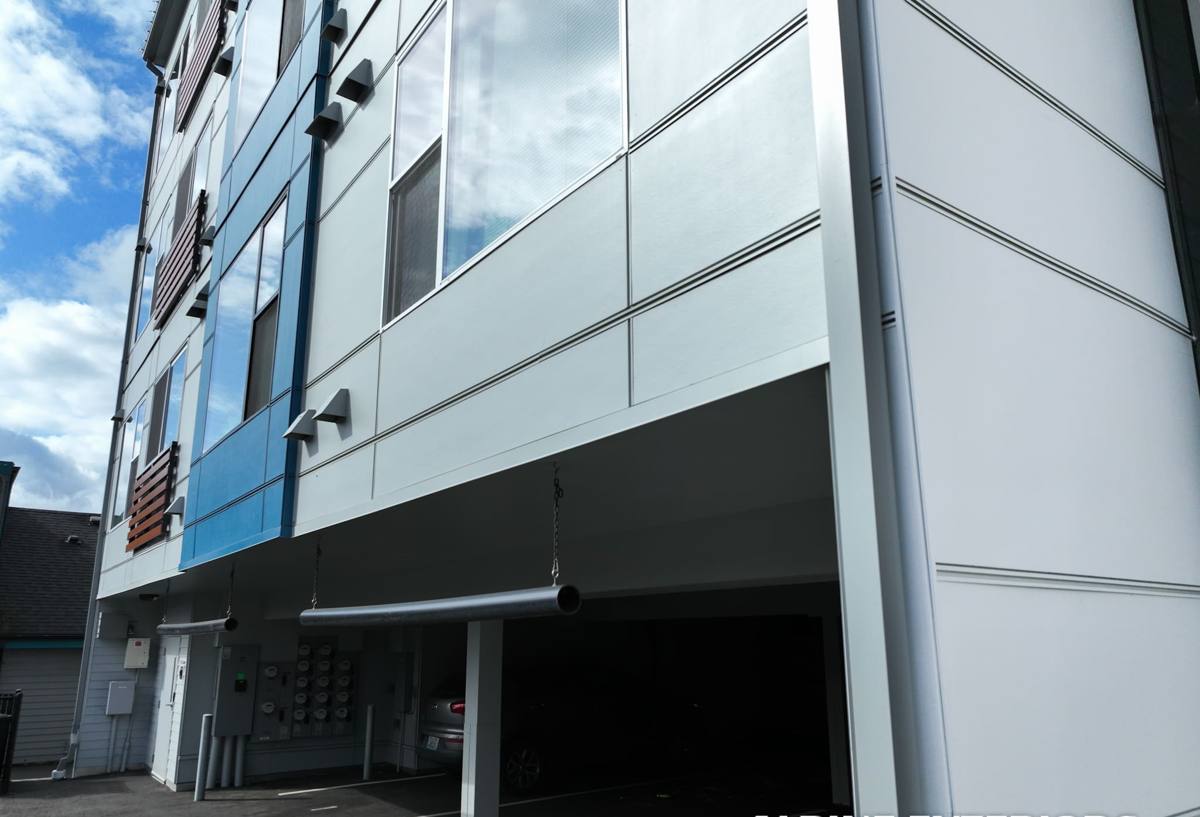
What Whatcom County's Climate Actually Does to Windows
Understanding the failure modes helps explain why the details matter more here than in a drier climate.
Salt Air and Metal Components
Proximity to Bellingham Bay means airborne salt reaches further inland than people expect, especially with west and southwest wind. Salt accelerates corrosion on hardware, hinges, and uncoated fasteners. Cheap or poorly finished hardware corrodes and seizes years before the glass or frame would otherwise need attention.
Driving Rain and Wind-Driven Water
Rain in this region doesn't just fall straight down — winter storms push it sideways into wall assemblies. A window that's properly flashed sheds that water past the opening. A window that's caulked-and-hoped instead of flashed will eventually let water track behind the trim, into the sheathing, and toward the framing where you can't see it until there's a stain or soft spot on the interior.
Moss, Algae, and Prolonged Dampness
Bellingham's long wet season keeps north-facing and shaded elevations damp for months at a time. That dampness supports moss and algae growth on sills, sashes, and nearby trim, which holds moisture against the surface even longer. Wood components that aren't properly primed and sealed on all six sides are especially vulnerable to this cycle.
Condensation From Temperature Swings
Cordata sees enough temperature swing between summer afternoons and damp winter mornings that interior condensation is a real, common complaint — especially on older single-pane or early double-pane units. Persistent condensation between panes usually means a failed seal, not a cleaning problem.
Signs a Cordata Home Needs Window Attention
- Fog or moisture trapped between panes of a double- or triple-pane window — the seal has failed and the unit needs replacement, not repair
- Soft, spongy, or discolored wood at the sill or lower corners of the frame
- Visible gaps or daylight around the frame where it meets the siding or trim
- Windows that are noticeably harder to open, close, or lock than they used to be
- Drafts you can feel near the frame on a windy day, even with the window latched
- Paint that's peeling, bubbling, or cracking specifically around the window opening and nowhere else on the wall
- Rising energy bills without any other obvious cause
- Visible moss, algae, or persistent black staining on sills and lower trim
What a Correct Window Job Involves
Replacing or installing a window is more than swapping a unit into an existing hole. Done properly, the work happens in a specific order, and skipping steps is how call-backs happen.
Assessing the Opening
Before anything is ordered, we check the rough opening for square, level, and signs of existing water damage. If there's rot or compromised sheathing behind the old window, that gets addressed before a new one goes in — installing a new window over damaged framing just hides the problem for another owner to find later.
Flashing and Weatherproofing
This is the step that matters most in our climate and the one that's easiest to shortcut. Proper flashing directs water that reaches the opening back out and down, over the exterior finish, rather than letting it pool at the sill or migrate into the wall cavity. Sill pan flashing, properly lapped house wrap, and correctly sequenced sealant are not optional extras here — they're the difference between a window that holds up through a wet Whatcom County winter and one that doesn't.
Setting and Sealing the Unit
The window gets shimmed level and plumb, fastened per manufacturer spec, and insulated around the frame without over-packing (which can bow the frame and cause operational problems). Interior and exterior sealant beads go in specific locations designed to let any incidental moisture drain rather than get trapped.
Trim, Hardware, and Final Check
Exterior and interior trim gets fitted and sealed, hardware is checked for smooth operation, and the unit is tested for square operation and a tight seal before we consider the job done.
Choosing Materials and Glass for This Climate
There's no single "best" window material — the right choice depends on the specific wall, exposure, and budget. Here's how the common options compare for a coastal Whatcom County home.
| Frame Material | Moisture Resistance | Maintenance | Typical Fit For Cordata Homes |
|---|---|---|---|
| Vinyl | Good — won't rot, low corrosion risk | Low | Strong value option for most replacement projects |
| Fiberglass | Very good — dimensionally stable in temperature swings | Low | Good fit for larger openings and exposed elevations |
| Wood (clad exterior) | Depends heavily on cladding and detailing quality | Moderate to high | Best where interior wood appearance matters; needs disciplined maintenance on exposed sides |
| Aluminum | Prone to condensation without thermal breaks | Moderate | Generally we steer away from it for primary residential openings here — it conducts cold and moisture too readily for this climate without added cost for thermal breaks |
For glass, double-pane with a low-E coating and an argon fill is the practical baseline for this area — it manages both winter heat loss and the condensation risk that comes with our humidity. Triple-pane makes sense on north-facing walls, rooms with chronic condensation history, or where street or highway noise is a factor, but it's not automatically worth the added cost on every opening.
Why We're Selective About Certain Products
Not every window on the market gets our recommendation, and that's a deliberate professional standard rather than a knock on any single brand. Some economy-tier units use thinner vinyl profiles or simplified weep systems that work fine in a mild, dry climate but struggle with the volume of driving rain and prolonged dampness Whatcom County sees. We'd rather spec a unit with a proven drainage design and a warranty structure that actually covers seal failure than install something cheaper that turns into a callback in three winters.
Our Process for a Cordata Window Project
- On-site assessment: We look at each opening individually — exposure, existing condition, framing, and how water currently moves around that part of the house.
- Honest recommendation: We'll tell you which openings genuinely need replacement now, which can wait, and which just need better sealing or minor repair.
- Written estimate: Clear pricing by opening, with material options explained in plain terms — no pressure to upsize the whole project if it isn't needed.
- Scheduling around weather: We plan install windows with an eye on the forecast, since an open wall during a wind-driven rain event is exactly the situation we're trying to prevent for you long-term.
- Installation: Proper flashing, sealing, and setting as described above — no shortcuts on the steps that don't show once trim goes back on.
- Final walkthrough: We check operation, seals, and cleanup with you before calling it finished.
Why Local Experience in Cordata and Bellingham Matters
A crew that works this specific area regularly knows which elevations catch the worst of the wind-driven rain, how moss establishes itself on north-facing trim, and how older Whatcom County homes were typically built and where they tend to have hidden moisture issues. That's knowledge you build by working the same streets and the same weather patterns season after season — not something a crew passing through on a one-off job brings with them. It shows up in small decisions: how much flashing overlap to use, which sealant holds up to our humidity, and when a "quick fix" caulk job is actually going to trap water instead of stopping it.
We also stand behind the work with our own labor warranty in addition to manufacturer coverage on the units themselves, so if something isn't right, you're not stuck chasing two different companies to get it resolved.
Ready to Talk About Your Windows?
If you're dealing with foggy glass, drafts, sticking sashes, or you're just planning ahead before the next wet season, we're happy to take a look. Use the form below to request a free, no-pressure estimate — we'll walk your home's openings with you and give you a straight answer on what does and doesn't need attention.