 Bellingham Roofing
 Building Decks for Columbia That Actually Hold Up
Columbia is one of Bellingham's older, well-established neighborhoods, with a mix of homes ranging from early-1900s craftsman-style houses to mid-century remodels and newer infill construction. A lot of these homes already have a deck, or space for one, but the decks that were built even 15-20 years ago rarely account for how hard the Pacific Northwest marine climate is on exposed wood, fasteners, and framing. A custom deck built for Columbia needs to do more than look good for a season — it needs to shed water fast, resist moss and algae, and stand up to the salt-laden air that drifts in off Bellingham Bay.
We build and replace decks for homeowners across Bellingham and Whatcom County, and Columbia's combination of tree cover, older lot layouts, and proximity to the water gives it its own set of challenges. This page walks through what actually matters when you're planning a custom deck in this part of town — not generic deck-building advice, but the specifics that determine whether your deck is still solid in ten years or soft and slippery in three.
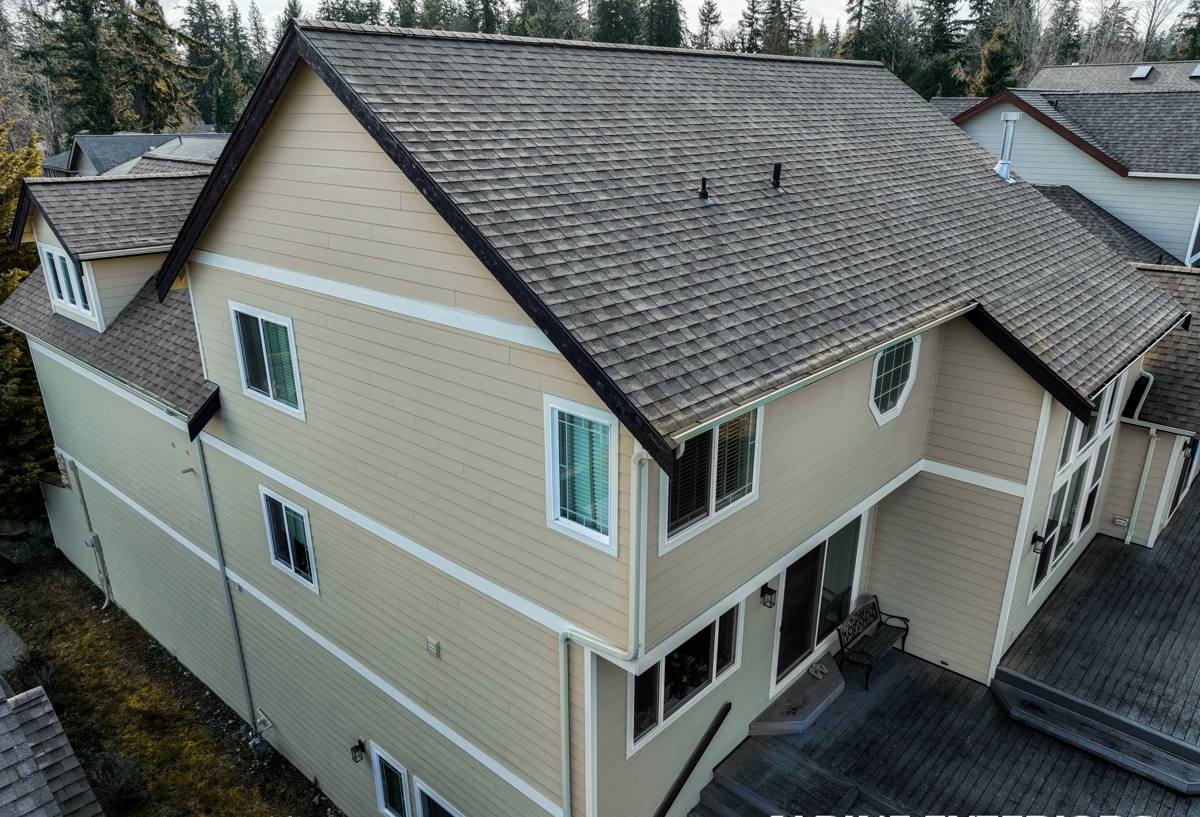
What Columbia's Climate Does to an Outdoor Deck
Whatcom County gets a long wet season, and Columbia's mature tree canopy means a lot of decks sit in partial shade for much of the year. That combination — moisture plus shade — is exactly what moss and algae need to take hold. Add in the salt air common to homes closer to the bay, and you've got three separate forces working against a deck at the same time:
Driving Rain and Standing Water
Wind-driven rain gets up under railings, into end-grain cuts, and behind ledger boards if flashing wasn't done correctly the first time. Water that doesn't drain off quickly is the single biggest reason decks rot from the inside out before the surface ever looks bad.
Moss and Algae Buildup
Shaded, damp decking is a moss magnet. Beyond looking neglected, moss holds moisture against the board surface and turns decking — especially smooth composite or painted wood — dangerously slick underfoot during the wetter months of the year.
Salt Air and Corrosion
Homes nearer Bellingham Bay deal with airborne salt that accelerates corrosion on fasteners, brackets, and hardware. A deck built with the wrong grade of screws or joist hangers can develop rust streaks and weakened connections well before the wood itself is a problem.
Choosing a Decking Material That Fits Columbia's Conditions
There's no single "best" decking material — the right choice depends on how much sun the deck gets, how much upkeep you want to do, and your budget. Here's how the common options compare for a shaded, wet Bellingham lot:
| Material | Moisture Performance | Maintenance | Typical Lifespan |
|---|---|---|---|
| Cedar | Naturally rot- and insect-resistant, but still needs sealing to shed water well | Annual cleaning and re-staining or sealing recommended | 15-20 years with upkeep |
| Pressure-treated fir/pine | Good structural performance when properly flashed; more prone to surface checking over time | Regular cleaning, periodic sealing | 15-20 years for framing, less for decking surface |
| Composite decking | Excellent moisture resistance on the board itself; still needs proper drainage underneath | Periodic washing to prevent moss/algae film; no sealing or staining | 25-30 years, varies by product warranty |
| Tropical hardwoods (e.g., ipe) | Very dense and rot-resistant, but demanding to install correctly | Oiling recommended to maintain color; low rot maintenance | 25+ years |
For a shaded Columbia lot, we often steer homeowners toward composite decking or cedar depending on budget and the look they want. Composite handles moss season with less fuss, while cedar keeps a more traditional Pacific Northwest look but asks for a bit more attention year to year. Whichever material you land on, we'll walk you through the honest maintenance expectations before you commit — not just the sales pitch.
The Structural Details That Actually Matter
The decking surface is the part everyone sees, but the framing underneath is what determines whether the deck is still safe in fifteen years. This is where a lot of older decks in this area start to fail, usually from shortcuts that weren't visible on installation day.
Ledger Flashing and Attachment
Where the deck attaches to the house is the most common failure point we see on rebuilds. Proper flashing — installed correctly against the siding and sealed against wind-driven rain — is not optional in this climate. A poorly flashed ledger board lets water track directly into the house framing.
Footings and Post Bases
Whatcom County's wet, sometimes clay-heavy soils mean footings need to be sized and placed correctly, with post bases that keep wood off standing water and off direct soil contact.
Fasteners and Hardware Grade
Given the salt air that reaches parts of Columbia, we use corrosion-resistant, coated or stainless fasteners and structural hardware rated for exterior, coastal-adjacent exposure. Standard interior-grade screws and generic joist hangers are a false economy — they're often the first thing to fail, and they fail invisibly, inside the structure.
Airflow Underneath
Decks built low to the ground or over patios with poor ventilation trap moisture underneath, which accelerates rot in joists and beams even when the surface boards look fine.
Railings, Stairs, and Code Requirements
Any deck built or replaced in Bellingham needs to meet current building code, and permitting is handled through the City of Bellingham (or Whatcom County if the property falls outside city limits). Code requirements that most often catch homeowners off guard include:
- Guardrails are required once a deck surface is a certain height above grade, with a minimum height requirement
- Baluster spacing must be narrow enough that a small child can't pass through
- Stair rise and run have to stay within a consistent range, and handrails are required above a minimum number of risers
- Footing depth and size must match the load and soil conditions for your specific site
We pull permits and handle inspections as part of our process, so you're not left trying to interpret code language or schedule city inspections yourself.
Moss, Algae, and Keeping a Deck Looking Good Long-Term
Even a well-built deck needs some seasonal attention in a climate like this. The goal isn't to eliminate moss and algae entirely — that's not realistic under mature trees in Whatcom County — it's to build the deck so buildup doesn't turn into rot or a safety hazard.
That starts with board spacing that lets water drain through rather than pool on the surface, and it continues with a simple annual routine: a deck wash before the wettest months set in, clearing debris out of the gaps between boards, and keeping gutters and downspouts nearby directed away from the deck footprint rather than dumping onto it.
Our Process for a Columbia Deck Project
- On-site walkthrough — we look at your existing deck or the space where a new one is planned, check drainage, sun exposure, and how the deck will tie into the house.
- Design and material selection — we go over decking, railing, and layout options with honest trade-offs for your budget and how much upkeep you want to take on.
- Permitting — we handle the paperwork and inspections with the City of Bellingham or Whatcom County, whichever applies to your address.
- Build — framing, flashing, and fastening done to hold up under this region's rain and salt exposure, not just to pass a quick visual check.
- Final walkthrough — we go over maintenance expectations so you know exactly what upkeep, if any, your new deck needs going forward.
Signs Your Existing Deck Needs More Than a Cleaning
If you're not sure whether your current deck needs repair or full replacement, look for these warning signs before booking any outdoor gatherings on it:
- Soft or spongy spots when you walk across the boards
- Rust streaks running down from screw heads or metal brackets
- Gaps or separation where the deck meets the house
- Wobbly railings or posts that shift when pushed
- Persistent green or black film that comes back within days of cleaning
- Visible daylight or gaps around footings or post bases
Any one of these on its own might just need a repair. Several at once usually means the structure has been compromised and it's worth a full inspection before deciding what's next.
Why Hire a Crew That Already Works in Columbia
Building a deck that lasts in this part of Bellingham isn't about following a generic national how-to guide — it's about knowing how this specific climate, with its combination of shade, rainfall, and salt air, wears on materials over years, not just months. We've worked on homes throughout Columbia and the surrounding Bellingham neighborhoods, and that means we already know which details get skipped on cheaper builds and which ones actually matter here: the flashing behind the ledger, the fastener grade, the drainage under the frame.
If you're planning a new deck or trying to figure out whether your current one is worth saving, we're happy to take a look. Reach out for a free, no-pressure estimate using the form below, and we'll give you a straight answer about what your project actually needs.