 Bellingham Roofing
 South Hill's Climate Is Harder on Windows Than Most People Realize
South Hill sits up above much of Bellingham, with a mix of older homes on tree-shaded lots and newer construction closer to the ridge. That elevation and exposure come with a trade-off. The same position that gives South Hill homes their views and their character also puts windows in the direct path of weather moving in off Bellingham Bay. Over years, that exposure adds up in ways that are easy to miss until a window is already failing.
Salt Air Off the Bay
Bellingham's proximity to the water means a steady, low-level presence of salt in the air, especially on homes with any exposure toward the bay. Salt air is corrosive to exposed metal hardware, aluminum components, and unprotected fasteners. It doesn't happen overnight, but over a decade or two it will pit hardware, dull finishes, and accelerate the breakdown of weatherstripping and seals faster than it would happen inland.
Driving Rain and Wind
Whatcom County gets a lot of rain, and a fair amount of it doesn't fall straight down. Wind-driven rain off the Sound and the bay pushes water sideways into window assemblies, testing every seal, flashing detail, and drainage path a window has. A window that's fine in a light sprinkle can still leak in a sideways November storm if the installation details weren't done right the first time.
A Long, Damp Moss Season
Bellingham's moss season runs long — shaded, north-facing, and tree-covered spots on South Hill lots can stay damp for months at a stretch. Moss and algae don't just grow on roofs and siding; they take hold on sills, in corners of frames, and anywhere water sits instead of draining. That constant moisture is exactly the environment that rots wood trim, breaks down caulk, and gives mold a foothold around window openings that aren't sealed and drained properly.
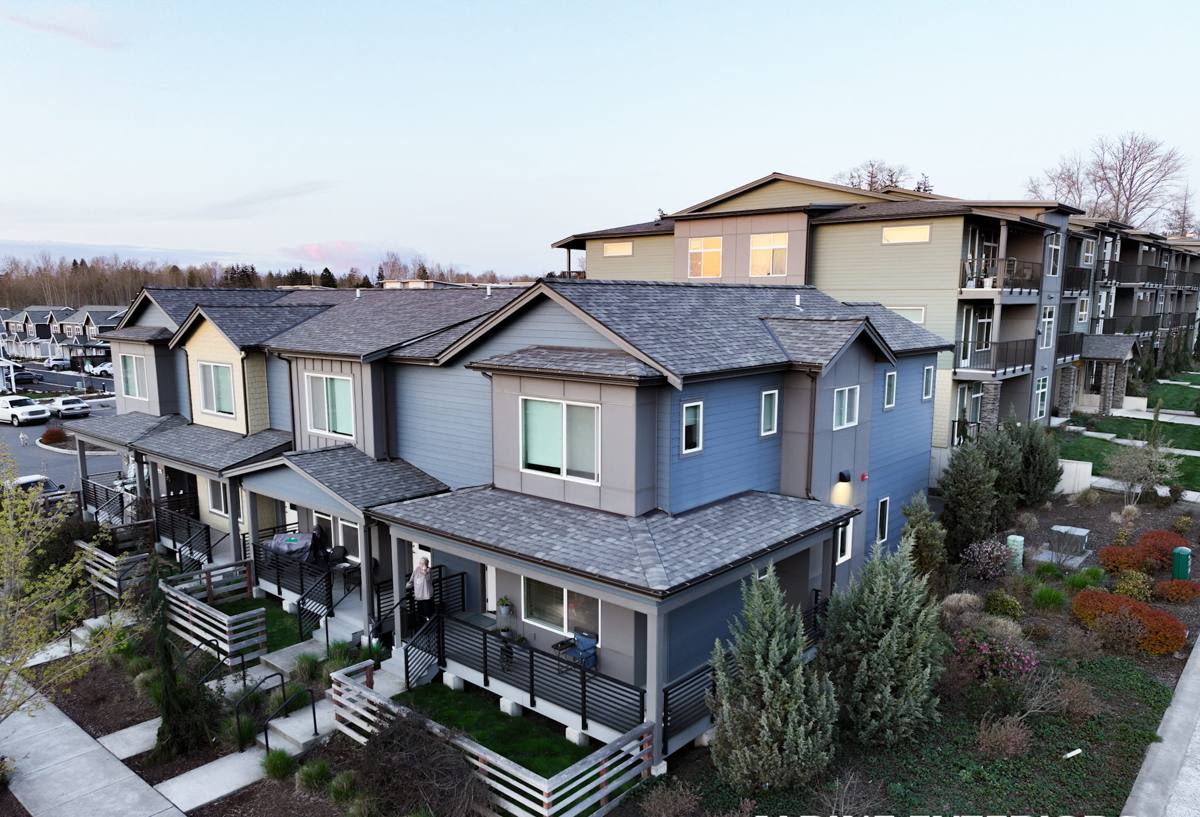
The Particular Challenge of South Hill's Older Housing Stock
A lot of South Hill homes are older than the Bellingham average, with original wood window openings, settled framing, and trim details that don't match what comes standard on off-the-shelf replacement windows today. That's the core reason custom windows matter here more than in a newer subdivision. An opening that's a half-inch out of square, or a sill that's been built up with decades of paint, needs a window made to fit that specific opening — not a standard size forced into it with extra caulk and shims.
Homeowners on South Hill are also often working to preserve some of the character of an older house — original trim profiles, sightlines, or a particular look from the street — while still getting real thermal and weather performance out of the windows themselves. That's a legitimate and common goal, and it's exactly the kind of project where custom-sized, custom-detailed windows do a better job than a generic retrofit.
Signs Your Windows Are Past Their Useful Life
Not every problem window needs full replacement right away, but in this climate, small issues tend to compound. Look for:
- Fogging or moisture trapped between panes of double-glazed units — a sign the seal has failed
- Soft, spongy, or discolored wood at the sill or lower corners of the frame
- Drafts you can feel with a hand near the frame on a windy day
- Windows that are hard to open, close, or lock, especially after damp weather
- Visible gaps between the frame and the siding or trim
- Green or black growth building up in the corners of the frame or on the sill, even after cleaning
- Paint that's bubbling or peeling specifically around the window opening, rather than the wall generally
- A noticeable rise in heating costs with no other explanation
Any one of these on its own might just need attention. Several at once, especially on a north- or west-facing wall, usually means the window and its surrounding assembly are past a point where patching makes sense.
What a Correct Custom Window Installation Actually Involves
The window unit itself is only part of the job. In a climate that throws driving rain and long stretches of dampness at a house, the installation details matter as much as the product. A correct job includes:
- Accurate measurement of the actual opening, not an assumed standard size, especially in older homes where openings have shifted over time
- Removal of the old unit and inspection of the framing underneath for hidden rot or water damage before anything new goes in
- Proper flashing that directs water down and away from the opening, integrated correctly with the existing siding or trim
- Sealing and insulating the gap between the new frame and the rough opening — not just caulking the visible seam
- Weep holes and drainage paths left clear so any water that does get in has somewhere to go
- Interior and exterior trim work finished to match the surrounding wall, so the opening isn't a weak point for years to come
Skipping any one of these steps is usually invisible on installation day and only shows up as a leak, a draft, or rot a year or two later — often after the workmanship warranty has expired.
Choosing the Right Window Material for This Exposure
There's no single "best" window material for every South Hill home — it depends on exposure, budget, and how much maintenance a homeowner wants to take on. Here's how the common options compare in a salt-air, high-rainfall climate:
| Material | How It Handles This Climate | Maintenance |
|---|---|---|
| Vinyl | Resists moisture and salt corrosion well; won't rot; performance depends heavily on installation quality | Low — occasional cleaning, no painting or sealing needed |
| Fiberglass | Very stable in temperature swings and moisture; strong resistance to corrosion and warping | Low — durable finish, minimal upkeep |
| Wood-clad | Good insulating properties and classic appearance; the cladding protects the wood, but any breach in that cladding lets moisture reach the wood underneath | Moderate — exterior cladding is low-maintenance, but any damage needs prompt attention |
| Solid wood | Traditional look that suits many older South Hill homes; most vulnerable to the region's rain and moss exposure without diligent upkeep | High — regular painting/sealing, especially on shaded or north-facing walls |
| Aluminum | Strong and slim-profile, but bare aluminum conducts cold and is more prone to corrosion pitting in salt air over time | Moderate — thermally broken and coated versions hold up better than bare aluminum |
For homes with real salt exposure or heavy shade and moss buildup, we generally steer homeowners toward vinyl or fiberglass for the lowest long-term maintenance burden, or a well-cladded wood window when matching an original historic profile matters more than minimizing upkeep. Solid wood and bare aluminum aren't off the table — they're just a bigger ongoing commitment in this specific climate, and we'll tell you that honestly up front rather than after the sale.
Cost Factors Worth Understanding
Custom window pricing varies a lot based on size, material, and the condition of the existing opening, so we won't quote a number that doesn't mean anything without seeing the house. What actually drives the cost:
| Factor | Why It Matters |
|---|---|
| Window size and number of openings | Larger units and full-house replacements naturally cost more than a single small window |
| Material choice | Vinyl is typically the most affordable; fiberglass and wood-clad run higher for their added durability or appearance |
| Condition of the existing opening | Hidden rot or out-of-square framing found during removal adds repair time before the new window can go in |
| Glass and performance options | Double vs. triple glazing, low-E coatings, and gas fills all affect price and long-term energy performance |
| Trim and match-to-existing work | Matching historic trim profiles or unusual shapes takes more fabrication and labor time than a standard install |
As a broad range, homeowners should expect anywhere from several hundred dollars per window on the simple end to well over a thousand per window for larger units, premium materials, or extensive trim work. The only way to get a real number is a walkthrough of the actual openings.
Our Process for South Hill Homeowners
We keep the process straightforward and give you clear information before you commit to anything:
- On-site walkthrough: We look at each opening, check the surrounding framing and trim, and talk through what you're trying to accomplish — energy performance, matching an existing look, or both.
- Honest recommendation: We'll tell you what material and configuration make sense for that specific wall and exposure, including trade-offs, not just the option with the highest margin.
- Custom measurement and ordering: Every opening is measured individually rather than assumed, which matters in older homes where nothing is perfectly standard anymore.
- Careful removal and inspection: Old units come out cleanly, and we check the framing underneath before anything new goes in — this is where hidden rot from years of moss and moisture gets caught.
- Installation with full weatherproofing details: Flashing, sealing, insulation, and drainage are done as a complete system, not an afterthought.
- Finish work and cleanup: Interior and exterior trim are finished to match, and the site is left clean.
Why It Matters to Hire a Crew That Already Works South Hill
A crew that regularly works South Hill and the surrounding Bellingham neighborhoods has already seen what this specific exposure does to windows over time — which walls take the worst of the driving rain, which older framing styles need extra attention, and how much of a difference proper flashing detail makes once moss season sets in. That's not something a crew coming from outside the area, or one that mostly works newer subdivisions, necessarily has a feel for.
It also matters for practical reasons: familiarity with the kind of older openings common on South Hill means fewer surprises during removal, more accurate estimates up front, and a better match between the new window and the character of the house. Whatcom County's building requirements and typical inspection expectations are also something a local crew navigates routinely rather than learning on your project.
Living With Your Windows: Ongoing Care in This Climate
Even a correctly installed, well-chosen window benefits from a little seasonal attention in this climate:
- Clear moss and debris from sills and tracks before it has a chance to hold moisture against the frame
- Check weep holes each fall to make sure they're not blocked before the rainy season sets in
- Wipe down hardware periodically if the home has any bay-facing exposure, to slow salt-related corrosion
- Watch for any soft spots or paint failure at the sill each spring, since that's the earliest sign of trouble
None of this is a heavy burden, but skipping it is how a good window installation loses years off its useful life in a climate that doesn't give windows much of a break.
If you're noticing drafts, fogged glass, or wear on your windows and want a straight answer about what's actually going on, we're happy to come take a look. There's no pressure and no obligation — just an honest read on your windows and, if it makes sense, a clear estimate for fixing it right. The form below is the easiest way to get started.