 Bellingham Roofing
 Deck Repair Built for Cordata's Climate
A deck in Cordata takes a steady beating that has nothing to do with how it's used and everything to do with where it sits. Salt-tinged air off the Sound works into fasteners and metal connectors year-round. Driving rain doesn't just fall on a deck surface, it gets pushed under rail caps, into board gaps, and against ledger boards where builders don't always expect water to travel. And a long, damp moss season settles into shaded boards and stays there for months, turning a walking surface slick and holding moisture against wood that should be drying out between storms. None of that means a deck in Cordata is doomed to fail early. It means repairs done here need to account for those specific stresses rather than treating every deck problem as a simple board swap.
This page covers what deck repair actually involves for a Cordata home — the structural issues that show up most in this climate, how to tell a real repair from a cosmetic patch, and how our process works from first inspection to final walkthrough.
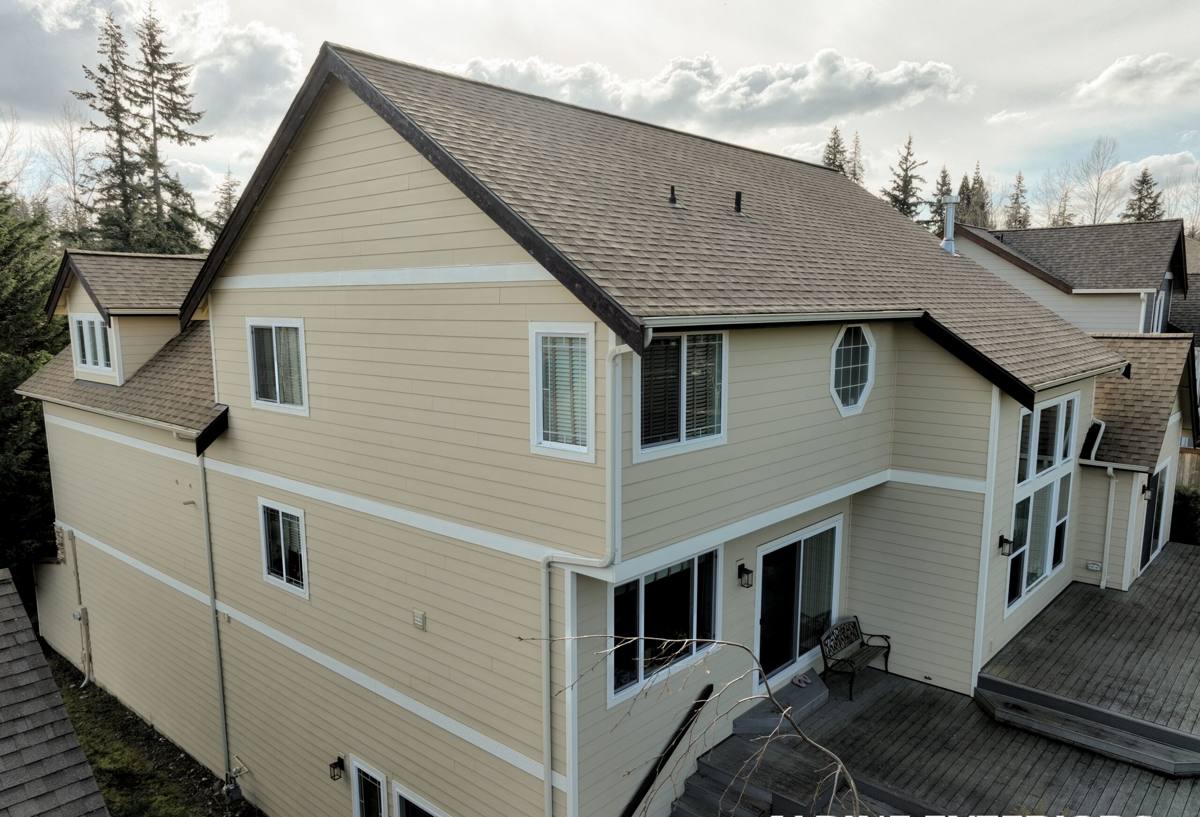
What Bellingham's Climate Does to a Deck Over Time
Most deck problems in this part of Whatcom County trace back to moisture that had somewhere to hide. A deck built on a sunny, exposed lot dries out between rain events and tends to age slowly and predictably. A deck with shaded corners, tight-to-the-house framing, or limited airflow underneath holds water far longer, and that's where rot, corrosion, and moss take hold first.
The Specific Stresses at Play
- Wind-driven rain intrusion: Rain pushed sideways and upward finds gaps at rail-to-post connections, stair stringers, and ledger flashing that a straight-down rain would never reach.
- Corrosion on fasteners and connectors: Salt-tinged marine air accelerates rust on undersized or non-rated screws, joist hangers, and structural bolts, often from the inside out where it isn't visible until a connection fails.
- Moss and algae buildup: Shaded decking, especially under trees or on the north side of a house, stays damp long enough to grow moss that holds moisture against the board surface and creates a genuine slip hazard.
- Trapped moisture under the deck: Low clearance, poor grading, or blocked airflow underneath a deck keeps framing members damp long after a storm has passed, which is where structural rot usually starts.
Signs Your Cordata Deck Needs Repair
Deck problems in this climate rarely show up as a sudden failure. They build slowly, and catching them early is usually the difference between a repair and a full rebuild.
- Soft, spongy, or bouncy spots in the decking surface when you walk across it
- Visible moss, algae, or dark staining that keeps returning even after cleaning
- Rust streaking around screw heads, joist hangers, or post bases
- A ledger board that shows gapping, staining, or separation from the house band board
- Loose or wobbly railings and posts, which often signal rot at the connection point rather than a simple hardware fix
- Stair stringers that flex or feel uneven underfoot
- Standing water that doesn't drain off the surface within an hour or two after rain
If you're seeing more than one of these at once, it's worth having the deck evaluated structurally rather than just patching the symptom you can see.
What a Correct Deck Repair Actually Involves
A repair that only addresses the board you can see from the top often misses the reason that board failed in the first place. A correct repair looks at the deck as a system — framing, connections, and surface — and fixes the cause, not just the symptom.
Structural Inspection First
Before any board comes off, a proper repair starts with checking the framing underneath: joists, beams, posts, and footings. Surface rot is often the visible edge of a larger moisture problem in the framing below, and replacing decking over compromised framing just hides the issue for a while longer.
Ledger Board and Flashing
The ledger board, where the deck attaches to the house, is one of the most common failure points in this region because it sits directly in the path of wind-driven rain running down the wall. Proper flashing directs water away from this connection instead of letting it pool against the house band board, and a repair that doesn't address ledger flashing is leaving the deck's most structurally important connection exposed to the exact conditions that damaged it originally.
Joist Hangers and Fasteners
Corroded or undersized hardware is a frequent, quiet cause of deck movement and eventual failure. A correct repair replaces compromised hangers, bolts, and screws with hot-dip galvanized or stainless connectors rated for exterior and, where relevant, coastal-influenced exposure, rather than reusing hardware that's already showing rust.
Post Bases and Footings
Posts that sit directly on or near grade, or on footings that have settled or cracked, take on moisture from below as much as from rainfall above. Repairing a deck without addressing a compromised post base or footing usually means the same problem returns within a season or two.
Decking Boards and Surface
Once the structure underneath is sound, decking board replacement, refastening, or resurfacing addresses the walking surface itself — including dealing with moss-prone areas so they don't just grow back the same way within a year.
Repair or Replace? What Actually Determines the Answer
| Factor | Leans Toward Repair | Leans Toward Replacement |
|---|---|---|
| Framing condition | Joists and beams are sound, damage is isolated | Widespread rot or soft framing in multiple areas |
| Ledger board | Ledger is solid, flashing needs correction | Ledger itself is rotted or pulling from the house |
| Age of the deck | Deck is under 15-20 years old with isolated issues | Deck is older and multiple systems are failing at once |
| Post and footing condition | Footings are stable and sized adequately | Footings are undersized, cracked, or heaving |
| Extent of surface damage | Limited to specific boards or a defined area | Widespread rot, warping, or fastener failure across the surface |
An honest evaluation looks at the framing first, because a deck's structural bones determine whether it's worth investing in a targeted repair or whether that money is better spent on a full rebuild. Anyone who quotes a repair price without getting underneath the deck first is guessing.
Decking Material Considerations for Repairs
When boards need replacing, the material choice matters more in this climate than it might elsewhere, since moss growth and moisture retention play out differently depending on what the deck surface is made of.
| Material | Moss and Moisture Behavior | Maintenance Burden |
|---|---|---|
| Pressure-treated wood | Absorbs moisture readily; needs sealing to resist moss and rot | Regular cleaning and resealing, typically every 1-2 years |
| Cedar | Naturally rot-resistant but still holds moisture in shaded areas | Periodic sealing to maintain resistance and appearance |
| Composite decking | Doesn't absorb water into the board itself, but surface moss and algae can still grow on the cap layer | Lower overall maintenance, mainly periodic washing |
Composite decking reduces some of the maintenance burden tied to moisture absorption, but it isn't immune to moss and algae growth on shaded sections — the surface still needs occasional cleaning. Wood decking can perform well for years in this climate too, provided the framing underneath is properly protected and the surface gets realistic, regular maintenance rather than being ignored until problems show up.
Cost Factors Worth Understanding
Deck repair estimates can vary widely for what sounds like the same job, and the difference usually comes down to scope rather than one contractor padding the price.
| Factor | What It Affects |
|---|---|
| Structural vs. cosmetic scope | Whether framing, ledger, and hardware get addressed or just the visible surface |
| Extent of hidden damage found | Repair cost can shift once framing is exposed and inspected directly |
| Hardware and fastener grade | Corrosion resistance and long-term reliability of structural connections |
| Decking material selected | Upfront cost versus long-term maintenance and moisture performance |
| Deck height and access | Staging, safety requirements, and labor time |
| Permit and inspection requirements | Structural repairs affecting framing or ledger attachment may require permitting |
A written estimate that separates these line items lets you see exactly what you're paying for, and it's a fair question to ask any contractor to walk through their scope before comparing numbers against another bid.
How Our Process Works
Deck repair done right starts underneath the deck, not on top of it, and we structure our process around that.
- In-person structural inspection: We get under the deck and check framing, connections, posts, and footings directly rather than estimating from a walk-around.
- Written, itemized estimate: You get a clear breakdown of what's structural, what's cosmetic, and what hardware or materials are involved — not a single lump-sum number.
- Repair or replace recommendation: We tell you honestly whether the framing supports a targeted repair or whether a rebuild is the more sensible long-term investment.
- Hardware and connection work first: Ledger flashing, joist hangers, and fasteners get addressed before surface work begins, since that's what determines how long the repair actually lasts.
- Decking and surface repair: Damaged boards are replaced or resurfaced, with attention to drainage and airflow so moss and standing water don't just come right back.
- Final walkthrough: We review the completed repair with you and point out any maintenance steps worth keeping up with going forward.
Why Hiring a Crew That Already Works in Cordata Matters
A crew that regularly repairs decks in and around Cordata has already seen how salt-tinged air corrodes underspecified fasteners, how wind-driven rain finds gaps at ledger flashing that look fine from a distance, and which deck orientations hold moss longest through the wet season. That's the kind of practical knowledge that shows up in the small decisions made during a repair — decisions a crew unfamiliar with this specific climate might not think to make at all.
It also matters after the work is done. A repair warranty is only as good as the company standing behind it, and a contractor with an established, ongoing presence in Bellingham and Whatcom County is the one you can actually reach a few years down the road if a question comes up.
A Practical Checklist Before You Choose a Deck Repair Contractor
- Do they physically inspect the framing and connections, not just the visible surface?
- Does the estimate distinguish structural repair from cosmetic board replacement?
- Is ledger board flashing specifically addressed if that's a factor in your deck's design?
- Do they specify hardware grade — hot-dip galvanized or stainless — for fasteners and connectors?
- Do they carry current WA contractor licensing, liability insurance, and workers' compensation?
- Can they point to recent, real repair work in or near Cordata or greater Bellingham?
- Does the estimate separate material cost from labor and note who covers what under warranty?
Maintaining a Deck After Repair
A well-executed repair still needs basic upkeep to get its full lifespan out of this climate. Keeping gutters and downspouts clear so runoff doesn't dump directly onto or under the deck helps more than most homeowners expect. Sweeping leaves and debris off the surface before the wet season settles in reduces the organic matter that feeds moss growth. And a periodic look underneath the deck, even just a quick visual check once a year, catches early moisture problems while they're still small and inexpensive to address.
If you'd like an honest, no-pressure look at your Cordata deck and a written estimate that spells out exactly what it would take to fix it right, we're glad to come take a look. Use the form below to request a free estimate.