 Bellingham Roofing
 Windows in Edgemoor Face a Different Kind of Wear
Edgemoor sits close to the water, under a heavy tree canopy, and squarely in the path of Bellingham's wet weather patterns. That combination is harder on windows than most homeowners realize. It's not one dramatic event that fails a window here — it's years of salt-tinged air, wind-driven rain hitting the glass at an angle, and shade from mature trees that keeps everything a little damp, a little longer, than homes further inland. A window that would hold up fine in a dry, sunny neighborhood can start failing early in this environment if it wasn't installed with these conditions in mind.
We install windows across Bellingham and Whatcom County, and Edgemoor's mix of older homes with original wood windows and newer homes due for their first replacement cycle keeps us working in this neighborhood regularly. The issues we see repeat: fogged double-pane glass, soft trim, sticking sashes, and drafts around frames that were never properly flashed. Correct installation is what prevents all of it.
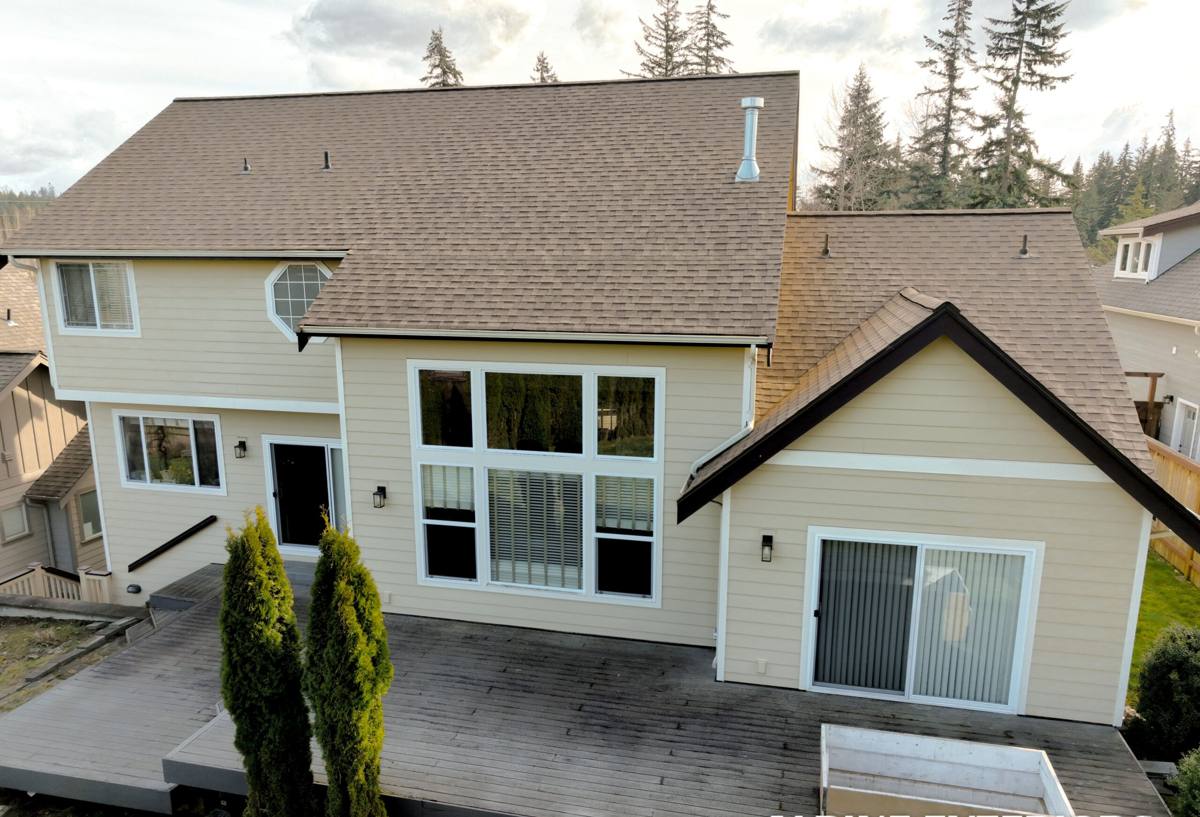
The Climate Factors That Actually Matter Here
Salt Air
Proximity to Bellingham Bay means a steady trace of salt in the air, even well inland from the shoreline. Salt is corrosive to certain window hardware and can accelerate the breakdown of poor-quality seals and finishes over time. It's a slow effect, but it compounds year after year, especially on the sides of a house that face open water.
Driving Rain
Bellingham doesn't just get rain — it gets rain pushed sideways by wind coming off the Salish Sea. Wind-driven rain finds any gap in flashing or sealant that a calm, straight-down rain never would. This is the single biggest cause of the hidden rot we find behind old window trim: water working its way in during storms, then sitting there because the wall assembly can't dry out fast enough between events.
Moss Season
The long stretch of cool, damp months each year is what locals call moss season, and it doesn't stop at the roofline. Moss and algae can take hold on north-facing sills, wood trim, and anywhere water lingers on a window assembly. Left alone, that moisture-holding growth keeps wood and lower-grade composite trim wet for months at a time, which is exactly the condition that leads to rot.
Signs a Window in Edgemoor Needs Attention
- Fog or condensation trapped between the panes of a double- or triple-pane window — the seal has failed and it can't be repaired, only replaced
- Soft, spongy, or discolored wood trim around the frame, especially on the north or west sides of the house
- Visible moss or dark streaking on the sill or lower frame
- Drafts or a noticeable temperature difference near the window on windy, rainy days
- Windows that are difficult to open, close, or lock — often a sign the frame has swelled or shifted
- Peeling paint or finish failure on the interior or exterior trim
What a Correct Installation Actually Involves
Window failures in this climate are rarely about the window unit itself — they're about how it was installed. A quality window installed without proper flashing and sealing will fail faster than a mid-grade window installed correctly. The steps that matter most:
- Full removal and inspection of the opening. We take the old window out completely rather than installing a replacement insert over a compromised frame, so we can see the actual condition of the sheathing and framing underneath.
- Repair of any rot or water damage found. If wind-driven rain has already gotten behind old trim, that damaged material gets replaced before the new window goes in — covering it up only hides the problem.
- Proper flashing, in the correct order. Sill pan flashing, side flashing, and head flashing installed in the right sequence, so water is directed out and down rather than trapped behind the wall.
- Weather-resistant barrier integration. The window's flashing needs to tie into the house's existing weather barrier correctly — a gap here is one of the most common causes of hidden leaks.
- Sealing that accounts for driving rain. Sealant and backer rod placement matter more here than in drier climates, because wind pushes water into gaps that gravity alone wouldn't reach.
- Interior and exterior trim finished to shed water, not hold it — sloped sills, back-primed wood, and materials chosen for damp exposure.
Choosing Window Materials for This Climate
There's no single "best" window material — the right choice depends on the home, the budget, and which trade-offs a homeowner is comfortable managing. In Edgemoor's damp, salt-air, moss-prone environment, we weigh moisture behavior and maintenance burden heavily.
| Material | How It Handles This Climate | Maintenance |
|---|---|---|
| Vinyl | Doesn't rot or corrode from salt air; performs well when installed with correct flashing | Low — occasional cleaning |
| Fiberglass | Very stable in wet, temperature-swinging conditions; strong resistance to moisture-related warping | Low |
| Wood (unclad) | Classic look, but most vulnerable to moss growth and rot in a shaded, damp neighborhood without diligent upkeep | High — regular painting/sealing |
| Wood-clad (aluminum or fiberglass exterior) | Protects the exterior-facing wood from rain and moss while keeping a wood interior; a common compromise for older or historic-style homes | Moderate |
| Aluminum | Durable, but can be prone to condensation and, if not a thermally broken frame, cold-transfer issues in our winters | Low |
For homes in Edgemoor with an older or traditional look, wood-clad windows are often the right balance — they preserve the interior character while putting a weather-resistant material on the side that actually faces the rain. For homes where upkeep is the priority, vinyl or fiberglass hold up with the least maintenance.
Our Installation Process
We keep the process straightforward and communicate what we find as we go, especially if we uncover hidden moisture damage that wasn't visible before removal.
- On-site assessment of existing windows, framing condition, and any moss or moisture issues around openings
- Recommendation of window materials and styles suited to the home's exposure — waterside-facing walls get more scrutiny than sheltered ones
- Written estimate before any work begins, including what's covered and what would trigger a change order (such as unexpected rot)
- Removal, framing repair as needed, and installation with full flashing and sealing
- Interior and exterior trim finish work
- Final walkthrough and operation check on every window installed
Cost Factors for Window Installation
Costs vary by window count, size, material, and what's found once old windows come out. Rather than quote a flat number, here's what actually moves the price:
| Factor | Why It Affects Cost |
|---|---|
| Window material | Vinyl is typically the most budget-friendly; fiberglass and wood-clad cost more upfront but often less over time in maintenance |
| Frame condition | Hidden rot from past water intrusion adds repair work beyond the window itself |
| Number and size of openings | Larger or custom-sized windows and higher window counts increase material and labor |
| Access and story height | Second-story or hard-to-reach windows, common on Edgemoor's sloped, wooded lots, can add labor time |
| Trim and finish work | Matching existing wood trim profiles takes more time than standard trim replacement |
We give a firm, itemized estimate after seeing the actual windows and openings in person — that's the only way to give a number that holds up once work starts.
Keeping New Windows in Good Shape
A correctly installed window in this climate still needs some seasonal attention, especially on a wooded, shaded lot where moss has an easy foothold.
- Clear moss and debris from sills and tracks at least once during moss season, more often on north-facing windows
- Check exterior caulking and sealant annually for cracking or gaps, particularly after a hard winter
- Keep gutters and nearby drainage clear so water isn't sheeting down over window openings
- Trim back branches or foliage that keep a window shaded and damp for extended periods
- Operate each window a few times through the year so seals and hardware don't seize up from disuse
- Watch for condensation between panes — it's the earliest sign of a failing seal and worth addressing before it worsens
Why a Locally Established Crew Makes a Difference
Window installation isn't a one-size-fits-all job, and a crew that hasn't worked in this specific environment can miss what matters most here. Knowing how far wind-driven rain travels up a wall, which sides of a house take the worst of the salt air, and how long moss season really runs in Whatcom County changes how flashing, sealing, and material choices get handled. That's knowledge built from doing this work locally, not from a general installation checklist.
We're a Bellingham-based crew that works across Whatcom County, including Edgemoor, and we install windows to hold up against the specific conditions this neighborhood sees every year — not just against a generic weather rating on a spec sheet.
If you're noticing drafts, fogged glass, or trim wear on your windows, we're happy to take a look. Request a free, no-pressure estimate using the form below, and we'll assess your home's specific exposure before recommending anything.