 Bellingham Roofing
 Windows on the Bluff Take a Different Kind of Beating
Edgemoor sits up on a bluff overlooking Bellingham Bay, and that position is a mixed blessing for the windows in these homes. The views are the reason people love living there, but the same exposure that gives you a wide-open outlook also means more direct salt-laden air, more wind-driven rain hitting the glass at an angle, and longer stretches of damp, mossy shade where trees crowd the lot. Whatcom County's marine climate is hard on window assemblies everywhere, but elevated, exposed sites like Edgemoor's see it first and see it worst.
We've replaced windows across Bellingham and Whatcom County long enough to know that a window spec that works fine three miles inland can underperform on a bluff-top lot facing the water. Sealant that would last a decade on a sheltered wall can start failing in six or seven years up here. That's not a knock on any one product — it's just what constant salt spray and driving rain do to any seal, gasket, or finish over time.
What "salt air" actually does to a window
Airborne salt is corrosive to exposed metal hardware — hinges, locks, balance mechanisms, and especially aluminum cladding or trim that isn't rated for coastal exposure. It also accelerates the breakdown of exterior caulking and glazing seals, which is usually the real culprit behind foggy double-pane glass. Once moisture gets between the panes, the insulated glass unit is done — no amount of cleaning brings it back.
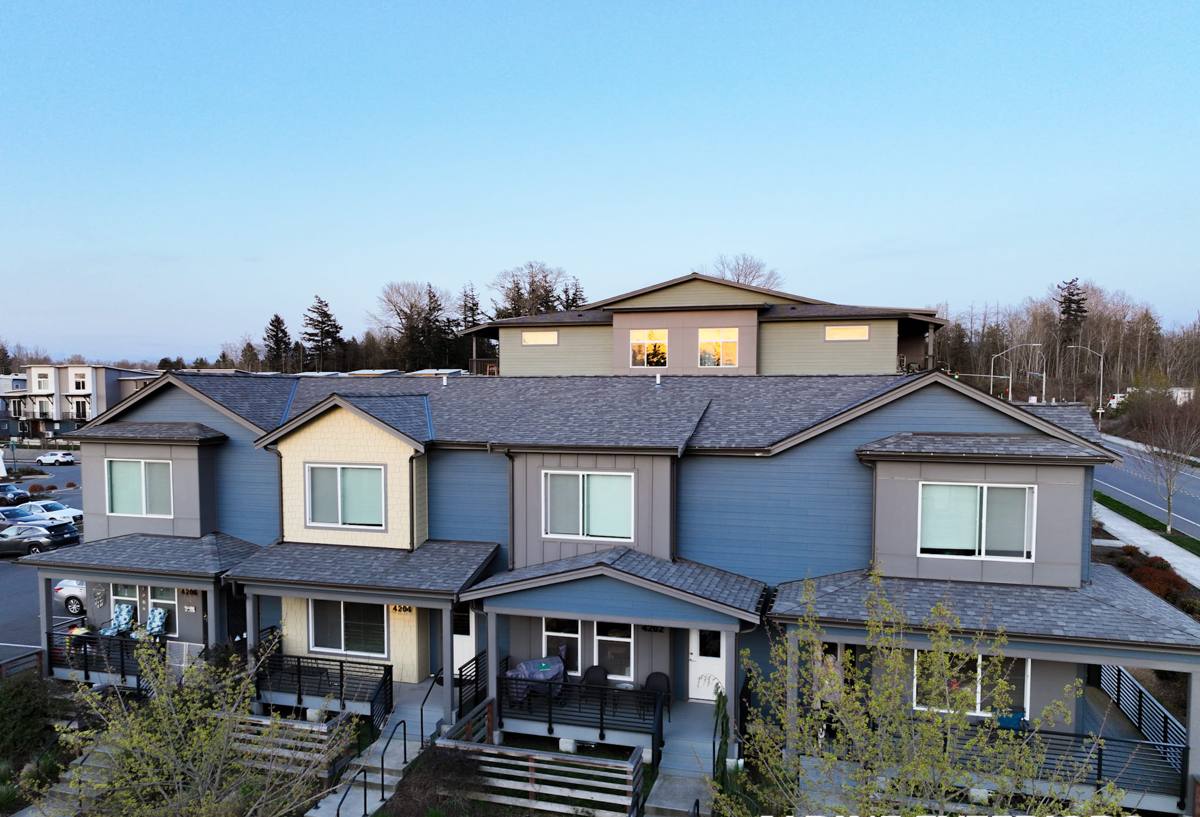
Signs an Edgemoor Home Needs Replacement Windows, Not Just Repair
Not every window problem calls for full replacement. But on bluff and near-water lots, we see a consistent pattern of failures that repair can't fix for long:
- Fogging or a milky haze between the panes — the seal has failed and the argon or air gap is compromised
- Soft or spongy wood at the sill or lower corners, often hidden under paint that still looks fine from a few feet away
- Windows that won't stay latched, or that whistle and rattle during a southwesterly blow
- Visible moss or black staining building up in the cladding grooves or sill track, even after cleaning
- A noticeable draft or cold spot at the window even with it fully closed and locked
- Single-pane or early dual-pane units original to an older Edgemoor home, now decades past their design life
If you're only seeing one of these, a repair or reseal might buy you a few more years. If you're seeing two or three together, that's usually a sign the window assembly itself — not just the seal — has reached the end of its useful life.
What a Correct Job Actually Involves Here
Window replacement on paper is simple: old unit out, new unit in. On a home exposed to driving rain and salt air, the details around that swap are what determine whether the new window lasts 25 years or leaks again in five.
Flashing comes first — before the window ever goes in
Most of the leaks we find on reopened Edgemoor walls trace back to flashing, not the window itself. Wind-driven rain doesn't just hit the glass — it gets pushed sideways and up under trim and siding at the rough opening. We integrate flashing tape and pan flashing at the sill so any water that does get past the exterior finish drains back out, not into the wall cavity. This step gets skipped more often than homeowners realize, because it doesn't show once the trim goes back on — but it's the single biggest factor in whether a window stays dry through a real coastal storm.
Material and glass choices that make sense for this exposure
We look at three things for a bluff or waterfront-facing opening: how the frame material handles sustained moisture and UV, how the hardware resists corrosion, and how the glass package handles both energy loss and condensation. A window that's marketed for general residential use isn't automatically wrong for Edgemoor, but we want corrosion-resistant hardware and a frame material with a track record in wet, salt-exposed climates before we'll stand behind it on an exposed wall.
Sealant and caulking done as a system, not an afterthought
Exterior sealant fails faster under constant sun-then-rain cycling and salt exposure than in a sheltered inland install. We use sealants rated for exterior, coastal-adjacent exposure, and we don't rely on caulk alone to do a flashing detail's job — caulk is the last line of defense, not the main one.
Our Process, Start to Finish
- On-site assessment. We look at each opening individually — sun exposure, wind direction, existing signs of moisture, and how the current window was originally flashed.
- Honest scope and estimate. You get a clear breakdown of what's being replaced, what materials we're using and why, and what it costs — no pressure, no inflated urgency.
- Removal and inspection of the rough opening. This is where hidden rot or old flashing failures show up. We tell you what we find before we cover it back up.
- Correct flashing and air-sealing. Sill pan, flashing tape, and backer rod/sealant installed as a system before the new window goes in.
- Window installation and adjustment. Set plumb and square, shimmed correctly, and operated through a full cycle to confirm smooth locking and operation.
- Exterior finish work. Trim, caulking, and any siding tie-in finished to match the home, with attention to drainage paths so water sheds away from the opening.
- Final walkthrough. We check operation, look, and seal with you before calling the job done.
Comparing Frame Options for a Bluff-Exposed Home
There's no single "best" window material — the right call depends on your home's exposure, your maintenance appetite, and your budget. Here's how the common options stack up specifically for a salt-air, high-rain setting like Edgemoor:
| Frame Type | Coastal/Moisture Performance | Maintenance | Typical Fit |
|---|---|---|---|
| Vinyl | Good — won't rust or rot, holds up well to salt exposure | Low — occasional cleaning | Most homes, especially where budget and low upkeep matter |
| Fiberglass | Very good — dimensionally stable, resists moisture and UV well | Low | Homes wanting a stronger frame with a more refined look |
| Wood, unclad | Poor in direct exposure without diligent upkeep — needs repainting/sealing on a strict schedule | High | Sheltered elevations only, or homeowners committed to regular maintenance |
| Wood, clad exterior | Good exterior protection if cladding and flashing are done correctly; interior wood still needs normal care | Moderate | Homes wanting a wood interior look with better exterior durability |
| Aluminum | Requires a coastal-rated finish; standard aluminum corrodes faster in salt air | Moderate | Specific architectural styles, when spec'd correctly for the exposure |
What Affects the Cost of a Window Replacement Project
Every Edgemoor home is a little different, so we won't quote a number without seeing the openings — but these are the factors that actually move the price:
| Factor | Why It Matters |
|---|---|
| Number and size of openings | More/larger windows means more material and labor |
| Frame material chosen | Vinyl, fiberglass, and clad-wood carry different material costs |
| Condition of the rough opening | Hidden rot or old flashing failures add repair time before install |
| Access and exposure | Bluff-facing or upper-floor windows can require more setup and care |
| Glass package | Upgraded glazing for energy performance or sound affects unit cost |
| Trim and exterior finish work | Matching existing trim profiles or siding takes extra labor |
Why It Matters That We Already Work Edgemoor
A crew that's replaced windows on a handful of Edgemoor homes already knows which elevations take the worst of the weather, what kind of rot patterns show up on bluff-facing walls, and which flashing details actually hold up here versus on paper. That's not something you can fully substitute with a generic install checklist. It shows up in small decisions — how much overlap to build into a flashing detail facing the prevailing wind, whether a sill needs extra slope, whether existing trim can be reused or needs to come off entirely to do the job right.
It also means we're not guessing at what "normal" wear looks like in this neighborhood versus a genuine problem. That judgment call, made correctly, is often the difference between a window that needs attention again in five years and one that's still tight and dry in twenty-five.
Choosing a Contractor for This Kind of Work
Window replacement is one of those jobs that looks the same whether it's done right or done fast — until the first real storm season tests it. Before hiring anyone for a bluff or waterfront-exposed home, it's worth asking:
- Will you show me the flashing detail before the trim goes back on, not just tell me about it?
- What warranty covers the installation itself, separate from the manufacturer's window warranty?
- Have you worked on homes with similar exposure — bluff-top, near water, heavy tree cover?
- What happens if you find rot or damage once the old window is out?
- Are you licensed and insured to work in Whatcom County, and can you show proof?
- Will I get a written scope of work before anything is ordered or removed?
Any honest contractor should answer these without hesitation. If you get vague answers, especially around flashing and what happens when hidden damage turns up, take that as a signal.
Let's Take a Look at Your Windows
If your Edgemoor home has windows showing fog, drafts, sticking hardware, or moss buildup in the tracks, it's worth getting them looked at before another wet season sets in. We'll walk the exterior with you, give you a straight read on what's failing and why, and put together a written estimate with no pressure to commit on the spot. Use the form below to request a free estimate.