 Bellingham Roofing
 Fairhaven Decks Face a Tougher Climate Than Most People Realize
Fairhaven sits close enough to Bellingham Bay that salt-laden air is a constant factor in how exterior wood and fasteners age here. Add Whatcom County's long, wet fall-through-spring stretch of driving rain, and a shaded tree canopy that keeps many decks damp well after a storm has passed, and you get a deck environment that's genuinely harder on materials than a typical inland yard. We repair decks all over Bellingham, but Fairhaven jobs tend to show a specific pattern: corroded fasteners before the boards look bad, moss and algae establishing faster than owners expect, and moisture trapped in places a quick visual check won't catch.
None of that means a Fairhaven deck is doomed to constant repair. It means the repair work has to account for those conditions specifically, not just patch what's visibly broken and call it done.
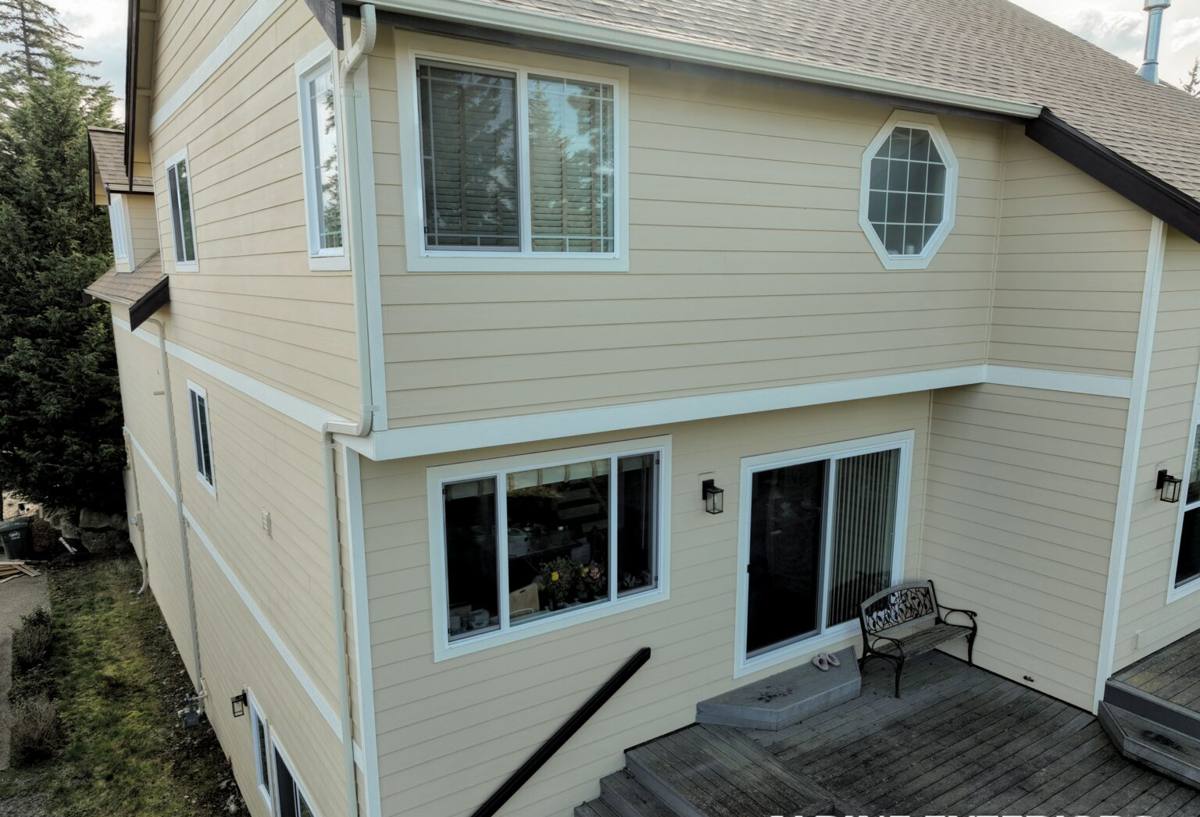
Why Salt Air, Rain, and Moss Season Matter for Repair Work
Salt Air and Fasteners
Coastal-adjacent air accelerates corrosion in standard steel fasteners and connectors — nails, screws, joist hangers, bolts. A deck can look structurally sound on the surface while its hidden hardware is quietly rusting away underneath. This is one of the most common things we find during a Fairhaven inspection that the homeowner had no idea was happening.
Driving Rain and Water Intrusion
Wind-driven rain doesn't just fall straight down — it gets pushed sideways into ledger connections, under railing posts, and into any gap where flashing is missing or has failed. Over time this shows up as soft framing, staining on the house wall behind the ledger board, or a deck surface that stays wet long after the rest of the yard has dried.
The Long Moss Season
Western Washington's moss season isn't a few weeks — it's most of the year on a shaded deck. Moss and algae hold moisture against the wood surface, which speeds up rot in boards and makes the deck surface slick and genuinely dangerous underfoot. A deck that looks "just dirty" is often further along structurally than it appears once you scrape the growth back.
Signs Your Deck Needs Repair, Not Just Cleaning
A lot of Fairhaven homeowners call us after pressure washing hasn't solved the problem, or after noticing something that feels off when they walk across the deck. These are the signs worth taking seriously:
- Boards that flex, bounce, or feel spongy underfoot, especially near the house
- Visible rust streaks running down from fasteners or hardware
- Gaps opening up between the ledger board and the house siding
- Railings or posts that wiggle when you push on them
- Persistent green or black staining that comes back within weeks of cleaning
- Soft or discolored wood you can press a screwdriver into with light pressure
- Standing water on the deck surface more than a day after rain stops
- Stairs that feel uneven or have visibly shifted stringers
Any one of these on its own might be minor. Several together usually mean the structure needs a real look, not just surface treatment.
What a Correct Deck Repair Actually Involves
Structural Framing First
The framing — ledger board, joists, beams, posts, and footings — is what actually holds the deck up and holds people safely on it. We check the ledger connection to the house first, since that's the single most common failure point on older decks and the one most likely to cause a serious accident if it lets go. Joists get checked for rot at the ends, where they sit in hangers, and anywhere water tends to pool.
Fasteners and Connectors
Given the salt air issue described above, we don't just replace hardware with whatever matches what's already there — we look at what corroded and why, and we address the cause, not just the symptom. Hidden hangers and bolts get inspected even when the visible fastener looks fine, since corrosion often starts on the parts you can't see.
Decking Boards
Individual board replacement is straightforward when the framing underneath is sound. We match spacing and fastening pattern to the rest of the deck so repaired sections don't stand out or trap water differently than the surrounding boards.
Railings and Guards
Loose railings are a safety issue, not a cosmetic one. We re-anchor posts into solid framing rather than just tightening what's there, since a wiggly rail is almost always a sign the post itself needs attention below the surface.
Drainage and Flashing
Where driving rain has gotten behind flashing or under the ledger, we fix the water path before closing anything back up. Repairing the surface without fixing the drainage just means the same failure happens again in a year or two.
Repair vs. Replacement: How We Help You Decide
Not every problem deck needs to be torn out. But sometimes patch repairs cost more over a few years than doing the job right once. Here's how we think through it:
| Factor | Favors Repair | Favors Replacement |
|---|---|---|
| Framing condition | Solid, dry, isolated soft spots | Widespread rot in joists/beams/posts |
| Ledger connection | Sound, properly flashed | Corroded, gapped, or improperly attached |
| Age of deck | Under 15-20 years, good original build | Original construction quality was poor |
| Extent of damage | Contained to a few boards or one area | Damage spread across most of the structure |
| Footings | Stable, no movement or heaving | Settling, cracked, or undersized for current code |
We'll give you a straight answer on which side of that table your deck falls on, including where it's a genuine judgment call rather than an obvious one.
Our Process for Fairhaven Deck Repair
1. On-Site Inspection
We walk the whole structure, not just the spot you called about, since problems in this climate rarely stay isolated. That includes checking underneath the deck where possible, not just the walking surface.
2. Honest Scope and Estimate
You get a written explanation of what's actually wrong, what needs to be fixed now versus what can be monitored, and a clear cost range — no pressure to upsell into a full rebuild if a targeted repair will genuinely hold up.
3. The Repair Itself
We address structure before cosmetics, correct drainage issues as we go, and use fasteners and hardware suited to this area's salt air and moisture rather than whatever is cheapest.
4. Cleanup and Walkthrough
We clear debris, sweep down surfaces, and walk the finished repair with you so you know what was done and what to watch for going forward.
Materials: Our Standard for Repairs in This Climate
When replacing boards or framing on a Fairhaven deck, we lean toward materials and fastener grades built for sustained moisture exposure — stainless or coated hardware rated for coastal-adjacent use, and decking that handles repeated wet-dry cycles without cupping or splitting. Standard construction-grade lumber and basic galvanized fasteners can work fine in drier inland settings, but they tend to show their limits faster here given the salt air and moss-season moisture load. That's a maintenance and longevity trade-off we're upfront about, not a knock on any specific product — it's simply what holds up best given what this climate does to a deck year over year.
Why Local Fairhaven Experience Actually Matters
A crew that's worked decks throughout Bellingham and Whatcom County knows what to check first because they've already seen the pattern: which fasteners fail early near the bay, which framing details tend to trap water under a shaded canopy, and how fast moss reestablishes on a north-facing deck versus one that gets more sun. That's not something you learn from a general contracting background elsewhere — it's specific to repairing decks in this exact environment, repeatedly, over years.
Keeping a Repaired Deck in Good Shape
Once a repair is done right, a little seasonal upkeep goes a long way toward avoiding a repeat visit:
- Sweep off leaves and debris regularly, especially in fall — trapped organic matter holds moisture against boards
- Treat moss and algae before it establishes, rather than waiting until it's thick and slick
- Check railings and stair connections for looseness once or twice a year
- Keep gutters and downspouts near the deck clear so runoff isn't dumping extra water onto or under it
- Reseal or refinish wood decking on the manufacturer's recommended schedule, not just when it looks faded
- Have any soft spots or new staining looked at early — small repairs now are cheaper than structural work later
Get an Honest Look at Your Deck
If your Fairhaven deck has soft spots, rusting hardware, persistent moss, or just doesn't feel as solid as it used to, we're glad to come take a look. We'll tell you plainly what's structural, what's cosmetic, and what actually needs to happen — no pressure toward a bigger job than the deck calls for. Use the form below to request a free, no-obligation estimate.