 Bellingham Roofing
 Decks in Fairhaven Take a Different Kind of Beating
Fairhaven sits close enough to the water that salt-laden air is a daily fact of life for anything built outdoors. Add Bellingham's long wet season, frequent driving rain off the Sound, and the shaded, moisture-holding conditions that let moss and algae take over almost any horizontal wood surface, and you've got a climate that is genuinely hard on decks. This isn't the same wear pattern you'd see on a deck in a dry inland climate. Fasteners corrode faster near salt air. Framing that stays damp for weeks at a time starts to rot from the inside before the surface boards show much damage. And a deck that looks fine from a distance can be structurally compromised underneath.
A deck replacement here isn't just about swapping out tired boards for new ones. It's about building something that's actually designed for Whatcom County's marine climate — correct drainage, the right fastener hardware, framing that can shed water instead of trapping it, and a surface material chosen with moss and mildew in mind. When any of those pieces get skipped, homeowners end up replacing the same deck again in half the time it should have lasted.
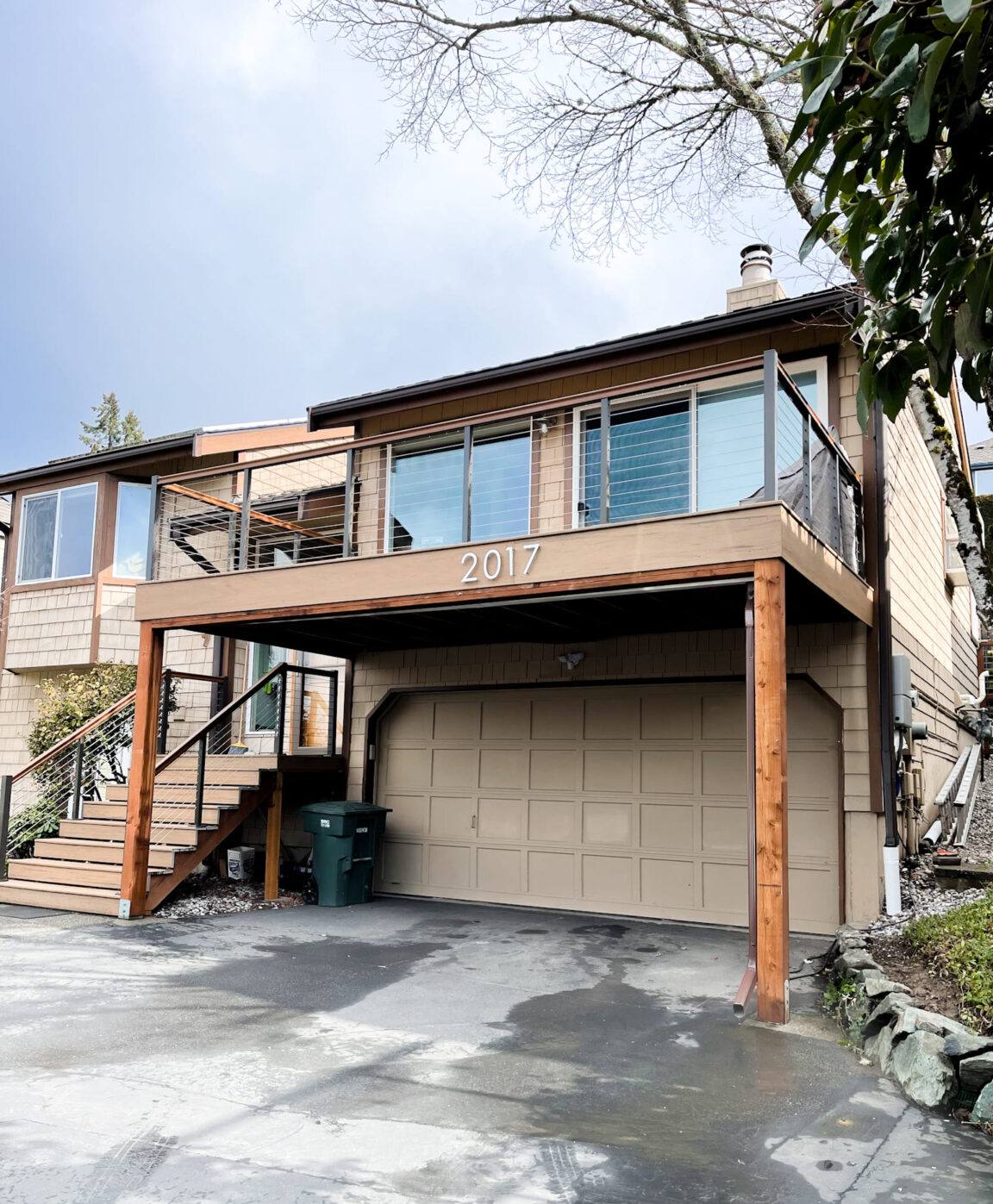
How to Tell a Deck Needs Replacing, Not Just Repairing
Not every tired-looking deck needs a full tear-off. But in a climate like this, cosmetic problems often mask structural ones, and it's worth knowing the difference before you spend money on the wrong fix.
Signs a repair may be enough
- A handful of individual boards are cupped, splintered, or stained, but the surface underneath feels solid when you press on it
- Railings are loose at a few connection points but the posts themselves aren't rotted
- Fasteners are visibly rusted or bleeding, but the wood around them is still firm
Signs you're looking at a replacement
- Soft, spongy decking in multiple areas, especially near the house or in shaded corners where water sits longest
- Visible rot or dark staining at the ledger board — the framing member that attaches the deck to the house
- Support posts or beams that show soft wood, cracking, or insect damage when probed with a screwdriver
- Persistent moss or algae growth that keeps returning within weeks of cleaning, which usually points to a drainage or shading problem the surface material can't solve on its own
- The deck was built more than 20-25 years ago with untreated fasteners or without proper flashing at the house connection
If you're not sure which category your deck falls into, that's exactly the kind of thing worth having looked at in person rather than guessed at from the driveway. A soft board is easy to spot; a rotted ledger board hidden behind siding is not.
What a Correct Deck Replacement Actually Involves
A deck replacement done right is mostly about what you can't see once it's finished. The visible decking and railings matter, but the framing, flashing, and fastener choices underneath are what determine whether the deck holds up for decades or needs attention again in five years.
The ledger connection
Where the deck attaches to the house is the single most common failure point on older decks, and it's the area most affected by our rain patterns. Proper flashing — installed so water is directed away from the house rather than behind the siding — is non-negotiable. This detail gets skipped more often than any other on lower-cost deck work, and it's usually the reason a "new-looking" deck ends up with hidden rot within a few years.
Framing and fasteners
Pressure-treated framing lumber is standard, but the fasteners connecting it matter just as much. In a marine-influenced climate, standard galvanized hardware corrodes faster than it would inland. Stainless steel or high-grade coated fasteners cost more up front but hold up significantly longer against salt air and constant moisture cycling.
Footings and structural support
Replacing the surface decking without checking the footings and posts underneath is one of the most common shortcuts in this trade. If the original footings were undersized, poured shallow, or have shifted over the years, a beautiful new deck surface is still sitting on a compromised foundation. A real replacement includes an honest structural check, not just a visual once-over.
Drainage and airflow underneath
Decks that sit low to the ground or in shaded, damp areas of a Fairhaven lot need airflow underneath to avoid becoming a moss and mildew trap. Grading, gaps, and joist spacing all play a role in whether a deck stays dry enough to resist growth between cleanings.
Choosing a Decking Material for This Climate
There's no single "best" decking material — the right choice depends on how much maintenance you're willing to do, your budget, and how much sun or shade the deck gets. In a climate with this much rain and moss pressure, the trade-offs are worth understanding up front rather than after the first wet winter.
| Material | How It Handles Our Climate | Maintenance | Typical Lifespan |
|---|---|---|---|
| Pressure-treated wood | Affordable, but prone to moss growth and splintering in shaded, damp spots without regular upkeep | Annual cleaning and periodic staining or sealing | 10-15 years before boards need replacing |
| Cedar | Naturally rot-resistant and handsome, but still needs sealing to resist moisture and moss over time | Sealing every 1-2 years | 15-20 years with upkeep |
| Composite decking | Resists moisture absorption and rot well; surface texture matters for moss/algae resistance in shaded areas | Occasional washing, no staining or sealing | 25-30+ years, manufacturer-dependent |
| Capped composite / PVC | Best moisture and mildew resistance of the common options; handles constant damp shade the best | Occasional washing | 25-30+ years, manufacturer-dependent |
Composite and capped composite products have become the more common recommendation for decks in shaded, damp parts of Bellingham simply because they don't absorb moisture the way wood does, which slows moss and mildew growth considerably. That said, real wood still has a place — it's a legitimate choice for homeowners who want that specific look and are willing to keep up with sealing on a regular schedule. We'll walk through the honest trade-offs for your specific deck's sun exposure and shade pattern rather than push one material across the board.
Our Deck Replacement Process
- On-site assessment. We look at the existing deck's framing, ledger connection, footings, and surface condition to determine what's actually failing and why.
- Honest scope and options. You get a clear picture of what needs to happen structurally, plus material options that fit your budget and how much upkeep you want to take on.
- Permitting. Deck work in the City of Bellingham and unincorporated Whatcom County often requires a permit depending on size, height, and attachment to the house. We handle the paperwork so you're not chasing it down yourself.
- Tear-off and structural correction. Old decking, and any framing or footings that don't meet current standards, come out. This is also when hidden rot at the ledger or posts gets addressed.
- Rebuild with climate-appropriate materials and hardware. Correct flashing, corrosion-resistant fasteners, and the decking material you've chosen go in, built to actually shed water instead of holding it.
- Final walkthrough. We go over the finished deck with you, including basic maintenance guidance specific to the material you chose.
Permits and Local Code Considerations
Homeowners are sometimes surprised that replacing an existing deck can still trigger permit requirements, even when the footprint isn't changing. Whatcom County and the City of Bellingham both have their own requirements around deck height, guardrails, and structural attachment to the home, and those requirements have been updated over the years — a deck built to code 20 years ago may not meet current standards. Rather than leaving this on the homeowner to sort out, we handle the permit process as part of the job, so the finished deck is both built correctly and documented correctly.
What to Ask Before Hiring a Deck Contractor
- Do they carry current liability insurance and, if required for the scope of work, workers' compensation coverage?
- Are they licensed and bonded to do contracting work in Washington State?
- Will they pull the required permit themselves, or leave that step to you?
- Do they inspect and address the framing, ledger, and footings — or just replace the visible decking?
- What fastener hardware do they use, and is it rated for coastal or high-moisture conditions?
- Can they explain, in plain terms, why they're recommending a particular decking material for your specific deck's sun and shade exposure?
Why a Crew That Already Works Fairhaven Matters
Deck failures in this neighborhood tend to follow patterns — the same shaded corners collect moss, the same ledger connections take on water, the same lower-lying yards need extra attention to drainage. A crew that's worked on decks throughout Fairhaven and the surrounding Bellingham area has already seen how these houses and lots behave through a full wet season, not just how a deck looks on a dry afternoon during the estimate. That familiarity shows up in small decisions — where to add extra flashing, which fastener grade is worth the upcoming cost, how to frame for airflow underneath — that a contractor unfamiliar with our climate might not think to flag.
It also matters for permitting and follow-through. Working regularly within Whatcom County and City of Bellingham jurisdictions means knowing the current requirements without having to research them from scratch on your project.
Get a Straightforward Estimate
If your deck is showing soft spots, persistent moss, rusted hardware, or you're just not sure whether it needs a repair or a full replacement, we're happy to take a look and give you an honest answer. Use the form below to request a free, no-pressure estimate for your Fairhaven deck.