 Bellingham Roofing
 Fairhaven's Coastal Climate Is Hard on Siding
Fairhaven sits close to Bellingham Bay, which means homes here deal with a combination of weather stresses that inland Whatcom County neighborhoods don't face in the same intensity. Salt-laden air off the water accelerates corrosion on fasteners and metal trim. Wind-driven rain off the Strait pushes moisture sideways into siding seams rather than just falling straight down. And the tree cover and marine humidity that make this part of Bellingham so green also make it one of the better breeding grounds for moss, algae, and mildew on exterior surfaces. None of this is unusual for the Pacific Northwest coast, but it adds up to a siding material and installation standard that needs to be a genuine match for the environment, not just whatever looked good in a showroom.
Homes in Fairhaven also skew older, with a good number of houses built well before modern moisture-barrier standards existed. That combination — older wall assemblies plus a demanding coastal climate — is exactly the situation where the choice of siding material and the quality of the installation matter most.
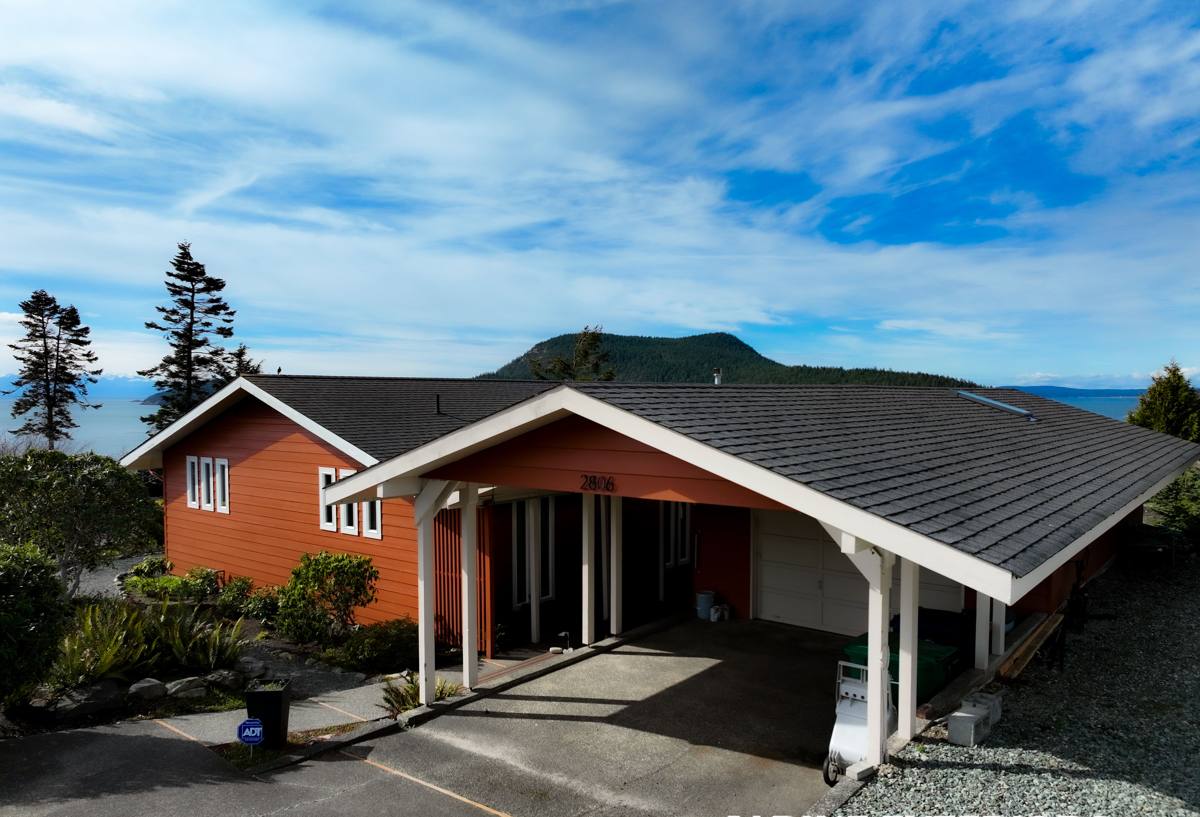
Why Fiber Cement Handles Fairhaven's Weather Better Than the Alternatives
Salt Air and Moisture
Fiber cement is made from cement, sand, and cellulose fiber. It doesn't rot, it doesn't feed mold the way wood-based products can, and it isn't affected by salt exposure the way some metal siding and fasteners are. That matters directly in Fairhaven, where anything within a mile or so of the bay gets a steady low-level dose of salt air year-round.
Driving Rain
Wind-driven rain off the water finds gaps that vertical rain never would. A siding system with proper lap coverage, correct flashing, and a drainage plane behind it sheds that water instead of trapping it against the wall sheathing. This is as much about installation as it is about the material itself — even the best siding product fails early if it's nailed up without attention to water management.
Moss and Shade
Bellingham's long wet season, combined with the tree canopy common in older Fairhaven lots, means north-facing and shaded wall sections stay damp longer than they would on a more open, sun-exposed home. Fiber cement's factory-applied finish resists the kind of surface breakdown that gives moss and algae something to grip onto, which keeps cleaning and maintenance more manageable over the life of the siding.
What a Correct Fiber Cement Install Actually Involves
Fiber cement is only as good as the installation behind it. A rushed or generic install can leave a Fairhaven home just as vulnerable to moisture problems as it was with its old siding — the material gets blamed, when the real issue was the process.
Prep and Moisture Management
Correct installation starts underneath the siding, not with the siding itself. That means removing the old cladding down to the sheathing, checking for hidden rot or water damage from years of coastal exposure, and installing a proper weather-resistant barrier before a single piece of new siding goes up. Skipping this step to save time is one of the most common ways a siding job goes wrong.
Fasteners, Gaps, and Flashing
In a salt-air environment, fastener choice is not a minor detail. Corrosion-resistant nails or screws, installed at the manufacturer's specified pattern and depth, keep the siding secured over decades rather than just years. Manufacturer-specified gaps at butt joints and around windows and doors allow the material to handle seasonal movement without cracking the caulk line, and flashing above windows, doors, and any horizontal trim needs to actually direct water outward, not just look finished from the ground.
- Old siding and sheathing inspected for hidden moisture damage before new material goes up
- Weather-resistant barrier installed continuously, lapped correctly at seams
- Corrosion-resistant fasteners used at the manufacturer's specified pattern
- Manufacturer-specified gaps maintained at joints, corners, and openings
- Flashing installed above windows, doors, and horizontal trim to direct water out, not in
- Bottom starter strip and clearance from grade, decks, and walkways set correctly
- Factory-finished ColorPlus edges field-touched only where cut, per manufacturer guidance
James Hardie Product Lines for a Neighborhood Like Fairhaven
We install James Hardie exclusively, and for a coastal, older-home neighborhood like Fairhaven, the specific product line matters as much as the brand. Hardie's HZ5 formulation is engineered for the Pacific Northwest's wetter, milder climate zone, which is the version we use in this area rather than a formulation built for a drier or hotter region.
| Product | Best Use on a Fairhaven Home | Look |
|---|---|---|
| HardiePlank lap siding | Most full-wall siding replacements; the standard choice for classic and craftsman-style homes common in the area | Traditional horizontal lap, several width and texture options |
| HardieShingle | Accent gables, dormers, or homes with a shingle-style architectural detail | Staggered or straight-edge shingle profile |
| HardiePanel | Modern or mixed-material facades, porch ceilings, accent walls | Smooth or textured vertical panel |
| HardieTrim | Window and door surrounds, corner boards, fascia | Smooth finish, paired to match siding profile |
All of these come with Hardie's factory-applied ColorPlus finish, which is baked on and warranted separately from the substrate — a meaningful advantage in a humid coastal climate where field-applied paint tends to fail faster on any material.
Our Process for a Fairhaven Siding Project
- On-site assessment — we look at the existing siding, wall condition, trim, and any moisture or rot signs specific to the home's exposure to wind and rain off the bay.
- Scope and product plan — we walk through which Hardie products fit the home's style and which areas need extra attention, like shaded north walls or ground-level clearance.
- Tear-off and inspection — old siding comes off, sheathing is checked, and any damaged material is addressed before moving forward.
- Weather barrier and flashing — the drainage plane goes in first, with flashing detailed at every penetration and opening.
- Siding installation — panels or planks go up to manufacturer spec for fastening, gapping, and clearance.
- Trim, caulking, and touch-up — trim is fitted, cut edges are sealed per Hardie's guidance, and the site is cleaned up.
- Final walkthrough — we go over the finished job with the homeowner before calling it done.
Cost Factors for a Fairhaven Siding Project
Every home is different, so we don't quote pricing without seeing the house, but the factors that move the number up or down are consistent across most Fairhaven projects.
| Factor | Why It Affects Cost |
|---|---|
| Condition of existing wall sheathing | Older homes near the bay sometimes have hidden moisture damage that needs repair before new siding goes on |
| Home height and access | Two-story or steeply sloped lots require more scaffolding and staging time |
| Amount of trim and architectural detail | Craftsman and older character homes often have more window trim, corner detail, and transitions than a simple box shape |
| Product mix | Combining lap siding with shingle accents or panel sections adds material and labor variety |
| Full tear-off vs. overlay | Removing old siding down to the studs costs more up front but is the only way to properly address hidden moisture issues |
Most full siding replacements land somewhere between a moderate exterior refresh and a larger remodel-scale project, depending on these factors — we'll give you an itemized, honest number after we've actually looked at the home.
Maintenance in a Marine, Moss-Prone Climate
Fiber cement is low-maintenance compared to wood or vinyl, but "low-maintenance" isn't "no-maintenance" in a climate like this one. A little seasonal attention keeps the siding looking good and performing well for the long haul.
- Rinse the siding annually, especially shaded or north-facing walls, to keep moss and algae from establishing
- Keep gutters clear so overflow doesn't run down the siding face repeatedly
- Trim back vegetation and tree branches that keep wall sections shaded and damp
- Check caulking at joints, windows, and trim every couple of years and reseal if it's cracking
- Watch for any staining or discoloration near ground level, which can signal splash-back or drainage issues
- Address any impact damage or cracked panels promptly rather than letting moisture get behind them
Why Hiring a Crew That Already Works Fairhaven Matters
Siding installation isn't one-size-fits-all, even within Bellingham. A crew that regularly works in Fairhaven has already seen how the bay's wind and salt exposure behave against real walls, how shaded lots hold moisture longer, and where older homes in this part of town tend to need extra prep work before new siding goes on. That familiarity shows up in the details — flashing choices, fastener selection, and knowing which walls need the most careful moisture management — rather than applying a generic installation approach to a house with genuinely local conditions.
If you're weighing a siding replacement for a Fairhaven home, we're happy to take a look and walk you through what your specific house needs. Reach out for a free, no-pressure estimate using the form below.