 Bellingham Roofing
 Siding Replacement Built for Lynden's Climate
Lynden sits in a part of Whatcom County that takes a steady beating from Pacific Northwest weather. Homes here deal with driving rain off and on for most of the year, damp air carried in from the coast, and a moss and algae season that can stretch from late fall well into spring. Siding that isn't built for that combination doesn't fail overnight — it fails slowly, one soft spot and one hairline crack at a time, until a homeowner is looking at rot sheathing they didn't know was there.
When we replace siding on a Lynden home, we're not just swapping old boards for new ones. We're addressing the specific way this region's moisture works its way into a wall system, and we're installing a product engineered to shed that moisture rather than absorb it. That's why every siding replacement job we do uses James Hardie fiber cement siding, installed to the manufacturer's specifications, and nothing else.
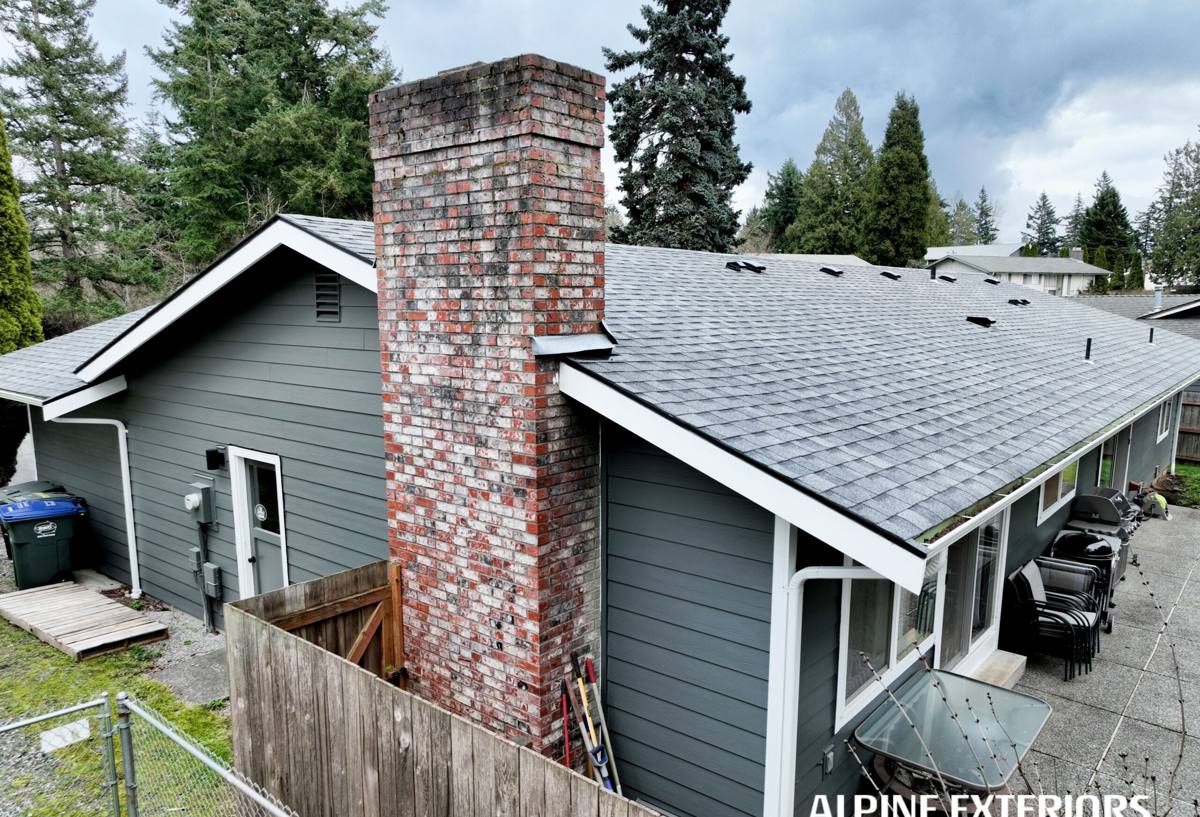
Why Siding Fails Faster in This Part of Whatcom County
Whatcom County's marine-influenced climate means homes in and around Lynden see a lot of days with high humidity, low sun exposure, and lingering moisture on exterior surfaces. That combination is exactly what moss, algae, and mildew need to take hold. It's also what causes slower-drying siding materials to stay wet longer after every storm, which matters more than most homeowners realize.
The Moisture Cycle That Wears Siding Down
Siding doesn't have to get soaked to fail — it just has to stay damp longer than it should. Wood-based products (cedar, primed spruce, and engineered wood siding like LP SmartSide) can swell when they absorb moisture and shrink again as they dry. Repeated over years of driving rain and a long moss season, that swell-and-shrink cycle opens up seams, stresses paint film, and eventually lets water behind the siding where it can reach the sheathing and framing. Once moisture gets behind the cladding, the damage is often invisible from the outside until it's significant.
Salt Air and Coastal Moisture
Lynden isn't right on the water, but this stretch of Whatcom County still sits within reach of coastal air moving in off the Salish Sea and Puget Sound. That means exterior materials are dealing with airborne moisture and salt exposure that inland regions don't see nearly as much. Vinyl siding can become brittle and discolored under sustained UV and moisture exposure over the years, and fasteners or trim on lower-grade products can corrode faster in this kind of air. It's a slow effect, but it's a real one, and it's part of why we don't recommend products that weren't designed with coastal-adjacent exposure in mind.
What Correct Siding Replacement Actually Involves
Siding replacement is more than a cosmetic upgrade — done right, it's a full reset of your home's weather barrier. Skipping steps here is the single biggest reason a siding job that looks fine on installation day starts causing problems two or three years later.
- Full tear-off and inspection. We remove the existing siding down to the sheathing so we can actually see what's underneath — not guess at it.
- Sheathing repair. Any rot, soft spots, or water-damaged sheathing gets cut out and replaced before anything new goes on. Installing new siding over damaged sheathing just hides a problem, it doesn't fix it.
- Weather-resistive barrier. A correctly lapped and sealed house wrap goes down as the home's real first line of defense against wind-driven rain.
- Flashing at every penetration. Windows, doors, vents, hose bibs, and light fixtures all need proper flashing so water is directed out and away from the wall, not trapped against it.
- Rainscreen or proper fastening per manufacturer spec. James Hardie siding has specific fastening, clearance, and gapping requirements — getting these wrong is one of the most common causes of premature siding failure and can also void the manufacturer's warranty.
- Trim, caulking, and finish work. The last 10% of a siding job — clean trim lines, correctly caulked joints, consistent reveal — is what separates a job that looks professional for twenty years from one that starts looking tired in three.
Why We Install Only James Hardie Fiber Cement
We get asked fairly often why we don't offer vinyl, LP SmartSide, or cedar as options. The honest answer is that we've made a standard for our own crews, and James Hardie is the product that consistently holds up to the conditions this region throws at it.
What Hardie Gets Right for This Climate
Fiber cement siding is not organic — it's made from cement, sand, and cellulose fiber, which means it doesn't swell, rot, or feed mold and mildew the way wood-based siding can. In a moss-prone, high-moisture climate like Whatcom County's, that's not a minor detail. It's the core reason it holds a paint finish and a clean appearance far longer than materials that are absorbing and releasing moisture with every wet week.
Hardie is also non-combustible, which matters increasingly to homeowners and insurers alike, and its ColorPlus factory-applied finish is baked on under controlled conditions rather than field-painted, giving it more consistent color retention over time than site-applied paint on wood siding. James Hardie also engineers regional HZ5 product lines specifically for climates like the Pacific Northwest, accounting for the freeze-thaw and moisture exposure homes here actually experience.
Being Straightforward About Trade-Offs
Fiber cement isn't the cheapest siding option up front, and it's heavier and more particular to install correctly than vinyl — which is exactly why installation quality matters as much as the product itself. It also isn't a DIY-friendly material; it requires the right blades, fastening pattern, and clearances to perform the way it's designed to. We think that trade-off is worth it for a material that, installed correctly, is built to perform for decades in this exact climate rather than needing attention every few years.
Siding Material Comparison for Whatcom County Homes
| Material | Moisture Behavior in Wet Climates | Maintenance | Our Position |
|---|---|---|---|
| James Hardie Fiber Cement | Non-organic, does not swell or rot; sheds moisture well | Low — occasional wash, repaint only after many years | What we install |
| Vinyl Siding | Doesn't rot but can trap moisture behind it; can warp or become brittle over time | Low, but limited repair options if damaged | Not installed by our crews |
| LP SmartSide / Engineered Wood | Wood-based; vulnerable to edge swelling if seals fail | Moderate — seams and cut edges need ongoing attention | Not installed by our crews |
| Cedar / Primed Spruce | Organic material; absorbs moisture, prone to rot without diligent upkeep | High — regular refinishing and moisture monitoring | Not installed by our crews |
How Our Process Works in Lynden
We keep the process straightforward because homeowners deserve to know what's happening to their house and when.
- On-site assessment. We walk the exterior with you, look at the current siding condition, check for signs of moisture intrusion around windows and trim, and talk through what you want out of the project.
- Written estimate. You get a clear scope of work and pricing before anything is scheduled — no surprise add-ons once the crew shows up.
- Scheduling around the weather. Given how much of the year Whatcom County sees rain, we plan tear-off and dry-in phases carefully so your home isn't left exposed longer than necessary.
- Tear-off, sheathing repair, and weather barrier installation. This is the phase that determines how the siding performs for the next 30 years, and we don't rush it.
- Hardie installation to manufacturer spec. Correct fastening, clearances, and flashing details, done by a crew that installs this product regularly rather than occasionally.
- Final walkthrough. We go over the finished work with you before calling the job complete.
Signs a Lynden Home May Need Siding Replacement
- Visible moss, algae, or persistent green staining that keeps returning after cleaning
- Soft or spongy spots when you press on the siding, especially near the bottom courses
- Paint that's peeling, bubbling, or failing faster than it used to
- Warped, cupped, or separating boards, particularly at seams and corners
- Visible gaps or cracking around window and door trim
- A noticeable musty smell near exterior walls, which can indicate moisture behind the siding
- Rising energy bills that may point to a compromised weather barrier
Why Hiring a Crew That Already Works in Lynden Matters
Siding installation isn't uniform across regions — what works in a dry inland climate is not necessarily what should go on a home dealing with sustained Pacific Northwest moisture and a long moss season. A crew that regularly works Whatcom County homes already understands how local moisture patterns behave against a wall system, which flashing details matter most in this climate, and how to sequence a job around the region's rain windows instead of fighting them.
There's also a practical side to hiring local: familiarity with Lynden's building department expectations, realistic scheduling given the area's weather patterns, and a crew that isn't learning fiber cement installation for the first time on your house. Correct installation is what makes the difference between a Hardie siding job that performs for decades and one that runs into avoidable problems because a detail was rushed or skipped.
What to Expect From an Estimate
A siding replacement estimate should never feel like a sales pitch. When we come out to a Lynden property, we're looking at the condition of the current siding, checking for underlying moisture damage, measuring accurately, and giving you a real picture of what the project involves — including where we find problems you didn't know you had, like soft sheathing under an otherwise decent-looking wall.
We'll also walk you through James Hardie's product lines and color options so you understand what you're choosing, not just that you're choosing "siding." You'll leave the conversation with a clear scope, a clear price range, and no pressure to sign anything on the spot.
If your Lynden home's siding is showing signs of wear, or you just want an honest read on its condition, we're happy to come take a look. Reach out for a free, no-pressure estimate using the form below.