 Bellingham Roofing
 New Roofs in York: Built for This Corner of Whatcom County
York is a quiet residential pocket of Bellingham, and like most neighborhoods in this part of Whatcom County, the roofs here age under a specific set of conditions: salt-tinged air moving in off the water, rain that often arrives sideways rather than straight down, and a moss season that can run for the better part of the year on shaded slopes. A roof that would hold up fine in a drier inland climate can wear out faster here if it wasn't built with those conditions in mind from the start. That's the gap between a new roof that looks good on installation day and one that actually performs for its full expected lifespan.
When we install a new roof in York, we're not just replacing worn shingles with new ones. We're building a system — deck, underlayment, flashing, ventilation, and roofing material — put together specifically to shed wind-driven rain, resist moss regrowth, and hold its fasteners against the corrosive pull of salt air. This page walks through what that actually involves, what your material options are, and how our process runs from first call to final walkthrough.
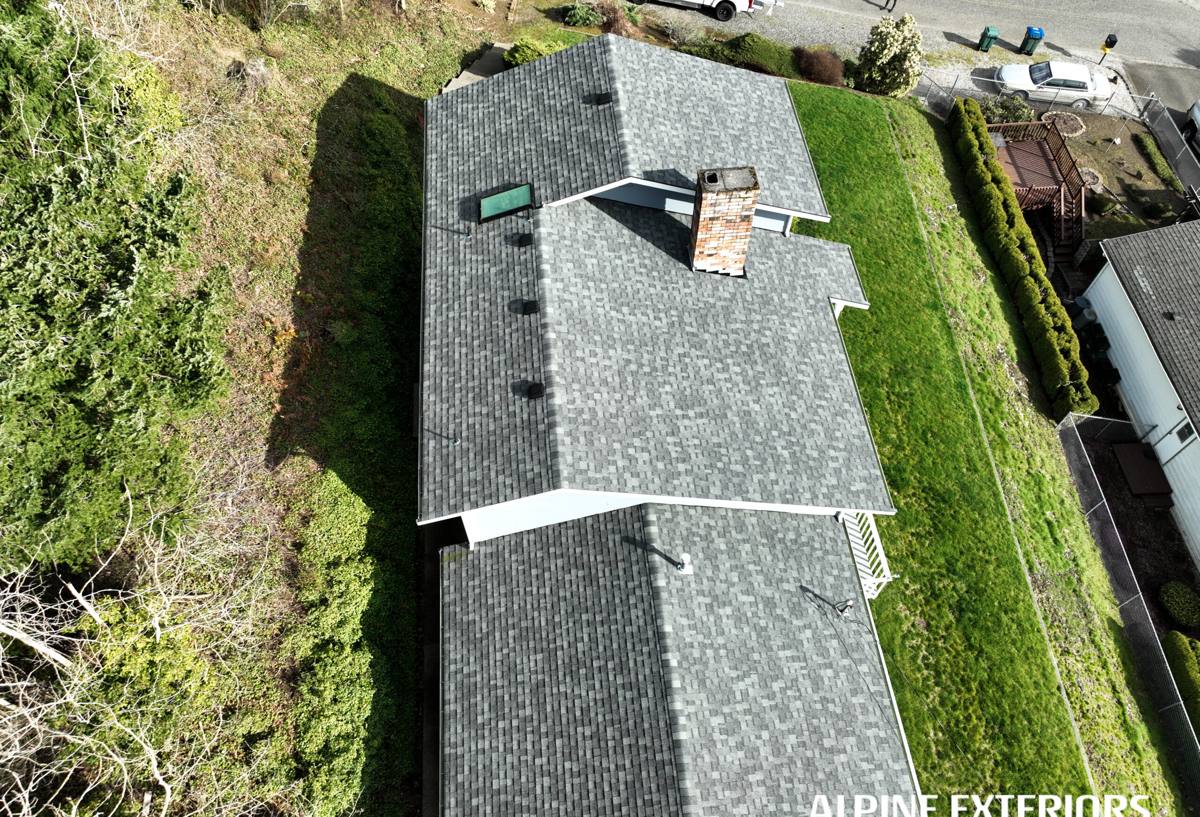
Signs a York Home Needs a New Roof, Not Another Repair
Not every roof problem calls for full replacement. But a handful of signs, especially in combination, usually mean patching has stopped being the economical choice:
- Shingles curling, cupping, or losing granules across large sections rather than just one spot
- Repeated leaks showing up in different locations, rather than one recurring trouble spot
- Soft, spongy, or visibly sagging areas in the roof deck
- Moss and dark algae streaking that come back within a season or two of cleaning
- Flashing around chimneys, vents, or skylights that's been patched or caulked more than once
- A roof at or past the expected service life of its material, especially one that's never been replaced since the home was built
A roof with one or two isolated issues can often be repaired. A roof showing several of these signs at once is usually past the point where repair still makes financial sense, and that's a judgment call worth having someone look at in person rather than guessing from the ground.
What a Correct New Roof Installation Involves
A new roof is only as good as what's underneath the shingles or panels. Skipping steps here is invisible on installation day and shows up later as leaks, premature wear, or a warranty that doesn't actually hold up if you need it.
Tear-Off and Deck Inspection
We remove the old roofing down to the deck rather than layering new material over old. That's the only way to actually see the plywood or OSB underneath, check for soft spots or water damage, and replace any sections that have been quietly deteriorating under the old roof — a problem that's common in a climate where moisture works its way in slowly and doesn't always show up as an obvious leak indoors.
Underlayment and Ice-and-Water Protection
A synthetic underlayment goes down over the entire deck as the roof's real waterproofing layer — the roofing material above it is the first line of defense, but the underlayment is what keeps the home dry if wind-driven rain gets past a shingle edge. In vulnerable spots like eaves, valleys, and roof-to-wall transitions, we use self-adhering ice-and-water membrane for extra protection where water is most likely to back up or pool.
Flashing at Every Transition
Chimneys, skylights, vent pipes, sidewalls, and valleys are where the large majority of roof leaks actually start — not in the open field of shingles. Correctly installed step flashing, counterflashing, and valley metal, sequenced so each layer sheds water into the one below it, is what keeps those transitions dry through years of driving rain instead of just the first storm.
Ventilation
A roof deck that can't breathe traps heat and moisture in the attic, which shortens shingle life from underneath and can cause condensation problems that have nothing to do with the roofing material itself. Balanced intake and exhaust ventilation is part of a correct installation, not an optional add-on.
Material Options for a York Re-Roof
Most homes in this neighborhood are good candidates for either asphalt shingles or one of the upgraded roofing systems, depending on budget, roof style, and how long you want to go before the next replacement.
| Material | Typical Lifespan Here | What to Know |
|---|---|---|
| 3-tab asphalt shingles | 12-18 years in coastal conditions | Lowest upfront cost; thinner profile wears faster under moss and moisture pressure |
| Architectural (laminate) asphalt shingles | 20-25 years in coastal conditions | Thicker and more wind- and impact-resistant than 3-tab; the standard choice for most re-roofs here |
| Synthetic/composite shingle | 25-40 years | Higher upfront cost; strong impact and weather resistance with a shingle-like appearance |
| Standing seam metal | 35-50+ years with proper detailing | Highest upfront cost; sheds moss and water efficiently with minimal long-term maintenance |
These are realistic ranges for coastal Whatcom County conditions, not manufacturer best-case numbers — actual lifespan still depends heavily on ventilation, installation quality, and how consistently moss gets cleared off. We'll walk through which option fits your roof's pitch, sun exposure, and budget during the estimate rather than steering every home toward the same product.
What Affects the Price of a New Roof in York
A number of factors move the price on a re-roof, and understanding them helps you evaluate a quote instead of just comparing bottom-line totals.
- Roof size and pitch: More square footage means more material and labor, and steep pitches slow crews down and require more safety equipment than a low-slope roof.
- Number of layers being removed: Some homes have more than one layer of old roofing on them, which adds tear-off time and disposal cost.
- Deck condition: Rot or water damage found once the old roofing is off means replacing sheathing before new material can go down — a common finding in a climate where moisture works into a roof slowly.
- Roof complexity: Valleys, dormers, skylights, and multiple roof planes all add cutting, fitting, and flashing work beyond what a simple gable roof needs.
- Material choice: As the table above shows, upfront cost varies significantly between asphalt, synthetic, and metal roofing systems.
- Access: Steep driveways, mature trees close to the roofline, or limited space for a dumpster and material staging can all add time to a project.
A firm number is hard to give without seeing the roof in person, which is why we walk every property before quoting rather than pricing from a phone call alone.
Our Installation Process, Start to Finish
A new roof is disruptive enough without also being confusing. Here's how a typical project runs:
- Estimate and inspection: We walk the roof, or inspect from a ladder or drone where access is limited, and give you a written scope and price before any work starts.
- Material selection and ordering: Once you choose a product, we order it and schedule delivery so materials are on-site and ready before the crew arrives.
- Permitting: Roof replacement generally requires a building permit in Bellingham and the surrounding Whatcom County area, and we handle that filing rather than leaving it to you.
- Tear-off and deck repair: Old roofing comes off, the deck gets inspected, and any damaged sections are replaced before anything new goes down.
- Underlayment, flashing, and installation: Waterproofing layers go down first, then flashing, then the roofing material itself, in the sequence that actually sheds water correctly.
- Cleanup and magnetic sweep: The property is cleared of debris and swept for stray nails and fasteners before we consider the job finished.
- Final walkthrough and warranty registration: We review the finished roof with you and register the manufacturer warranty in your name.
Why a Crew That Already Works in York Matters
A roofing crew that's already worked jobs in this neighborhood has a head start an out-of-area contractor doesn't. That means a realistic sense of the roof styles, pitches, and ages common on York's homes, familiarity with the local permitting process, and an understanding of how this stretch of coastline behaves — which roof orientations take the worst of the wind-driven rain, which slopes hold moss longest, and how salt exposure here compares to more sheltered parts of Bellingham.
It also means smoother logistics: knowing which weather windows are reliable enough to plan a tear-off around, established relationships with local suppliers for faster material turnaround, and being available for a follow-up visit without a long drive if a question comes up after the job is done. None of that replaces careful installation work, but it does mean fewer surprises and faster answers when something local-specific comes up.
What to Ask Before You Hire a Roofer for a York Home
- Is the tear-off full removal to the deck, or is this a layover installation?
- Is deck inspection and repair included in the estimate, or billed separately if damage is found?
- What underlayment and ice-and-water protection is specified, and where will it be used?
- Is a ventilation assessment part of the scope, not just a shingle swap?
- What flashing materials and methods are used at chimneys, valleys, and sidewalls?
- Does the quote include permit filing, or is that left to the homeowner?
- Is the manufacturer warranty registered on your behalf, and what does it actually cover?
- What happens, in writing, if the crew finds deck damage once the old roofing is off?
A quote that's vague on these points is hard to compare honestly against one that spells them out — the lowest number on paper sometimes leaves out work another bid included.
If your roof in York is showing its age, or you just want a straight answer about repair versus replacement, we're happy to take a look and walk you through what we see — no pressure and no obligation. Reach out below for a free estimate.