 Bellingham Roofing
 Why Metal Roofing Makes Sense in Puget
Homes in the Puget area sit close enough to the water and the weather patterns that come with it that roofing decisions here can't be copied straight out of a catalog. Salt-laden air, wind-driven rain that finds its way under poorly lapped materials, and a moss season that stretches for most of the year all put real demands on a roof. Metal roofing has become a popular answer for homeowners in this part of Whatcom County because, done correctly, it handles all three of those stresses better than most alternatives — but "done correctly" is the operative phrase. A metal roof is only as good as the flashing details, fastener choices, and underlayment behind it.
This page focuses specifically on metal roofing for Puget-area homes: what the local climate actually demands from the system, what a correct installation looks like, and why local experience on this exact type of project matters more than it might seem.
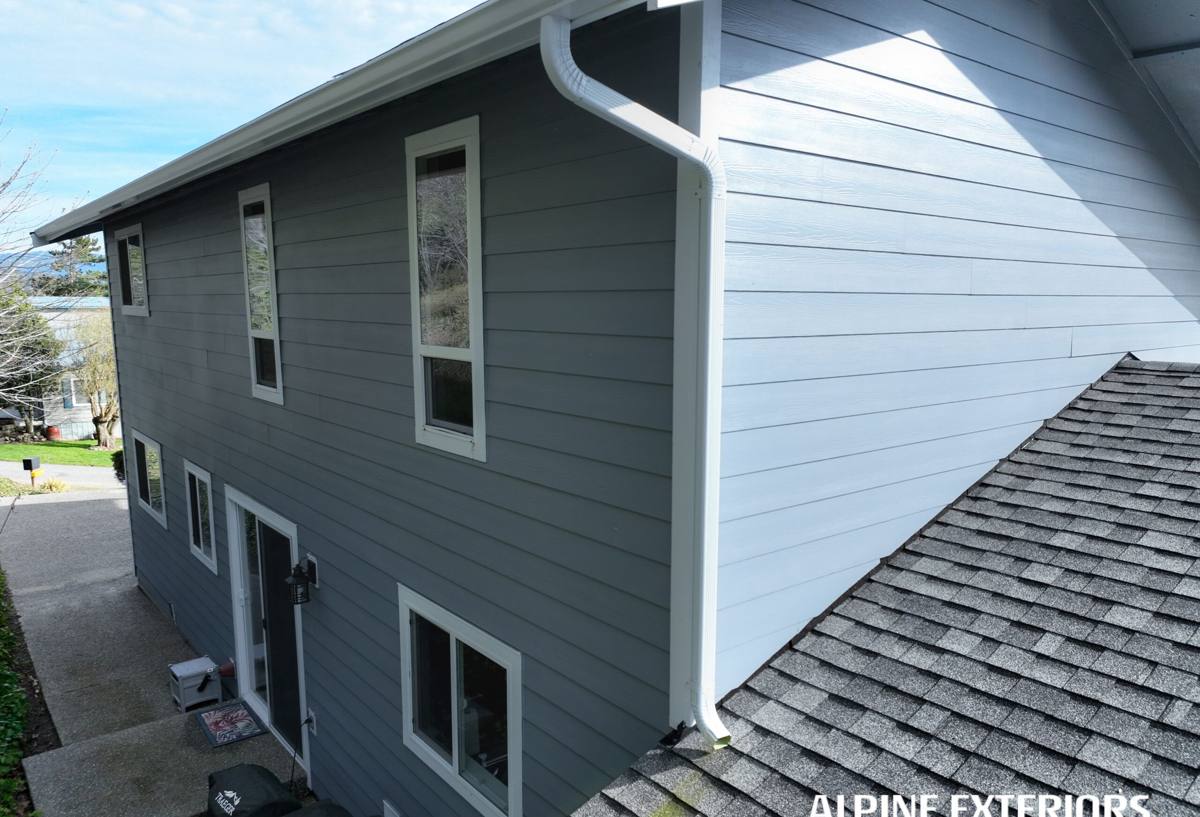
What Puget's Climate Does to a Roof
Salt Air and Corrosion
Proximity to Puget Sound means airborne salt is a constant, low-level presence on every exterior surface, including the roof. Salt accelerates corrosion on unprotected metal fasteners, exposed cut edges, and lower-grade coatings. This doesn't mean metal roofing is a poor fit — it means the metal, coating, and fastener specification all need to be matched to a marine-influenced environment rather than a generic inland spec.
Driving Rain
Storms coming off the water frequently bring rain at an angle rather than straight down. That changes how water moves across a roof surface and, more importantly, how it can be pushed sideways or upward under panel laps, around penetrations, and at wall-to-roof transitions. A roof that would shed water fine in a calm, vertical rainfall can still leak in these conditions if the underlying flashing and seam details weren't built with wind-driven water in mind.
Extended Moss Season
The combination of shade, moisture, and mild temperatures common in this part of Bellingham keeps moss and algae active across a large part of the year, not just a short "wet season." On roofing materials with a textured or porous surface, moss can gain a foothold and hold moisture against the roof deck. Metal roofing's smooth, hard surface gives moss and algae far less to grip, which is one of the practical reasons it holds up well here — but only if the roof is detailed to actually drain rather than pond in low-slope sections or valleys.
What a Correct Metal Roof Installation Includes
"Metal roofing" isn't one product — it's a category, and the difference between a roof that performs for decades and one that causes problems in five years usually comes down to details most homeowners never see once the job is finished.
- A solid, properly ventilated roof deck — soft or under-ventilated decking undermines even the best panel system
- A synthetic or high-temperature underlayment suited to metal roofing, not a generic felt product
- Fasteners and clips rated for coastal/marine exposure, matched to the panel's metal type to avoid galvanic corrosion
- Properly lapped and sealed seams sized for wind-driven rain, not just standard exposure
- Custom-fabricated flashing at every valley, wall intersection, chimney, and penetration — not stock trim stretched to fit
- Ridge and hip venting that keeps the attic dry without creating a path for wind-blown rain to enter
- Ice-and-water shield or equivalent membrane at valleys and eaves, where moss and standing moisture are most likely to concentrate
Choosing the Right Metal Roofing System for This Area
Standing Seam vs. Exposed-Fastener Panels
Standing seam panels conceal their fasteners under raised, interlocking seams, which keeps water and salt air away from the screws entirely. Exposed-fastener panels cost less up front but rely on a field of gasketed screws that sit directly in the weather — in a salt-air environment, that's more hardware exposed to corrosion and more points that can eventually need attention. We install both, but for a Puget home taking direct exposure off the water, we generally recommend standing seam as the more durable long-term choice and explain the trade-off honestly rather than defaulting to the cheaper option.
Coating and Finish
Factory-applied paint systems vary widely in how they hold up to salt air and UV exposure. We steer away from thinner or unrated coatings on coastal-adjacent jobs — not because a given product is "bad," but because a lighter-duty finish is a poor match for this specific exposure and will show chalking, fading, or coating breakdown sooner than a homeowner should have to deal with.
| Factor | Standing Seam | Exposed-Fastener Panel |
|---|---|---|
| Fastener exposure | Concealed under seams | Exposed to weather directly |
| Typical lifespan in coastal exposure | Longer, fewer maintenance items | Shorter without periodic fastener checks |
| Upfront cost | Higher | Lower |
| Moss/algae resistance | Very good (smooth, continuous surface) | Good, but seams and screw heads catch more debris |
| Best fit | Direct water/wind exposure, long-term ownership | Budget-driven projects, outbuildings, shorter hold periods |
Our Process on a Puget Metal Roof
Assessment and Deck Inspection
Every metal roofing job starts with a look at what's underneath the existing roof — decking condition, ventilation, and any signs of past moisture intrusion around valleys or penetrations. Covering up a compromised deck with new metal panels just delays a bigger problem, so this step isn't skipped to save time.
System Selection
Based on the home's exposure, roof pitch, and how much shade and moss pressure the site sees, we recommend a panel type, gauge, and coating that fits the actual conditions rather than a one-size-fits-all package.
Flashing and Detail Work First
Valleys, wall transitions, and penetrations get custom-fabricated flashing before panels go on, sized and lapped for wind-driven rain rather than standard vertical rainfall assumptions.
Panel Installation
Panels are run, seamed, and fastened per the manufacturer's coastal-exposure specifications, with attention to expansion and contraction so the system isn't fighting itself as temperatures shift through the seasons.
Final Water Test and Walkthrough
Before we consider the job done, we walk the roof and review the completed work with the homeowner, including what routine maintenance (if any) the specific system requires going forward.
Maintenance Realities for Metal Roofs Here
One of the honest selling points of metal roofing in this climate is how little ongoing maintenance it demands compared to some alternatives — but "little" isn't "none." A well-installed metal roof in the Puget area still benefits from:
- Periodic clearing of debris from valleys and gutters, especially under overhanging trees
- A visual check after major windstorms for any lifted trim or debris impact
- Keeping gutters and downspouts clear so water isn't backing up under eave flashing
- An occasional look at sealant points around penetrations, which age faster than the panels themselves
We tell homeowners this plainly because a roof that's marketed as "maintenance-free" but isn't ends up disappointing people. Metal roofing done right is low-maintenance, not zero-maintenance.
Common Problems We See on Existing Metal Roofs in the Area
When we're called out to look at an underperforming metal roof in this part of Bellingham, the issues tend to repeat: fasteners installed without coastal-rated hardware, flashing that was bent on-site from stock trim instead of custom-fabricated for the actual roof geometry, and panels run without accounting for wind-driven rain at laps. None of these are flaws in metal roofing as a material — they're installation shortcuts that show up faster in a salt-air, high-wind-rain environment than they would somewhere more sheltered.
Why Local Experience on This Job Matters
Metal roofing systems are unforgiving of guesswork in flashing and fastening — mistakes don't announce themselves right away, they show up as a leak two or three winters later, after driving rain has had enough chances to find a weak seam. A crew that already works in and around Puget has already made the coastal-exposure adjustments — panel selection, fastener grade, flashing details — a standard part of how the job gets bid and built, rather than something figured out after a callback. That familiarity with how this specific stretch of Whatcom County weather behaves is worth more than it sounds like on paper.
Get an Honest Look at Your Roof
If you're weighing metal roofing for a home in the Puget area, we're glad to come take a look, walk you through what your roof's specific exposure and pitch call for, and give you a straightforward, no-pressure estimate — no upsell, just an honest read on what your roof actually needs.