 Bellingham Roofing
 Building Decks for Sehome's Climate and Terrain
Sehome sits close in to central Bellingham, with a mix of older homes on sloped, tree-shaded lots and newer construction closer to the flats. That combination — hillside grading, mature tree cover, and Whatcom County's marine climate — puts specific demands on a deck that a generic build doesn't account for. Salt-tinged air off the Salish Sea, long stretches of driving rain, and a moss season that can run from October through May all work on wood, fasteners, and finishes year-round, not just in a rainy month or two.
A deck built for Sehome has to handle standing shade, slow-drying surfaces, and soil that stays saturated for long stretches most winters. None of that is exotic — it's just Pacific Northwest reality — but it means the build decisions that work fine in a drier climate (fastener choice, ledger flashing, joist spacing, decking material) don't always hold up here the same way.
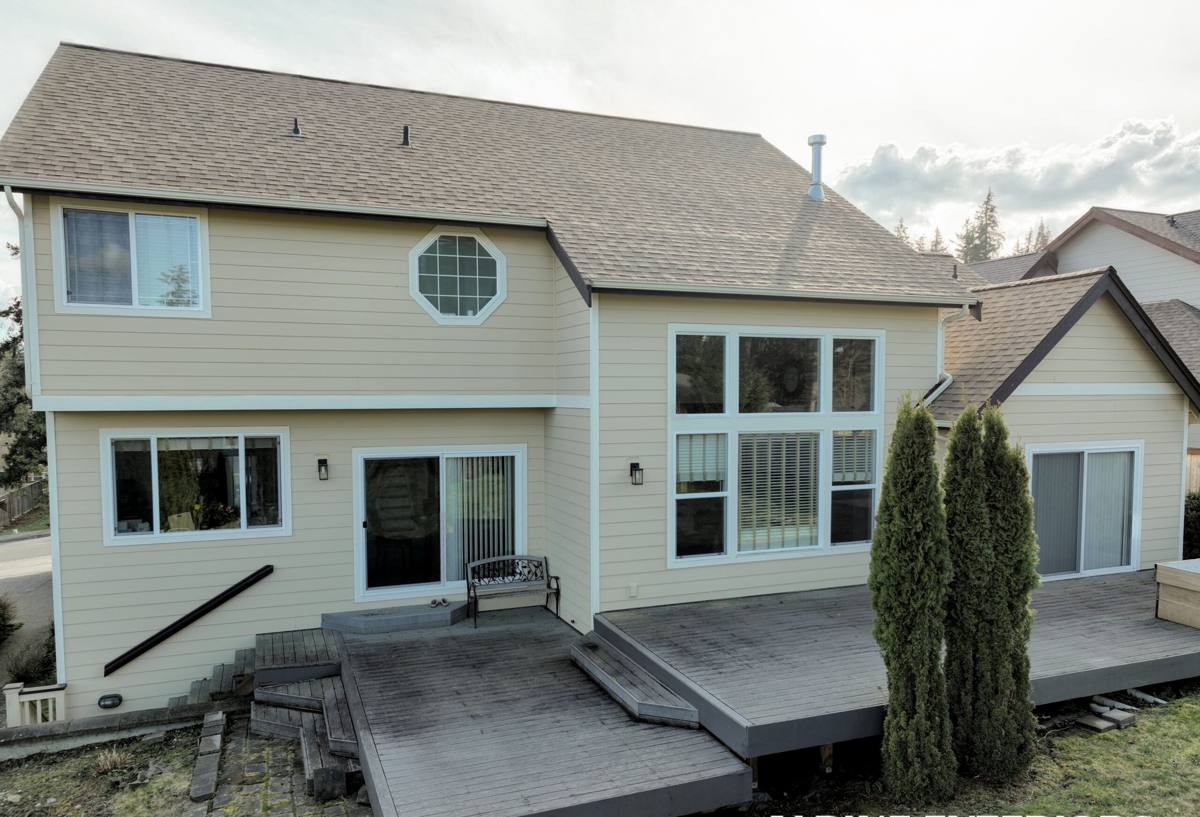
What Sehome Homes Need From a Deck
Shade and Slow Drying
Many Sehome lots have tree cover from neighboring yards or the hillside itself, which means parts of a deck can stay damp long after the rain stops. That slows evaporation, feeds moss and algae growth, and keeps wood at a higher moisture content for more of the year than an open, sun-exposed deck would see.
Slope and Grading
Bellingham's hillier neighborhoods, Sehome included, often mean a deck has to step down a grade, tie into a walkout basement, or sit on footings at varying depths. That's a structural design question as much as a finish-carpentry one — post heights, beam spans, and footing depth all shift with the site.
Salt Air and Metal Fatigue
Bellingham is close enough to saltwater that fasteners, brackets, and hardware see accelerated corrosion compared to an inland build. Over years, that's the difference between hardware that's still tight and hardware that's rusting through where it counts — at the ledger, the post bases, and the joist hangers.
Framing and Substructure: Where Failures Start
Most deck problems we get called out for aren't decking-board problems — they're framing problems that took years to show up. The substructure carries the load and takes the brunt of standing moisture, since it's shaded by the deck boards above it and gets less sun and airflow than the surface.
- Joists and beams sized and spaced for the actual span and load, not the minimum the boards will tolerate
- Ledger board attached and flashed correctly where the deck meets the house — this is the single most common failure point in wet climates
- Post bases set above grade and away from standing water, with proper footing depth for the soil and slope
- Joist hangers and structural connectors rated for exterior, corrosion-prone environments
- Airflow beneath the deck preserved where the site allows it, so the frame can actually dry between rain events
None of this is visible once the deck is finished, which is exactly why it matters who builds it. A deck can look right for a few seasons on bad framing before the problems surface.
Decking Material Choices for a Marine Climate
There's no single "best" decking material — it's a set of trade-offs between upfront cost, maintenance, and how the material behaves under Whatcom County's wet, shaded conditions. Here's how the common options compare for a Sehome-type site:
| Material | Upfront Cost | Maintenance | Behavior in Shade/Moisture |
|---|---|---|---|
| Pressure-treated fir/pine | Lowest | Regular cleaning and re-sealing needed | Prone to splintering, checking, and moss buildup if not maintained |
| Cedar | Mid-range | Periodic cleaning and finish renewal | Naturally rot-resistant but still needs upkeep in constant shade |
| Capped composite | Higher | Occasional washing, no sealing/staining | Resists moisture absorption well; some boards can still surface-stain if debris and moss aren't cleared |
| Uncapped composite | Mid-to-higher | More maintenance than capped composite | More prone to moisture wicking at cut edges and fastener points over time |
Our standard is to steer clients away from uncapped composite in heavy-shade, low-airflow spots like a lot of Sehome yards see — not because it's a bad product everywhere, but because the exposed cut edges and lower moisture resistance are a poor match for a site that doesn't get much sun to dry things out. That's a site-fit call, not a knock on the product.
Railings, Fasteners, and Hardware That Actually Hold Up
Railings and hardware take a different kind of punishment than the deck surface — they're exposed on all sides, and in Bellingham's case, exposed to salt-tinged air as well as rain. We spec stainless or coated hardware rated for coastal exposure rather than the cheapest exterior-rated option, because the cost difference upfront is small compared to replacing rusted-out brackets or hangers five years in. Railing posts get the same attention to base flashing and moisture isolation as the ledger — a post base that traps water against untreated wood is a slow-motion problem no matter how solid the rest of the deck is.
Drainage, Ledger Attachment, and Moisture Management
Where the deck meets the house is the highest-risk point on the whole structure, because it's the one spot where a failure can lead to water getting behind siding or into framing rather than just damaging the deck itself. Correct ledger flashing — installed in the right order relative to the house's water-resistive barrier and siding — is non-negotiable, and it's also one of the easiest things for a rushed or unlicensed crew to get wrong because it's covered up quickly.
Below the deck, grading and drainage matter almost as much. A deck built over a low spot that collects water will stay wet longer after every Whatcom County rain event, which shortens the life of the substructure regardless of what decking material sits on top. We look at where water actually goes on a given lot before finalizing footing placement and, where it makes sense, add simple drainage improvements rather than building on top of a wet-prone grade and hoping for the best.
Our Deck Building Process
1. On-Site Assessment
We walk the actual lot — slope, shade pattern, existing drainage, and how the deck will tie into the house — before talking materials or layout. A design that ignores the site's realities just moves the problems to later.
2. Design and Material Selection
We go over the material trade-offs honestly, based on how much sun and airflow the specific location gets, your maintenance appetite, and your budget. There's no single right answer for every yard.
3. Permitting
Most new decks and many rebuilds in the City of Bellingham require a permit, and structural elements like footings and ledger attachment get inspected for good reason. We handle that process as part of the job rather than leaving it to the homeowner.
4. Framing and Structural Work
This is where most of the long-term performance of the deck is decided — footings, framing, ledger flashing, and hardware selection all get done to hold up under years of Bellingham weather, not just pass a first-year inspection.
5. Decking, Railing, and Finish Work
Surface materials and railings go in last, with attention to fastener placement, board spacing for drainage and expansion, and clean, consistent finish work.
6. Walkthrough
We go over care and maintenance specific to the material you chose, so the deck actually gets the (usually minimal) upkeep it needs to last.
Maintenance Checklist for Sehome Deck Owners
A well-built deck in this climate still needs some seasonal attention, especially in shaded, tree-covered yards. A short annual routine goes a long way:
- Clear leaves, needles, and debris from the deck surface and between boards before fall rains set in
- Wash off moss and algae buildup at least once a year, more often in heavy-shade areas
- Check and re-seal wood decking on the manufacturer's recommended schedule — don't wait for visible graying or checking
- Inspect railing posts and hardware annually for rust staining or loosening
- Confirm the area under the deck isn't holding standing water after a heavy rain
- Look at the ledger board area yearly for any sign of staining, gaps, or soft wood
Why a Local Bellingham Crew Matters for Sehome Projects
A crew that works Sehome and the surrounding Bellingham neighborhoods regularly already knows how the area's shade patterns, slope conditions, and Whatcom County permitting process play out in practice — that's not something a crew traveling in from outside the region picks up on the first job. It also means when a warranty question or a maintenance question comes up two or three years later, you're calling a crew that's still local and still around, not chasing down someone from out of the area.
If you're planning a new deck or need an existing one assessed in Sehome, we're happy to take a look and walk you through your options — no pressure, no obligation. Fill out the form below for a free estimate.