 Bellingham Roofing
 When Siding in Sehome Has Reached the End of Its Useful Life
Sehome sits in central Bellingham, close enough to the Salish Sea to catch salt-laden air on a regular basis, and low enough on the hill in places to hold onto shade, moisture, and moss longer than more open parts of Whatcom County. Add in the driving rain that comes through most of the year, usually on a wind rather than straight down, and siding here works harder than siding in a drier inland climate. Paint film breaks down faster, seams and laps take on more water, and anything with a wood-based or porous substrate has more chances to absorb moisture than it would elsewhere.
Every siding system eventually reaches a point where cleaning, caulking, and spot repairs stop being a real fix and start being a way to delay the inevitable. This page is about that specific decision point for Sehome homes: how to tell when full replacement is the right call, what a correct replacement job actually involves, and why we do it with one product system rather than whatever happens to be cheapest that month.
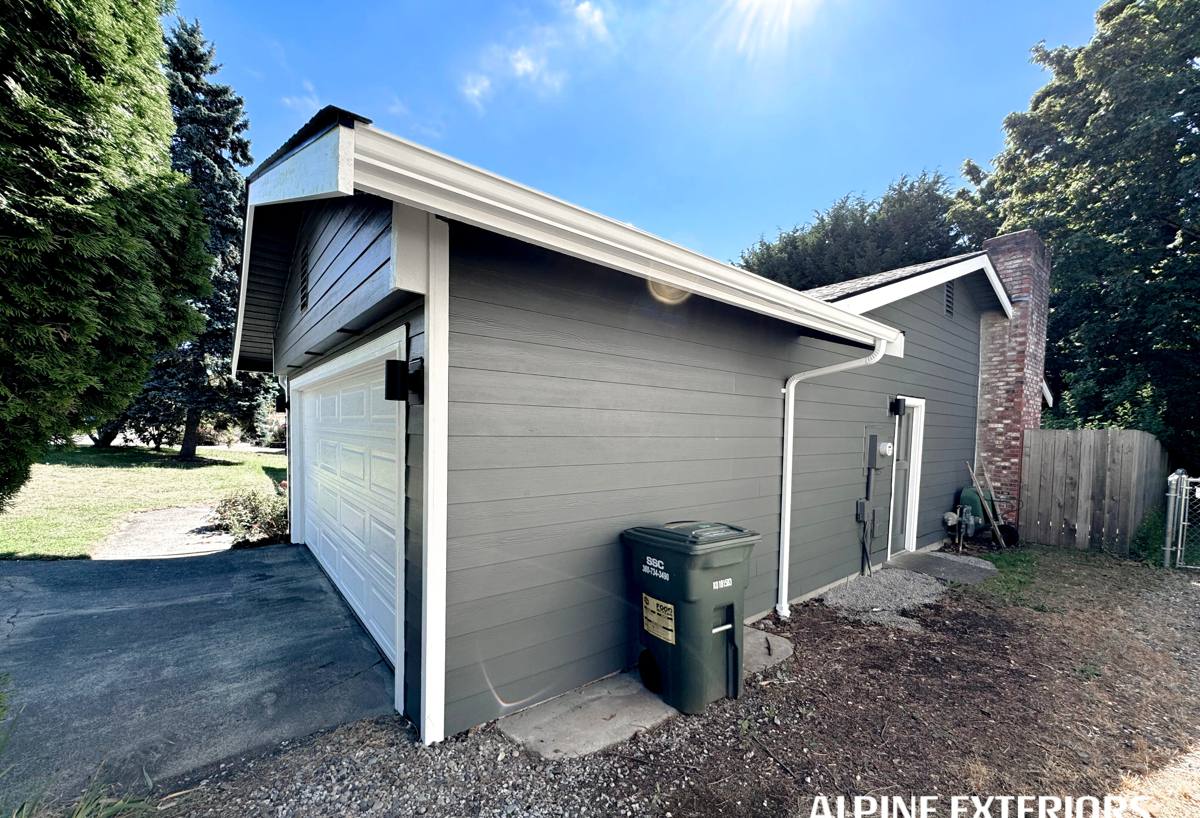
Signs a Sehome Home Needs Full Replacement, Not Another Patch
Repair makes sense when damage is isolated and the rest of the siding is still sound underneath. Replacement makes sense once the damage is spread out, the substrate has absorbed water, or the siding is old enough that any repair would just be a patch on a system that's already failing everywhere else. A few signs tend to separate one situation from the other:
- Soft, spongy, or crumbling siding in more than one or two spots, not just one isolated board
- Paint that keeps failing within a year or two of repainting, especially on shaded or north-facing walls
- Visible warping, buckling, or gaps at seams and laps across multiple sections of the wall
- Moss or dark staining that returns quickly after cleaning, on siding rather than just the roof
- Rot or discoloration on the wall where trim, corner boards, or window casings meet the siding
- Siding that's original to a home more than 20-25 years old, particularly wood-based products
- Interior signs, musty smell, staining on interior walls, that suggest moisture is already getting past the exterior
One or two of these on their own might still be a repair. Several at once, especially combined with age, usually means the assembly behind the siding has already been absorbing water for a while, and a patch job would just be covering that up rather than fixing it.
What a Correct Siding Replacement Actually Involves
A siding replacement is only as good as what happens underneath it. The visible boards are the last step, not the job itself.
Tear-Off and What We Find Behind the Old Siding
Full tear-off means removing the old siding down to the sheathing, which is the only way to actually see what condition the wall is in. On Sehome homes with older siding, that's often where we find the real story: sheathing that's stayed dry and sound, sheathing with soft spots from long-term moisture intrusion, or a water-resistive barrier that's torn, missing, or improperly lapped. Overlaying new siding on top of old without checking any of this just traps whatever problem is already there.
Water-Resistive Barrier and Flashing
Behind the siding, a correctly lapped water-resistive barrier and properly integrated flashing at every window, door, and penetration are what actually keep wind-driven rain out of the wall. This is the detail that separates a job that holds up through Bellingham's wet season after wet season from one that leaks again within a few years. Flashing has to be lapped shingle-style, top piece over bottom, so water sheds down and out rather than working its way behind the barrier.
Fastening, Clearances, and Manufacturer Spec
Fiber cement siding has a fastening schedule, clearance requirements, and joint treatment spelled out by the manufacturer, and those specs exist because they were tested against real weather exposure, not because they're arbitrary. Correct nail placement, proper gaps at trim and flashing, and the right clearance above grade, decks, and roof lines all affect how well the assembly sheds water and how long the finish holds up. Skipping these details is one of the most common ways a siding job fails early, regardless of which product went up.
Why We Replace Old Siding With James Hardie Fiber Cement, and Nothing Else
We install James Hardie fiber cement exclusively. We don't install LP SmartSide, vinyl siding, Cemplank, Allura, primed spruce, or cedar. That's a professional standard we settled on after years of tear-offs and service calls, not a supplier arrangement, and it comes directly from what this climate does to a wall over time.
- Non-combustible core: fiber cement doesn't feed a fire the way wood-based siding can, which matters for homeowner safety and can matter for insurance.
- Factory-applied ColorPlus finish: color and finish are baked on under controlled conditions rather than brushed on in the field, so it resists fading and moisture better than site-applied paint over time.
- HZ5 formulation: engineered specifically for regions with heavy rain and freeze-thaw cycling, which is a reasonable description of Whatcom County's climate.
- Dimensional stability: fiber cement doesn't swell, cup, or warp the way engineered wood products can after repeated wet-season exposure.
- Transferable warranty: Hardie backs the product with a strong warranty structure, provided the installation follows their published specification.
Other products on that list aren't bad products in every setting, and plenty of homeowners elsewhere are satisfied with them. Our call is specific to what we consistently see in a marine climate with this much sustained moisture: vinyl that cracks and gaps as it ages and lets water track behind it, engineered wood that can swell or delaminate at cut edges and fastener points if moisture gets in, and site-finished materials that need more frequent repainting to keep their protective layer intact. We'd rather stand behind one system fully than sell a cheaper option and let the homeowner discover the trade-offs years later.
Choosing a Hardie Product Line and Finish for a Sehome Home
Hardie's lineup covers a range of looks that suit different home styles found around Sehome, from older bungalows and mid-century houses to newer infill construction.
| Product Line | Look | Common Use |
|---|---|---|
| HardiePlank lap siding | Traditional horizontal lap, smooth or wood-grain texture | Most common choice for full replacements on older Bellingham homes |
| HardieShingle | Staggered or straight-edge shingle profile | Accent areas, gables, or full facades on a more traditional or coastal-style home |
| HardiePanel with battens | Vertical board-and-batten look | Modern or farmhouse-style exteriors, often paired with lap siding on the same home |
| HardieTrim | Smooth trim boards for corners, fascia, and window surrounds | Paired with any of the above for a finished, consistent look |
Color is worth the same amount of attention as profile. A factory ColorPlus finish in a darker tone will show less staining from moss and pollen between cleanings than a very light color on a shaded, north-facing wall, which is a real consideration on the more tree-covered lots around Sehome. We walk through color and profile options as part of the estimate rather than assuming one answer fits every home.
Our Siding Replacement Process, Start to Finish
- Walk-through and estimate: we inspect the current siding, trim, and visible wall condition, and give a written estimate based on what we actually see, not a generic price list.
- Tear-off: old siding comes off down to the sheathing, and we document anything unexpected before covering it back up.
- Substrate repair: any soft or water-damaged sheathing gets replaced before anything new goes back on the wall.
- Water-resistive barrier and flashing: a new barrier goes on correctly lapped, with flashing integrated at every window, door, and penetration.
- Hardie installation: siding, trim, and any accent profiles go up to manufacturer fastening and clearance specifications.
- Caulking, touch-up, and cleanup: joints are sealed where specified, factory finish is touched up as needed, and the site is cleared of debris and old material.
- Final walkthrough: we go over the finished job with the homeowner before considering it done.
Cost Factors in a Sehome Siding Replacement
| Factor | Why It Matters |
|---|---|
| Home size and wall area | More square footage means more material and labor, the biggest single driver of overall cost |
| Tear-off vs. what's found underneath | Sound sheathing keeps a job on schedule; water-damaged sheathing adds repair time and material |
| Trim, window, and gable complexity | More corners, casings, and transitions mean more cutting, fitting, and flashing detail |
| Product line and profile | Lap siding, shingle profile, and board-and-batten carry different material and labor costs |
| Access and lot conditions | Sloped, shaded, or tightly landscaped lots around Sehome can add setup and staging time |
Exact numbers depend on the specific home and what tear-off reveals, which is why we give real estimates after a walk-through rather than a number over the phone.
Why Hiring a Crew That Already Works Sehome Matters
A crew that replaces siding across Bellingham on a regular basis has already seen how salt air, driving rain, and a long moss season play out on real walls through a full year of weather, not just on a spec sheet. That shows up in small decisions on a Sehome job: how much attention a shaded, tree-covered lot needs at flashing and clearance details, which colors hold up better on north-facing walls nearby, and how to sequence tear-off and substrate repair on an older home without surprises derailing the schedule. A contractor unfamiliar with this specific climate is more likely to apply generic details that don't quite account for what this part of Bellingham does to a wall over time.
Get a Free, No-Pressure Estimate
If your Sehome home's siding is showing its age, or you're just not sure whether it needs a repair or a full replacement, we're happy to take a look and walk you through what we find, plainly and without a sales script. Use the form below to schedule a free estimate.