 Bellingham Roofing
 Storm Damage Roof Repair for South Hill Homes
South Hill sits up above much of Bellingham, which means it catches wind and driving rain a little differently than the flats below. Add in Whatcom County's long wet season, salt-laden air off Bellingham Bay, and the mature tree canopy that shades a lot of South Hill's older lots, and you've got a roof environment that punishes shortcuts. When a windstorm rips shingles loose, a branch comes down, or weeks of rain finally find the one spot a roof couldn't hold anymore, homeowners need a repair that actually solves the problem — not a tarp and a promise.
This page covers what storm damage repair looks like specifically for South Hill: the risks this part of Bellingham deals with, what a correct repair involves, and how our process works from the first call to the final inspection.
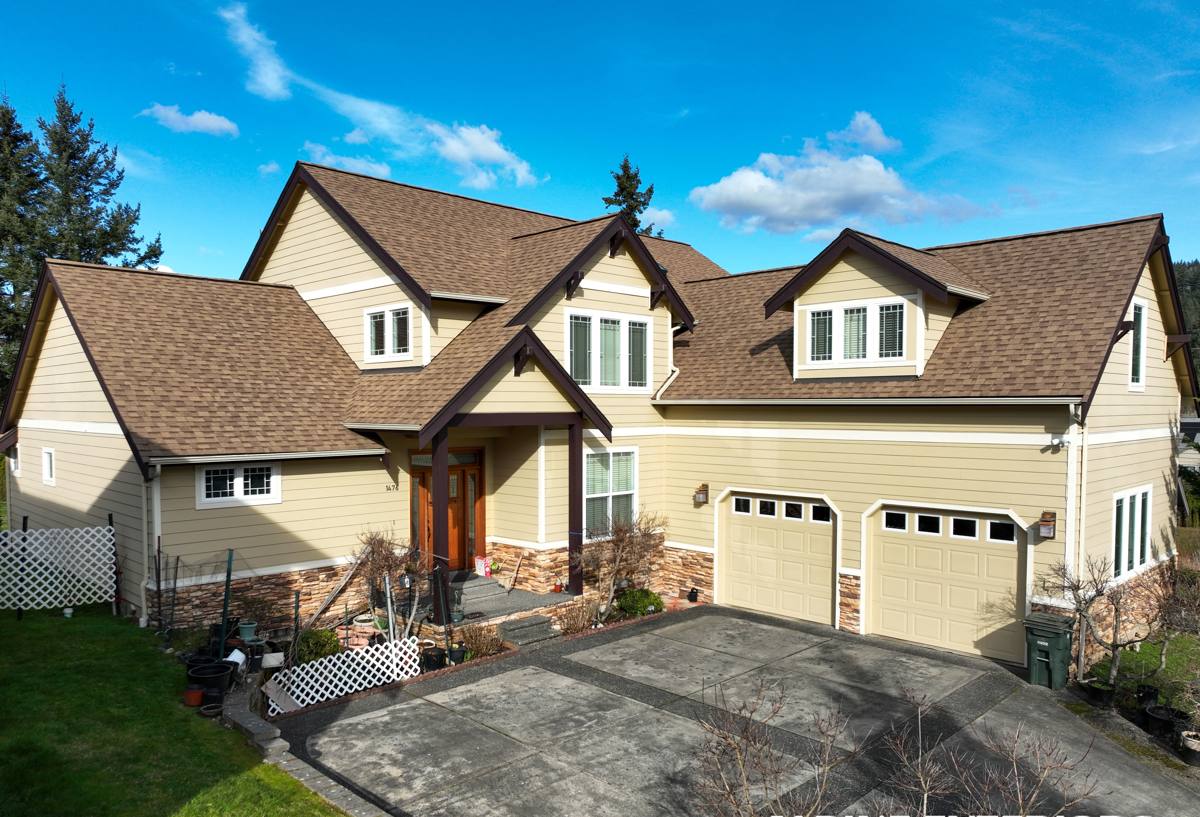
Why South Hill's Position and Age Work Against a Roof
South Hill isn't unique in Bellingham for having weather — but its elevation and older housing stock combine in a way that's worth understanding before any repair work starts.
Elevation and Wind Exposure
Being up on the hill means more direct exposure to gusts coming off the water, especially during the fall and winter storm cycles that move through Whatcom County. Wind doesn't just lift shingles at the edges and ridge — it can drive rain sideways under flashing and starter courses that would stay dry on a more sheltered roof.
Tree Cover and Debris
Many South Hill properties have mature trees close to the roofline. That's good shade in August and a real liability in a windstorm — falling limbs cause point damage (cracked shingles, punctured decking, dented gutters) that's easy to miss from the ground. Constant leaf and needle litter also feeds moss growth, which we'll get to below.
Older Roof Systems
A good share of South Hill's homes were built well before today's underlayment, flashing, and ventilation standards existed. A storm doesn't create a weak roof — it finds one. If the decking, flashing details, or attic ventilation were already marginal, a storm event is often what turns a hidden problem into a visible leak.
Salt Air, Driving Rain, and Bellingham's Moss Season
Three regional factors show up in almost every storm repair we do in this area:
- Salt air: Proximity to Bellingham Bay accelerates corrosion on exposed fasteners, flashing, and metal drip edge — a storm-damaged section with already-corroding metal fails faster than a fresh one.
- Driving rain: Wind-driven rain doesn't behave like straight-down rain. It gets pushed under laps, around vents, and into gaps that would never leak in calm weather, which is why storm-related leaks often show up somewhere other than the obvious damage.
- Moss season: Whatcom County's long damp stretch from fall through spring keeps roofs wet for extended periods, and moss takes hold anywhere debris collects or sunlight is limited. Moss lifts shingle edges and holds moisture against the roof surface, which is exactly where wind and rain damage tends to start.
None of these factors cause storm damage on their own, but they all make a storm-damaged roof worse, faster, if the repair isn't done correctly.
What a Correct Storm Damage Repair Actually Involves
A quick patch over visible damage is the most common corner cut in storm repair — and it's the one that causes callbacks. A repair done right addresses what's underneath, not just what's on top.
Full Inspection Before Any Work
We look past the obvious damage: decking condition under lifted or missing shingles, flashing at chimneys, walls, and valleys, gutter and downspout function, and attic-side signs of moisture that haven't reached the ceiling yet.
Matching the Repair to the Damage
Not every storm event needs a full section torn off. Isolated wind lift or a single impact point can often be repaired properly with matching materials and correct fastening. Widespread granule loss, multiple compromised layers, or decking rot changes that calculus — and we'll tell you honestly which situation you're in.
Fixing the Cause, Not Just the Symptom
If a leak traces back to failed flashing, inadequate ventilation, or moss that's been holding moisture against the deck, we address that root cause as part of the repair. Covering a symptom without fixing the cause just means the same call in a year or two.
How Our Process Works
- Initial call and scheduling: We ask what happened, when, and what you've noticed since — that helps us prioritize urgent leaks ahead of cosmetic damage.
- On-site inspection: We get on the roof (not just a look from the driveway) and document damage with photos, including anything relevant for an insurance claim.
- Honest scope and options: You get a clear explanation of what's damaged, what needs repair versus what can wait, and a written estimate.
- The repair itself: Matched materials, correct fastening patterns, and proper flashing detail — done to hold up through the next storm, not just look finished.
- Final walkthrough: We show you what was done and what to keep an eye on going forward.
Repair or Replace? What Actually Decides It
After a storm, the question homeowners want answered fastest is whether this is a repair or the start of a full replacement conversation. Here's how we think through it:
| Situation | Repair Is Usually Sufficient | Replacement Worth Discussing |
|---|---|---|
| Damage extent | Isolated area, single slope, or a few shingles | Multiple slopes or widespread granule loss |
| Roof age | Roof has years of expected life left | Roof was already near end of service life |
| Decking condition | Solid, dry decking under the damage | Soft, rotted, or repeatedly wet decking |
| Moss and moisture history | First real issue, well-maintained roof | Long-term moss buildup with underlying damage |
| Underlying materials | Flashing and underlayment still sound | Flashing or underlayment already failing |
We'll always recommend the repair when it's the honest, durable answer. We only bring up replacement when a repair genuinely wouldn't hold.
Materials and Methods for Storm Repairs in This Climate
Given the driving rain and salt air South Hill roofs deal with, we're particular about a few things during any storm repair:
Flashing and Fasteners
We use corrosion-resistant flashing and fasteners rather than whatever's cheapest, since standard hardware degrades faster this close to the water. This is a durability decision, not a brand preference — the goal is a repair that doesn't need redoing in a few years because the metal gave out first.
Underlayment at Repair Edges
Where we tie a repair into existing roofing, proper underlayment and lap technique at the transition matters more than the shingle itself — that's usually where wind-driven rain finds its way in if it's done wrong.
Moss and Debris Removal
Any repair on a roof with moss buildup includes clearing it from the work area and surrounding sections first. Repairing over trapped moisture just seals the problem in.
What to Do in the First 24–48 Hours After Storm Damage
- Photograph visible damage from the ground — don't get on the roof yourself
- Check attic spaces and ceilings for new staining, dampness, or light coming through
- Clear debris away from downspouts and gutter outlets so water can drain
- Note the date and approximate time of the storm for insurance purposes
- Avoid tarping or covering damage yourself unless it's a safe, ground-accessible area
- Call for an inspection before smaller damage turns into a bigger leak
Why Hiring a Crew That Already Works South Hill Matters
Storm repair isn't just a general roofing skill — it's knowing what this specific hill does to a roof. A crew that regularly works South Hill has already seen how wind behaves coming off the bay at this elevation, how fast moss reestablishes under this tree cover, and which flashing details tend to fail first on the area's older homes. That familiarity shows up in fewer surprises during the inspection and a repair scope that's realistic the first time, not revised after the fact.
It also matters for accountability. A local crew that plans to keep working in your neighborhood has every reason to do the repair right the first time and stand behind it — not just move on to the next storm-chasing job in a different city.
Get a Straight Answer on Your Roof
If a recent storm left you with missing shingles, a new leak, or damage you're not sure how serious it is, we're glad to take a look. The estimate is free, there's no pressure, and you'll get a straight answer about whether you're looking at a repair or something bigger — just fill out the form below to get started.