 Bellingham Roofing
 Deck Repair Built for Sudden Valley's Conditions
Sudden Valley sits in a pocket of Whatcom County that's tougher on outdoor wood structures than most people realize. Between the tree cover, the proximity to Lake Whatcom, and the hilly, shaded lots that make up much of the community, decks here take on moisture in ways that decks in open, sunny parts of Bellingham simply don't. Add in the region's long wet season and the moss that comes with it, and you've got a recipe for hidden rot, soft boards, and loose framing that isn't always obvious from a quick look.
We repair decks throughout Sudden Valley regularly, and the patterns repeat: ledger boards pulling moisture from the house wall, joists staying damp for weeks because the sun never really hits that side of the yard, and railings that look fine until you actually put weight on them. This page walks through what we look for, what a proper repair actually involves, and why it pays to hire a crew that already understands how this specific neighborhood's decks age.
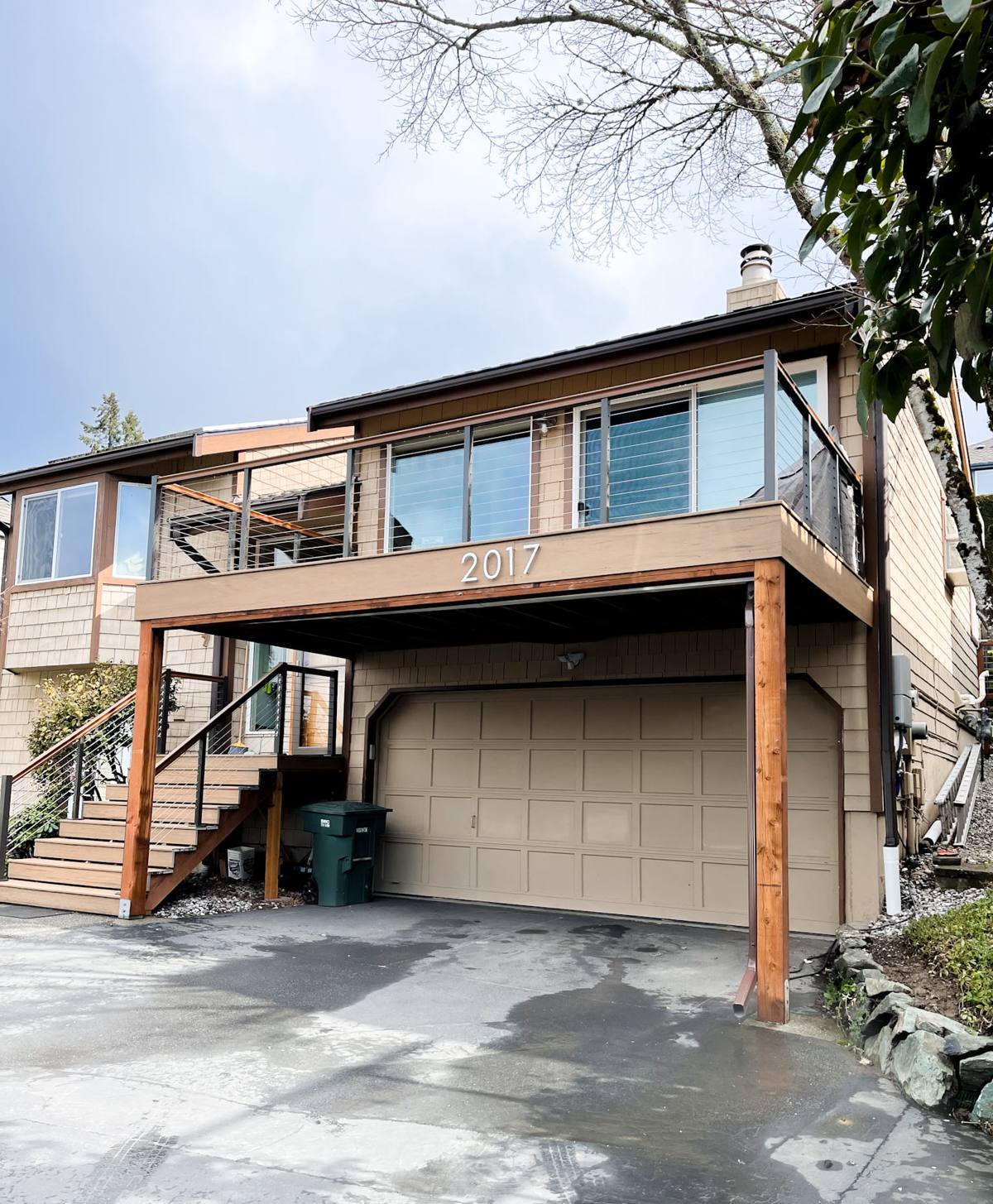
Why Decks in Sudden Valley Wear Differently
Whatcom County's climate is defined by long stretches of driving rain, salt-tinged air moving in off the Sound, and a moss season that can run from fall through spring. In Sudden Valley specifically, that general regional pattern gets amplified by local terrain: many lots are wooded or built into slopes near the lake, which means decks often sit in partial or heavy shade for large parts of the day. Shade keeps surfaces damp longer after every rain, and damp wood is exactly what moss, mildew, and rot organisms need to take hold.
What This Means in Practice
- Boards on the shaded side of a deck often show rot years before boards on the sunny side, even on the same structure.
- Moss buildup on decking isn't just cosmetic — it holds moisture against the wood surface and accelerates decay underneath.
- Ledger boards (where the deck attaches to the house) are a common trouble spot because they trap moisture between the deck framing and the wall if flashing wasn't installed correctly the first time.
- Fasteners and hardware corrode faster near the lake and in persistently damp, shaded conditions, which weakens connections long before the wood itself looks bad.
Signs Your Deck Needs Repair
Most deck problems don't show up as one dramatic failure — they show up as small warning signs that get ignored until they're expensive. Here's what we'd want a Sudden Valley homeowner to check before calling anyone:
- Soft, spongy, or springy spots when you walk across the deck
- Visible moss or dark green-black staining on boards, especially in shaded corners
- Railings or posts that wobble or flex when pushed
- Gaps opening up between decking boards or around the ledger board
- Rust streaks around screws, nails, or joist hangers
- Stairs that feel less solid than they used to
- A musty smell coming from underneath the deck
Any one of these on its own might be minor. Several at once usually means the framing underneath needs a closer look, not just a surface fix.
What a Correct Deck Repair Job Involves
A repair that just replaces the boards you can see is a repair that's likely to fail again within a season or two, especially in a shaded, moisture-heavy setting like Sudden Valley. A correct repair starts underneath, not on top.
Structural Inspection First
Before replacing anything, we check the ledger board attachment and flashing, the condition of the joists and beams, post bases where they meet the ground or a concrete footing, and every connection point where hardware has been exposed to years of damp weather. This is the step that gets skipped by anyone just swapping out bad-looking boards, and it's the step that actually determines whether a repair holds.
Addressing the Moisture Source
If a deck is failing because of trapped moisture — bad flashing at the ledger, poor drainage underneath, or boards installed tight against each other with no room to dry — replacing the wood without fixing that underlying issue just resets the clock on the same failure. We treat the moisture pathway as part of the repair, not a separate problem.
Matching Materials and Fasteners
We use fasteners and hardware rated for exterior, damp-climate use, and we match decking material to what's already on the structure where that makes sense, or recommend a change if the original material is part of why it failed. Mixing incompatible metals or using interior-grade hardware outdoors is a shortcut that shows up as rust and loosening within a couple of wet seasons.
Repair vs. Replace: How We Help You Decide
Not every deck problem means a full rebuild, and not every deck is worth patching indefinitely. We look at the structure honestly and tell you which side of the line it's on.
| Factor | Repair Usually Makes Sense | Replacement Usually Makes Sense |
|---|---|---|
| Framing condition | Joists and beams are solid; only surface boards or isolated members are damaged | Multiple joists, beams, or the ledger board show significant rot |
| Age of structure | Deck is relatively young or was built with quality materials | Deck is old and multiple systems (framing, decking, railings) are failing together |
| Extent of moisture damage | Damage is localized to one area (a corner, a few boards, one post) | Damage is widespread or the moisture source has been active for years |
| Code and safety | Current structure meets safe spacing and attachment standards | Older railings, spacing, or attachment methods no longer meet current safety expectations |
| Cost over time | Repair cost is a small fraction of what full replacement would cost | Repeated repairs are adding up close to what a rebuild would cost |
We'll walk the deck with you, point out exactly what we're seeing, and give you a straight answer rather than steering you toward the bigger job by default.
Our Deck Repair Process
- On-site assessment. We inspect the deck from underneath as well as on top, checking framing, ledger attachment, posts, and hardware condition, not just the visible surface.
- Written scope and estimate. You get a clear breakdown of what needs to be fixed, why, and what it will cost — no vague allowances.
- Removal of damaged material. We pull out compromised boards, framing, or hardware and check the surrounding area for damage that isn't visible until the bad section is opened up.
- Structural repair. Joists, beams, posts, or ledger connections get repaired or replaced to current standards, with attention to flashing and drainage so water doesn't get trapped again.
- Decking and railing work. New boards, railings, or stair components are installed with appropriately rated, corrosion-resistant fasteners.
- Final walkthrough. We check the deck is solid, level, and safe, and point out anything you should keep an eye on going forward.
Materials and Products We Use
We install and repair with both treated lumber and composite decking, depending on the homeowner's budget, the existing structure, and how the deck sits relative to shade and moisture. Each has real trade-offs worth understanding rather than a clear "best" answer.
Treated Lumber
Lower upfront cost and a natural look, but it requires regular cleaning and refinishing to hold up against moss and moisture, especially in shaded spots. Skipping that maintenance is one of the most common reasons we get called for repairs.
Composite Decking
Higher upfront cost but far less ongoing maintenance, and it resists moss and moisture damage better than untreated or under-maintained wood. The trade-off is that composite is less forgiving of poor installation — fastening, spacing for expansion, and ventilation underneath all have to be done correctly, or you trade one set of problems for another. We follow manufacturer installation specs closely because that's what protects the warranty and the long-term performance.
Whichever material a deck already has, our standard is the same: fix the structure underneath properly, use hardware rated for wet, shaded conditions, and don't cut corners that will just bring the deck back to us in two years.
Why Hiring a Crew That Already Works Sudden Valley Matters
A deck repair crew that mostly works dry, open lots elsewhere in Bellingham may not think twice about shade, lake-adjacent moisture, or how long moss season really runs in a wooded community like Sudden Valley. We work in this neighborhood regularly, which means we're not guessing at how local conditions affect the repair — we've seen which spots on a Sudden Valley deck fail first, how fast moss builds back in shaded corners, and what actually holds up through a full Whatcom County winter here versus what just looks fixed for a season.
That local familiarity also means a faster, more accurate estimate. We're not learning the neighborhood's quirks on your job.
Maintenance That Extends Your Deck's Life
After a repair, a little upkeep goes a long way toward not needing another one soon, particularly in shaded, damp conditions:
- Sweep leaves and debris off the deck regularly, especially in fall, so they don't trap moisture against the boards
- Clean moss off decking and railings before it builds up thick enough to hold water against the surface
- Check underneath the deck once or twice a year for standing water, soft wood, or rust on hardware
- Keep gutters and downspouts near the deck clear so runoff isn't draining directly onto or under it
- Reseal or refinish treated lumber on the schedule the product calls for, not just when it looks faded
If you're dealing with a soft spot, a wobbly railing, or a deck that's just starting to show its age, we're happy to take a look and give you an honest assessment. Fill out the form below for a free, no-pressure estimate.