 Bellingham Roofing
 Asphalt Shingle Roofing Built for York's Weather, Not Just Any Weather
York sits close enough to Bellingham Bay and the surrounding marine air that roofs here take a different kind of beating than roofs twenty miles inland. It's not one big storm that does the damage — it's the accumulation. Salt-laden air working on metal fasteners and flashing. Driving rain that comes in sideways off the water and finds every gap in a lazy install. And a moss season that, in Whatcom County, isn't really a season at all — it's most of the year. An asphalt shingle roof that's designed and installed with those three things in mind will outlast one that was put on the same way you'd put on a roof in Spokane or Yakima.
This page is specifically about asphalt shingle roofing for York homes — what the climate demands, what a correct installation actually involves, and how we approach the job when we're already working in the neighborhood.
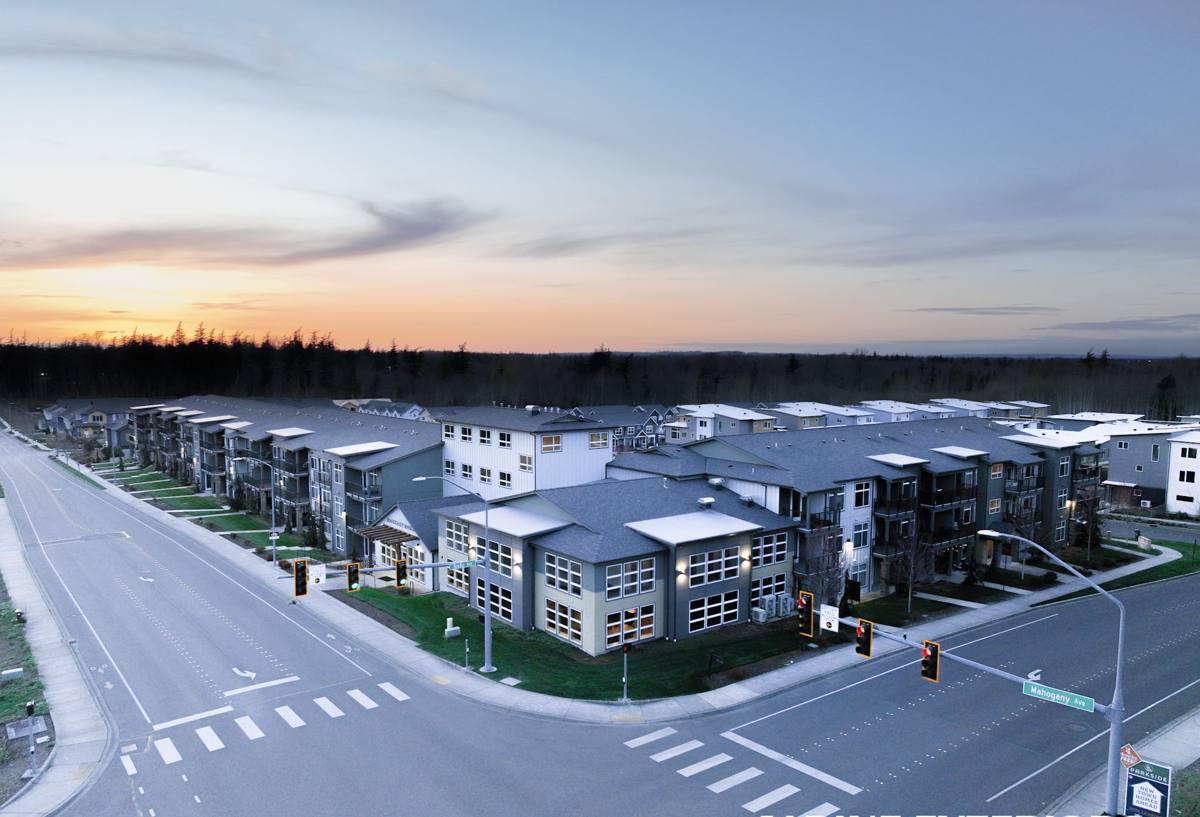
What York's Climate Actually Does to a Shingle Roof
Salt Air and Corrosion
Homes closer to Bellingham Bay deal with a slow, steady corrosive load on anything metal. Roofing nails, drip edge, flashing, and vent stacks all take that exposure over time. Standard electro-galvanized fasteners can start losing their coating faster near the water than they would further inland, which is why fastener and flashing material selection matters more here than it does in a lot of other parts of the county.
Driving Rain
Bellingham gets a lot of rain, but it's the wind-driven rain off the water that causes the real problems on a shingle roof — it pushes water sideways and upward under laps that would hold fine in a straight-down rain. That means underlayment coverage, shingle nailing pattern, and valley and edge detailing all have to be done to handle water that isn't just falling, it's being pushed.
Moss and Sustained Moisture
Whatcom County's combination of shade, humidity, and mild temperatures is close to ideal for moss growth on north-facing and shaded roof slopes. Moss holds moisture against the shingle surface, works its way under tabs, and lifts granules over time, which shortens the life of the roofing even if nothing looks obviously wrong yet. A roof that isn't detailed and maintained with moss in mind will show premature wear years before a roof that is.
What a Correct Asphalt Shingle Job Looks Like Here
A shingle roof is a system, not a single product. The shingle itself gets most of the attention, but in a climate like York's, the details around it are what actually determine how long the roof performs.
- Underlayment: synthetic or self-adhered underlayment with full coverage, not just the minimum required by code, especially in valleys and at eaves
- Ice and water shield at vulnerable points: valleys, eaves, and around penetrations, even though York doesn't see heavy ice — this membrane also does double duty against wind-driven rain
- Drip edge and flashing: corrosion-resistant metal at all edges, valleys, and roof-to-wall transitions
- Proper nailing pattern: correct nail count and placement per shingle, set to the manufacturer's high-wind specification, not the bare minimum
- Ventilation: balanced intake and exhaust so the attic isn't trapping moisture that condenses back onto the roof deck from underneath
- Valley detailing: woven, closed-cut, or open metal valleys installed correctly for the shingle type, since valleys are where driving rain concentrates
Skip any one of these and the shingle itself doesn't matter much — water finds the weak point, not the strongest part of the roof.
Choosing the Right Shingle for a Marine Climate
Not every asphalt shingle product is built the same way, and in a coastal, moss-prone climate the differences matter more than they would somewhere drier. We install shingles rated for the wind and moisture exposure this area actually sees, and where it fits the budget, we'll talk through algae-resistant (AR) shingle options — these are treated to resist the blue-green algae that causes the dark streaking you see on a lot of older Pacific Northwest roofs. It's a different organism than moss, but the same damp, shaded conditions that grow moss also feed algae staining.
| Shingle Tier | Typical Lifespan (PNW climate) | Best Fit |
|---|---|---|
| 3-tab / economy | 15–20 years | Budget-driven projects, rentals |
| Architectural / dimensional | 25–30 years | Most York homes — better wind rating, better look |
| Premium algae-resistant dimensional | 30+ years | Shaded lots, north-facing slopes, moss-prone roofs |
These are general ranges, not guarantees — actual lifespan depends on slope, shading, ventilation, and maintenance as much as the product itself. We'll give you honest numbers for your specific roof during the estimate, not a sales pitch.
Our Process for a York Roof Replacement or Repair
1. On-Site Assessment
We walk the roof, not just look at it from the ground. We're checking deck condition, existing ventilation, flashing condition, and how much shade and moss exposure the roof actually gets based on tree cover and orientation — that shapes the shingle and ventilation recommendations we make.
2. Straightforward Estimate
You get a written scope covering materials, tear-off, disposal, flashing and ventilation work, and timeline. No vague line items. If your roof has a moss or moisture problem that goes beyond the shingle layer — like deck rot — we'll show you what we find, not just quote around it.
3. Tear-Off and Deck Inspection
Full tear-off lets us actually inspect the deck, which you can't do accurately over an existing layer. Any soft or water-damaged decking gets replaced before anything new goes down — covering a bad deck with a new roof just moves the problem underground.
4. Installation to Manufacturer and High-Wind Spec
Underlayment, flashing, and shingles go on in that order, with nailing and fastening done to the manufacturer's high-wind requirements, which also keeps the product warranty intact.
5. Final Walkthrough
We walk the finished roof with you, cover what maintenance (if any) it'll need, and make sure gutters and downspouts are clear before we leave.
Why Hiring a Crew That Already Works York Matters
A roofing crew that regularly works this part of Bellingham already knows which streets sit closer to the salt air, which lots have heavier tree cover and moss pressure, and how the wind tends to come off the bay during a fall storm. That's not marketing — it changes real decisions, like which valley detail to use or whether a particular slope needs extra ventilation. A crew coming from outside the area is starting from zero on all of that, and asphalt shingle roofing has enough judgment calls in it that local experience shows up in how long the roof actually lasts.
There's also a practical side: being local means faster response if a storm causes damage, easier scheduling for a follow-up inspection, and a crew that's still around and accountable years after the install — not a name you found once and can't reach again.
Maintenance That Actually Extends the Roof's Life
Asphalt shingle roofs in this climate aren't zero-maintenance, and treating them that way is the most common way homeowners shorten their own roof's lifespan.
- Keep gutters and downspouts clear so water isn't backing up under the eave line
- Remove overhanging branches to cut down on shade and debris that feed moss growth
- Have moss physically removed (not pressure-washed, which strips granules) rather than left to spread
- Get a roof checked after any major windstorm, even if nothing looks obviously wrong from the ground
- Schedule a periodic inspection every few years rather than waiting for a visible leak
None of this replaces a correct installation, but it's the difference between a shingle roof hitting the top or bottom of its expected lifespan range.
Signs a York Roof Needs Attention
Because moss and salt-air corrosion work slowly, a lot of homeowners don't notice a problem until it's already affected the deck underneath. Watch for granules collecting in gutters, shingle edges that look curled or lifted, dark streaking on shaded slopes, visible moss growth, or any soft spot when the roof is walked. Rusted fasteners or flashing showing through paint or coating is also worth a look, since that's the salt-air corrosion process at work. Catching these early is almost always cheaper than waiting for an interior leak to show up.
Get a Straightforward Estimate
If you're weighing a repair against a full replacement, or just want an honest read on how much life is left in your current roof, we're glad to come take a look. We'll give you a free, no-pressure estimate based on what your roof actually needs — use the form below to get started.