 Bellingham Roofing
 Asphalt Shingle Roofing Built for Fairhaven's Conditions
Fairhaven sits close to the water, wrapped in mature trees, and squarely in Bellingham's wet, gray-sky weather pattern. That combination is harder on a roof than most homeowners realize. Salt-laden air off the bay accelerates corrosion on fasteners and flashing. Driving rain off Puget Sound tests every seam and lap in an underlayment system. Heavy tree cover keeps roof surfaces shaded and damp long after a storm passes, which is exactly what moss and algae need to take hold. An asphalt shingle roof that's correctly specified and installed for these conditions can perform well for decades. One that's installed generically, the way it might be in a drier inland climate, tends to show problems early — granule loss, moss colonies, soft spots at the eaves, and premature flashing failure.
This page is about doing the job right for this specific neighborhood: the materials that make sense here, the installation details that matter in a marine, tree-shaded climate, and what ongoing care looks like once the roof is on.
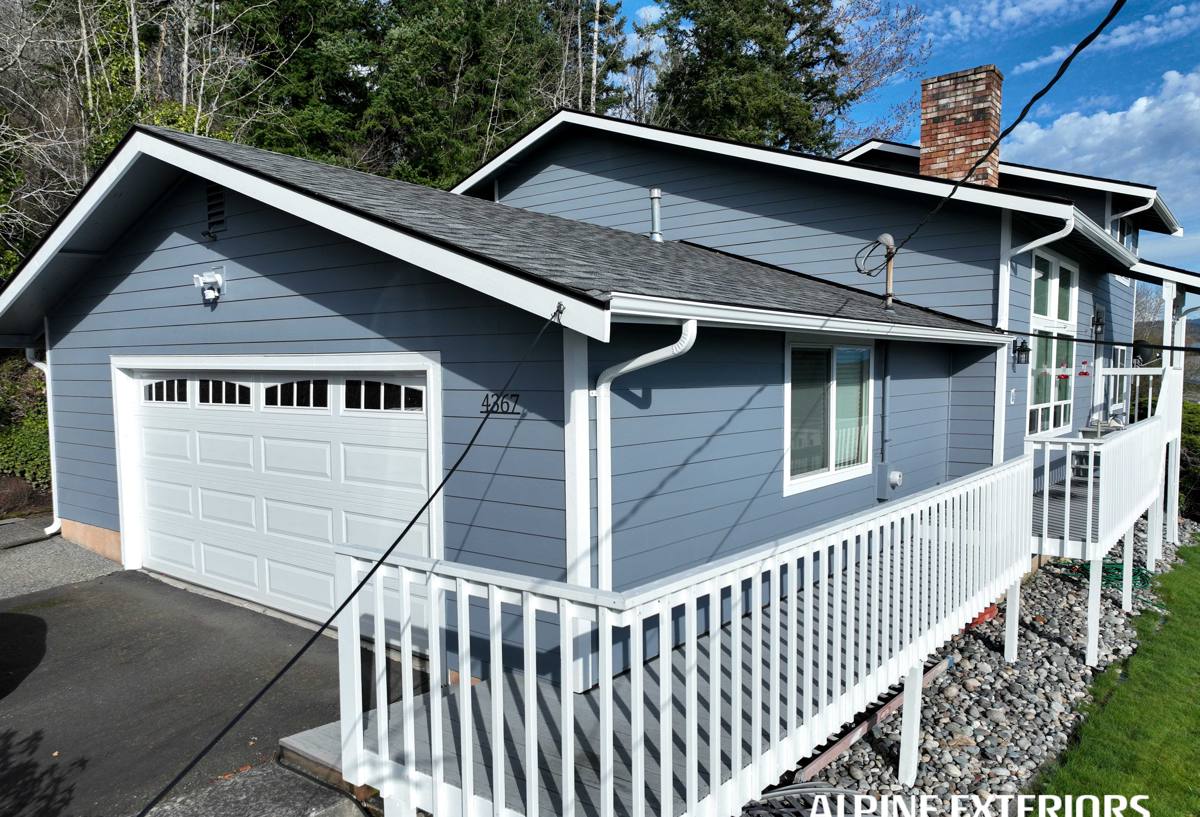
What Whatcom County's Climate Actually Does to a Shingle Roof
Salt Air and Moisture
Bellingham Bay is close enough that salt-bearing air reaches Fairhaven roofs regularly, especially on exposed or elevated sections. Salt air speeds up corrosion on exposed metal — nail heads, drip edge, valley flashing, and vent flashing. Once corrosion opens even a pinhole in flashing, water finds its way behind it, and that's where hidden rot starts, often long before a homeowner sees a stain on the ceiling below.
Driving Rain
Storms coming off the water don't always fall straight down. Wind-driven rain pushes water sideways and upward under shingle tabs, into valleys, and around any penetration in the roof — vents, chimneys, skylights. A shingle roof that relies only on the shingles themselves to shed water, without proper underlayment and flashing detail, will eventually leak in exactly these conditions.
Shade and Moss
Fairhaven's tree canopy is part of what makes the neighborhood attractive, but it also means many roofs stay damp and shaded for long stretches, particularly on north-facing slopes and sections tucked under overhanging limbs. Moss spores need moisture and low light to establish, and once a colony gets started it holds water against the shingle surface, lifts tabs, and shortens the life of the roofing underneath it.
What a Correctly Installed Roof Looks Like Here
A shingle roof is a system, not just a layer of shingles. In a climate like this, every layer of that system earns its keep.
- Ice and water shield at eaves, valleys, and around penetrations — the areas most exposed to wind-driven rain and ponding.
- Synthetic underlayment across the full deck, lapped and sealed correctly, as the real backup water barrier under the shingles.
- Corrosion-resistant flashing and fasteners at valleys, chimneys, skylights, and roof-to-wall transitions, sized and finished to hold up to salt-air exposure.
- Balanced attic ventilation — intake at the eaves and exhaust at the ridge — so moisture from inside the home doesn't condense against the underside of the deck.
- Proper nailing pattern and fastener count, matched to the shingle manufacturer's specification, not just "enough to hold it down."
Skipping any one of these doesn't necessarily cause an immediate problem. It shows up two, five, or ten years later as a leak, a soft spot in the decking, or shingles that fail well before their rated lifespan.
Choosing the Right Shingle for a Fairhaven Roof
Not every asphalt shingle is built the same way, and in a shaded, damp, salt-air environment, the differences matter more than they would somewhere drier. We generally steer Fairhaven homeowners toward algae-resistant, mid- to upper-tier architectural shingles rather than basic three-tab products, for reasons that come down to how each style handles moisture and appearance over time.
| Shingle Type | Typical Lifespan | How It Handles This Climate |
|---|---|---|
| Standard 3-tab shingles | 15–20 years | Lower cost, but thinner profile shows moss and algae staining faster and has less wind resistance in coastal gusts |
| Architectural (laminated) shingles | 25–30+ years | Heavier, more wind-resistant, better shadow-line drainage; our default recommendation for this area |
| Algae-resistant (AR) shingles | Same as base shingle, with a longer clean appearance | Copper- or zinc-infused granules resist the algae staining common under tree cover; worth the small upgrade here |
| Impact-rated / premium architectural | 30+ years | Best long-term value where budget allows; strongest performance in wind and debris impact |
We don't push a single brand on every roof. What matters is matching the shingle's construction and warranty structure to the specific exposure of that roof — how much shade it gets, how close it is to the water, and how steep or complex the roof lines are.
Our Process for a Fairhaven Roof Replacement
- On-site inspection. We look at the existing roof, deck condition, ventilation, and how the specific lot's tree cover and sun exposure affect that particular roof.
- Written estimate. Clear scope, materials, and pricing — no vague allowances or surprise add-ons discovered mid-job.
- Tear-off and deck inspection. Old roofing comes off completely so we can check the decking underneath for soft spots or rot before anything new goes down.
- Underlayment and flashing installation. Ice and water shield at vulnerable areas, synthetic underlayment across the field, and new flashing at every valley, wall, and penetration.
- Shingle installation. Installed to manufacturer nailing and exposure specifications, not shortcuts.
- Ventilation check. Intake and exhaust balanced so the attic can actually dry out between wet spells.
- Final walk-through. We review the finished roof with the homeowner before considering the job done.
Moss, Algae, and Keeping a Fairhaven Roof Healthy Long-Term
Even a well-installed roof in this neighborhood needs some ongoing attention because of the tree cover and moisture. Moss and algae growth is a maintenance issue more than an installation failure — but ignoring it turns a cosmetic problem into a structural one.
A few habits go a long way: keep gutters clear so water isn't backing up under the shingle edge, trim back branches that shade a roof section year-round, and address moss while it's still a light green film rather than a raised mat. Once moss lifts a shingle tab, water can get underneath it regardless of how good the underlayment is.
Signs a Fairhaven Roof Needs Attention
- Dark streaking or green film on north-facing or shaded slopes
- Moss visibly raised above the shingle surface, especially near valleys or eaves
- Granules collecting in gutters or at downspout outlets
- Curling, cupping, or cracked shingle tabs
- Rust staining around vent pipes, flashing, or fasteners
- Daylight visible through the roof deck from inside the attic
- Soft or spongy spots when walking the roof
- Interior ceiling stains, especially after a wind-driven storm
Any one of these on its own isn't necessarily an emergency, but they're worth a professional look before the next wet season sets in.
What Affects the Cost of a Shingle Roof in This Area
| Factor | Why It Matters Here |
|---|---|
| Roof size and complexity | Steep pitches, multiple valleys, and dormers common on older Fairhaven homes add labor and material time |
| Deck condition | Moisture exposure over the years can mean sections of decking need replacement, not just new shingles |
| Shingle tier | Standard vs. architectural vs. algae-resistant options carry different material costs and lifespans |
| Flashing and ventilation upgrades | Bringing older flashing and attic ventilation up to current standards adds upfront cost but reduces future callbacks |
| Access and tree cover | Tight lots and overhanging branches near the water can require extra care and time to protect landscaping and neighboring property |
We provide a detailed written estimate for every roof rather than a rough per-square number, because two roofs of the same size in Fairhaven can require very different scopes of work depending on their condition and exposure.
Why Local Experience in This Neighborhood Matters
A crew that regularly works in Fairhaven and the surrounding Bellingham waterfront area already knows what to expect: which slopes hold moss the longest, how tight some of the older lots are to work around, and how much salt-air exposure a given block typically sees. That familiarity shows up in small decisions — which fastener finish to use, how much ventilation a particular attic actually needs, how to sequence a tear-off around mature trees without unnecessary damage to the yard. It's the difference between a roof that's built to a generic spec sheet and one that's built for the specific conditions it will face for the next 25-plus years.
Ready for a Straightforward Estimate?
If your Fairhaven roof is showing moss, aging shingles, or you're planning ahead for a replacement, we're happy to take a look and walk you through what we find — no pressure, no sales script. Use the form below to request a free estimate, and we'll give you an honest read on your roof's condition and what it would take to get it right for the long haul.