 Bellingham Roofing
 Building a Deck That Can Handle Barkley's Weather
Barkley is one of Bellingham's more established residential pockets, with a mix of older homes and newer construction tucked among mature trees close to the water. That combination is great for shade and privacy, but it's tough on outdoor structures. A deck built without Whatcom County's climate in mind will start showing problems within a few seasons — soft spots, green film underfoot, corroding hardware, and boards that cup or crack. A deck built correctly for this area can handle decades of Pacific Northwest weather without becoming a maintenance headache.
This page is about one thing: building decks for homes in and around Barkley, done right for the conditions this neighborhood actually sees. Not a generic deck page — the specifics of building here.
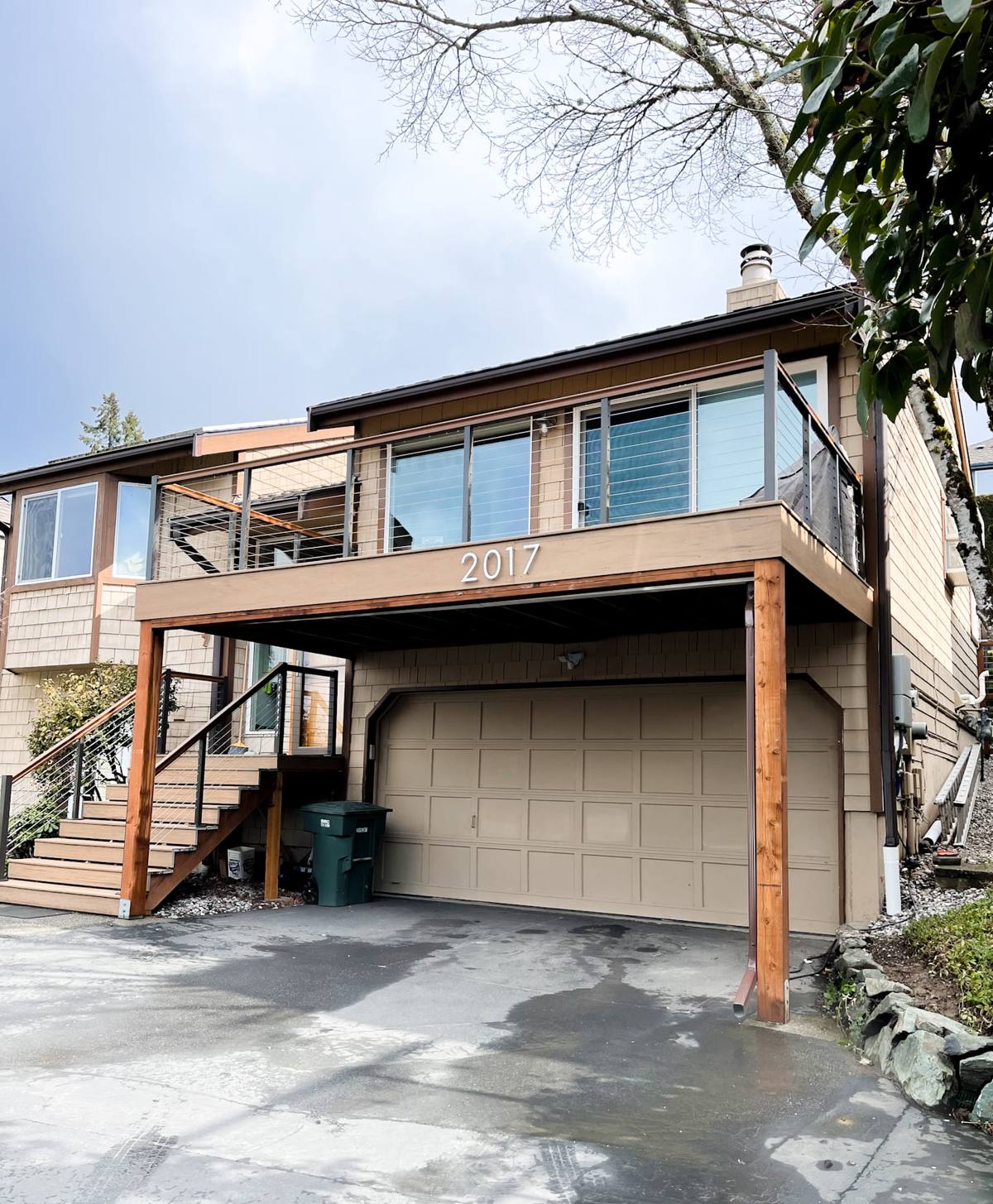
What Bellingham's Climate Does to an Outdoor Deck
Whatcom County sits in a wet marine climate, and Barkley's proximity to Bellingham Bay adds a layer most inland towns don't deal with: salt-laden air. Over time, that combination works against a deck in a few predictable ways:
- Driving rain gets pushed sideways by wind off the water, soaking ledger boards, fascia, and any horizontal surface that isn't properly flashed or sloped.
- Salt air accelerates corrosion on fasteners, screws, and metal connectors — the parts of a deck you can't see once it's built, and the parts most likely to fail first if the wrong hardware was used.
- Shade and tree cover, common throughout Barkley's older lots, keep decking damp longer after rain, which is exactly what moss, algae, and mildew need to take hold.
- A long moss season — realistically most of the year here — turns any deck surface that stays wet and shaded into a slip hazard if it isn't built with proper drainage and airflow underneath.
None of this means a deck can't last in Barkley. It means the build has to account for moisture and salt from the framing up, not just at the surface.
Choosing Decking Material for a Barkley Backyard
There's no single "best" decking material — there's a best fit for your budget, your yard's sun exposure, and how much upkeep you actually want to do. Here's an honest comparison of the main options we install:
| Material | Upfront Cost | Moss/Moisture Resistance | Upkeep |
|---|---|---|---|
| Pressure-treated wood | Lowest | Fair — needs sealing and regular cleaning to resist moss | Annual cleaning, periodic re-staining or sealing |
| Cedar | Moderate | Good natural resistance, but still absorbs moisture | Regular sealing to hold color and resist graying |
| Composite | Higher | Very good — dense, low-absorption surface | Occasional washing; no staining or sealing |
| PVC/capped polymer | Highest | Excellent — fully sealed surface, minimal moisture uptake | Lowest — periodic rinsing only |
For heavily shaded Barkley lots where moss is a constant fight, we usually steer homeowners toward composite or capped polymer boards, simply because the maintenance burden of a wood deck in full shade is real — it's not that wood is a bad product, it's that a shaded, damp lot demands more attention than a sunny one to keep wood decking looking and performing well. On sunnier, more open lots, cedar or well-maintained pressure-treated wood is a perfectly sound, more affordable choice.
A Note on Fasteners and Hardware
Whatever decking material you choose, the hardware holding it together matters just as much — arguably more, since it's hidden. In a salt-air environment like Barkley, we use stainless steel or heavy-duty coated fasteners and connectors rated for coastal exposure. Standard galvanized hardware can start corroding well before the decking above it shows any wear, which is how a deck ends up structurally compromised while still looking fine on top.
What a Correctly Built Deck Involves
A deck is a structure, not just a platform, and the parts you don't see are what determine whether it's still solid in fifteen years. A properly built deck in this climate includes:
- Footings set to the required frost depth and sized for the actual load of the deck, not guessed at.
- Ledger board flashing that directs water away from the house rather than letting it wick into the rim joist — one of the most common failure points on older decks we're asked to repair or rebuild.
- Joist spacing matched to the decking material's span rating, since composite and PVC boards often require tighter spacing than wood.
- Corrosion-resistant hardware throughout — hangers, hurricane ties, and fasteners rated for wet or coastal exposure.
- Proper beam and post sizing for the deck's height and footprint, especially on larger or multi-level decks.
- Guardrails and stair framing built to current code requirements, not just "close enough."
Skipping any one of these doesn't usually cause an immediate problem — it causes a problem in year six or year ten, which is worse, because by then it's a repair job instead of a build decision.
Drainage, Ventilation, and Moss Prevention
Given how much of the year Bellingham spends wet, drainage and airflow underneath a deck matter as much as the decking itself. A deck that traps moisture underneath it stays damp longer, which feeds moss and speeds up rot in framing that's already harder to inspect once the deck is built.
We plan for this during the build, not as an afterthought:
- Grading the ground beneath the deck so water drains away instead of pooling under the framing.
- Keeping adequate clearance between the ground and the framing for airflow, especially on lower decks close to grade.
- Spacing decking boards correctly so water sheds through rather than sitting on the surface.
- Positioning the deck, where the yard allows, to get at least some direct sun exposure — full-shade decks in Barkley's tree-covered lots are the ones that need moss treatment most often.
None of this eliminates moss entirely in a climate like this — nothing does — but it substantially reduces how fast it comes back and how much cleaning a deck needs to stay safe underfoot.
Our Deck Building Process
Whether it's a new deck or a full rebuild of an existing one, the process runs the same way for every Barkley property we work on:
- On-site visit and consultation — we look at the actual lot: sun exposure, drainage, grade, tree cover, and how the deck will connect to the house.
- Design and material discussion — honest talk about which decking material fits your budget and how much upkeep you want long-term, plus layout and size.
- Written estimate — a clear breakdown of materials and labor before any work starts, no surprise add-ons partway through.
- Permitting — we handle the permit process where one is required for your project's size and height.
- Construction — footings, framing, flashing, decking, railings, and stairs, built to code and to the standards outlined above.
- Final walkthrough — we go over the finished deck with you before calling the job done.
Permits and Code Considerations in Whatcom County
Most decks above a certain height off grade, or attached directly to a house, require a permit locally — the exact thresholds depend on the specifics of the project, which is part of why the on-site visit matters. Permitted work means the footings, framing, and guardrails get inspected against current code, which protects you if you ever sell the home and a buyer's inspector looks at the deck closely. We handle this process as part of the build rather than leaving it for the homeowner to sort out separately.
Keeping Your Barkley Deck in Good Shape Year-Round
A well-built deck still needs some seasonal attention in this climate. A simple maintenance routine goes a long way:
- Sweep leaves and debris off the deck regularly in fall — wet leaves left sitting are one of the fastest ways to grow moss.
- Rinse the surface periodically, especially in shaded areas, to slow moss and mildew buildup.
- Check that gaps between boards stay clear so water keeps draining through rather than pooling.
- Inspect fasteners and railings once a year for any early signs of corrosion or loosening.
- Re-seal or re-stain wood decking on the schedule the product calls for — skipping a cycle in this climate shows up fast.
- Keep gutters and downspouts near the deck clear so runoff isn't dumping directly onto or under it.
Why Hiring a Crew That Already Works Barkley Matters
Barkley isn't a uniform neighborhood — lot grading, tree cover, and sun exposure vary block to block, and those differences change how a deck should be built. A crew that's already worked on homes in this part of Bellingham knows which lots tend to hold moisture, which yards get real afternoon sun versus near-constant shade, and how the local permitting process actually runs, not just how it reads on paper. That familiarity shows up in fewer surprises during the build and a deck that's designed for the lot it's actually sitting on, not a one-size-fits-all layout.
It also matters for accountability. A contractor with an ongoing presence in Bellingham and Whatcom County has a reputation to maintain in the community, which is a different incentive than a crew passing through for a single job.
Ready to Talk About Your Deck?
If you're planning a new deck or need to replace one that's past its useful life, we're happy to take a look and give you a straightforward, no-pressure estimate. Use the form below to get started, and we'll walk your property with the specifics of your Barkley lot — and Bellingham's climate — in mind.