 Bellingham Roofing
 Birchwood's Roofs Work Harder Than Most
Birchwood sits close enough to Bellingham Bay that salt-laden air is a daily fact of life, not an occasional nuisance. Add Whatcom County's long, wet winters and a moss season that can stretch from October well into spring, and you've got a roofing environment that punishes shortcuts. A shingle roof that would last two decades in a dry inland climate can start showing real problems in half that time here if it wasn't installed with this neighborhood's conditions in mind.
None of this means asphalt shingles are the wrong choice for Birchwood homes — they're not. It means the details of the installation matter more here than in most parts of the country. Underlayment choice, flashing quality, ventilation, and fastening all have to account for driving rain that comes in sideways off the water and moss that will colonize any roof surface that stays damp and shaded too long.
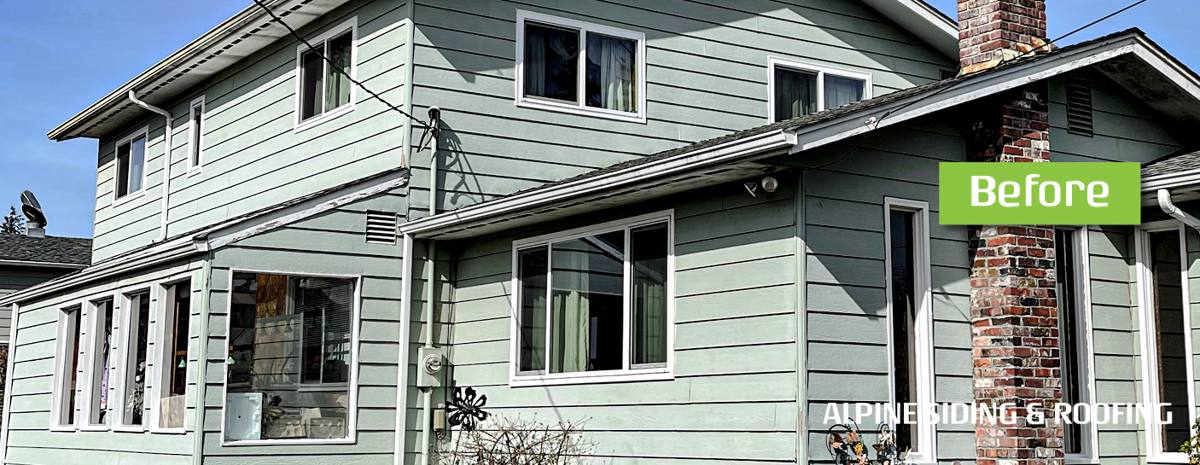
What Driving Rain and Salt Air Actually Do to a Roof
Wind-driven rain doesn't just fall on a roof — it gets pushed uphill under shingle tabs, into nail heads, and along flashing edges. A roof designed for calmer weather often relies on gravity alone to shed water. In Birchwood, gravity isn't enough. That's why the underlayment layer and the flashing details around penetrations matter as much as the shingles themselves.
Salt air adds a second, slower kind of wear. It accelerates corrosion on exposed metal — nail heads, flashing, vent boots, and gutter hardware all age faster near the water than they would further inland. A roof built with standard-grade fasteners and thin flashing will show rust streaks and metal fatigue years before a roof built with corrosion-resistant materials in the same spot.
Moss Season Is Longer Than Most Homeowners Realize
Whatcom County's combination of shade, moisture, and mild temperatures gives moss and algae a long growing window. On roofs with poor airflow or north-facing slopes that rarely see direct sun, moss can take hold within a year or two of installation and keep growing nearly year-round. Left alone, it holds moisture against the shingle surface, lifts tabs, and shortens the roof's life significantly.
What a Correctly Built Asphalt Shingle Roof Includes
A shingle roof is a system, not just a layer of shingles nailed to plywood. For Birchwood conditions, we treat every layer as doing real work:
- Deck inspection and repair — any soft, delaminated, or water-stained sheathing gets replaced before anything new goes down. Shingles installed over a compromised deck fail early no matter how good the shingle itself is.
- Ice-and-water shield at vulnerable points — eaves, valleys, and areas prone to wind-driven rain get a self-adhering waterproof membrane, not just felt paper.
- Synthetic underlayment across the field — more tear-resistant and water-resistant than old-style felt, and it holds up better to the wind exposure common near the bay.
- Corrosion-resistant flashing and fasteners — around chimneys, skylights, sidewalls, and vent penetrations, using metal that's rated to handle salt air rather than standard-grade steel.
- Balanced attic ventilation — intake at the eaves and exhaust at the ridge, sized to the attic volume, so moisture doesn't get trapped under the deck and accelerate rot or mold from the inside.
- Proper shingle fastening pattern — nail placement and count matched to the shingle manufacturer's high-wind specification, not just the minimum local code allows.
Signs a Birchwood Roof Needs Attention
Because moss and moisture damage build slowly, a lot of homeowners don't notice a problem until it's already inside the attic. Worth checking for, or asking a roofer to check for, on a regular basis:
- Moss or dark algae streaking on north-facing slopes or anywhere shaded by trees
- Granules collecting in gutters or at downspout outlets
- Shingle tabs that look lifted, curled, or cupped at the edges
- Rust staining around vent boots, flashing, or exposed nail heads
- Soft spots, sagging, or discoloration on the ceiling below the attic
- Daylight visible through the roof deck from inside the attic
- Gutters or valleys that hold standing water or debris longer than they should
Any one of these on its own isn't necessarily an emergency, but a roof showing two or three at once usually needs a closer look sooner rather than later.
Our Process for a Birchwood Shingle Roof
The steps are fairly standard in the trade — what changes is how much attention goes into the details that matter for this climate.
- On-site inspection — we look at the existing roof, attic ventilation, deck condition, and any moss or moisture patterns specific to the home's exposure and shade.
- Tear-off and deck assessment — old roofing comes off down to the deck so we can actually see what's underneath, rather than layering over existing problems.
- Deck repair — any damaged sheathing is replaced before new materials go down.
- Waterproofing layer — ice-and-water membrane at eaves, valleys, and other vulnerable areas, then synthetic underlayment across the rest of the roof.
- Flashing installation — new corrosion-resistant flashing at every penetration, valley, and sidewall junction.
- Shingle installation — installed to the manufacturer's high-wind fastening pattern, with attention to proper alignment and exposure.
- Ventilation check and adjustment — intake and exhaust venting confirmed or upgraded so the attic can actually breathe.
- Cleanup and final walkthrough — magnetic sweep for stray fasteners, gutter check, and a walkthrough so you understand what was done and what to watch for going forward.
Choosing a Shingle for Coastal Whatcom County Conditions
Not every asphalt shingle product is built the same way, and the differences matter more here than in a drier climate. This is a general comparison of the shingle categories most commonly used on homes in this area:
| Shingle Type | Typical Lifespan | Algae/Moss Resistance | Wind Rating |
|---|---|---|---|
| Standard 3-tab | 15–20 years | Low unless treated | Lower — often 60–70 mph |
| Architectural/dimensional | 25–30 years | Moderate, better with algae-resistant granules | Higher — commonly 110–130 mph rated |
| Algae-resistant (copper/zinc granule) laminate | 25–30+ years | High — granules actively resist growth | Higher — commonly 110–130 mph rated |
For a home in Birchwood, we generally steer clients toward algae-resistant architectural shingles. The upfront cost is higher than standard 3-tab, but given how long moss season runs here, the maintenance savings and extended lifespan usually make up the difference well within the roof's service life. We'll walk through the honest trade-offs for your specific roof rather than pushing one product line.
Maintenance That Actually Extends Roof Life Here
A well-installed roof still needs some upkeep in this climate. The maintenance that matters most for Birchwood homes isn't complicated, but it does need to happen on a schedule:
- Keep gutters and downspouts clear so water isn't sitting against the roof edge
- Trim back overhanging branches that keep sections of the roof shaded and damp
- Have moss treated and gently removed before it works under shingle tabs — pressure washing is not the right method and can strip granules
- Check attic ventilation periodically, especially after any insulation or remodeling work that could block intake or exhaust vents
- Have flashing and vent boots inspected every few years, since these are the first components to show wear from salt air
Cost Factors for a Birchwood Shingle Roof
Every roof is different, but the factors that move the price up or down are consistent. Rather than quoting a number that won't match your actual roof, here's what typically drives cost:
| Factor | Effect on Cost |
|---|---|
| Roof size and number of facets/slopes | More material and labor, plus more flashing detail work |
| Deck condition | Rotted or soft sheathing adds repair cost before shingles go on |
| Shingle grade selected | Algae-resistant architectural shingles cost more upfront than standard 3-tab |
| Roof pitch and access | Steeper or harder-to-access roofs take longer and require more safety setup |
| Existing ventilation | Adding or upgrading intake/exhaust venting adds labor but pays off in roof life |
| Number of penetrations | Chimneys, skylights, and multiple vents each need individual flashing work |
The only way to get an accurate number is a look at the actual roof — but knowing these factors ahead of time helps homeowners understand why two quotes for what looks like "the same roof" can come in differently.
Why It Matters That We Already Work in Birchwood
A crew that roofs across a wide, dry region and occasionally takes a job near Bellingham Bay doesn't have the same instinct for this neighborhood's specific failure points as one that works Birchwood roofs regularly. Knowing which slopes in this area tend to hold moss, how far wind-driven rain typically pushes under tabs on homes with this kind of exposure, and which flashing details fail first near the water isn't something you get from a general specification sheet — it comes from doing the work here, repeatedly, and seeing what holds up over years of Whatcom County weather.
That local pattern recognition shows up in small decisions during the job — where we add extra ice-and-water membrane even though code doesn't strictly require it, which vents we upgrade proactively, how we sequence flashing at a valley that catches more water than most. Those are the details that separate a roof that looks fine on installation day from one that's still performing well a decade later.
Get a Straightforward Estimate
If your Birchwood home's roof is showing moss, granule loss, or you're just due for an honest look at its condition, we're glad to come take a look. There's no pressure and no obligation — just a clear read on where things stand and what your options actually are. Use the form below to request a free estimate.