 Bellingham Roofing
 Board & Batten in Cordata: A Style That Has to Work as Hard as It Looks
Cordata is one of the newer residential pockets of north Bellingham, and it shows in the housing stock: a mix of contemporary builds, craftsman-influenced homes, and infill construction where clean vertical lines and simple, modern facades are common design choices. Board and batten siding fits that look naturally. The tall, narrow panels and raised battens create shadow lines and a sense of height that a lot of Cordata's newer homes are actually designed around, whether the original builder used it or a homeowner is adding it during a remodel.
The problem is that board and batten is often chosen for looks first and installed without much thought for what Whatcom County weather does to a vertical siding profile over twenty or thirty years. We install board and batten in Cordata regularly enough to know where it succeeds and where cheaper versions of it fail, and almost all of that comes down to material choice and the details behind the boards, not the boards themselves.
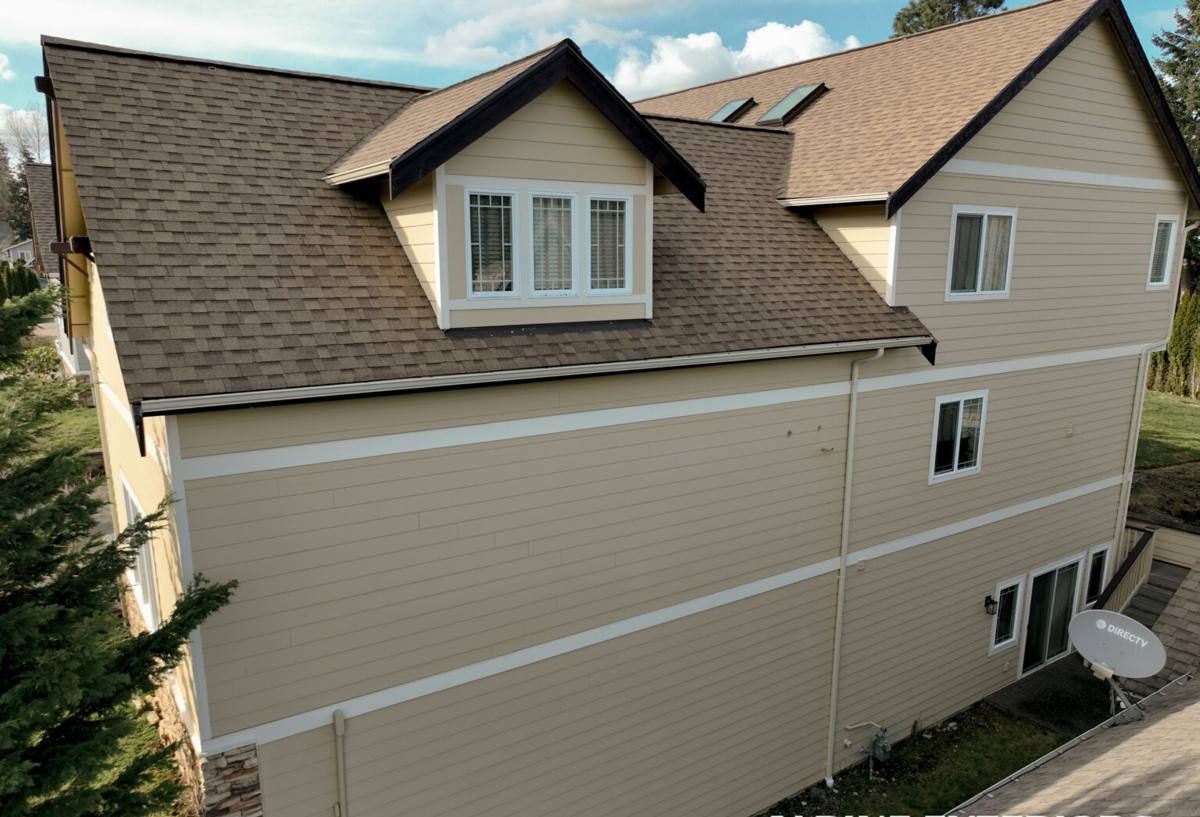
What Bellingham's Climate Actually Does to Vertical Siding
Board and batten has more vertical seams and more exposed edge grain than horizontal lap siding, which makes it less forgiving of the wrong material in a wet marine climate. A few things about this area matter specifically for this siding style:
- Salt air off Bellingham Bay and the Puget Sound corridor accelerates corrosion on fasteners, flashing, and any exposed metal trim, and it slowly degrades finishes that aren't factory-cured to resist it.
- Driving, wind-blown rain pushes water sideways into vertical seams and batten joints far more aggressively than it does on a flat wall, which is exactly where cheap board and batten systems tend to let moisture in first.
- A long moss and algae season, common through much of the year in Whatcom County, sits directly on top of any siding surface that stays damp and shaded, which is common on north- and west-facing walls in tree-lined Cordata lots.
- Freeze-thaw cycling in winter, while milder here than inland, still stresses any siding material that absorbs water at the seams, since that moisture expands and contracts against the substrate.
None of this means board and batten is a bad choice for this area. It means the material behind the look has to actually be engineered for these conditions, and the installation details have to assume the wall will get wet repeatedly over its life.
Why We Only Build This Look in James Hardie Fiber Cement
Board and batten can be built out of several different materials, and we've made a deliberate decision to install it in exactly one: James Hardie fiber cement. We don't do board and batten in real wood, LP SmartSide, vinyl, or other fiber cement brands, and it's worth explaining why rather than just stating it.
Real wood board and batten
Traditional cedar or spruce board and batten can look beautiful when new, but it's the material most exposed to Bellingham's moisture. The vertical seams and end grain absorb water readily, and in a climate with this much rain and humidity, that means more frequent repainting, more vulnerability to rot at the base and around openings, and a shorter realistic service life before boards need replacing.
LP SmartSide and engineered wood
Engineered wood products have improved over the years, but they're still wood-based at the core, which means the same vulnerability to moisture intrusion if the surface coating is ever compromised — a scratch, a poorly sealed cut edge, a fastener that backs out. In a wet coastal climate, we don't think that risk is worth taking on a siding style that has more seams than a standard lap installation.
Vinyl board and batten
Vinyl is inexpensive and low-maintenance in dry climates, but it expands and contracts with temperature swings, can warp or crack over time, and doesn't hold paint if a homeowner ever wants to change the color. It also reads as visibly less substantial than fiber cement on a board and batten profile, where the shadow lines and board thickness are part of the appeal.
James Hardie fiber cement solves the core problem: it's non-combustible, dimensionally stable, resistant to moisture-driven warping, and manufactured with a factory-applied ColorPlus finish that's baked on and warranted against fading and peeling — a real advantage in a climate where UV exposure is lower but moisture exposure is constant.
What "Board and Batten" Means When It's Built in Hardie
Board and batten isn't a single product — it's a look, built one of two ways with James Hardie materials:
- HardiePanel vertical siding with HardieTrim battens — large-format fiber cement panels installed vertically, with trim boards fastened over the seams to create the classic raised-batten look.
- Reveal panel systems — a more modern variation using consistent negative-space gaps instead of raised battens, for homes going for a cleaner, more contemporary line.
Most Cordata homes we work on use the first approach, since it matches the more traditional-leaning architecture common in the area, but we'll walk through both options during an estimate if a homeowner is deciding between a classic and a modern look.
What a Correct Installation Actually Involves
This is where most board and batten failures actually happen — not in the material, but in details that are invisible once the job is finished. A correct installation on a Cordata home should include:
- A drainage plane and rainscreen gap behind the panels, so any moisture that does get past the surface has somewhere to go instead of sitting against the wall sheathing.
- Proper flashing at every horizontal transition — window heads, water tables, roof lines — since these are the points where driving rain finds its way behind vertical siding first.
- Correct panel and batten spacing per Hardie's installation specifications, including expansion gaps at joints so the material isn't fighting itself as temperatures shift.
- Fasteners placed and spaced according to Hardie's fastening schedule, using corrosion-resistant fasteners appropriate for a coastal, salt-air environment.
- Sealant used only where Hardie's specifications call for it — not as a substitute for correct flashing, which is a shortcut we see on a lot of prior installs we're asked to fix.
The mistakes we see most often on existing board and batten in this area
The most common issues we find on homes we're re-siding in the Bellingham area are battens face-nailed without expansion room, missing or undersized flashing at window heads, and panels installed tight to grade or driveways with no clearance for water to escape. Every one of these is a fixable oversight at the time of installation, and an expensive one to correct later.
Our Process for a Cordata Board & Batten Project
| Step | What Happens |
|---|---|
| 1. On-site assessment | We look at existing siding condition, wall exposure to wind and rain, moss/moisture patterns, and any rot or flashing issues before quoting anything. |
| 2. Design and material selection | We walk through Hardie panel textures, batten spacing, and ColorPlus color options against the home's existing rooflines, trim, and stone or masonry accents. |
| 3. Prep and removal | Old siding comes off down to the sheathing so we can address any hidden moisture damage rather than siding over it. |
| 4. Weather barrier and rainscreen | A code-compliant water-resistive barrier and drainage gap go on before a single panel is hung. |
| 5. Panel and batten installation | Panels and battens are installed to Hardie's fastening and spacing specifications, with flashing integrated at every penetration and transition. |
| 6. Trim, caulk, and cleanup | Final trim details, targeted sealant application, and full site cleanup, including magnetic nail sweeps. |
| 7. Walkthrough | We go over the finished job with the homeowner before calling it complete. |
Cost Factors for Board & Batten Siding
Every home is different, but the main variables that move the price on a board and batten project in this area are consistent enough to lay out honestly:
| Factor | Why It Matters |
|---|---|
| Wall square footage and home height | More surface area and multi-story sections increase material, labor, and access/scaffolding needs. |
| Condition of existing sheathing | Rot or moisture damage found during tear-off adds repair scope before new siding can go on. |
| Batten spacing and pattern complexity | Tighter batten spacing and detailed trim work take more labor hours than a simple, wide-spaced pattern. |
| Panel texture and color | Different HardiePanel textures and ColorPlus colors are priced differently based on availability and finish. |
| Site access | Tight lots, mature landscaping, or difficult driveway access in established Cordata neighborhoods can add setup time. |
Maintaining Board & Batten Siding in a Wet Climate
Fiber cement dramatically reduces maintenance compared to wood or vinyl, but "low maintenance" isn't "no maintenance" in a climate like this. A simple annual routine keeps board and batten performing the way it's supposed to:
- Rinse the siding down once or twice a year to remove built-up moss, algae, and pollen before it takes hold, especially on shaded north-facing walls.
- Check caulking at trim joints and around penetrations annually, since sealant is a wear item even when the panels underneath are not.
- Keep gutters clear and downspouts directed away from the wall base, since concentrated runoff is one of the fastest ways to stress any siding system.
- Trim back landscaping and tree cover that keeps a wall shaded and damp for extended periods.
- Inspect flashing at window heads and water tables every couple of years for any signs of separation or corrosion.
Why It Matters That We Already Work in Cordata
Board and batten done right depends on details that are specific to how a house actually sits on its lot — wind exposure, tree cover, drainage patterns, and how driving rain hits a particular wall face. A crew that's already worked on homes in Cordata has a working sense of those patterns before they even get on a ladder: which orientations take the worst weather, where moss builds up fastest, and what a correctly detailed installation needs to hold up through a Whatcom County winter. That local familiarity, paired with sticking to one material system we know inside and out, is what keeps a board and batten project from becoming a callback five years later.
If you're considering board and batten siding for a home in Cordata, we're happy to take a look and talk through what it would actually involve for your specific house. Reach out for a free, no-pressure estimate using the form below.