 Bellingham Roofing
 Custom Windows in Barkley: Fit for This Corner of Whatcom County
Barkley is one of Bellingham's mixed residential neighborhoods, and like the rest of the city it sits inside Whatcom County's marine-influenced weather pattern. Salt air drifts in off the water, rain arrives wind-driven more often than it falls straight down, and a mild, damp climate gives moss a long season to work on any surface that stays shaded. Windows sit right at the boundary between the inside of a house and all of that weather, so getting a window right here isn't just about picking a good product off a shelf — it's about sizing, sealing, and flashing it correctly for the specific opening it's going into.
"Custom" in this context doesn't necessarily mean unusual or ornate. It means a window built and installed to fit the actual opening, orientation, and construction of a specific Barkley home, rather than a stock size dropped into place and trimmed to fit. That distinction matters more in this climate than in a drier one, because every seam, joint, and transition point is a spot where wind-driven rain can eventually find its way in if it wasn't detailed correctly the first time.
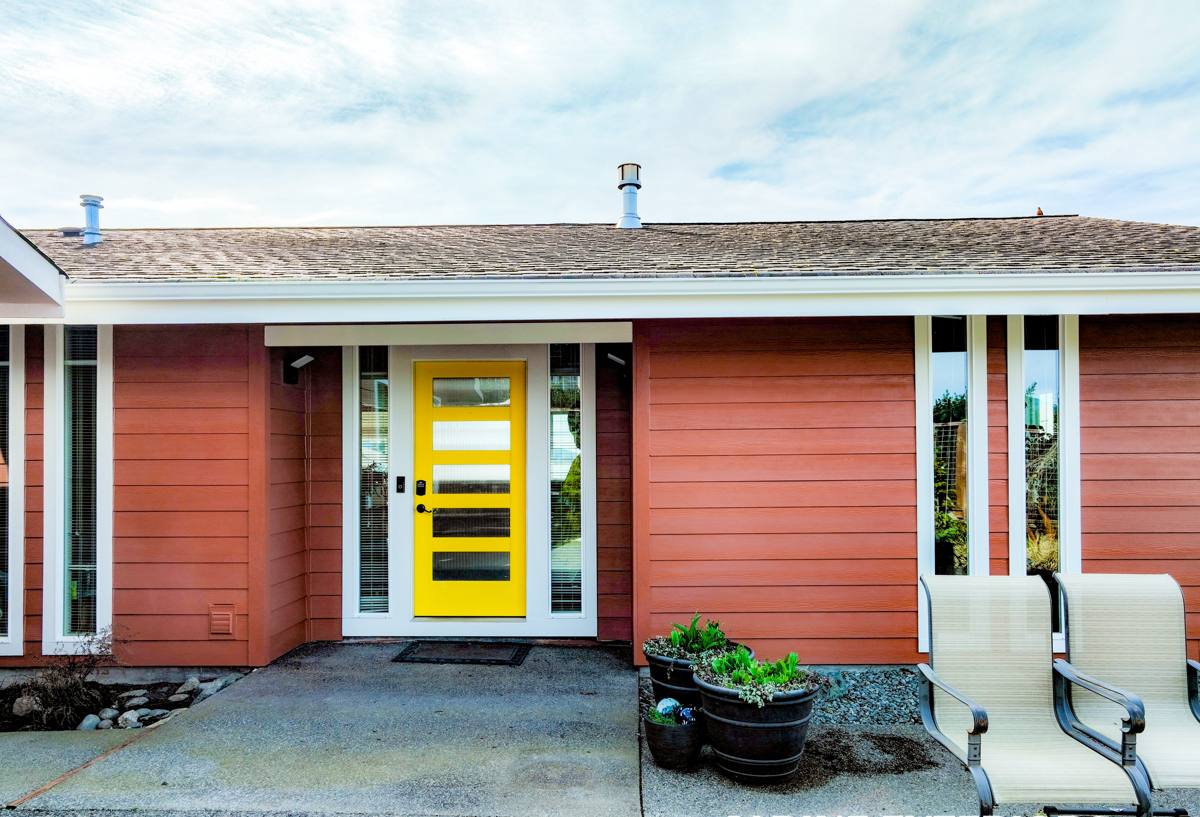
What Makes a Window Project "Custom" in Barkley
Non-Standard or Non-Stock Openings
Not every rough opening matches a manufacturer's standard window sizes, especially once a home has had additions, remodels, or previous window work done over the years. When an opening falls outside standard dimensions, the choice is either to special-order a window built to that exact size or to reframe the opening to fit a stock unit. Reframing adds cost and disruption; a properly custom-sized window usually preserves more of the existing wall and trim while still getting a correct, well-sealed fit.
Bay, Bow, and Picture Windows
Larger specialty windows — bays, bows, and big picture windows — are common requests on homes looking to bring in more light or open up a view, and they come with real structural and weatherproofing considerations that a standard single or double window doesn't. Bay and bow units project outward from the wall plane, which means they need proper structural support underneath, a roof or cap detail that sheds water instead of pooling against the house, and flashing that accounts for three or more planes meeting at odd angles instead of one flat opening.
Matching an Addition or Mixed-Era Construction
Bellingham neighborhoods, Barkley included, often have a mix of construction from different decades sitting next to each other — an addition built years after the original structure, or a home that's had partial window replacements over time. Custom window work in these situations is as much about matching sightlines, trim profiles, and glass proportions across the whole elevation as it is about the window unit itself. A mismatched replacement window can leave a house looking patched together even when the window itself performs fine.
What Salt Air, Driving Rain, and Moss Mean for a Custom Window
Corrosion on Hardware and Custom Trim
Salt-carrying marine air moves through Bellingham steadily, and it accelerates corrosion on window hardware, screen frames, and any lower-grade fasteners over time — a bigger concern on custom units where hardware or trim profiles may already be a step outside the standard product line. Corrosion-resistant hardware and fasteners matter more here than they would in a dry inland climate, and it's worth confirming upfront rather than discovering pitted hinges or stiff latches a few years in.
Wind-Driven Rain at Larger or Irregular Openings
Rain in this region is frequently pushed sideways by wind rather than falling straight down, and that matters even more at a bay, bow, or oversized picture window opening, where there's simply more seam length and more transition points for water to find. A well-built window with sloppy flashing at these larger openings will leak; the same window installed with a correctly pitched sill pan and properly lapped flashing usually won't. The installation detail, not the window product, is what determines the outcome.
Moss, Mildew, and Sill Rot on Shaded Elevations
Shaded walls and window sills that don't drain well stay damp longer here than they would in a drier climate, and that supports moss and mildew growth and, on wood-framed windows, gradual rot at the sill and lower corners. It's a slow-developing problem — most homeowners don't notice it until paint starts failing or a sill feels soft underfoot, which is often several seasons after the moisture problem actually started.
Frame Material Options for Custom Sizing
Custom and specialty windows are available in the same core frame materials as standard replacement windows, but the trade-offs are worth understanding before committing to a material for a larger or more visible opening.
| Frame Material | Moisture & Corrosion Behavior | Typical Maintenance | Realistic Lifespan Here |
|---|---|---|---|
| Vinyl | Won't rot; larger custom units rely more on quality welds and reinforcement at wide spans | Low; occasional track and weep-hole cleaning | 20-30 years |
| Fiberglass | Dimensionally stable and resists moisture well, often a strong choice for larger custom openings | Low | 30-40+ years |
| Wood, painted or clad | Attractive for custom trim matching but vulnerable to moisture at joints and sills without upkeep | Higher; regular paint or finish maintenance | 15-30 years depending on upkeep |
| Aluminum | Can support slim sightlines on picture windows but conducts cold and can corrode over time near salt air | Moderate | 20-30 years |
For bay, bow, and larger picture windows specifically, frame stiffness and structural reinforcement matter as much as material choice, since these units carry more glass weight over a wider span than a standard single window. We'll walk through which material fits the size and location of your specific opening rather than defaulting to whichever product is easiest to sell.
Full-Frame Replacement: Usually the Honest Answer for Custom Work
Insert replacement — fitting a new window into an existing, structurally sound frame — works well for straightforward, standard-size swaps. Custom window projects more often call for full-frame replacement, where the opening is taken down to the rough framing and the flashing is rebuilt from scratch. That's true almost by default when an opening is being resized, when a bay or bow window is being added where a flat window used to sit, or when there's already moisture damage at the sill or jambs that an insert would just seal up behind a new window. Full-frame work costs more and takes longer, but for custom sizing it's usually the only way to get a correct, properly flashed result rather than a stock-fit compromise.
Installation Fundamentals We Don't Treat as Optional
Most window failures in this climate trace back to shortcuts in flashing and sealing, not defects in the window itself — and custom openings raise the stakes because there's more seam length and more transition points to get right. On every job, that means:
- A properly pitched sill pan, sized to the actual opening, that sheds water outward instead of letting it pool
- Head flashing integrated with the housewrap or building paper above the window and lapped correctly for water to shed down and out
- Jamb flashing tied into the surrounding wall assembly rather than relying on caulk alone
- Structural support and cap flashing at bay, bow, or other projecting windows so the added weight and extra roofline are handled correctly
- Weep holes and drainage paths left clear and functional, not sealed shut during installation
- Corrosion-resistant fasteners and hardware suited to a consistently damp, salt-influenced climate
- Trim and sightlines coordinated with the rest of the elevation so a custom window doesn't look bolted on
None of this adds meaningfully to the cost of a project relative to the window itself, but skipping any of it is exactly what turns a custom window that should last decades into one that's leaking behind the wall within a few years.
Signs a Barkley Home's Windows Need Attention
- Visible fogging or condensation between panes, usually a failed seal on a double- or triple-pane unit
- Drafts or a noticeable temperature difference near a closed window
- Soft, discolored, or spongy trim and sill material, especially on shaded or weather-facing walls
- A bay or bow window that feels like it's sagging, or gaps opening up at its roofline or side panels
- Difficulty opening, closing, or latching a window that used to operate smoothly
- Peeling paint or bubbling finish on wood-framed windows or trim
- Water staining on interior wall or ceiling surfaces near a window
Any one of these is worth a professional look. Caught early, most point to a repair or resealing job. Left through another wet season, several of them point to water damage already working its way into the surrounding framing.
Why a Local Crew That Already Works Barkley Matters
A crew that installs windows across Bellingham through every season learns how salt air, wind-driven rain, and moss actually behave on real houses, not just how a product performs on a spec sheet. For custom work specifically, that shows up in practical calls: how much structural reinforcement a given bay window span needs, how a sill pan should be pitched for the amount of water a particular Barkley elevation actually sees, and which trim and flashing details are worth the extra time on install day so a custom opening doesn't become next winter's leak. It also means someone who's used to matching custom trim and sightlines to the mixed construction found across this neighborhood, rather than treating every job as an identical stock replacement.
If you're planning a custom window project in Barkley — a resized opening, a bay or bow addition, or replacement windows that need to match an existing elevation — we're glad to take a look and give you a straightforward, honest read on what the job actually involves. Reach out using the form below to schedule a free, no-pressure estimate.