 Bellingham Roofing
 Building Decks for Birchwood's Coastal Climate
A deck in Birchwood has to earn its keep. This part of Bellingham sits in a marine climate shaped by Whatcom County's proximity to the water, and that means a deck out here deals with more than sun and foot traffic. It deals with salt-tinged air rolling in off the bay, driving rain that comes in sideways during winter storms, and a moss season that can stretch from fall through spring under the region's tree cover and overcast skies. A deck built to a generic national standard will show its age fast here. One built for this specific climate will not.
This page covers what we look at, what we build, and how we work when the job is a deck in Birchwood specifically — not a general overview of decking, but the real considerations for this neighborhood's conditions.
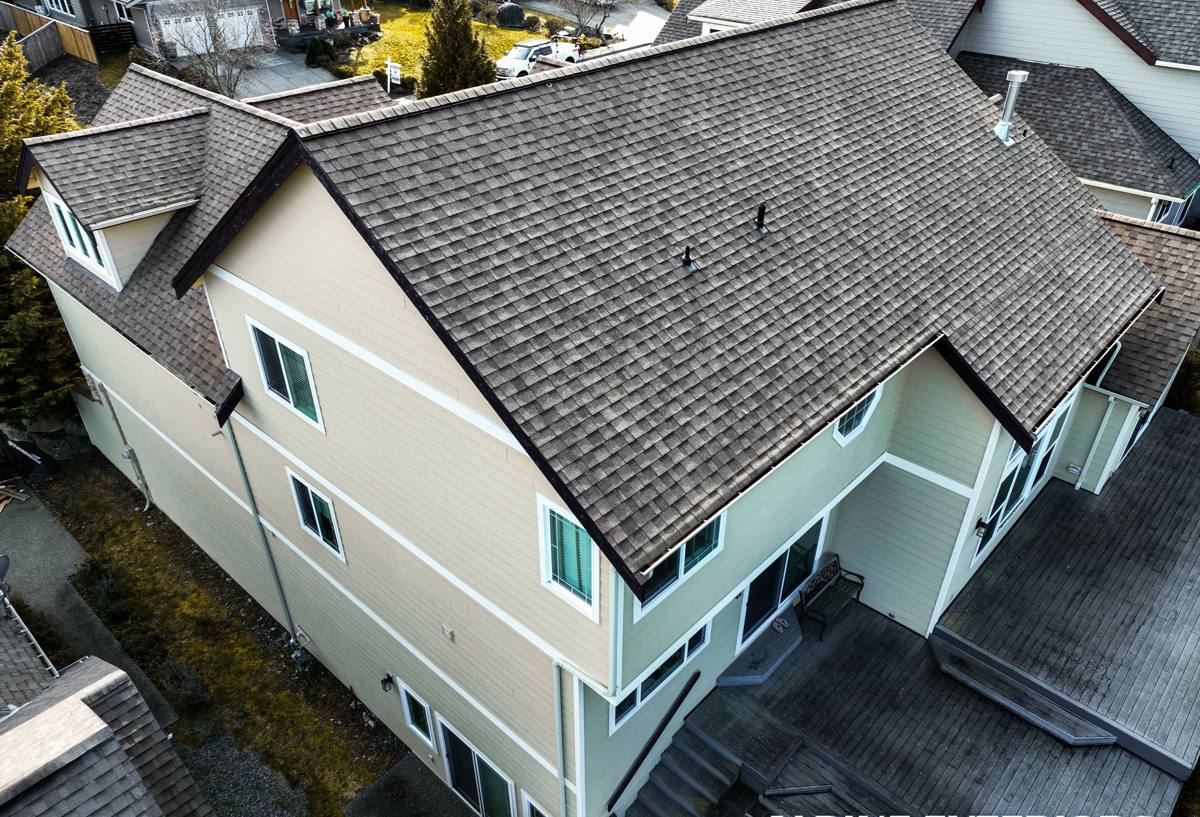
What Birchwood Homes Actually Need From a Deck
Most of the deck problems we get called out to fix in this area trace back to the same handful of causes. Understanding them up front is what separates a deck that lasts fifteen-plus years from one that needs major repair in five.
Salt Air and Fastener Corrosion
Even a few miles inland from open water, airborne salt accelerates corrosion on anything less than fully rated hardware. Standard zinc-coated screws and joist hardware can start rusting and staining decking within a couple of seasons in this environment. It's a slow failure that's easy to miss until a fastener head snaps off or a hidden joist hanger weakens.
Driving Rain and Water Intrusion Points
Storms here don't always fall straight down — wind-driven rain gets pushed sideways into ledger boards, stair stringers, and any spot where the deck meets the house. If flashing and water-shedding details aren't done correctly at the framing stage, water finds its way behind siding and into structural wood, and that damage is invisible until it's serious.
Moss, Shade, and Surface Traction
Whatcom County's tree cover and long stretches of overcast, damp weather create ideal conditions for moss and algae to colonize any decking surface that doesn't drain and dry well. Beyond the cosmetic issue, a mossy deck surface gets slick and genuinely dangerous, especially on stairs. Deck orientation, gap spacing, and surface texture all affect how fast moss takes hold.
Choosing the Right Decking Material for Birchwood
There's no single "best" decking material — there's a best material for this climate and this budget. Here's how the common options actually perform under salt air, driving rain, and heavy shade.
| Material | Moisture Behavior | Moss/Algae Resistance | Maintenance | Typical Lifespan |
|---|---|---|---|---|
| Pressure-treated wood | Absorbs and releases moisture; prone to cupping if not sealed | Low — needs regular cleaning and treatment | Annual cleaning, periodic sealing | 10-15 years |
| Cedar | Naturally moisture-resistant but still needs sealing on cut ends and fastener holes | Moderate — resists rot better than pine, still grows moss in deep shade | Sealing every 1-2 years, regular cleaning | 15-20 years |
| Capped composite | Does not absorb water; core is protected by a plastic cap | Good — smooth cap sheds algae more easily than wood grain | Occasional wash, no sealing | 25-30 years |
| PVC decking | Fully synthetic, no moisture absorption | Best of the common options in constant shade/damp conditions | Occasional wash | 25-30+ years |
We're honest with clients about the trade-offs. Real wood costs less up front and looks the part, but it demands real upkeep in a climate that doesn't give it many dry stretches to recover between rain events. Composite and PVC cost more initially but hold up with far less attention in exactly the conditions Birchwood sees most — heavy shade, high humidity, and a long wet season. Which one makes sense depends on your budget, how much maintenance you want to do, and how much sun the deck's location actually gets.
What a Correctly Built Deck Involves
A deck that survives this climate is won or lost in the framing stage, long before decking boards ever go down. The details that matter most here include:
- Ledger board flashing installed to properly shed water away from the house band joist, not just caulked and hoped for
- Corrosion-resistant, climate-rated fasteners and joist hardware throughout — not standard interior-grade hardware
- Footings sized and set below frost depth per Whatcom County building code, on soil that's been checked for drainage
- Joist spacing and beam sizing matched to the actual decking material chosen, since composite and wood have different span ratings
- Proper gap spacing between boards so water drains through instead of pooling on the surface
- Guardrail and stair construction that meets current code height, spacing, and load requirements
- A ventilated space beneath the deck so structural framing can dry out between rain events instead of staying damp
Skipping any one of these doesn't usually cause an obvious problem on day one. It shows up two or three winters later as soft framing, a wobbly rail, or a ledger connection that's pulling away from the house.
Our Deck Building Process
We keep the process straightforward and communicate clearly at each stage, since a deck is a significant investment and you should know what's happening and why.
1. Site Visit and Assessment
We look at your home's exposure — how much direct sun the deck area gets, how shaded it is, and how water currently moves across the yard and off the roofline nearby. That tells us a lot about what materials and drainage approach make sense for your specific spot.
2. Design and Material Selection
We walk through material options honestly, including what each one will actually look and behave like in five, ten, and twenty years under local conditions — not just at installation.
3. Permitting
Most deck projects of meaningful size require a permit through the applicable local jurisdiction. We handle that process so the structure is inspected and legitimate, which also matters if you ever sell the home.
4. Construction
Footings, framing, flashing, and fastening are done to the standards above, with attention to the details that don't show up until years later if they're done wrong.
5. Final Walkthrough
We go over the finished deck with you, including basic care guidance specific to the material you chose, so you know what upkeep to expect and what's normal versus what to call us about.
Maintaining a Deck Through a Whatcom County Winter
Whatever material you choose, a little seasonal attention goes a long way in this climate. A simple maintenance rhythm keeps a deck looking good and, more importantly, keeps it safe underfoot:
- Sweep leaves and debris off the surface regularly in fall, since trapped organic matter is what feeds moss growth
- Clean the deck surface at least once or twice a year with a deck-safe cleaner to interrupt moss and algae before it takes hold
- Check and clear the gaps between boards so water keeps draining through rather than sitting
- Inspect fasteners and hardware annually for early rust staining, especially near the ledger and stairs
- Reseal wood decking on the manufacturer's recommended schedule — don't wait until it looks obviously weathered
- Keep gutters and downspouts near the deck clear so runoff isn't dumping extra water onto or under the structure
Why a Crew That Already Works Birchwood Matters
Deck building isn't identical everywhere. A contractor who mostly works drier inland climates may not think twice about standard hardware or skip extra flashing detail that would be fine somewhere else but falls short here. A crew that already works in and around Bellingham understands the permitting process for this area, has already seen how salt air and moss behave on decks a few years after installation, and builds with that experience baked in rather than learning it on your project.
That local familiarity also shows up in smaller ways — knowing how the site typically drains through a Whatcom County winter, recognizing which construction details cause callbacks in this specific climate, and being available and accountable if something needs attention down the road.
Cost Factors to Expect
Deck project costs vary based on size, material, height off the ground, and site accessibility. In general, pressure-treated wood is the lowest up-front cost, cedar sits in the middle, and composite or PVC decking cost more initially but reduce long-term maintenance spending. Other factors that affect price include the complexity of footings on sloped or difficult soil, the amount of railing and stair work involved, and whether existing structure needs to be removed first. We provide a clear, itemized estimate before any work begins so there are no surprises.
If you're planning a new deck or replacing one that hasn't held up to Birchwood's weather, we'd be glad to take a look and put together a free, no-pressure estimate. There's a form below — tell us a bit about the project and we'll follow up to schedule a site visit.