 Bellingham Roofing
 Why Birch Bay Decks Wear Out Faster
Birch Bay sits right on the water, and that changes what a deck goes through compared to a deck a few miles inland. Salt-laden air corrodes metal fasteners and hardware faster than in a typical Whatcom County yard. Wind-driven rain off the bay gets pushed sideways into ledger boards, stair stringers, and any gap where flashing wasn't done right the first time. Add in the long stretch of wet, low-sun months we get here in Northwest Washington, and you have ideal conditions for moss and algae to colonize horizontal deck surfaces for much of the year.
None of that means a deck at Birch Bay is doomed — it means the repair has to account for exposure most inland decks never see. A patch job that would hold up fine in a sheltered Bellingham neighborhood can fail within a season or two out here if the fasteners, flashing, and drainage details aren't upgraded to match the environment.
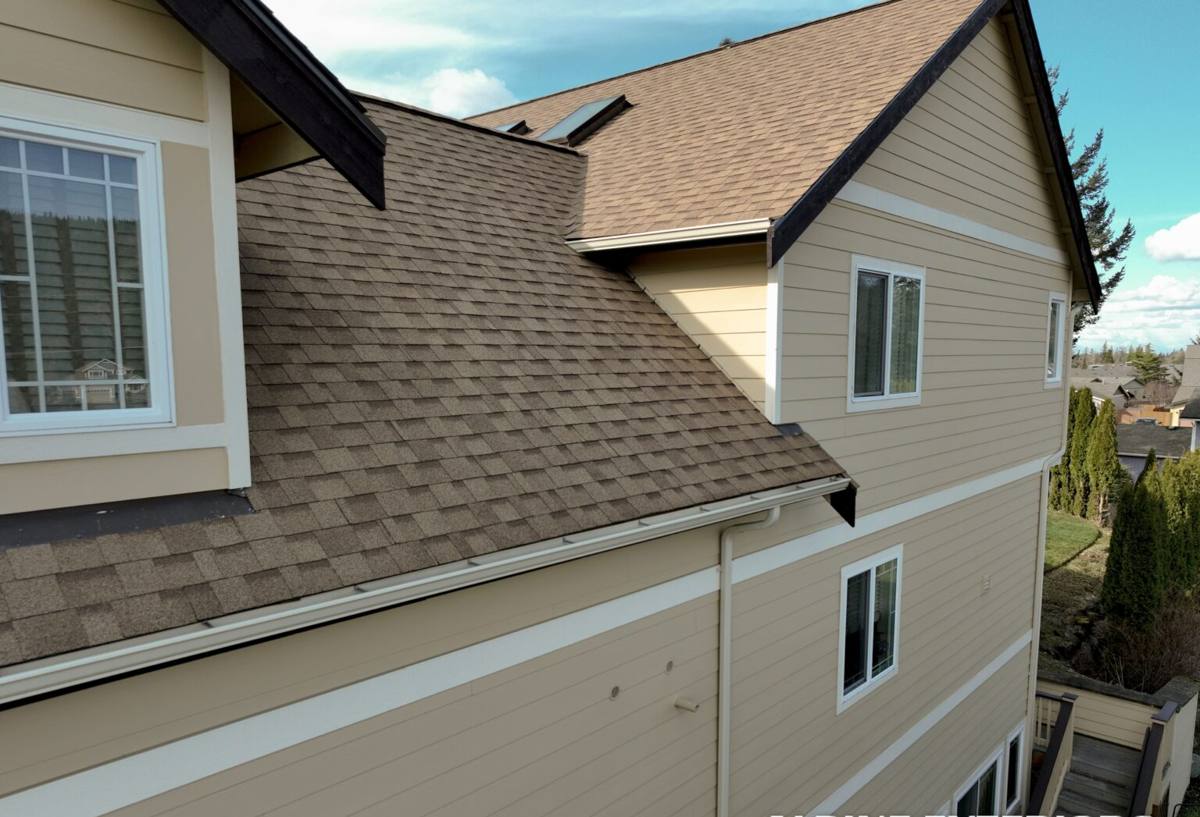
What Salt Air and Moisture Actually Do to a Deck
Fastener and Hardware Corrosion
Standard galvanized nails, screws, and joist hangers hold up reasonably well in drier inland conditions, but salt air accelerates rust. Once a fastener starts corroding, it loses holding strength long before the wood around it looks bad — which is why a deck can seem structurally fine on the surface while the connections underneath have quietly weakened.
Moss, Algae, and Trapped Moisture
Moss doesn't just look bad. It holds moisture against the decking boards, blocks airflow, and keeps the wood surface wet for days after a rain even when the rest of the yard has dried out. Over a full wet season, that constant dampness is what drives rot in deck boards, especially where boards butt together or meet a post or rail.
Wind-Driven Rain at Ledger and Rim Connections
The ledger board — where the deck attaches to the house — is the single most common source of hidden rot we find on repair calls anywhere in Whatcom County, and coastal exposure makes it worse. Wind-driven rain pushes water into any gap in the flashing at that connection, and because it's hidden behind the decking and often behind siding, the damage can go unnoticed until the deck starts to feel spongy or the ledger connection itself starts to fail.
Signs a Birch Bay Deck Needs Repair
- Soft, spongy, or bouncy spots when you walk across the deck, especially near the house
- Visible rust streaks running down from screws, nails, or joist hangers
- Persistent moss or dark staining on boards that doesn't clear up between rains
- Railings or posts that wiggle more than they used to
- Gaps opening up where the deck meets the house siding or trim
- Stair stringers that feel less solid underfoot than the rest of the deck
- Boards that have visibly cupped, warped, or split
Any one of these on its own might be a minor fix. Several at once, or anything near the ledger connection, usually means it's worth a proper inspection before it turns into a bigger job.
What a Correct Repair Actually Involves
A lot of deck "repairs" amount to replacing a few obviously bad boards and calling it done. That approach misses the point in a coastal environment — if the fasteners and flashing that caused the damage aren't addressed, the same rot shows up again in the same spots within a couple of years.
Structural Inspection First
Before any board gets pulled, we check the ledger connection, the posts and footings, the joists underneath, and the railing posts for looseness or rot. Surface damage is often just the visible part of a problem that started underneath.
Flashing and Water Management
If the ledger flashing is missing, damaged, or was never installed correctly, that gets corrected as part of the repair — not just the rotted board sitting on top of it. This is the step that actually stops the problem from coming back.
Fastener Upgrades
Where corrosion is part of the problem, we replace failing hardware with fasteners rated for the exposure, not just a like-for-like swap of whatever was there before.
Matching Structural Repairs to the Existing Deck
Repaired sections need to tie into the existing structure cleanly — matching board spacing, fastening pattern, and load path so the repaired area performs the same as the rest of the deck, not as a patch bolted onto it.
Repair or Replace? Cost and Condition Factors
Not every deck problem calls for a full rebuild, and not every deck is worth patching. The right call usually comes down to a few factors:
| Factor | Leans Toward Repair | Leans Toward Replacement |
|---|---|---|
| Ledger board condition | Sound, dry, well-flashed | Soft, rotted, or poorly flashed |
| Extent of damage | Isolated boards or one section | Rot or corrosion spread across the structure |
| Age of the deck | Newer deck, isolated issue | Original deck already near end of service life |
| Framing and footings | Solid, code-compliant, no movement | Undersized, shifted, or failing footings |
| Fastener condition | Hardware still sound | Widespread rust and corroded connections |
We'll give you a straight answer on which side of that line your deck falls, including the honest trade-off if a repair is realistic but a rebuild would last longer.
Rough Cost Range Factors
Deck repair costs vary a lot based on how much of the structure is affected, whether the ledger and flashing need work, and what decking material is involved. A repair limited to a handful of boards and some hardware is a modest job. A repair that involves ledger flashing, joist sistering, or stair rebuilding costs more because it's addressing structure, not just surface. We'll walk the deck with you and explain what's driving the number before any work starts — no guessing, no surprise add-ons once we're into it.
Our Process for Birch Bay Deck Repairs
- Inspection: We check the whole deck — decking, framing, ledger, posts, footings, and railings — not just the spot you called about.
- Assessment and plan: You get a clear explanation of what's actually wrong, what caused it, and what it will take to fix it correctly.
- Repair work: Rotted or damaged material comes out, structure and flashing get corrected where needed, and new material is fastened to match the existing deck.
- Fastener and hardware check: Anything showing corrosion gets addressed as part of the job, not left for next time.
- Final walkthrough: We go over the finished work with you and flag anything else worth keeping an eye on.
Materials That Hold Up Near the Water
Not every deck material or fastener performs the same way in salt air. We don't install or specify hardware based on what's cheapest — we base it on what will actually hold up given where your deck sits. In some cases that means stainless steel fasteners instead of standard galvanized, or hardware rated specifically for coastal or high-moisture exposure. That's a slightly higher upfront cost in exchange for not doing the same repair again in a few years. We'll explain the reasoning behind any material recommendation rather than just listing options.
Maintenance That Extends the Life of a Repair
A good repair lasts a lot longer with basic upkeep, especially given how long our wet season runs. A few habits make a real difference:
- Sweep leaves and debris off the deck regularly, especially in fall — trapped debris holds moisture against the boards
- Rinse or gently brush off moss buildup before it gets established, rather than letting it sit through the winter
- Keep gutters and downspouts clear so water isn't dumping extra volume onto or near the deck
- Check railings and stairs periodically for looseness — catching it early is a small fix, not a rebuild
- Reseal or refinish wood decking on the manufacturer's recommended schedule, not just when it looks faded
Why a Local Crew Matters for This Job
A deck repair in Birch Bay isn't the same job as a deck repair in a sheltered part of Bellingham, and a crew that hasn't worked much along the water can miss that. We work throughout Whatcom County and see, repeatedly, how salt exposure, wind direction, and our regional rain patterns affect decks differently depending on where they sit. That's not a sales pitch — it's the difference between a repair that accounts for the actual conditions your deck faces and one that treats every job the same. We're also here after the job is done, which matters if a question comes up a year or two down the line.
If you're seeing soft spots, rust stains, or persistent moss on a deck in Birch Bay, it's worth getting a straight assessment before the problem grows. We offer free, no-pressure estimates — use the form below to get one scheduled.