 Bellingham Roofing
 Why Decks in York Wear Out Faster Than You'd Expect
If you own a home in York, you already know the weather here doesn't do decks any favors. Bellingham sits close enough to the water that salt-laden air reaches most yards, and that salt works its way into fasteners, flashing, and end grain year-round. Add in the region's long stretch of driving rain each fall and winter, plus a moss season that can run from October well into spring, and you have a set of conditions that ages an outdoor structure much faster than a deck built in a drier climate would age.
Moss is the one homeowners notice first, but it's rarely the real problem — it's a symptom. Moss holds moisture against boards and framing long after a storm has passed, which is exactly what wood, fasteners, and even some composite substrates don't want. By the time moss is thick enough to be an eyesore, the deck underneath has usually been sitting damp for years. That's how a deck that looks "just old" turns out to have soft framing, rusted hardware, or a rotted ledger board once we actually get underneath it.
Repair or Replace? How to Tell
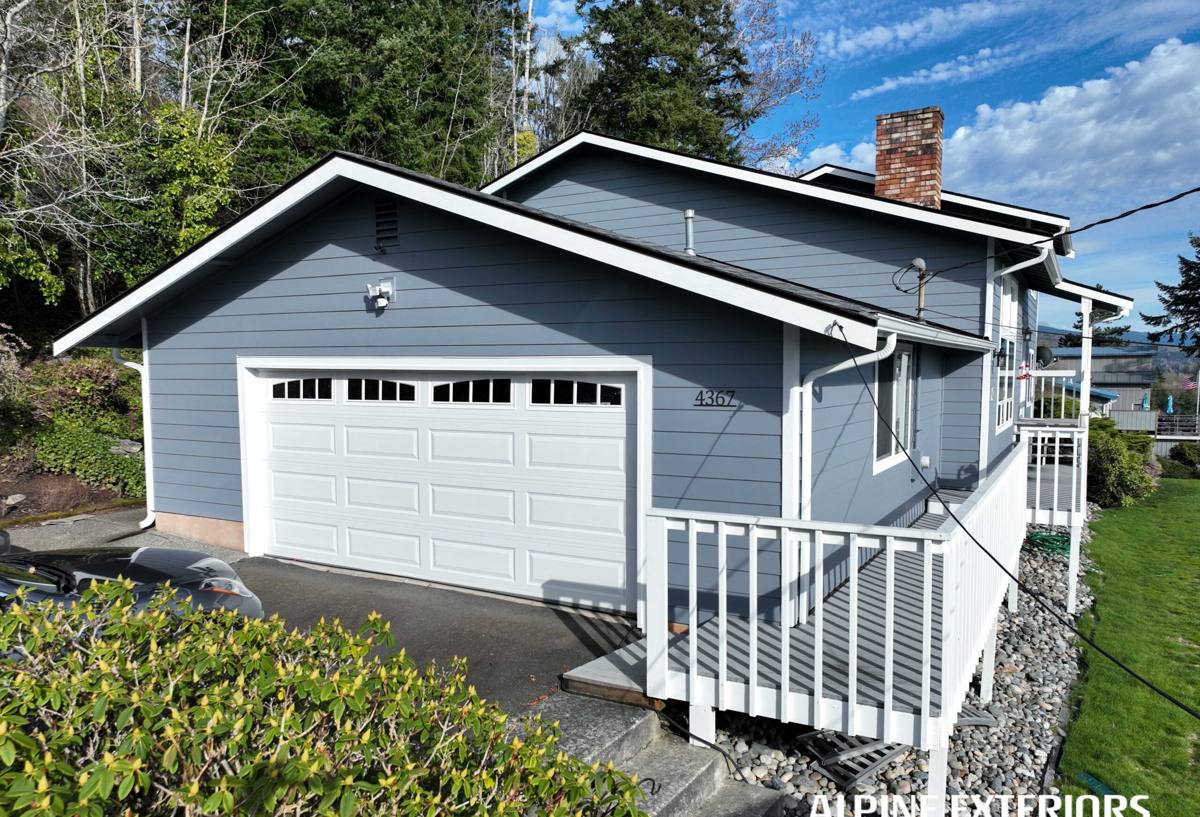
Not every tired-looking deck needs a full replacement, but a lot of them do once you're past a certain point. Here's the honest breakdown we use when we inspect a deck in York:
- Repair may be enough if the framing and ledger connection are sound, only a handful of boards are damaged, and the issues are cosmetic or isolated.
- Replacement is the better call if the ledger board, joists, or posts show rot, if railings feel loose or spongy, if fasteners are visibly rusted or bleeding stains onto the wood, or if the deck was built without proper flashing at the house connection — a very common shortcut on older builds in this area.
- Age matters, but condition matters more. A 12-year-old deck that was flashed and fastened correctly can still have a lot of life left. A 6-year-old deck built without flashing, in a spot that gets constant runoff, can already be failing structurally.
We'd rather tell a York homeowner their deck can be repaired than talk them into a replacement they don't need — but we'll also be straight with you when patching boards is just delaying an inevitable, more expensive fix.
Warning Signs Worth Checking Now
- Soft or spongy spots when you walk across the deck
- Gaps or dark staining where the deck meets the house
- Rust streaks running down from screws or joist hangers
- Persistent moss or algae that returns within weeks of cleaning
- Railings that flex or posts that wiggle at the base
- Visible daylight or soft wood where posts meet footings
What a Correct Deck Replacement Actually Involves
A deck replacement done right is a structural project, not just a board swap. In a climate like Whatcom County's, a few details matter more than they would somewhere drier, and skipping them is exactly how a deck ends up failing again in five or six years instead of twenty.
The Ledger and House Connection
This is the single most important connection on the whole structure, and it's also the one most likely to be done wrong on older decks. Proper flashing — installed so water sheds away from the house rather than behind the ledger board — is non-negotiable in a region that sees this much driving rain. We don't attach a ledger to a house without correct flashing, full stop.
Framing and Fasteners
Salt air accelerates corrosion on standard fasteners and hardware. We use fastener and hardware ratings suited to coastal exposure, not whatever happens to be cheapest at the yard, because replacing a deck's surface boards is a lot less expensive than replacing rusted-through joist hangers a few years down the road.
Footings and Post Bases
Posts sitting directly on or near grade stay wet longer in our climate and are one of the first places rot starts. Correct post bases keep wood lifted off concrete and off standing water, which matters more here than in a climate with a shorter wet season.
Airflow Underneath
Decks built low to the ground or boxed in tight with skirting trap moisture underneath, which feeds the moss and mildew cycle. Where it's practical, we build in airflow so the underside of the deck can actually dry out between storms instead of staying damp all winter.
Choosing Materials for a Coastal, Wet Climate
There's no single "best" decking material — there's a best fit for your budget, your maintenance appetite, and how exposed your particular yard is to salt air and standing moisture. Here's how the common options stack up for a York property specifically.
| Material | Upfront Cost | Maintenance | Moisture/Salt Behavior |
|---|---|---|---|
| Pressure-treated wood | Lowest | Annual cleaning, periodic sealing | Needs consistent upkeep to resist rot; fasteners must be corrosion-rated |
| Cedar | Moderate | Regular sealing/staining to hold color and resist checking | Naturally rot-resistant but still needs sealing in this much rain |
| Capped composite | Higher | Occasional washing, no staining or sealing | Resists moisture and salt well; won't rot or splinter |
| PVC decking | Highest | Lowest of all options | Fully synthetic; handles constant moisture exposure with no rot risk |
We install all of these when a homeowner has a clear preference, but for a lot of York properties — especially anything with real exposure to salt air or shade that keeps the deck damp longer — we steer people toward capped composite or PVC. It's not that wood is a bad product; it's that wood asks for a maintenance schedule this climate makes easy to fall behind on, and once you fall behind, moisture damage moves fast.
Our Deck Replacement Process
- On-site inspection. We get under the existing deck, check the ledger connection, footings, and framing, and tell you honestly whether you're looking at a repair or a full replacement.
- Straightforward estimate. You get a clear scope and price range before any work starts — no surprise change orders for things we should have caught up front.
- Permitting. Deck replacements typically require a permit through the local building department, and we handle that paperwork so you don't have to chase it down.
- Demolition and disposal. Old decking, damaged framing, and debris are removed and hauled off — your yard isn't left as a job site between steps.
- Rebuild to code. Ledger flashing, framing, footings, and fasteners are installed to current code, not just replicated from whatever was there before.
- Final walkthrough. We go over the finished deck with you, including basic care for whatever material you chose, before we consider the job done.
Permits and Local Code in Whatcom County
Most deck replacement projects — especially anything involving new framing or footings — require a building permit locally, and inspections at key stages of construction are standard. This isn't paperwork for its own sake: it's what makes sure the ledger flashing, footing depth, and railing height actually hold up to an inspector's standards and, more importantly, to this climate. Skipping the permit process might save a little time up front, but it also means no one is checking that the structural work will actually last through a Whatcom County winter. We pull the permits and schedule the inspections as a standard part of the job.
Caring for Your New Deck Through the Wet Season
Whatever material you choose, a little seasonal attention goes a long way in this climate. A quick checklist we give every York customer:
- Sweep leaves and debris off the deck before fall rains set in — trapped organic matter feeds moss growth
- Rinse off surface moss or algae as soon as it appears rather than letting it establish
- Check that gutters and downspouts near the deck are directing water away, not onto it
- For wood decks, plan on resealing or staining on the schedule your contractor recommends — don't wait until it visibly needs it
- Once a year, glance underneath at the ledger connection and footings for any new staining or softness
- Keep planters and rugs from sitting directly on deck boards for weeks at a time — they trap moisture underneath
Why a Crew That Already Works in York Matters
Deck framing rules and flashing details don't change from neighborhood to neighborhood, but familiarity with local conditions does make a difference in the decisions made along the way — where to prioritize airflow, which material fits a shaded, damp lot versus an open, sun-exposed one, and how aggressively to spec corrosion-resistant hardware given a property's exposure to salt air. A crew that's worked on decks throughout Bellingham and the surrounding Whatcom County area has already seen how different lots in this climate age over time, and that experience shapes better recommendations than a generic, one-size-fits-all spec sheet would.
It also means straightforward logistics — permits filed with the right local office, inspections scheduled without back-and-forth delays, and a crew that shows up when they say they will because the job is local, not a drive-in project squeezed between other regions.
Get an Honest Look at Your Deck
If your deck in York is showing moss that won't quit, soft spots, or rust stains where it meets the house, it's worth getting an honest, no-pressure look before another wet season sets in. We'll tell you straight whether you're looking at a repair or a full replacement, walk you through material options that make sense for your specific lot, and give you a clear estimate — no obligation. Reach out below to schedule a free deck assessment.