 Bellingham Roofing
 Lynden's Climate Is Harder on Siding Than It Looks
Lynden sits inland from Bellingham Bay, but it doesn't escape the marine weather pattern that defines Whatcom County. Moisture-laden air moves in off the Strait of Georgia and Puget Sound and settles over the Nooksack lowlands for months at a time. The result is a long wet season, low winter sun angles that leave north- and east-facing walls damp for days after a storm, and a moss and algae season that can run from October through April in a typical year. Add the region's driving rain — wind-blown moisture that gets pushed sideways into wall assemblies rather than just falling straight down — and you have a climate that punishes any siding material with weak seams, poor drainage, or a finish that can't handle sustained moisture exposure.
Homes in and around Lynden also deal with wide seasonal temperature swings for a coastal-influenced climate — summer highs in the 80s, winter lows that dip below freezing, and the freeze-thaw cycling that comes with it. Siding that absorbs water and then freezes is siding that cracks, delaminates, or lets moisture behind the cladding where it can rot sheathing and framing. Whatever goes on a Lynden home has to handle all of this for decades, not just look good on installation day.
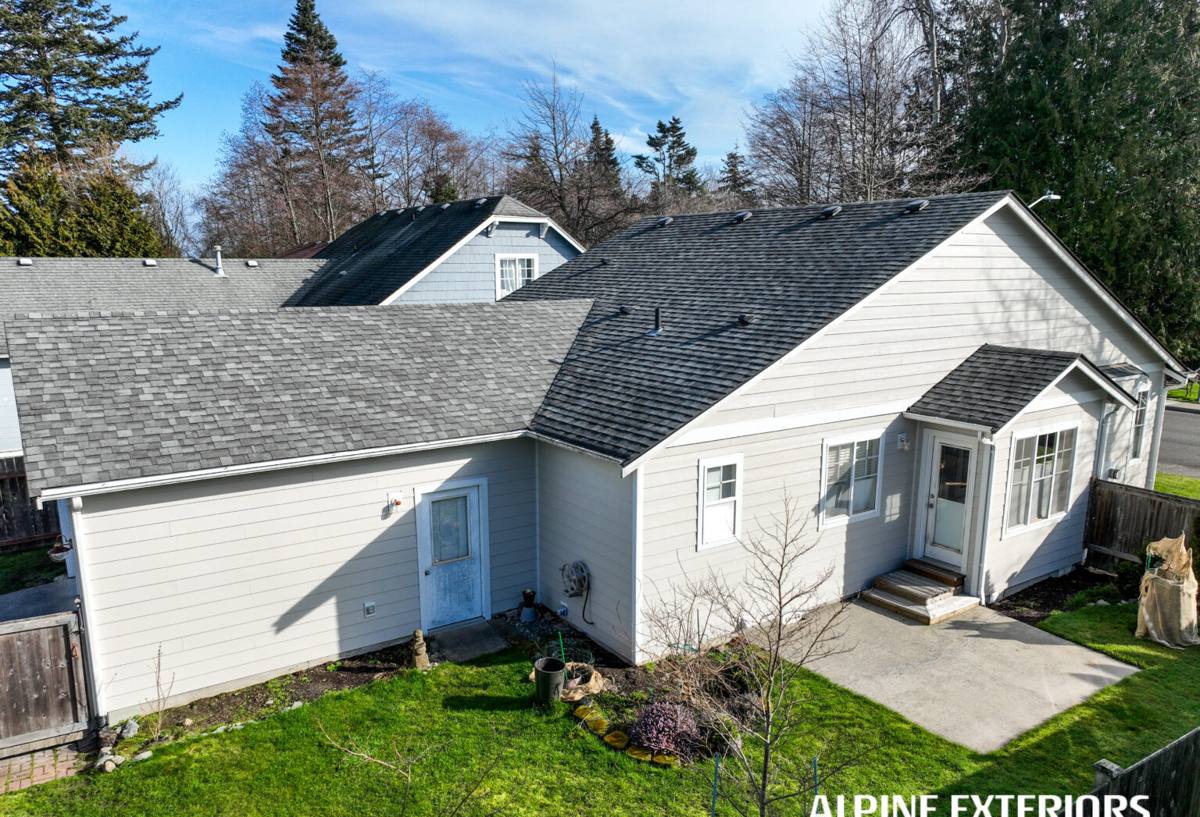
What Fiber Cement Actually Needs to Do Here
Fiber cement siding is a mix of cement, sand, and cellulose fiber pressed into planks or panels. Done right, it's dimensionally stable, doesn't rot, resists pests, and holds paint or factory finish far longer than wood-based products. But "fiber cement" isn't one product — quality, engineering, and finish vary a lot between manufacturers, and in a climate like Lynden's those differences show up fast.
For this region specifically, fiber cement siding needs to:
- Shed wind-driven rain without letting water track behind the board at laps and joints
- Resist moss and algae growth on a factory finish, not just a field-applied paint coat
- Hold its dimensions through repeated wet-dry and freeze-thaw cycles without swelling or cracking
- Accept caulking and touch-up paint that actually bonds and lasts in a damp climate
- Be installed with the correct clearances, flashing, and fastening for sustained moisture exposure — not just fair-weather installation practices
Why We Install James Hardie and Nothing Else
We install James Hardie fiber cement siding exclusively. We don't install LP SmartSide, vinyl, Cemplank, Allura, or primed wood siding, and we tell homeowners why up front rather than letting them find out after the fact.
What the alternatives get right — and where they fall short in this climate
LP SmartSide is an engineered wood product with a resin-treated strand substrate. It installs fast and holds paint reasonably well when the factory coating is intact, but it's still wood at its core — if the edge seal is compromised by a cut, a nail split, or years of moisture cycling, the substrate can swell and deteriorate. In a climate with Lynden's rain totals and moss season, that edge-seal dependency is a real long-term liability.
Vinyl siding is inexpensive and low-maintenance in the sense that it never needs painting, but it's a thin plastic product that expands and contracts significantly with temperature swings, can crack in cold snaps, and offers essentially no fire resistance. It also tends to look and perform like what it is over a couple of decades, especially against moss and mildew staining that's hard to fully clean off a textured vinyl surface.
Cemplank and Allura are both legitimate fiber cement manufacturers, and we're not going to claim otherwise. Our decision to standardize on Hardie comes down to manufacturing consistency, the depth of engineering behind their climate-specific product lines, the strength and transferability of their warranty, and the fact that our crews know one system inside and out rather than switching specs between jobs. In a trade where installation quality determines whether siding lasts 10 years or 40, that consistency matters more than it might seem.
Primed spruce and cedar are beautiful materials, and we understand the appeal. But bare wood siding in a climate this wet requires a maintenance commitment — recaulking, repainting, and vigilant moisture inspection — that most homeowners underestimate until they're several years in and behind on upkeep. Fiber cement removes that burden without giving up a wood-grain look.
James Hardie's HZ5 Engineering for This Region
James Hardie engineers its siding by climate zone, and the Pacific Northwest falls into their HZ5 category — the line built for regions with significant moisture exposure and freeze-thaw cycling. HZ5 products are formulated and tested for performance in exactly the conditions Lynden sees: sustained dampness, moss and mildew pressure, and temperature swings through the winter. That's a meaningfully different product than what gets shipped to a dry climate, and it's part of why "fiber cement" isn't interchangeable across brands or product lines.
Hardie's ColorPlus factory finish is baked on in a controlled environment rather than field-sprayed or brushed, which gives it more consistent coverage and better long-term color retention than most on-site paint jobs can match — especially important in a climate where UV exposure is inconsistent but moisture exposure is constant.
Product lines we use most in Lynden
| Product | Best use | Why it fits here |
|---|---|---|
| HardiePlank lap siding | Primary wall cladding, most common choice | Wide range of textures and exposures; strong track record against wind-driven rain when installed with correct lap and flashing detail |
| HardiePanel vertical siding | Accent walls, gables, modern facades | Fewer horizontal seams for water to track into, good for steep gable ends that take direct rain |
| HardieTrim boards | Corners, window and door casing, fascia | Matches the plank system dimensionally and resists the rot that takes out wood trim first |
| HardieShingle siding | Accent bands, dormers, decorative sections | Cedar-shingle look without the maintenance burden in a moss-prone climate |
What Correct Installation Looks Like
Fiber cement siding fails early almost exclusively because of installation mistakes, not material defects. In a wet climate like Whatcom County's, the details matter even more than usual.
Water management comes first
Before a single board goes up, the wall needs a proper weather-resistive barrier, correctly flashed window and door openings, and rainscreen or drainage gap detailing where the wall assembly calls for it. Fiber cement is durable, but it's not waterproof by itself — the system behind it is what actually keeps water out of the wall.
Fastening and clearances
Hardie specifies exact fastener types, spacing, and penetration depth, along with minimum clearances from grade, roof lines, decks, and other siding terminations. Skipping these — nailing too tight, closing up clearances to save a trim detail, or using the wrong fastener — is the single most common cause of premature failure we see on fiber cement jobs that weren't installed by a Hardie-focused crew.
Joints, caulking, and touch-up
Butt joints, corners, and penetrations need the right combination of flashing, gapping, and sealant — not just a bead of caulk over a tight joint. And any field-cut edges need the manufacturer-specified touch-up to maintain the moisture protection the factory finish provides.
Our Process for a Lynden Siding Project
- On-site assessment — we walk the exterior, check current siding and sheathing condition, and look at drainage, grading, and roof-to-wall details that affect how the new siding will perform.
- Moisture and substrate check — if we find soft sheathing, rot, or evidence of past water intrusion, we address it before siding goes on. Covering a moisture problem with new siding just hides it.
- Product and color selection — we walk through HardiePlank exposures, textures, and ColorPlus color options based on the home's style and your preferences.
- Weather barrier and flashing installation — this is the step that determines long-term performance more than any other, and we don't shortcut it.
- Siding installation to Hardie spec — correct fastening, clearances, and joint detailing throughout.
- Trim, caulking, and final touch-up — including manufacturer-approved sealants and finish touch-up on any field cuts.
- Final walkthrough — we go over the finished exterior with you before calling the job done.
Moss, Algae, and Long-Term Upkeep
Even with a moss-resistant factory finish, no siding in Whatcom County is completely immune to organic growth over time — shaded, north-facing walls near mature trees will always be more prone to it than open, sun-exposed elevations. The advantage of Hardie's ColorPlus system is that it holds up to routine cleaning far better than field-applied paint, so a homeowner can rinse or gently wash affected areas without stripping the finish or exposing bare substrate. We recommend an annual visual check heading into the wet season — looking at caulk joints, trim connections, and any areas near grade or plantings where moisture tends to sit longest.
What Drives Cost on a Lynden Siding Job
| Factor | Why it matters |
|---|---|
| Home size and wall complexity | More corners, gables, and dormers mean more cutting, flashing, and trim work |
| Current siding removal | Tear-off and disposal of existing siding adds labor beyond a straightforward re-side |
| Sheathing or framing repair | Any rot or moisture damage found during removal needs to be fixed before new siding goes on |
| Product line and texture | Plank vs. panel vs. shingle accents, and smooth vs. woodgrain textures, carry different material costs |
| Trim and accent detailing | Corner boards, window casing, and accent bands add labor even when the wall area is the same |
| Access and site conditions | Steep lots, tight setbacks, and multi-story walls affect staging and labor time |
What to Ask Before Hiring a Siding Crew in Lynden
Not every contractor who says they "do siding" has real fiber cement experience, and in a climate this unforgiving, that gap shows up in the wall assembly long before it shows up on the surface. Before hiring anyone for a Lynden siding project, it's worth asking:
- Are they James Hardie certified or specifically experienced with Hardie's installation specs, not just fiber cement in general?
- Will they show you the weather-resistive barrier and flashing plan before siding goes up, not just describe it verbally?
- Do they inspect and address sheathing condition during tear-off, or just cover whatever is underneath?
- Can they explain their fastening and clearance approach in specific terms — nail type, spacing, gap at grade and roof lines?
- Do they have local experience with Whatcom County's rain and moss conditions, not just general siding work from a drier region?
- What does their warranty cover, and how does it interact with James Hardie's manufacturer warranty?
Let's Take a Look at Your Home
If your Lynden home's siding is showing moisture damage, moss buildup, or you're just planning ahead for a replacement, we're happy to come take a look. We'll give you a straightforward, no-pressure assessment of what your siding needs and a clear estimate for James Hardie installation done to spec for this climate — no obligation either way.