 Bellingham Roofing
 Siding in Happy Valley Works Harder Than It Looks
Happy Valley sits close enough to Bellingham Bay to catch salt-laden air off the water, and close enough to the hills and tree cover around it to stay damp and shaded for long stretches of the year. That combination is tougher on exterior siding than either factor alone. Salt air accelerates corrosion on fasteners and trim metal. Driving rain off the Sound finds every gap in flashing and caulking that a calmer climate would forgive. And where lot lines back up to trees or the terrain blocks direct sun for part of the day, moss and algae get a long runway to take hold on north- and west-facing walls.
None of this is unique to any one street in the neighborhood — it's a function of Whatcom County's marine climate and Happy Valley's mix of older housing stock, mature trees, and proximity to the water. But it does mean siding replacement here isn't a cosmetic project. It's a chance to fix the moisture and ventilation problems that got the old siding into trouble in the first place, and to put something on the wall that's actually engineered for this climate rather than merely tolerant of it.
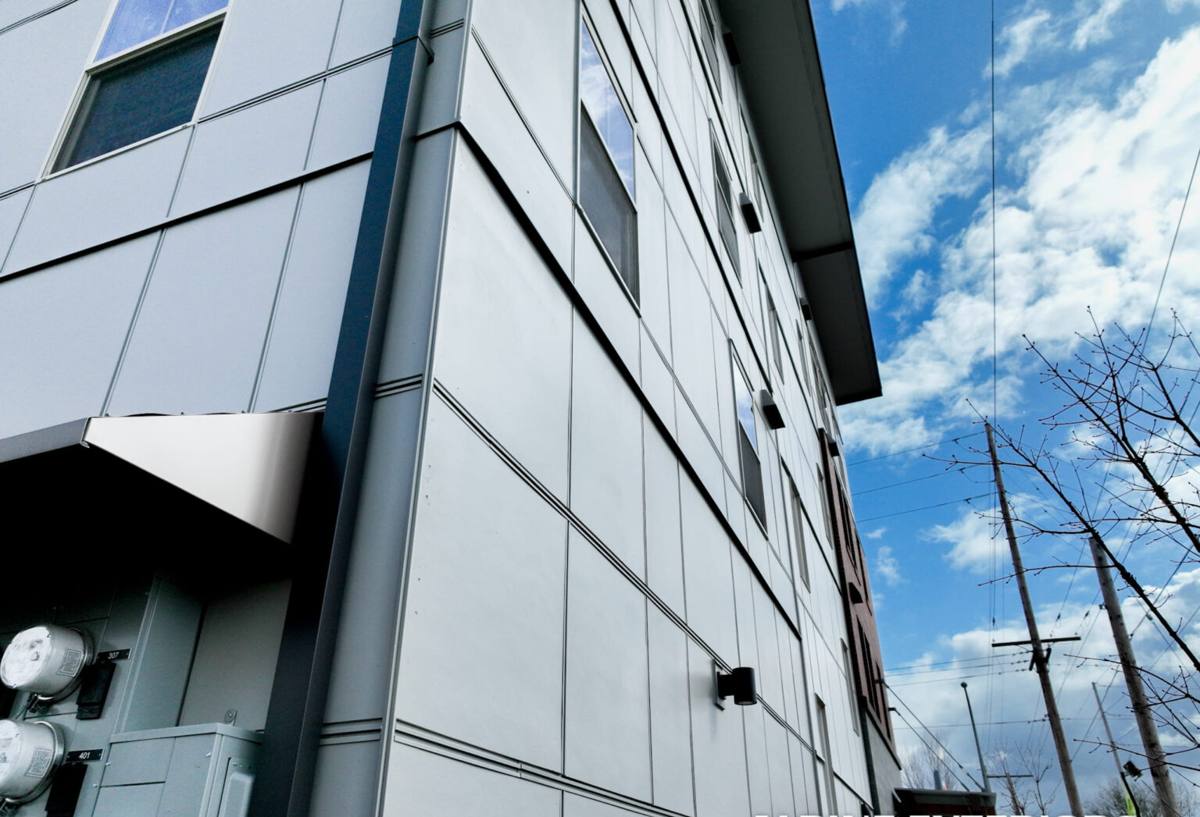
Signs Your Happy Valley Home May Need Siding Replacement
Siding failure in this climate is rarely sudden. It shows up as a slow accumulation of small problems that, together, mean patching isn't worth it anymore. Before you commit to a full replacement, it's worth knowing what we actually look for during an inspection.
- Soft or spongy spots when you press on the siding, especially near the bottom courses and around windows
- Paint that's bubbling, peeling, or chalking faster than a normal repaint cycle would explain
- Persistent moss or algae staining that comes back within a season of cleaning
- Visible warping, cupping, or gaps opening up between boards or panels
- Rot or discoloration at butt joints, corners, and anywhere trim meets siding
- Rising energy bills that suggest the wall assembly behind the siding is no longer doing its job
- Interior signs — musty smell, peeling interior paint, or damp drywall on an exterior wall
Any one of these can sometimes be spot-repaired. Several at once, especially combined with a house that's original to its construction date, usually means the siding and the moisture barrier behind it have reached the end of their useful life together.
Why Age Matters More Here Than in Drier Climates
A siding product that's rated for 30 years in Arizona doesn't automatically get 30 years in Whatcom County. Constant humidity, frequent freeze-thaw swings in winter, and near-daily moisture exposure for months at a time shorten the real-world lifespan of anything that isn't specifically engineered for a wet marine climate. That's a big part of why product selection matters as much as installation quality.
What a Correct Siding Replacement Actually Involves
Replacing siding is not just pulling off old boards and nailing up new ones. Done correctly, it's a full rebuild of the wall's moisture management system, and skipping steps here is exactly how a wall ends up back in the same condition ten years later.
Tear-Off and Inspection
Once the old siding comes off, we inspect the sheathing underneath for rot, delamination, or soft spots — problems that are invisible until the wall is opened up. Any damaged sheathing gets replaced before anything new goes on. Installing new siding over compromised sheathing just hides the problem for a while.
Weather-Resistive Barrier and Drainage Plane
A properly installed weather-resistive barrier, lapped correctly and integrated with flashing at every window, door, and penetration, is what actually keeps driving rain out of the wall assembly. In a climate like this one, we also pay close attention to the drainage plane behind the siding — the gap that lets any moisture that does get past the outer layer drain and dry out instead of sitting against the sheathing.
Flashing and Trim Details
Most siding failures we see didn't start with the siding material itself — they started with a flashing detail that was skipped or done wrong: a window head flashing that wasn't kicked out far enough, a missing kick-out flashing where a roofline meets a wall, trim caulked instead of flashed. Getting these details right the first time is what separates a job that lasts from one that needs attention again in a few years.
Fastening and Clearances
Fiber cement siding has specific fastening requirements — nail type, spacing, and depth all affect how the product performs over time. Manufacturer-specified clearances from grade, roofing, and decks also matter for keeping the bottom edge of the siding from sitting in standing water or splashback.
Why We Install Only James Hardie Fiber Cement Siding
We get asked fairly often why we don't offer vinyl, LP SmartSide, or other fiber cement brands. The honest answer is that we standardized on James Hardie because, after years of replacing failed siding of every type, it's the product we trust to actually perform in this climate without turning into a maintenance project.
Vinyl is inexpensive and low-maintenance in the sense that it doesn't need painting, but it's a thin plastic product that can warp in heat, crack in cold, and fade unevenly over time — and it doesn't offer the same fire resistance or impact durability as fiber cement. LP SmartSide is a wood-strand product with real strengths, but it's an engineered wood product at its core, which means its long-term performance depends heavily on caulking, painting, and edge sealing being maintained on schedule — something that's easy to fall behind on in a climate that gives you fewer dry days to do exterior maintenance.
James Hardie fiber cement is non-combustible, dimensionally stable in wet and dry cycles, and comes with a factory-applied ColorPlus finish that's baked on and warranted separately from the substrate — so you're not relying on a field-applied paint job to hold up against salt air and constant damp. It's not the cheapest option on the market, but it's the one we're willing to put our name behind in a climate that doesn't forgive shortcuts.
Choosing the Right Hardie Products for This Climate
James Hardie engineers its siding in regional formulations — its HZ5 product line is built for the freeze-thaw and moisture conditions found in the Pacific Northwest, which is what we install here rather than a formulation designed for a different climate zone. Beyond the base material, there are a few practical choices to make for a Happy Valley home.
| Product | Best Use | Why It Fits This Climate |
|---|---|---|
| HardiePlank lap siding | Most home styles, traditional and modern | Widely available profiles and factory colors; proven track record in wet marine climates |
| HardiePanel vertical siding | Accent walls, gables, modern facades | Fewer horizontal laps means fewer joints for water to find |
| HardieTrim boards | Corners, window and door trim, fascia | Matches the siding's moisture stability so trim and field don't move at different rates |
| ColorPlus factory finish | All exposed siding and trim | Baked-on finish resists the fading and chalking that field paint struggles with here |
Color selection is worth thinking about too. Lighter, factory-finished colors show algae and moss growth less readily than deep, dark tones, though no color is immune to it if a wall sits shaded and damp year-round. We'll walk through your specific exposure — which walls get sun, which stay shaded — as part of choosing colors that will actually look good five and ten years out, not just on install day.
Our Siding Replacement Process
- On-site inspection: We walk the exterior, check for moisture intrusion and sheathing damage, and identify the specific conditions on your lot — sun exposure, tree cover, drainage.
- Written proposal: A clear scope covering tear-off, sheathing repair allowances, flashing details, product selection, and color.
- Prep and protection: Landscaping, windows, and walkways are protected before tear-off begins.
- Tear-off and sheathing repair: Old siding comes off, sheathing is inspected and repaired as needed, and we don't move forward until that layer is solid.
- Weather barrier and flashing: New WRB, properly lapped and flashed at every penetration, before any siding goes up.
- Hardie installation: Installed to manufacturer fastening and clearance specifications, not shortcuts that happen to look fine on install day.
- Final walkthrough: We review the finished work with you before calling the job done.
Cost Factors for Siding Replacement in Happy Valley
Every home is different, so we don't publish flat pricing, but the factors that move the number up or down are consistent. Knowing them ahead of time helps you understand your estimate instead of just seeing a total.
| Factor | How It Affects Cost |
|---|---|
| Home size and wall complexity | More square footage and more corners, dormers, and gables mean more labor and trim |
| Sheathing condition | Rot or moisture damage found during tear-off adds repair scope not visible in an initial estimate |
| Siding profile and accessories | Vertical panels, trim detailing, and accent choices cost more than a straightforward lap siding install |
| Access and site conditions | Sloped lots, tight setbacks, or limited staging space can add time and equipment cost |
| Tear-off and disposal | Multiple layers of old siding, or siding installed over hazardous materials, adds scope |
Why Local Experience in Happy Valley Matters
A crew that already works in Whatcom County knows the practical realities of building here: what the county's permitting and inspection process actually expects, how the region's wet-then-dry seasonal swing stresses a wall assembly over time, and what a home's sun and shade pattern is likely to do to siding on each exposure. That local knowledge shows up in small decisions — how much drainage gap to build in on a shaded north wall, which color will actually hold up on a wall that stays damp longer than the rest of the house — that a crew unfamiliar with the area might not think to ask about.
It also matters for accountability. A local crew is easy to reach if a question comes up after the job is done, and has a reputation in the community that depends on the work holding up, not just looking good at handoff.
Ready for an Estimate?
If your Happy Valley home is showing signs of siding wear, or you're simply planning ahead, we're happy to take a look and give you a straight assessment — no pressure, no obligation. Use the form below to request a free estimate.