 Bellingham Roofing
 Blaine Roofs Take a Different Kind of Beating
Blaine sits right where Whatcom County meets the water, close enough to the Canadian border that homeowners here deal with a weather pattern most inland roofers never see day to day. Wind comes off the bay with real force, rain drives in sideways instead of falling straight down, and salt-laden air works on metal components year-round whether a storm is happening or not. Add in the long, damp moss season that Whatcom County is known for, and you've got a roof that ages differently than one 30 miles inland. A repair approach copied from a generic roofing playbook often misses the specific combination of problems a Blaine roof actually develops.
This page is about one job done right: storm damage roof repair for homes in Blaine. Not a full replacement pitch, not a generic storm-chaser checklist — an honest look at what storm damage really looks like here, what a correct repair involves, and why local experience changes the outcome.
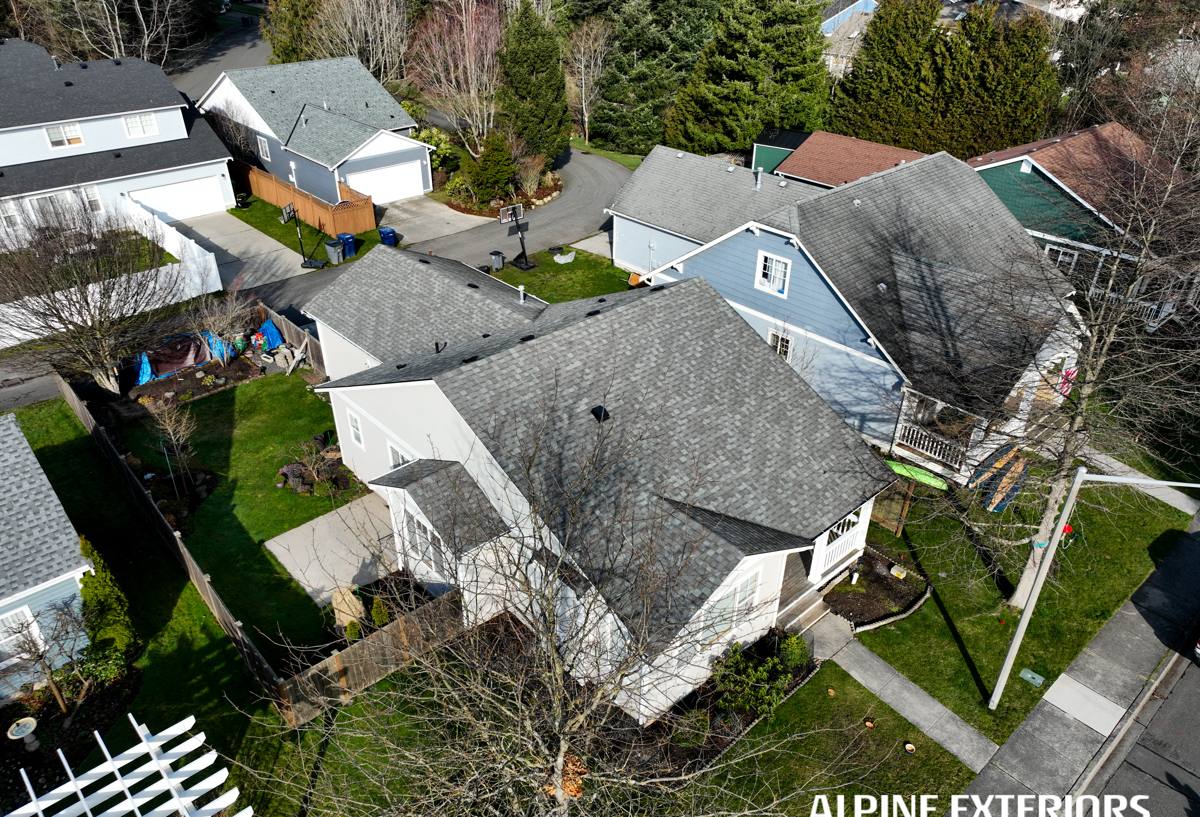
Signs Your Blaine Roof Has Storm Damage
Some storm damage is obvious right after a windstorm. Other damage is quiet — a lifted shingle tab, a bent flashing edge, a fastener that backed out just enough to let water in over the following months. Because Blaine gets repeated wind-and-rain events through fall and winter rather than one or two isolated storms, damage tends to compound. A small issue from an October blow can turn into a real leak by February if nobody's looking for it.
- Missing, cracked, or curled shingles, especially on the side of the roof that faces prevailing wind
- Granules collecting in gutters or at downspout outlets after a storm
- Lifted or creased shingle tabs that don't lie flat anymore
- Bent, loose, or rusting flashing around chimneys, vents, and skylights
- Water stains on interior ceilings or in the attic that appear after a windy rain event
- Debris or branch strikes that punctured or gouged the roofing surface
- Moss buildup at joints and valleys that's holding moisture against the roof deck
- Soft spots underfoot near valleys or eaves, which often means the decking underneath is already wet
If you notice any of these after a storm, the roof is telling you something. The earlier a small leak point is found, the less it costs to fix and the less chance it has to damage the decking or insulation underneath.
What a Correct Storm Damage Repair Actually Involves
Start With a Real Inspection, Not a Guess From the Ground
A proper storm damage assessment means getting on the roof, not just looking up from the driveway. Wind damage in particular can be deceptive — a shingle can look fine from below but be lifted enough at the tab to let wind-driven rain underneath. We check every slope, not just the side that took the obvious hit, because wind damage on a coastal property rarely stays confined to one plane of the roof.
Check the Decking, Not Just the Surface
Shingles are the visible layer, but the roof deck underneath is what actually keeps water out of your home. If a leak has been running for any length of time, the plywood or OSB decking around it may be soft, delaminated, or stained. Replacing shingles over damaged decking is a repair that fails again within a season — the deck has to be sound, or repaired itself, before new roofing goes down.
Match Materials Correctly
A storm repair should blend into the existing roof as closely as possible, both for appearance and for performance. That means matching shingle profile and, where possible, color line — not just grabbing whatever's on the truck. On older roofs where an exact match isn't available, we'll walk you through the realistic options rather than promising a seamless match we can't deliver.
Flashing and Fasteners Get the Same Attention as Shingles
Most storm leaks in this region trace back to flashing and fasteners as much as to the shingles themselves. Salt air accelerates corrosion on exposed metal, so a repair that reuses old, pitted flashing or corroded nails is a repair that's already halfway to failing again. Correct flashing work at valleys, chimneys, and penetrations matters more here than in a drier, inland climate.
Salt Air and Moss: The Two Slow Problems Behind Most Storm Damage
Storm damage and long-term wear aren't separate issues on a Blaine roof — they feed each other. Salt-laden air corrodes exposed fasteners, flashing edges, and metal vents faster than it would inland, which means a roof going into a windstorm with corroded hardware is more likely to lose shingles or develop leaks than one with sound metal. And moss, which thrives in Whatcom County's long damp season, holds moisture against the roofing surface and works its way under shingle edges, lifting them just enough for wind and rain to finish the job during the next storm.
A repair that only addresses the storm damage itself, without dealing with the corrosion or moss that made the roof vulnerable in the first place, is treating the symptom. Part of an honest repair is telling you when moss removal, gutter clearing, or hardware upgrades to corrosion-resistant fasteners and flashing would meaningfully extend the life of the fix.
Our Process for Storm Damage Repairs in Blaine
- Inspection and documentation. We get on the roof, photograph the damage, and identify both the storm-caused issues and any pre-existing wear that contributed to them.
- Honest scope of work. You get a clear explanation of what's damaged, what's simply aged, and what actually needs to happen — no upsell to a full replacement if a targeted repair will hold.
- Written estimate. Materials, labor, and timeline laid out before any work starts, so there are no surprises.
- Repair work. Deck inspection and repair as needed, correct flashing and fastener replacement, and shingle matching done to the standard we'd want on our own homes.
- Final walkthrough. We show you what was done and what to keep an eye on going forward, including any moss or drainage issues worth addressing separately.
Repair or Replace? How We Help You Decide
Not every storm-damaged roof needs to come off. But a repair on a roof that's already near the end of its service life can end up being money spent on a roof you'll replace within a year or two anyway. Here's how we think through it with homeowners:
| Factor | Repair Usually Makes Sense | Replacement Usually Makes Sense |
|---|---|---|
| Roof age | Under 12-15 years, or a newer roof with isolated damage | Nearing or past the end of its rated service life |
| Extent of damage | Localized to one slope, valley, or penetration | Widespread across multiple slopes or repeated storm events |
| Decking condition | Sound, dry decking beneath the damaged area | Soft, delaminated, or water-stained decking in multiple spots |
| Material availability | Shingle line still available or a close match exists | Discontinued material with no reasonable match |
| Underlying wear | Isolated wear tied to the storm event itself | Heavy moss history, corrosion, or granule loss roof-wide |
We'll give you our honest read on where your roof falls on this table rather than defaulting to whichever option costs more.
Insurance Claims for Storm Damage
Many storm damage repairs in Blaine go through homeowners insurance, especially after a documented wind event. We provide clear photo documentation and a written scope of damage that you can submit with a claim. We won't inflate a scope to maximize a payout, and we won't downplay damage to make a job easier — the goal is an accurate record of what the storm actually did, so the claim reflects the real repair that's needed.
Why a Crew That Already Works Blaine Matters
Storm damage repair isn't just a technical skill — it's a scheduling and materials problem too. A crew that already works this part of Whatcom County knows which suppliers carry the shingle lines common on local homes, understands how quickly a small leak can turn into a bigger problem given the area's rain patterns, and isn't learning on your roof how salt air affects fastener and flashing choices. That local familiarity shows up in faster, more accurate assessments and repairs that are built for the conditions your roof will actually face again next winter, not just for the storm that just passed.
Get a Free, No-Pressure Estimate
If your Blaine home has visible storm damage, or you're just not sure whether that recent windstorm did any harm you can't see from the ground, we're happy to take a look. The estimate is free, there's no pressure to move forward, and you'll get a straight answer about what the roof actually needs. Use the form below to get started.