 Bellingham Roofing
 Why Sudden Valley Roofs Wear Differently
Sudden Valley sits back from Bellingham Bay along the shores of Lake Whatcom, and that setting shapes what a roof out here has to survive. Whatcom County's marine climate still reaches this far inland — driving rain, long stretches of overcast humidity, and salt-tinged air that moves in off the water settle over the whole region, roof included. What makes Sudden Valley different from a lot of in-town Bellingham neighborhoods is the tree canopy. Much of the community was built into second-growth forest, and mature conifers shade roof slopes for a good part of the day, most of the year. Shade plus moisture is exactly the combination that grows moss, and moss is exactly what shortens a roof's working life when it isn't dealt with.
A correct new roof installation here has to answer to both realities at once: regional wet-climate durability, and a heavier, more constant moss and needle-debris load than you'd see on an open lot closer to downtown. Get the underlayment, ventilation, and material choice right the first time, and a roof in Sudden Valley holds up as well as anywhere in Whatcom County. Get it wrong, and homeowners end up re-treating moss and chasing leaks every year or two instead of just living with a roof that works.
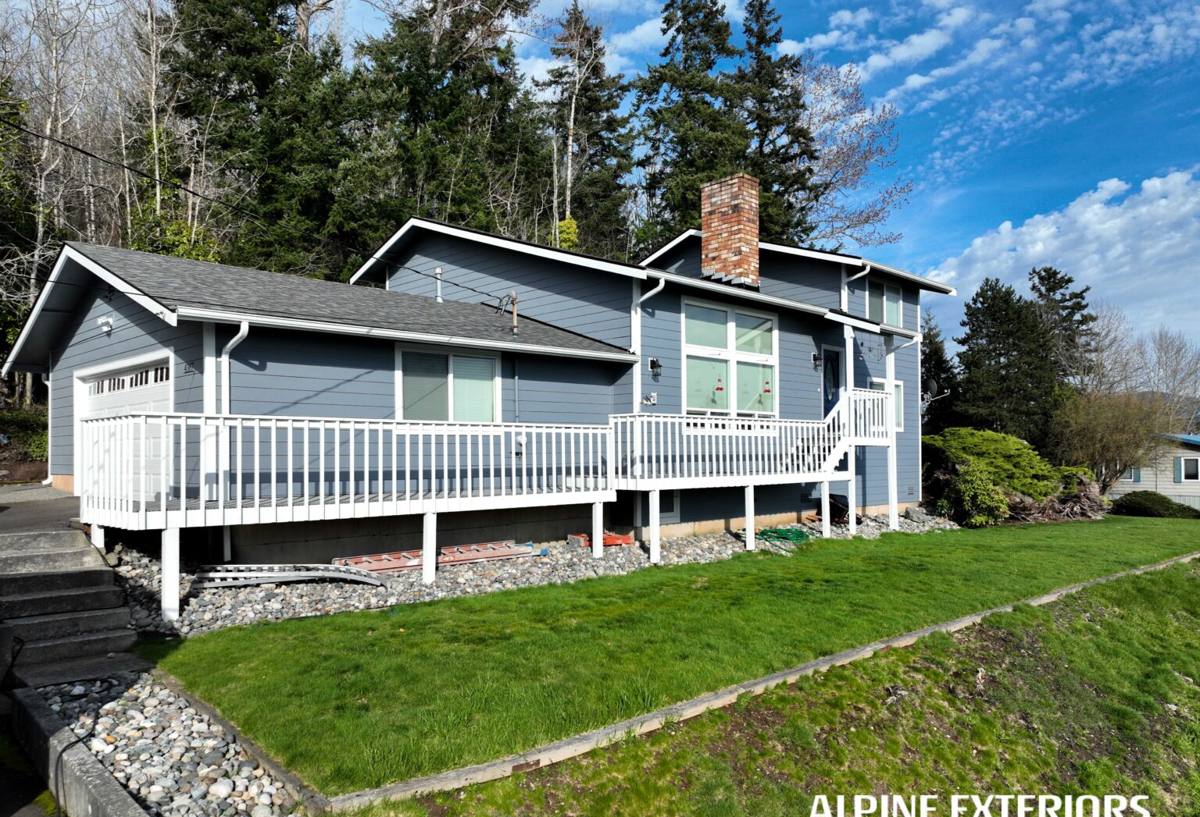
What a Correct New Roof Installation Involves
Full Tear-Off and Deck Inspection
Every legitimate new roof installation starts with a full tear-off down to bare sheathing, not a layover on top of old shingles. That's the only way to actually see the deck. On homes surrounded by trees, we look closely for soft spots from long-term moisture around old moss growth, in valleys, and anywhere needles and leaves have been packed against the roof for years. Damaged sheathing gets replaced before anything new goes down — new shingles over a compromised deck just hide the problem for another season.
Underlayment That Matches the Climate
Given how much rain this part of Washington sees, underlayment is a real structural layer of the system, not an afterthought. Self-adhered ice-and-water membrane goes in valleys, around penetrations, and along eaves, with synthetic underlayment across the rest of the field. In a shaded, high-moisture setting like Sudden Valley, this layer is what buys time if wind-driven rain or a clogged gutter pushes water somewhere it shouldn't be.
Flashing and Penetrations
Chimneys, skylights, plumbing vents, and wall-to-roof transitions are where most roofs actually leak, not out in the open field of shingles. New flashing goes in at every penetration, and every wall intersection gets properly step-flashed. Reusing old flashing to save time is a shortcut that shows up as a leak within a few years, especially on a roof that stays damp longer than most because of shade.
Roof-Edge Details That Matter Under Trees
Drip edge and gutter apron are small details, but on a lot with this much overhead tree cover they carry more weight than usual. Properly installed drip edge keeps water and wind-driven debris from getting up under the shingle edge, and a correctly sized gutter apron directs runoff into the gutter rather than behind it. With needle and leaf litter as constant as it is here, gutters also fill and dam faster than they would on an open lot, so we always talk through whether gutter guards or a larger gutter profile make sense as part of the job, not as an upsell afterward.
Choosing the Right Roofing System for a Shaded, High-Moisture Lot
Not every roofing material handles Sudden Valley's tree cover the same way. Some shed moss and debris naturally; others hold onto moisture and give algae and moss something to grip. Part of our job during the estimate is being straight about which systems actually make sense for a shaded lot versus which ones look good on paper but require constant upkeep once installed.
| Roofing Material | Performance Under Shade & Moss Pressure | Ongoing Maintenance | General Lifespan Range |
|---|---|---|---|
| Architectural asphalt shingle | Algae-resistant granules help; still benefits from periodic moss removal under heavy canopy | Low to moderate — annual debris clearing recommended | 20–30 years |
| Standing seam metal | Smooth, hard surface sheds moss and debris more effectively than textured materials | Low — occasional debris clearing | 40–60 years |
| Cedar shake | Absorbs moisture and holds debris; the hardest material to keep moss-free under a shaded canopy | High — regular cleaning and treatment required | 15–25 years with diligent upkeep |
| Synthetic/composite shingle | Resists moisture absorption better than wood; holds up well in shaded conditions | Low to moderate | 30–50 years depending on product |
Most of the new roof installations we do in Sudden Valley end up as algae-resistant architectural shingles or standing seam metal, for that reason. Cedar shake looks the part in a wooded setting, but a shaded lot is about the hardest environment there is for wood roofing to hold up in over time, and we'd rather say that plainly during the estimate than sell a product that's going to demand constant upkeep to survive in this specific setting.
Color matters too, though less than material choice. Darker shingles hide moss staining and algae streaking longer than light colors, which is worth factoring in on a lot where full sun to dry the roof surface is limited. And because falling branches and cones are a real, ongoing hazard directly under mature trees, we also discuss impact-rated shingle options where it makes sense, rather than treating impact resistance as something only hail-prone regions need to think about.
Ventilation: The Part of the Job You Never See
Under heavy tree cover, attics run more humid than attics on open, sun-exposed lots, simply because they get less direct solar drying. Without balanced intake and exhaust ventilation, that humidity condenses inside the attic, which breaks down the decking and shortens the life of the new roofing system from underneath — no matter how good the shingles are. Every installation we do includes a real review of existing intake (soffit vents) and exhaust (ridge or box vents), and we correct the balance where it's inadequate, which is common on older Sudden Valley homes built before current ventilation standards were typical.
Our Installation Process, Step by Step
- Site walk and roof inspection — we look at the whole system: roof, decking, ventilation, gutters, and how the surrounding trees affect that particular slope.
- Written proposal and material selection — a clear scope and price, with an honest recommendation on materials suited to the amount of shade on your lot.
- Permitting — handled before work starts, per Bellingham and Whatcom County requirements.
- Property protection — tarps over landscaping, driveway protection, and dumpster or trailer placement planned around your specific access.
- Tear-off and deck repair — full removal, deck inspection, and replacement of any compromised sheathing before anything new goes down.
- Underlayment, flashing, and ventilation corrections — the layers that determine how the roof performs in ten years, not just in the first one.
- New roofing installation — installed to manufacturer specification so warranty coverage is valid.
- Full cleanup — tear-off debris hauled off, and a magnetic sweep of the yard and driveway for stray nails.
- Final walkthrough — we go over the finished roof with you before calling the job done.
Site Access and Scheduling Around Sudden Valley's Trees
Sudden Valley isn't laid out like a typical in-town subdivision. Many homes sit on wooded lots with narrower or shared driveways, mature trees close to the roofline, and in some cases community association guidelines that apply to exterior work. We plan dumpster and material staging around what a given driveway can actually handle, and we're upfront in advance about anything the site itself requires — whether that's extra care around low branches, coordinating with a homeowners' association, or simply confirming access before the crew and materials show up.
Material delivery is its own consideration on a wooded lot. A boom truck needs a clear line to unload bundles onto the roof, and low branches or a tight driveway can rule that out, meaning materials get hand-carried instead. We account for that during the estimate rather than discovering it the morning the truck shows up.
Timing matters too. Whatcom County's wet season makes same-day dry-in a priority on any tear-off — we don't leave a roof open overnight if it can be avoided, and we plan around the forecast rather than around convenience.
Why a Crew That Already Works in Sudden Valley Matters
A roofing crew that already works this neighborhood knows what a typical Sudden Valley roof deals with before they climb the ladder: the pitch and age of homes common to the area, how much moss buildup to expect on a north-facing slope under conifers, and what ventilation corrections are commonly needed on houses of a certain era. That familiarity means a more accurate estimate the first time, fewer surprises once tear-off starts, and a crew that isn't learning the neighborhood's quirks on your roof.
It also means faster response if something goes wrong between now and your next full replacement — a storm-damaged section, a skylight leak, a limb that comes down on a slope — because we're not routing a truck across the county for a one-off call.
After Installation: Keeping a Sudden Valley Roof Healthy
A new roof installed correctly still needs a bit of attention in a shaded, wooded setting like this one. None of it is complicated, but skipping it is how a well-installed roof ends up looking neglected within a few years.
- Clear gutters and valleys of needles and leaf litter at least twice a year — more often if your lot has heavy overhead cover.
- Have moss growth treated and removed before it builds up thick enough to hold moisture against the shingles.
- Keep overhanging branches trimmed back from the roofline to reduce shade, debris, and abrasion during wind.
- Avoid pressure washing the roof surface — it strips granules and can force water under shingles; low-pressure treatments are safer.
- After any significant windstorm, do a quick visual check for lifted shingles, debris damage, or new moss patches.
- Have your attic ventilation checked periodically, especially if you notice condensation or musty smells in the attic space.
If your roof in Sudden Valley is aging out, showing heavy moss, or you're just planning ahead, we're glad to come take a look. Estimates are free, there's no pressure to commit on the spot, and you'll get a straight answer about what your specific roof and lot actually need — use the form below to get started.