 Bellingham Roofing
 Windows Built for Bellingham's Marine Climate
Happy Valley sits inside Whatcom County's marine climate zone, which means windows here work harder than they would almost anywhere else in the country. Salt-laden air off Bellingham Bay slowly corrodes cheap hardware and unprotected metal components. Driving rain, pushed sideways by winter storms, finds every gap in flashing and sealant that a fair-weather installation would never expose. And the long, damp moss season that runs from fall through spring keeps humidity high against exterior walls for months at a time, which is exactly the condition that turns a marginal window installation into a rot problem two or three years down the road.
None of that is exotic knowledge to anyone who has lived in Bellingham for a while, but it matters enormously when you're replacing windows. A window that performs fine in a dry climate can fail here simply because it wasn't installed with this weather pattern in mind. The product matters, but the installation — flashing sequence, sealant choice, drainage path — matters just as much, sometimes more.
What Happy Valley Homes Typically Need
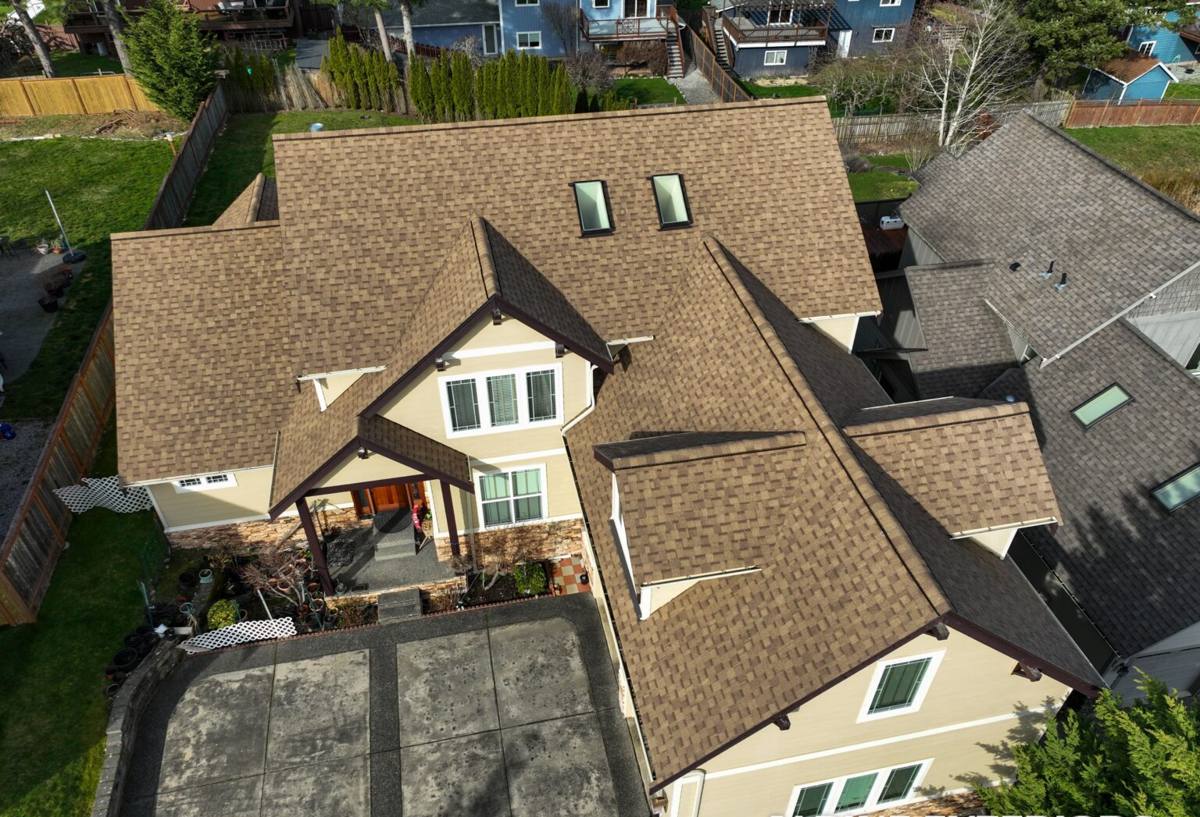
Happy Valley is one of Bellingham's established residential neighborhoods, with a mix of older homes carrying their original wood or early-generation aluminum windows alongside newer construction with more modern glazing. Each type has its own set of issues we run into regularly.
Older Homes
Original single-pane wood windows or first-generation aluminum-frame units are common in older Happy Valley houses. These were never designed for today's energy expectations, and after decades of exposure to Whatcom County's wet winters, the wood sashes are often swollen, rotted at the corners, or painted shut. Aluminum frames from that era conduct cold straight through, which shows up as condensation and, eventually, sill damage.
Newer Homes
Newer builds usually have vinyl or fiberglass double-pane windows that are still functionally sound but may be reaching the point where seals fail — you'll see fogging between the panes, or the operating hardware starts sticking. In these cases the fix is often more targeted than a full replacement of every window in the house.
In both cases, the local factor is the same: whatever goes in needs to shed sideways-driven rain, resist the corrosive effect of salt air, and not trap moisture behind the wall during the months when the moss growing on the north side of the house is a fair indicator of how much moisture is sitting against your siding, too.
Signs Your Windows Are Ready for Replacement
Not every window problem means full replacement. Here's what we actually look for when we evaluate a home in Happy Valley:
- Fogging or a hazy film between panes of a double-pane window — the seal has failed and the gas fill is gone
- Wood sashes or sills that are soft, discolored, or visibly rotting at joints and corners
- Windows that are difficult to open, close, or lock, or that no longer stay open on their own
- Visible daylight or a noticeable draft around the frame when the window is closed
- Condensation forming on the inside of the glass regularly during colder months
- Paint or caulk that's cracked and pulling away from the frame, especially on the side of the house that takes the worst weather
- A noticeable rise in heating costs without any other explanation
- Visible corrosion or pitting on aluminum frames or hardware
If you're seeing two or three of these on the same window, replacement is usually the more sensible long-term move than another round of patching.
Full-Frame vs. Insert Replacement
There are two basic approaches to replacing a window, and which one makes sense depends on the condition of the existing frame and sill — not just personal preference.
| Approach | What It Involves | Best For |
|---|---|---|
| Insert (pocket) replacement | New window fits inside the existing frame; original trim and siding stay in place | Frames that are still structurally sound and square, faster projects, less exterior disruption |
| Full-frame replacement | Old frame is removed down to the rough opening; new flashing, sill pan, and frame are installed from scratch | Rotted or water-damaged frames, homes where moisture has already gotten behind the siding, or when you want a larger glass area |
In a climate like ours, we lean toward recommending full-frame replacement more often than contractors in drier regions would, simply because insert replacement reuses an old sill and frame that may already have hidden moisture damage from years of driving rain. We'll tell you honestly which one your windows need — there's no reason to pay for full-frame work if an insert will do the job correctly.
What Correct Installation Actually Involves
The window itself is only part of the equation. Most window failures we get called out to inspect — leaks, rot, drafts — trace back to installation shortcuts, not a bad product. A correct installation in this climate includes:
- A sloped sill pan that directs any water that gets past the window to the exterior, not into the wall cavity
- Flashing tape or membrane integrated with the house wrap in the correct shingle-lap order, so water is always directed outward and downward
- Backer rod and a quality exterior sealant rated for this climate at the perimeter, applied so it can flex with seasonal movement instead of cracking
- Proper shimming so the window is square and level, which keeps hardware from binding and seals from being stressed unevenly
- Continuous insulation between the frame and rough opening — not stuffed too tight, not left with gaps
- Interior air sealing, which is often skipped but matters as much as the exterior work for preventing condensation inside the wall
Skipping any one of these steps might not cause a problem in year one. It shows up in year three or four, usually as a soft spot in the siding or a musty smell near the window that traces back to trapped moisture — exactly the kind of slow damage that our moss season is good at hiding until it's serious.
Choosing the Right Glass and Frame
Once the installation approach is settled, the next decision is what window actually goes in. A few factors matter more here than they would in a milder or drier climate.
Frame Material
Vinyl frames are the most common choice for good reason — they don't corrode, don't need repainting, and hold up well against salt air. Fiberglass costs more but resists expansion and contraction better across our temperature swings and holds paint longer if you want a specific exterior color. Wood-clad windows look great and are still an option, but they require more upkeep in a climate this wet, and we'll walk you through that trade-off honestly rather than push a product that means more maintenance for you down the road.
Glass Package
Double-pane glass with a low-E coating is the standard, sensible choice for most Bellingham homes and handles our mild-but-damp winters well. Triple-pane adds cost and weight and is worth it mainly for north-facing rooms, homes right along the water where wind exposure is higher, or homeowners specifically prioritizing energy performance over the added expense. For most Happy Valley homes, a well-installed double-pane low-E window delivers the better return.
Hardware
Look for corrosion-resistant hardware — stainless steel or coated components hold up far better against salt air than bare or lower-grade metal, which can start showing pitting and stiffness within a few seasons this close to the water.
Practical Cost Factors
We don't publish fixed prices because every home is different, but these are the factors that actually move the number on a Happy Valley job:
| Factor | Why It Matters |
|---|---|
| Insert vs. full-frame | Full-frame involves more labor, new flashing and trim work, and sometimes minor siding repair |
| Number and size of openings | Larger or custom-sized windows cost more than standard sizes, and larger openings need more structural attention |
| Frame material | Vinyl is generally the most economical; fiberglass and wood-clad cost more upfront |
| Condition of the existing opening | Rot or water damage discovered once the old window is out adds repair work before the new one can go in |
| Access and site conditions | Second-story windows, tight side yards, or limited access affect labor time |
We give a firm, itemized quote after actually looking at your windows in person — not a phone estimate — because the condition of what's behind the old frame is the biggest variable, and we won't know that until we open one up.
Our Installation Process
- On-site assessment. We inspect each window from both inside and outside, check for rot or moisture damage, and measure openings precisely.
- Honest recommendation. We tell you which windows need full replacement, which can take an insert unit, and which don't need to be touched yet.
- Written quote. Itemized by window, with the frame material, glass package, and installation approach spelled out — no vague lump sums.
- Scheduling around the weather. Full-frame work exposes the wall opening, so we plan those installations for drier stretches whenever the forecast allows, and we protect open walls if weather turns during the work.
- Removal and inspection of the opening. Once the old window is out, we check the sill and framing for hidden damage before anything new goes in.
- Correct flashing and installation. Sill pan, flashing, shimming, insulation, and sealant applied in the right order and sequence, not shortcuts.
- Interior and exterior finish work. Trim, caulking, and touch-up so the window looks finished, not just functional.
- Final walkthrough. We test operation, locks, and seals with you before we consider the job done.
Why a Crew That Already Works Happy Valley Matters
Window replacement in this neighborhood isn't identical to window replacement in a dry inland climate, and a crew that mostly works elsewhere can miss things a local crew catches automatically. Familiarity with Bellingham's permit requirements means paperwork doesn't slow your project down. Knowing how driving rain moves across a typical Happy Valley elevation — which walls take the worst of it, which sides stay damp longest into moss season — shapes how we sequence flashing and where we pay closest attention. And knowing the housing stock in this neighborhood, from older original-window homes to newer builds with early-generation double-pane units, means we're not guessing at what we'll find once a window comes out.
Whatcom County's building department has specific requirements around egress windows in bedrooms and energy code compliance for replacements — details that are easy to get wrong if you don't handle them regularly. We do.
Protecting Your Investment After Installation
A correctly installed window in this climate should need very little from you, but a bit of seasonal attention goes a long way given how much moisture our region deals with:
- Clean debris out of window tracks and weep holes before moss season so water can drain instead of pooling
- Check exterior caulking once a year for cracking or separation, especially on walls that face prevailing storms
- Wipe down interior sills if condensation forms, and address the underlying humidity if it's a recurring pattern
- Keep gutters and downspouts clear nearby, since overflow running down a wall puts extra water load right at the window head
- Operate hardware periodically through the winter so mechanisms don't seize from disuse and moisture
If you'd like an honest look at where your windows actually stand, we're happy to come take a look. The estimate is free, there's no pressure to move forward, and you'll get a straight answer about what needs replacing now, what can wait, and what it'll actually cost — just fill out the form below to get started.