 Bellingham Roofing
 Why Barkley Roofs Wear Differently Than You'd Expect
Barkley sits close enough to the water and the surrounding tree cover that its homes take on a specific combination of stresses most roofing guides never mention. Salt-laden air moves in off Bellingham Bay and slowly works on exposed metal fasteners, flashing, and vent caps. Driving rain off Puget Sound doesn't just fall straight down here — wind-driven rain gets pushed sideways under shingle tabs and around poorly lapped flashing, which is a very different failure mode than a roof simply "leaking." And Whatcom County's long, wet moss season means organic growth has months to take hold on north-facing slopes and shaded valleys before a dry stretch ever gives a roof a chance to fully dry out.
None of this means a new roof in Barkley needs to be exotic or overbuilt. It means the installation details that get skipped on a fast, low-bid job — proper flashing laps, correct fastener choice, real ventilation, moss-resistant material selection — are exactly the details that determine whether a roof lasts its full rated life here or starts failing at year twelve instead of year twenty-five.
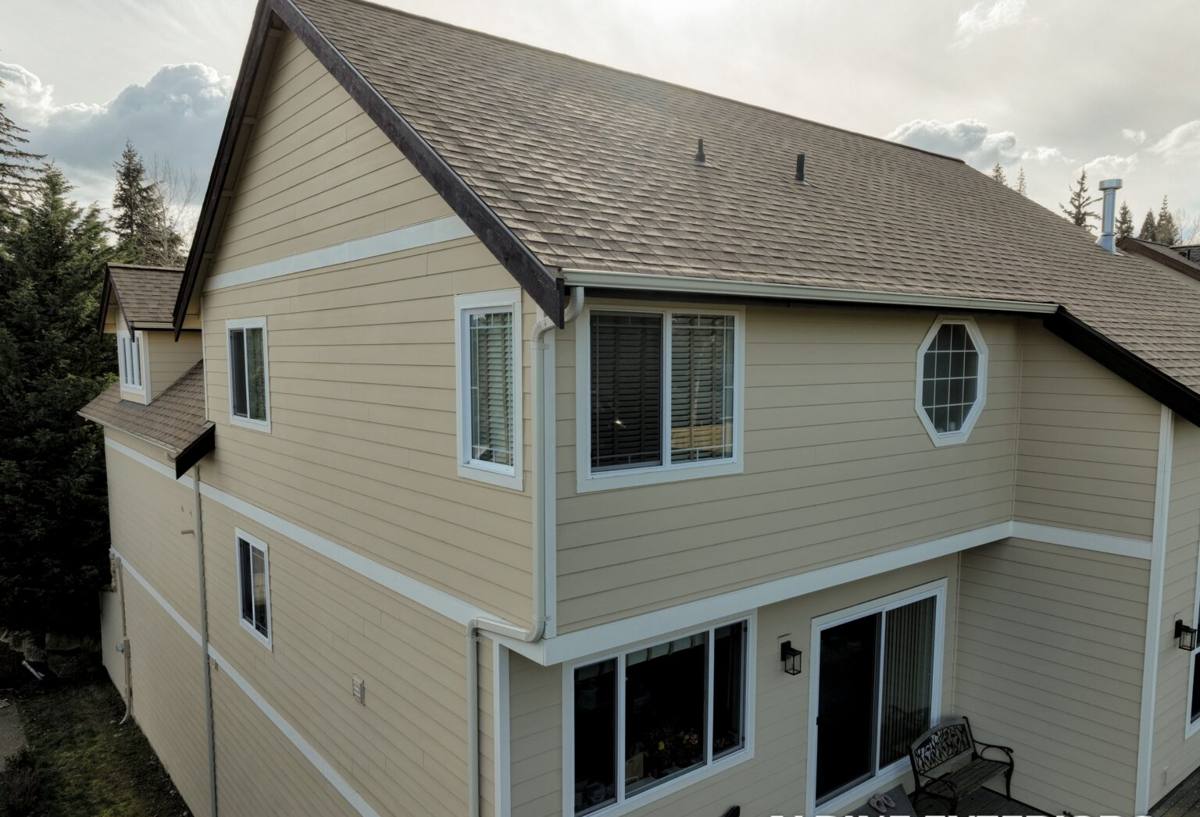
What a Correct New Roof Installation Actually Involves
"New roof installation" sounds like one job, but it's really a sequence of smaller jobs stacked on top of each other. Skipping or rushing any single layer is how a roof that looks fine on installation day starts leaking two winters later. A correct installation covers:
- Full tear-off of the old roofing material, not a layover — layering new shingles over old traps moisture and voids most manufacturer warranties
- Inspection of the deck (sheathing) underneath, with any soft, delaminated, or rot-damaged panels replaced before anything new goes down
- A properly lapped underlayment system, including ice-and-water shield in the vulnerable spots — eaves, valleys, and around penetrations
- New flashing at every roof-to-wall transition, chimney, skylight, and vent — reused old flashing is one of the most common sources of "new roof, old leak"
- Balanced intake and exhaust ventilation so the attic can actually dry out between wet spells
- Correct fastening for the material and local wind exposure, not just whatever nail gun setting was used on the last job
Every one of these steps is invisible once the roof is finished. That's exactly why they matter — a homeowner can't tell from the ground whether they were done right, which is why the crew's habits and standards matter more than the shingle bundle on the truck.
Deck Condition Is the Part Estimates Often Miss
A roof is only as good as what it's nailed to. In this climate, sheathing damage usually shows up first around chimney flashing, skylight curbs, and low-slope valleys — the spots where water has had the most opportunities to find a way in over the years. We don't know what we'll find under your specific roof until the old material is off, which is why a firm, honest quote separates the base installation cost from a per-sheet deck repair rate up front, instead of surprising you with it mid-job.
Material Options Worth Comparing for a Barkley Home
There's no single "best" roofing material for this area — the right call depends on your roof's slope, sun and moss exposure, budget, and how long you plan to own the home. Here's how the common options actually compare under Bellingham's conditions:
| Material | Typical Lifespan Here | Moss Resistance | Salt-Air/Coastal Notes |
|---|---|---|---|
| Architectural asphalt shingle | 25–30 years | Moderate — benefits from algae-resistant granules | Standard choice; fastener and flashing metal quality matter more than the shingle itself |
| Standing seam metal | 40–50+ years | Good — sheds moisture fast, little for moss to grip | Needs coastal-rated fasteners and finish to avoid premature corrosion near the water |
| Cedar shake | 20–30 years with upkeep | Poor without regular treatment | High-maintenance in this climate; needs consistent moss and moisture management |
| Synthetic/composite shake or slate | 30–50 years | Good | Performs well in wet, shaded lots without cedar's maintenance burden |
We're honest about trade-offs rather than pushing one product line. Cedar shake, for example, can look great on the right home, but it demands a maintenance commitment — periodic cleaning and treatment — that not every homeowner wants to sign up for, and its moisture behavior in constant shade is a real factor, not a knock on the material itself. Standing seam metal costs more up front but can make sense on a home you plan to keep for decades. For most Barkley re-roofs, a quality architectural shingle with algae-resistant granules and correctly installed metal flashing is the practical, budget-sensible choice — we'll tell you plainly if your specific roof calls for something different.
Our New Roof Installation Process, Step by Step
1. On-Site Assessment
We walk the roof (not just the ground), check the attic for existing ventilation and moisture staining, and note slope, shading, and any prior repair patches. This is also when we flag anything unusual before it becomes a mid-job surprise.
2. Tear-Off and Deck Inspection
Old material comes off completely. Every section of decking gets checked by hand — soft spots and delamination get replaced, not covered over. You'll know exactly what was found and what was replaced.
3. Underlayment, Flashing, and Ventilation
Synthetic underlayment goes down with ice-and-water shield at eaves, valleys, and penetrations. New flashing is formed and installed at every wall, chimney, and vent transition. Intake and exhaust vents are checked and corrected so the finished attic can actually breathe year-round, not just in summer.
4. Roofing Material Installation
Shingles, panels, or shakes go on to manufacturer spec, with fastening patterns matched to the roof's exposure — a north-facing slope that never fully dries and a wind-exposed ridge don't get treated the same way.
5. Cleanup and Final Walkthrough
Job-site magnets sweep for stray nails, debris is hauled off, and we walk the finished roof and attic with you so you can see exactly what was done before we call it complete.
Ventilation and Moisture: The Step Many Roofs Skip
A brand-new roof with poor attic ventilation can trap moisture underneath it just as easily as an old, worn-out one. In a climate with this much sustained humidity and rainfall, trapped attic moisture leads to premature sheathing rot, mold, and reduced insulation performance — all hidden under a roof that looks perfect from the street. Correct new roof installation always includes checking that intake vents (typically at the eaves) and exhaust vents (ridge or box vents) are balanced, not just present. This is one of the most common shortcuts on rushed installs, and one of the most expensive to fix after the fact, since it usually means pulling roofing back off.
Moss, Algae, and Salt Air: What Happens After Installation
Even a well-installed roof in Whatcom County will face moss pressure, especially on shaded, north-facing sections and under overhanging trees. Algae-resistant shingle granules and proper ventilation reduce how fast growth establishes, but they don't eliminate the need for periodic gentle cleaning — moss holds moisture against the roof surface and can work its way under shingle edges over time if left unchecked. Near the water, salt-laden air also accelerates corrosion on unprotected metal — exposed nail heads, cheap flashing, and uncoated vent caps age faster here than they would inland. We select fasteners and flashing metal with that exposure in mind rather than defaulting to whatever is cheapest, since replacing corroded flashing later costs far more than specifying it correctly the first time.
Signs Your Barkley Home May Need a New Roof Now
Some damage is obvious; a lot of it isn't until you know what to look for. Before scheduling a full replacement, it's worth checking for:
- Shingles that are cupping, curling, or missing granules in patches
- Daylight visible through the roof deck from inside the attic
- Soft or bouncy spots when walking the roof or attic floor
- Persistent moss or dark algae streaking that returns quickly after cleaning
- Rusted, lifted, or missing flashing around chimneys, skylights, and vents
- Granules collecting in gutters or at downspout outlets
- Interior ceiling stains, especially after wind-driven rain events
- A roof already at or past 20–25 years old, regardless of visible damage
Any one of these on its own might just mean a repair. Several together, or a roof already near the end of its expected lifespan, is usually the point where a full replacement is the more cost-effective decision than continuing to patch.
What Drives the Cost of a New Roof Installation
Every roof is priced from its own specifics, but the main variables that move the number are consistent from job to job:
| Factor | Why It Matters |
|---|---|
| Roof size and number of slopes/valleys | More cuts, seams, and flashing points mean more labor and material |
| Current deck condition | Rotten sheathing found during tear-off adds real material and labor cost |
| Material selection | Standing seam metal and synthetic products cost more upfront than standard shingle |
| Roof pitch and access | Steep or hard-to-access roofs take longer and require different safety setups |
| Ventilation upgrades needed | Adding or correcting intake/exhaust venting is often bundled into a re-roof |
We'd rather walk you through these factors on your specific roof than quote a number that doesn't hold up once the tear-off starts. A written estimate should separate the base install cost from any conditional items, like deck repair, clearly enough that you know what you're agreeing to.
Why a Crew That Already Works in Barkley Matters
Roofing crews that mostly work inland, drier parts of the county don't always build in the same margins for wind-driven rain, sustained shade, and salt exposure that a Barkley roof actually experiences. A crew that regularly works this specific pocket of Bellingham already knows which slope orientations hold moss longest, which flashing details fail first near the water, and how local permitting and inspection expectations run. That familiarity shows up in fewer callbacks, not in a different price on paper — the materials and labor cost the same either way. It shows up in whether the roof still looks and performs the way it should ten winters from now.
If you're weighing repair versus full replacement, or just want a straight answer on what your roof actually needs, we're happy to take a look and put it in writing. Fill out the form below for a free, no-pressure estimate — we'll walk the roof, tell you honestly what we find, and give you a clear picture before any work is scheduled.