 Bellingham Roofing
 Happy Valley sits close enough to the water and the tree line that its roofs work harder than roofs in drier, more sheltered parts of Whatcom County. Salt-tinged air off Bellingham Bay, wind-driven rain that finds every gap in flashing, and a moss season that can run most of the year all add up over time. When a roof in this neighborhood reaches the end of its life, replacing it correctly — not just quickly — is what keeps the next one lasting its full term.
Why Happy Valley Roofs Wear the Way They Do
Every roof in Bellingham deals with rain. What makes Happy Valley's aging pattern a little different comes down to a few overlapping factors:
- Salt air exposure: Proximity to the bay means metal fasteners, flashing, and exposed hardware corrode faster than they would further inland. Cheap or under-coated metal shows rust years before it should.
- Driving rain: Storms here rarely fall straight down. Wind pushes rain sideways under shingle tabs, around vent boots, and up under poorly lapped flashing — areas a standard nail-and-shingle job can miss.
- Moss and shade: Mature trees are part of what makes this a nice place to live, but they also mean shaded roof sections stay damp longer and grow moss for most of the year. Moss holds moisture against the roofing material and, left unchecked, works its way under shingle edges.
- Roof age mix: Like a lot of established Bellingham neighborhoods, Happy Valley has a range of roof ages. Older roofs installed before current flashing and ventilation standards were common tend to show the effects of these conditions sooner.
None of this means a roof here needs replacing early — it means the replacement, when it does happen, needs to account for these conditions specifically instead of using a generic approach.
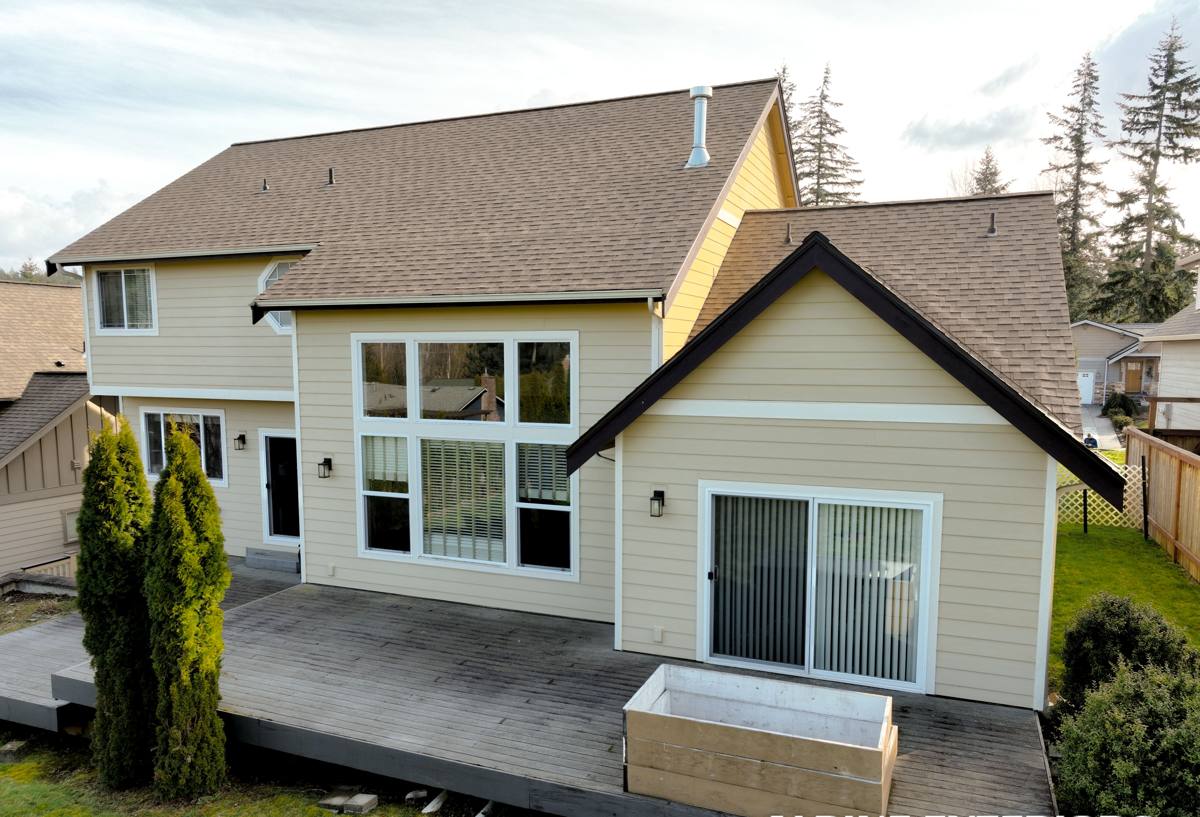
Signs a Happy Valley Roof Is Ready for Replacement
Some of these are obvious from the ground. Others show up as small clues before the bigger problems start.
- Granule loss showing up in gutters, or shingles that look bald and shiny in patches
- Curling, cracked, or lifted shingle edges, especially on shaded or north-facing slopes
- Persistent moss growth that comes back within weeks of cleaning
- Dark streaking or algae staining across large sections
- Soft spots in the decking felt when walking the roof
- Daylight visible through the attic roof boards, or damp insulation below the roof deck
- Rusted, cracked, or missing flashing around chimneys, skylights, and vent pipes
- A roof approaching or past the manufacturer's expected service life for its material and exposure
One or two of these on their own might mean a repair is enough. Several together, especially combined with a roof's age, usually mean it's time to talk about full replacement rather than another round of patching.
What a Correct Roof Replacement Involves Here
Tear-off and deck inspection
We remove the existing roofing down to the deck rather than layering over it. That's the only way to actually see what's underneath — soft or delaminated sheathing, hidden water staining, or old damage that a re-cover would just seal in. Any compromised decking gets replaced before anything new goes down.
Underlayment built for wind-driven rain
Given how much of Happy Valley's weather comes in sideways, underlayment choice matters more here than it would in a drier climate. We use synthetic underlayment with self-adhering, waterproof membrane at the eaves, valleys, and any other water-concentration points — the spots where driving rain and gravity both push water hardest.
Flashing that accounts for salt exposure
Flashing is where most roof leaks actually start, not in the field of the roofing material itself. Around chimneys, skylights, walls, and vent penetrations, we install new flashing rated for the corrosion exposure this area sees, properly lapped so water sheds over each layer instead of behind it.
Ventilation that discourages moss
A roof that breathes properly stays drier and colder in the shaded sections where moss takes hold fastest. Balanced intake and exhaust ventilation reduces the trapped moisture that feeds moss growth and also helps the roof deck and insulation last longer.
Material selection suited to shade and moisture
Not every roofing product performs the same under heavy tree cover and long damp spells. We'll walk through the realistic trade-offs for your specific roof — sun exposure, pitch, and how much moss pressure the property actually sees — rather than defaulting to whatever's easiest to install.
Comparing Roofing Material Options for This Climate
| Material | How It Handles Moss & Moisture | Maintenance Burden | Typical Lifespan Here |
|---|---|---|---|
| Architectural asphalt shingle | Good with algae-resistant granules; still needs periodic moss removal in shaded areas | Low to moderate | 20–30 years with proper ventilation |
| Standing seam metal | Sheds moisture fast; smooth surface resists moss better than textured materials | Low, but fasteners and coatings need to be corrosion-rated near the bay | 40+ years |
| Cedar shake | Absorbs moisture readily; high moss and rot risk in shaded, damp sections without diligent upkeep | High — regular treatment and inspection required | Highly variable; shortened significantly by shade and moisture without maintenance |
| Composite/synthetic shingle | Doesn't absorb moisture; performs consistently in shade | Low | 30–50 years depending on product |
We're happy to install any material a homeowner chooses, but we'll always tell you honestly where a product's maintenance needs or moisture behavior don't match a heavily shaded, damp lot — that's a judgment call we make based on installation experience, not a knock on any manufacturer.
Our Process for a Happy Valley Roof Replacement
- On-site assessment — We look at the whole roof system: decking, ventilation, flashing, tree cover, and drainage, not just the shingles.
- Written estimate — Clear scope, material options, and pricing before any work starts. No pressure, no surprise add-ons hidden in fine print.
- Scheduling around weather — Tear-off and replacement get scheduled with realistic weather windows in mind, and the roof deck is protected if conditions turn while work is in progress.
- Tear-off and deck repair — Full removal of old roofing, deck inspected and repaired as needed.
- Underlayment, flashing, and ventilation installed — The parts of the job that determine whether the roof actually performs in this climate, done first and done right.
- New roofing installed — Per manufacturer specification, including proper nailing patterns and exposure for wind and rain resistance.
- Site cleanup and final walkthrough — Magnetic sweep for debris, gutters checked and cleared, and a walkthrough so you know exactly what was done.
Why It Matters That We Already Work This Neighborhood
A roofing crew that's worked other properties in Happy Valley and nearby parts of Bellingham already understands the shade patterns, the typical roof pitches, and where driving rain tends to cause problems on homes like yours. That's not a marketing point — it changes real decisions on the job, like where to add extra underlayment protection or which flashing details need reinforcing based on how a specific slope catches wind and rain.
It also means we're not guessing at permitting requirements or working through Whatcom County inspection processes for the first time. Local experience shortens the learning curve on every job, which shows up as fewer surprises and a tighter timeline for you.
Protecting Your Roof Between Now and Replacement
If your roof isn't quite ready for full replacement yet, a few habits slow the wear this climate causes:
- Have moss professionally removed rather than power-washed, which can strip granules and shorten shingle life
- Keep gutters clear so water isn't backing up under the roof edge during heavy rain
- Trim back tree limbs that keep sections of the roof shaded and damp longer than necessary
- Get flashing and vent boots inspected every couple of years, since these fail well before the shingle field usually does
- Address small leaks immediately — deck damage from a slow, hidden leak is almost always more expensive than the leak itself
Getting a Straight Answer About Your Roof
Not every roof that looks rough needs full replacement, and not every roof that looks fine from the ground is actually sound underneath. The only way to know which situation you're in is a real inspection, not a guess from curb appeal. If you're seeing moss buildup, granule loss, or signs of age on a Happy Valley roof, we'll give you a straightforward read on what it actually needs — repair, partial replacement, or full replacement — and why.
If you'd like an honest, no-pressure estimate for your roof, use the form below and we'll schedule a time to take a look.