 Bellingham Roofing
 New Roof Installation Built for the Puget Area of Bellingham
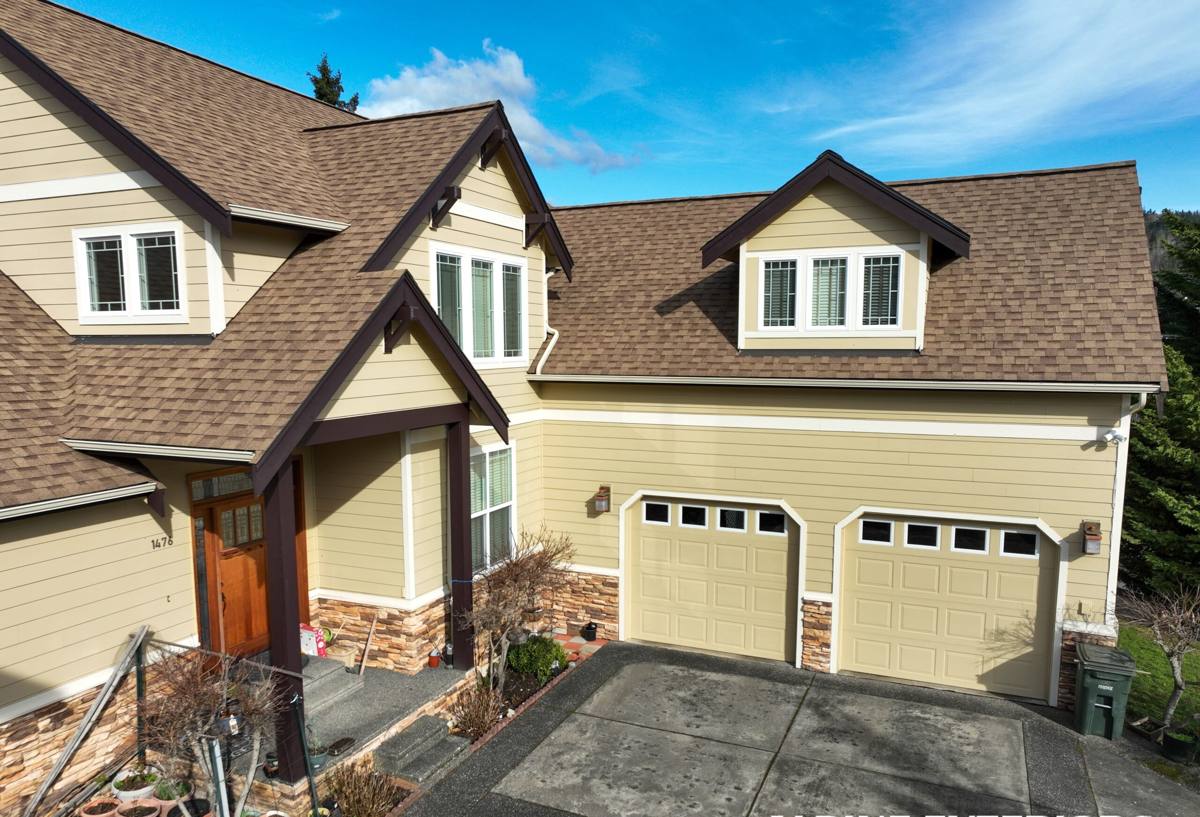
Homes in the Puget area of Bellingham sit in a specific kind of weather squeeze. You're close enough to the water to deal with salt-laden air, exposed enough to catch driving rain off Puget Sound during the fall and winter storm cycle, and shaded enough by mature evergreens that moss has months on end to get established on north-facing slopes and shaded valleys. None of that is unusual for Whatcom County, but it does mean a roof installed here has to be built differently than a roof going on a house in a dry inland climate. A new roof installation isn't just about picking a shingle color. It's about matching the assembly underneath the shingle to the way water, wind, and organic growth actually behave on this property, in this neighborhood, in this county.
What Bellingham's Climate Actually Does to a Roof
Three things drive almost every roofing problem we see in this part of Whatcom County, and they all show up on Puget-area homes.
Salt Air and Metal Fatigue
Proximity to Puget Sound means airborne salt settles on exposed metal — flashing, fasteners, vent caps, gutters. Untreated or low-grade metal corrodes faster here than it would twenty miles inland. Corroded flashing is one of the most common hidden causes of a roof leak, because the shingles above it can look fine while the metal underneath is failing.
Driving, Wind-Driven Rain
Bellingham doesn't just get rain, it gets rain pushed sideways by wind coming off the water. That matters because a roof only designed to shed water straight down will let wind-driven rain find its way under shingle tabs, around chimneys, and along valleys. The fix isn't a fancier shingle — it's correct underlayment, proper flashing laps, and valley details built for lateral water movement, not just gravity.
A Long Moss Season
Mild, damp winters combined with tree cover give moss and algae a long runway to establish on shaded or north-facing roof slopes. Moss isn't just cosmetic. As it grows, it holds moisture against the roofing material, lifts shingle edges, and works its way under the surface layer over time, which shortens the life of the roof from the inside out.
What a Correct New Roof Installation Includes
A roof that's going to hold up under Bellingham conditions needs every layer to do its job, not just the shingles on top. When we install a new roof, this is the full assembly, not a shortcut version.
Full Tear-Off and Deck Inspection
We remove the old roofing down to the deck rather than layering over it. That's the only way to actually see the condition of the sheathing, catch soft or water-damaged spots, and confirm the deck can be properly nailed and sealed. Layering over an old roof hides problems instead of fixing them.
Ice and Water Barrier at Vulnerable Points
Eaves, valleys, and roof penetrations get a self-adhering waterproof membrane underneath the underlayment. These are the spots where wind-driven rain and ponding are most likely to find a way in, so they get extra protection beyond the standard underlayment.
Synthetic Underlayment Across the Field
A high-quality synthetic underlayment gives the whole roof a secondary water barrier that holds up better than old-style felt, especially in a climate where the roof deck can stay damp for extended stretches.
Corrosion-Resistant Flashing and Fasteners
Given the salt air in this area, we don't cut corners on metal. Flashing, drip edge, and fasteners are chosen to resist corrosion, not just to meet a minimum spec. This is one of the details that separates a roof that lasts from one that starts leaking at the flashing in five or six years.
Balanced Attic Ventilation
Intake and exhaust ventilation are sized and balanced so moist air actually moves out of the attic instead of condensing under the deck. Poor ventilation traps moisture, which feeds mold and rot from the inside and can void shingle warranties.
Correct Nailing and Manufacturer Installation Standards
Shingles are only rated to perform, and covered under warranty, when they're installed to the manufacturer's nailing pattern and exposure spec. This is a step that's easy to rush and easy to get wrong, and it directly affects wind resistance and warranty coverage.
Choosing a Roofing Material for a Puget-Area Home
There isn't one "right" material for every house — it depends on the roof's slope, shade exposure, budget, and how long you plan to own the home. Here's how the common options stack up against Bellingham's climate specifically.
| Material | Moss/Algae Resistance | Salt Air Durability | Relative Cost | Typical Lifespan |
|---|---|---|---|---|
| Standard 3-tab asphalt shingle | Low — needs regular cleaning | Moderate, depends on flashing quality | Budget | 15–20 years |
| Architectural (laminate) asphalt shingle | Moderate; algae-resistant granule options available | Good with proper flashing detail | Mid-range | 25–30 years |
| Standing seam metal | High — sheds moss growth well on steeper slopes | Excellent with coated/corrosion-resistant panels | Premium | 40–50+ years |
| Composite/synthetic shake | Moderate to good | Good | Premium | 30–40 years |
For most Puget-area homes with tree cover, we recommend architectural shingles with algae-resistant granules as the practical middle ground, or standing seam metal for homes with steep, shaded roof planes where moss is a persistent, recurring problem. The right call depends on the specific roof, and that's something we walk through on site, not over the phone.
Signs a Puget Home Needs Replacement, Not Another Repair
- Granules collecting heavily in gutters or at downspouts — a sign the shingle surface is wearing thin
- Shingles that are curling, cupping, or cracking, especially on south- and west-facing slopes
- Moss established across multiple slopes rather than just a light surface film
- Soft spots or visible sagging when walking the roof or viewing from the attic
- Recurring leaks in the same area even after past patch repairs
- Daylight visible through the roof deck from inside the attic
- A roof approaching or past the manufacturer's expected service life for its material
One or two of these on their own might mean a targeted repair is enough. Several of them together usually mean the roofing system as a whole has reached the end of its useful life, and patching individual spots is just delaying a full replacement while spending money that won't carry forward into the new roof.
Our New Roof Installation Process
1. On-Site Assessment
We inspect the current roof, attic ventilation, and any problem areas in person before recommending anything. This is also when we talk through material options based on your roof's slope, shade, and exposure.
2. Written Estimate
You get a clear, itemized estimate covering materials, labor, tear-off and disposal, and any deck repair allowances, so there are no surprise line items once work starts.
3. Scheduling Around Whatcom County Weather
Roofing is weather-dependent work. We plan installation dates with realistic dry-weather windows in mind, and we know how to sequence a tear-off so your home isn't left exposed if conditions shift mid-project.
4. Tear-Off, Deck Repair, and Installation
Old roofing comes off, the deck is inspected and repaired as needed, and the new roofing system goes on in the order described earlier — underlayment, ice and water protection, flashing, ventilation, then the finish material.
5. Cleanup and Final Walkthrough
The property is cleaned of debris and nails using a magnetic sweep, and we walk the finished roof with you before calling the job complete.
Permits and Timeline
A full roof replacement in Bellingham typically requires a building permit, and the exact requirements can vary depending on the scope of work and the property. We handle the permit process as part of the job rather than leaving it for the homeowner to sort out. As for timeline, most single-family roof replacements are completed in a matter of days once work begins, though the exact schedule depends on roof size, complexity, and weather. We'll give you a realistic window up front rather than an optimistic one that slips.
Why a Crew That Already Works Puget Matters
A roofer who works Whatcom County regularly already knows how local roofs actually fail — where moss tends to build up first, which flashing details hold up against wind-driven rain off the Sound, and how salt air changes the calculus on metal components. That's the kind of judgment that shows up in the small decisions made on the roof deck, not just in the sales pitch beforehand. It also means we're not guessing at permit requirements or scrambling to source materials suited to this climate — we're doing what we already know works on homes like yours, in this specific area.
Questions to Ask Before You Hire
- Are you licensed and insured to do roofing work in Washington State?
- Will you provide a written, itemized estimate before work begins?
- Do you perform a full tear-off, or do you install over existing layers?
- What underlayment and ice-and-water protection do you use, and where?
- How do you handle attic ventilation as part of a new roof?
- What's covered under workmanship warranty versus manufacturer warranty?
- Can you walk me through how you'd handle this specific roof's slope and exposure?
A contractor who answers these clearly and specifically, rather than in vague generalities, is usually one who's done the work enough times to know exactly what a correct installation requires.
Get a Free, No-Pressure Estimate
If your roof in Puget is showing wear, has an active leak, or you're just planning ahead, we're happy to take a look and give you an honest assessment — no pressure, no upsell. Fill out the form below to schedule a free estimate for your new roof installation.