 Bellingham Roofing
 Roofing in Sehome Has Its Own Set of Problems
Sehome sits close enough to Bellingham Bay that salt-laden air is a constant factor, and the tree cover around Sehome Hill keeps a lot of roofs in shade for a good part of the day. That combination — salt air, driving rain off the water, and shaded, damp roof sections that never fully dry out — creates a repair pattern that's different from what you'd see on a roof out in the open county. We see it on comp shingle roofs, cedar, metal, and flat sections alike: fasteners corrode faster, moss gets a longer growing season, and moisture finds its way into places a drier climate would never let it reach.
None of that means Sehome roofs fail faster than roofs anywhere else in Whatcom County. It means the failure points are predictable if you know what to look for, and a repair that ignores them will need to be redone within a couple of years. This page is about what a correct roof repair looks like on a Sehome home, not a generic rundown of roofing basics.
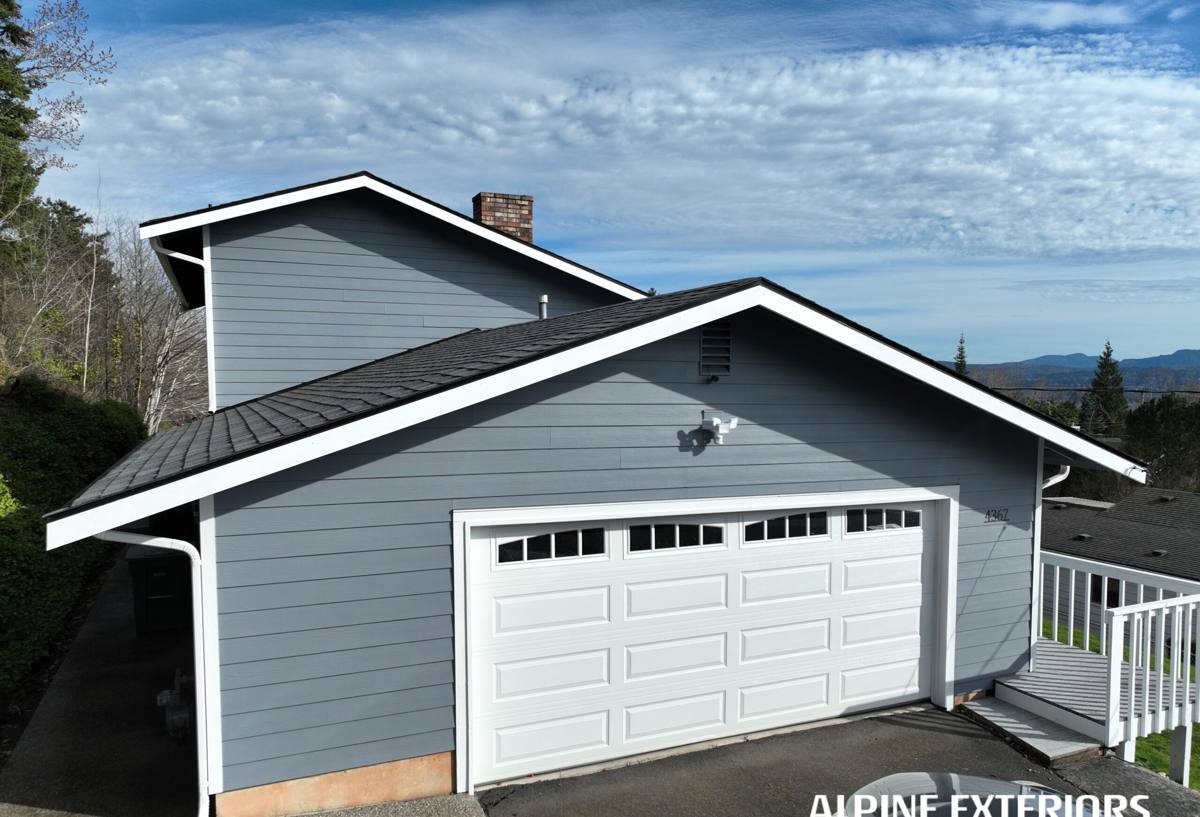
What the Local Climate Actually Does to a Roof
Salt Air and Metal Fatigue
Bellingham's marine air carries salt that accelerates corrosion on anything metal — flashing, nail heads, valley metal, gutter hangers, and the fasteners holding down ridge caps. A roof that's ten or twelve years old on the coast can have significantly more corrosion at these connection points than the same roof would show inland. Corroded flashing is one of the most common causes of a leak that homeowners assume is a "shingle problem" when it's actually a metal problem.
Driving Rain and Wind-Driven Water
Storms coming off the Strait and the bay don't just fall straight down — wind pushes rain sideways and up under laps, ridge caps, and poorly sealed penetrations (vent boots, skylights, chimney flashing). A repair that only addresses the visible hole or stain, without checking how water is actually getting pushed into the assembly, tends to fail again in the next windstorm.
Moss and Shade
Tree cover near Sehome Hill and mature landscaping throughout the neighborhood keep a lot of roof surfaces shaded well into the day. Shaded, damp roof sections grow moss and algae for most of the year, not just a few wet months. Moss doesn't just look bad — its root structure lifts shingle tabs, holds water against the roof deck, and works granules loose, which shortens the life of an otherwise sound roof section.
Signs a Repair — Not a Full Replacement — Is the Right Call
Most Sehome roofs we're called out to don't need a full tear-off. They need a correctly diagnosed, correctly executed repair. Common signs it's a repair situation:
- A stain on an interior ceiling or wall that appears only during or after heavy wind-driven rain
- Missing, cracked, or curling shingles in one localized area rather than across the whole roof
- Visible moss buildup concentrated on the shaded, north-facing slope
- Rusted or lifting flashing around a chimney, skylight, or plumbing vent
- Sagging or soft spots limited to one section, often near a valley or roof-wall intersection
- Granules collecting in gutters after storms, without widespread bald patches on the shingles
If the roof covering as a whole still has useful life left and the damage is contained to specific points of entry, repair is the honest recommendation. We'll tell you plainly if what you're looking at is closer to end-of-life and a repair would just be a short-term patch.
What a Correct Repair Actually Involves
A roof repair done right isn't just swapping a few shingles. On a Sehome home, it typically means:
- Tracing the water path. Leaks rarely show up directly below their entry point. We follow the deck and framing to find where water is actually getting in, which is often several feet from the interior stain.
- Checking the roof deck. Prolonged moisture from moss and shaded, slow-drying sections can soften plywood or OSB sheathing. Any soft decking gets replaced — patching over it just hides the problem.
- Replacing corroded flashing, not just resealing it. Given how salt air affects metal here, we replace flashing that's actively corroding rather than caulking over it, which is a short-term fix at best.
- Matching materials properly. Shingle color, profile, and exposure need to match the existing roof as closely as possible so the repair doesn't stand out and so the courses shed water the way they were designed to.
- Addressing the moss, not just the symptom. If shaded conditions caused the damage, we'll talk about realistic moss control going forward — treatment, zinc or copper strips, or gutter and debris management — so you're not back to the same repair in a few years.
Roofing Materials in Sehome: Repair Considerations
Sehome has a real mix of roof ages and materials, from older cedar shake on some of the neighborhood's original homes to comp shingle on more recent re-roofs and metal on additions or outbuildings. Each behaves differently when it comes to repair.
| Material | Common Issue Locally | Repair Approach |
|---|---|---|
| Composition (asphalt) shingle | Moss lifting tabs; granule loss in shaded areas | Localized shingle replacement, moss treatment, flashing check |
| Cedar shake/shingle | Moisture retention in shaded sections; splitting | Selective shake replacement, improved ventilation, moss management |
| Metal panel | Fastener corrosion, sealant failure at laps/penetrations | Fastener replacement, re-sealing penetrations, panel section repair |
| Low-slope/flat (membrane) | Ponding water, seam separation near roof-wall junctions | Seam repair, drainage correction, targeted membrane patching |
Whatever the material, the underlying issue in Sehome is almost always the same: sustained moisture from shade, salt exposure at metal components, or wind-driven rain finding a weak point. The repair method changes; the diagnosis process doesn't.
Repair vs. Replacement: How We Decide
We don't push replacement when a repair will genuinely hold up, and we won't recommend patching a roof that's past the point where repair makes financial sense. A few factors go into that call:
| Factor | Leans Toward Repair | Leans Toward Replacement |
|---|---|---|
| Roof age | Well under expected lifespan for the material | At or near end of expected lifespan |
| Damage extent | Localized to one or two areas | Widespread across multiple slopes |
| Decking condition | Sound, no widespread soft spots | Soft or rotted decking in multiple areas |
| Repair history | First or infrequent repair | Repeated repairs to the same areas |
| Underlying materials | Underlayment and flashing still serviceable | Underlayment failing broadly, not just at the leak |
Straightforward repairs on a Sehome roof are often a modest, contained expense — usually in the range of a few hundred to a couple thousand dollars depending on scope, material, and access. Anything beyond that, especially if decking replacement or extensive flashing work is involved, we'll walk you through the numbers before any work starts. No pressure toward the bigger job if it isn't warranted.
Our Process, Start to Finish
We keep the repair process straightforward:
- Inspection: We get on the roof (weather permitting) and check the interior where relevant, tracing suspected leak paths rather than guessing from the ground.
- Honest diagnosis: We explain what's actually causing the problem — moss, flashing, wind-driven rain, deck moisture — in plain terms, not vague "wear and tear."
- Written estimate: You get a clear scope of work and price before anything is touched.
- The repair: Matched materials, proper flashing, and attention to the specific cause, not just the visible symptom.
- Cleanup and check-in: Debris cleared, gutters checked for granule buildup, and a rundown of anything worth watching going forward.
Why It Matters That We Already Work in Sehome
A crew that only sees a roof once has no way to know whether a given stain is a one-time fluke or part of a pattern common to homes on that side of Bellingham. Working repeatedly in Sehome and the surrounding Whatcom County neighborhoods means we already know which flashing details tend to corrode first in this air, which slopes stay wet longest under the tree cover, and which repair shortcuts don't hold up through a wet Pacific Northwest winter. That's the difference between a repair that lasts and one that's back on our schedule — or someone else's — in eighteen months.
Simple Maintenance That Extends a Repair's Life
A good repair holds up longer with basic upkeep in between:
- Clear gutters and downspouts each fall so water isn't backing up under the roof edge
- Trim back overhanging branches where practical to reduce shade and debris buildup
- Have moss treated before it spreads across a full slope, not after
- Take a look (or have us look) after any major windstorm, since that's when flashing and vent boots are most likely to shift
- Don't ignore a small ceiling stain — catching it early is almost always the cheaper repair
If you're dealing with a leak, moss buildup, or a repair that didn't hold the first time, we're happy to take a look and give you a straight answer about what it needs. Reach out for a free, no-pressure estimate using the form below.