 Bellingham Roofing
 Why Roofs in Columbia Wear Differently
Columbia sits close enough to Bellingham Bay that salt-laden air is part of daily life, and that air is hard on a roof. Salt accelerates corrosion on fasteners, flashing, and any exposed metal, and it settles into shingle granules and gutters over time. Add in the driving rain that comes off the water during fall and winter storms, and you've got wind-driven moisture finding its way under laps and around penetrations that would stay dry in a calmer climate.
Then there's moss. Whatcom County's mix of shade, moisture, and mild temperatures means moss season isn't really a season here — it's closer to year-round, especially on north-facing slopes and roofs shaded by mature trees, which are common throughout Columbia's older, tree-lined streets. Moss holds water against the roofing surface, works into shingle laps, and can lift edges enough to let wind and rain underneath. None of this is dramatic on its own, but stacked together over 20-plus years, it's exactly why roofs in this part of Bellingham age faster than the manufacturer's brochure suggests.
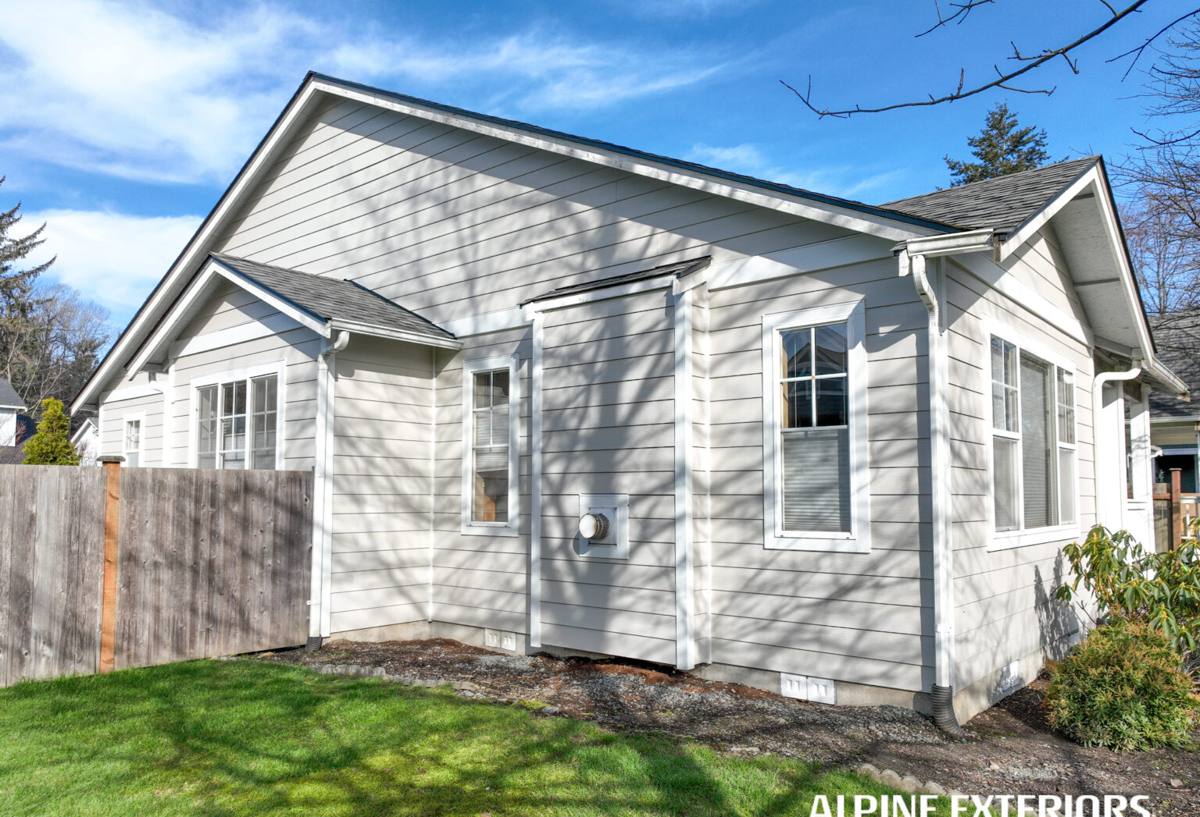
Signs a Columbia Roof Needs Replacement, Not Another Repair
Not every roof problem calls for a full replacement, and a straight shooter will tell you when a repair is genuinely the better move. But there's a point where patching the same roof over and over stops making financial sense. Here's what usually tips the decision toward replacement:
- Granules collecting in gutters or at downspout outlets, leaving bare, shiny patches on the shingles
- Shingle edges curling or cupping, especially on slopes that take the brunt of the wind and rain
- Moss established in valleys or along the ridge, not just surface growth that wipes off
- Soft or spongy spots underfoot, which usually mean the decking beneath has taken on moisture
- A history of repeat repairs to the same areas over the last several years
- Interior staining on ceilings or in the attic, particularly near chimneys, vents, or valleys
- A roof at or past 20-25 years old for architectural asphalt shingles, even if it looks okay from the ground
Any one of these alone isn't necessarily urgent. Several of them together, especially on an older Columbia home, usually means the roof system as a whole is at the end of its useful life.
What a Correct Roof Replacement Actually Involves
A roof replacement done right is more than swapping old shingles for new ones. The parts you can't see from the ground are the parts that determine whether the new roof actually holds up in this climate.
Tear-Off and Deck Inspection
We remove the old roofing down to the decking rather than installing over it. That's the only way to actually see the wood underneath — soft, delaminated, or water-stained sheathing gets replaced before anything new goes down. Covering over a compromised deck just locks the problem in.
Underlayment and Water Protection
A synthetic underlayment goes down as the roof's secondary barrier, with self-adhered ice-and-water membrane at the vulnerable spots — eaves, valleys, and around penetrations — where wind-driven rain is most likely to find a way in.
Flashing Details
Flashing around chimneys, skylights, sidewalls, and roof-to-wall transitions is where most leaks actually start, not in the open field of shingles. We replace flashing rather than reuse it and reseal, since old flashing has usually already flexed and thinned in ways you can't see.
Ventilation
Intake at the eaves and exhaust at the ridge need to work together so the attic can actually breathe. We check and correct this as part of the replacement, not as an afterthought.
Material Options for Bellingham's Marine Climate
There's no single "best" roofing material — the right choice depends on the home, the budget, and how much long-term maintenance an owner wants to take on. Here's how the common options actually compare for a house exposed to salt air and heavy moss pressure:
| Material | Moisture & Salt Behavior | Moss Resistance | Typical Lifespan |
|---|---|---|---|
| Architectural asphalt shingle | Good when installed with proper underlayment and flashing; standard fasteners should be corrosion-resistant near the water | Moderate — benefits from periodic cleaning and, where appropriate, zinc or copper strips | 20-30 years |
| Standing seam metal | Excellent shedding; needs marine-grade fasteners and coatings to handle salt exposure long-term | High — smooth, steep surfaces give moss little to hold onto | 40-60 years |
| Cedar shake | Requires diligent maintenance in a wet, salty climate; absorbs and releases moisture with every storm cycle | Low without regular treatment — a natural, absorbent surface is exactly what moss prefers | 20-30 years with upkeep |
We'll walk through these trade-offs honestly during your estimate. A material that performs beautifully in a dry inland climate can be a maintenance headache a few blocks from the water, and that's worth knowing before you commit, not after.
Cost Factors for a Columbia Roof Replacement
Every roof is priced on its own specifics, but the variables that move the number are consistent. Broad ranges for a full tear-off and replacement on a typical single-family home run from the low five figures for a straightforward asphalt shingle job up into the high five figures for metal or a complex, steep roofline — the table below breaks down what drives that range.
| Factor | Why It Affects Cost |
|---|---|
| Roof size and pitch | More square footage and steeper slopes mean more material, more labor time, and added safety measures |
| Number of existing layers | Removing two layers of old roofing takes longer and costs more in disposal than removing one |
| Decking condition | Rotted or soft sheathing discovered during tear-off has to be replaced before installation continues |
| Material selection | Asphalt, metal, and cedar carry very different material and labor costs |
| Roof complexity | Valleys, dormers, skylights, and multiple penetrations all add flashing work and time |
| Ventilation upgrades | Adding or correcting intake and exhaust venting adds modest cost but pays off in roof longevity |
Our Process for Columbia Homeowners
- Inspection. We get on the roof, check the attic where accessible, and assess the deck, flashing, and ventilation — not just the shingles.
- Written estimate. You get a clear, itemized quote with material options and honest recommendations, no pressure to decide on the spot.
- Scheduling around the weather. Bellingham's rain windows mean timing matters — we plan tear-off days around forecasts so your home isn't exposed longer than necessary.
- Tear-off and deck repair. Old roofing comes off, the deck gets inspected in daylight, and any compromised sheathing is replaced before we move forward.
- Installation. Underlayment, flashing, ventilation, and the new roofing go on to manufacturer specifications, not shortcuts.
- Cleanup and walkthrough. Yard and gutters get cleared of debris, and we walk the finished roof with you before calling the job done.
Ventilation and Moisture: The Part That Gets Skipped
A lot of roof replacements focus entirely on the visible surface and treat ventilation as optional. In a climate like Whatcom County's, that's a mistake. Poor attic ventilation traps moisture-laden air against the underside of the decking, which shortens the life of the very roof you just paid to install and can contribute to condensation issues inside the attic itself. Balanced intake and exhaust venting isn't an upsell — it's part of what makes the rest of the roof system work as designed, and we treat it that way on every replacement.
Why a Crew That Already Works in Columbia Matters
A roofing crew that regularly works this part of Bellingham already knows what to expect before they climb the ladder. That means recognizing the housing stock common to Columbia's older streets, understanding how salt exposure from the bay affects fastener and flashing choices, and knowing how to schedule tear-off days around this area's rain patterns instead of getting caught mid-job in a downpour. It also means faster response if a storm causes damage, since we're not traveling across the county to reach you. Local experience shows up in the details — the flashing choices, the fastener spec, the timing — long before it shows up in a sales pitch.
Keeping Your New Roof Performing in This Climate
A correct installation is the foundation, but a little ongoing attention keeps it performing for its full lifespan in a wet, mossy, salt-air environment. After your replacement, plan on:
- Clearing gutters and downspouts at least twice a year, more often under overhanging trees
- Having moss treated or gently removed before it establishes in valleys or along the ridge
- Trimming back branches that keep sections of the roof shaded and damp
- Checking attic ventilation isn't blocked by insulation or storage
- Getting a quick inspection after any major windstorm, especially one with driving rain off the water
If your Columbia home's roof is showing its age, or you just want an honest read on whether repair or replacement makes more sense, we're happy to take a look. Fill out the form below for a free, no-pressure estimate.