 Bellingham Roofing
 Why Sehome Roofs Take a Different Kind of Beating
Sehome sits close enough to Bellingham Bay to catch salt-laden air on a regular basis, and close enough to Sehome Hill's tree cover to stay shaded and damp for long stretches of the year. That combination is hard on roofing. Salt air accelerates corrosion on unprotected metal fasteners and flashing. Tree cover keeps needles, leaves, and moisture sitting on the roof deck instead of drying off in the sun. And Whatcom County's long, wet fall-through-spring stretch means a roof here spends more months of the year wet than dry.
None of that is unique to any one house in the neighborhood — it's the baseline every roof in this part of Bellingham has to handle. What changes from house to house is how well the roofing system was matched to those conditions in the first place. A lot of the moss buildup, rust streaking, and premature granule loss we see on Sehome roofs traces back to material and installation choices that were fine for a drier, sunnier climate but were never really suited to this one.
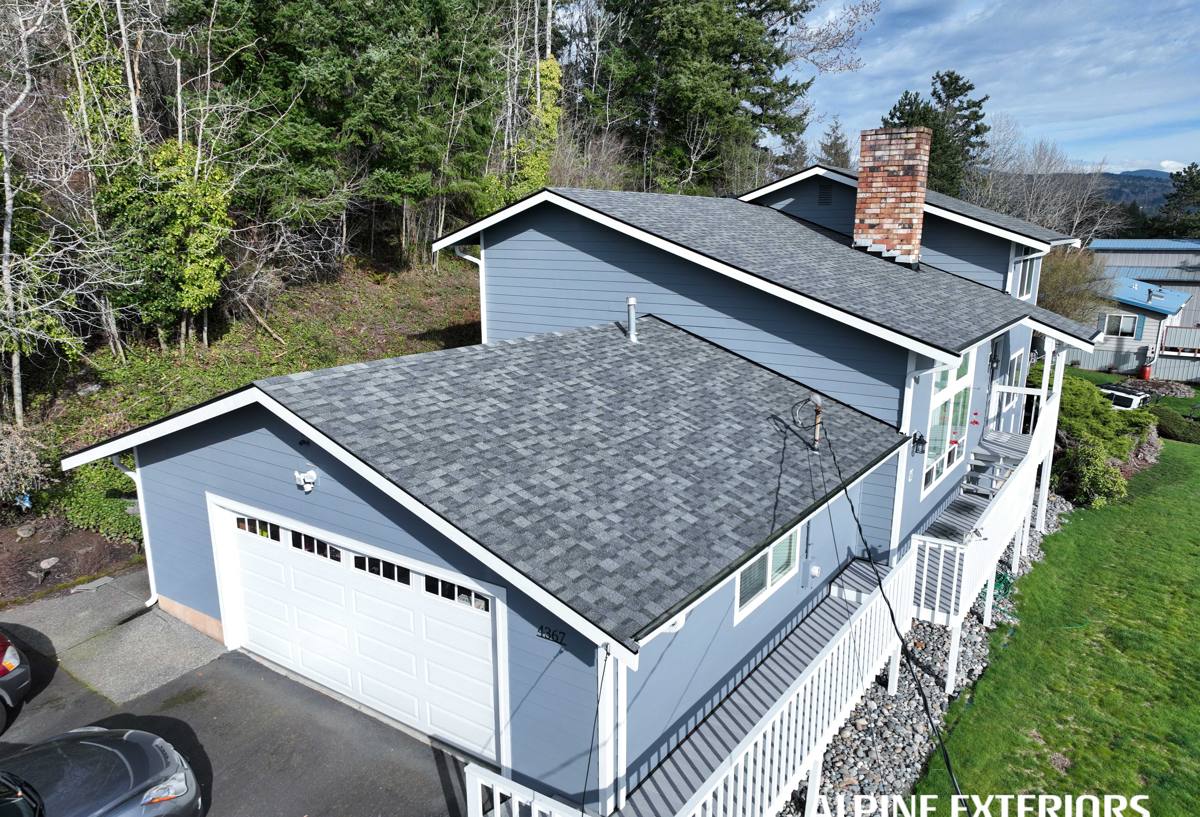
Why Metal Holds Up Where Other Materials Struggle
Metal roofing isn't the right fit for every home or every budget, but for the specific conditions Sehome deals with, it solves several problems at once:
- Moss resistance: Moss needs a rough, porous surface and standing moisture to get established. A properly installed metal roof sheds water fast and gives moss spores far less to grab onto than asphalt shingles.
- Wind and rain performance: Interlocking or standing-seam panels handle wind-driven rain — the kind that comes sideways off the water during a fall storm — better than a shingle system relying on gravity and adhesive strips alone.
- Long service life: A correctly installed steel or aluminum roof commonly outlasts two or three asphalt roofing cycles, which matters when re-roofing means renting equipment, staging materials on a sloped or tree-lined lot, and disrupting the household each time.
- Fire and ember resistance: Not the main driver for most Sehome homeowners, but a genuine bonus during dry summer stretches.
The trade-off is upfront cost and the need for a crew that actually knows how to detail metal correctly — done poorly, a metal roof can leak, oil-can (develop a wavy appearance), or fail at the fasteners years before it should.
Where Metal Isn't Automatically the Answer
We'll say this plainly rather than oversell the product: if your roof deck has widespread rot, if your budget is tight and your time horizon is short, or if your home's architecture calls for a specific traditional look, a well-installed asphalt or composite system may be the more honest recommendation. Part of an honest estimate is telling you when metal isn't the best use of your money.
What a Correct Metal Roof Installation Actually Involves
Metal roofing rewards careful installation and punishes shortcuts more than almost any other roofing material. A few of the details that matter most:
Deck and Substrate Prep
Any soft, delaminated, or moisture-damaged decking gets replaced before a single panel goes down. Installing metal over a compromised deck just hides a structural problem under a durable surface — the roof will look fine while the framing underneath keeps deteriorating.
Underlayment
Given how much rain this area gets, we use a high-temperature synthetic or self-adhering underlayment rated for metal roofing, with extra protection at eaves, valleys, and any low-slope transitions where wind-driven rain is most likely to work its way underneath.
Fastening and Panel Movement
Metal panels expand and contract with temperature swings. Fasteners and clips have to allow for that movement, especially on longer panel runs, or you get oil-canning, popped screws, and eventual leaks at the fastener points.
Flashing and Penetrations
Chimneys, vents, and skylights are where most metal roof leaks actually start — not the flat panel areas. Custom-formed flashing, not generic trim pieces, is what keeps these transitions watertight for the life of the roof.
Ventilation
Under-tree-cover homes especially need balanced intake and exhaust ventilation. Without it, moisture gets trapped in the attic, which leads to condensation on the underside of the metal panels — a problem that looks like a roof leak but is actually a ventilation failure.
Comparing Metal Panel Systems for Sehome Homes
Not all metal roofing is the same product wearing different colors. The panel type changes cost, appearance, and long-term performance:
| System | Typical Look | Best Fit | Maintenance Notes |
|---|---|---|---|
| Standing seam | Clean vertical panels, hidden fasteners | Most Sehome homes, especially where wind-driven rain and moss are concerns | Low — no exposed fasteners to fail over time |
| Exposed-fastener panels | Ribbed, visible screw pattern | Budget-conscious projects, outbuildings, garages | Fasteners and washers need periodic inspection and eventual replacement |
| Metal shingles/shakes | Mimics traditional shingle or shake profiles | Homes where architectural style calls for a traditional look | Moderate — more seams than standing seam, but still far fewer than composite shingles |
For most homes in this neighborhood, standing seam is the system we recommend first, simply because hidden fasteners remove the single most common failure point on a metal roof exposed to this much rain and salt air over time.
Moss, Debris, and Living Near the Tree Line
Sehome's proximity to wooded areas like Sehome Hill means many roofs here deal with more falling debris and shade than roofs on the flats closer to downtown. That combination — shade plus organic debris plus year-round moisture — is exactly what moss and algae need to take hold. A metal roof doesn't make a home immune to debris buildup, but it removes the porous surface moss depends on, so what does land on the roof is far more likely to just wash off in the next rain instead of rooting in.
We still recommend homeowners in tree-heavy parts of Sehome keep gutters and valleys clear a couple of times a year — metal roofing reduces the moss problem, it doesn't eliminate the need for basic upkeep.
Our Process for a Sehome Metal Roofing Project
- On-site assessment: We inspect the existing deck, flashing points, ventilation, and any moss or moisture damage before quoting anything.
- System recommendation: Based on your home's slope, tree exposure, and budget, we recommend a panel type and finish rather than pushing one default product.
- Written estimate: Clear scope, material specification, and timeline — no vague allowances that turn into change orders later.
- Tear-off or overlay decision: We're upfront about when your existing roof needs full tear-off versus when a direct overlay is genuinely appropriate.
- Installation: Deck repair, underlayment, panel installation, and custom flashing at every penetration.
- Final walkthrough: We go over the finished roof and ventilation with you before calling the job done.
What Drives the Cost of a Metal Roof in This Area
Metal roofing costs more upfront than asphalt shingles, and the final number depends on more than just square footage:
| Factor | Why It Matters |
|---|---|
| Panel type and gauge | Standing seam typically costs more than exposed-fastener panels; heavier gauge steel or aluminum costs more but resists denting and wear longer |
| Roof complexity | Valleys, dormers, and multiple roof planes require more custom flashing and labor than a simple gable roof |
| Tear-off vs. overlay | Removing an old roof and repairing any deck damage adds cost but is often the right call on older Sehome homes |
| Finish and coating | Higher-grade paint finishes cost more but hold color and resist salt-air corrosion longer |
| Snow retention and accessories | Gutters, snow guards, and ventilation upgrades are worth budgeting for rather than adding as an afterthought |
We'll walk through these line by line during your estimate so you know what you're paying for and why — not just a single lump-sum number.
Signs Your Current Roof May Be Ready for a Metal Upgrade
- Moss or dark streaking that returns within months of cleaning
- Granule loss visible in gutters or downspouts
- Curling, cracked, or missing shingles after a windy winter
- Rust spots or corrosion on existing metal flashing
- Interior ceiling stains near chimneys, skylights, or valleys
- A roof already past or approaching its expected asphalt lifespan
- Frequent repair calls that are starting to add up to more than a replacement would cost
Why Hiring a Crew That Already Works in Sehome Matters
Metal roofing is unforgiving of guesswork. A crew that regularly works this specific stretch of Bellingham already understands how salt exposure from the bay, moisture from tree cover, and the region's storm patterns interact with a given roof's slope and orientation — instead of treating every project as a generic install. That familiarity shows up in the small decisions: where to add extra underlayment, which flashing details need reinforcing, and how much ventilation a shaded roof actually needs versus a sun-exposed one nearby.
It also matters for permitting and code compliance specific to Whatcom County and the City of Bellingham, and for knowing which manufacturer warranties actually hold up in coastal, high-moisture conditions versus which ones have exclusions that quietly reduce coverage in exactly this kind of climate.
Get a Straight Answer for Your Sehome Roof
If you're weighing metal roofing for a home in Sehome, we're glad to take a look and give you a straightforward assessment — including telling you if metal isn't the right fit for your situation. Reach out for a free, no-pressure estimate using the form below.