 Bellingham Roofing
 Roofing in Sehome: A Climate That Doesn't Go Easy on Roofs
Sehome sits close enough to Bellingham Bay that salt-laden air reaches every roof in the neighborhood, and close enough to Sehome Hill's tree cover that shade and moisture linger on rooflines long after a storm has passed. That combination — salt air, driving rain off the water, and a moss season that can run most of the year in Whatcom County — is harder on a roof than most homeowners realize until they're dealing with soft decking, a stained ceiling, or a roofer telling them a repair won't hold. A roof replacement done right in this neighborhood has to account for all three conditions, not just swap old shingles for new ones and call it done.
We work on homes throughout Sehome regularly, which means we're not guessing at how the weather behaves here. We know which slopes hold moss longest, which eaves take the worst of the wind-driven rain, and which older homes were built with ventilation that never matched what the climate actually demands. That local pattern recognition shapes every recommendation we make.
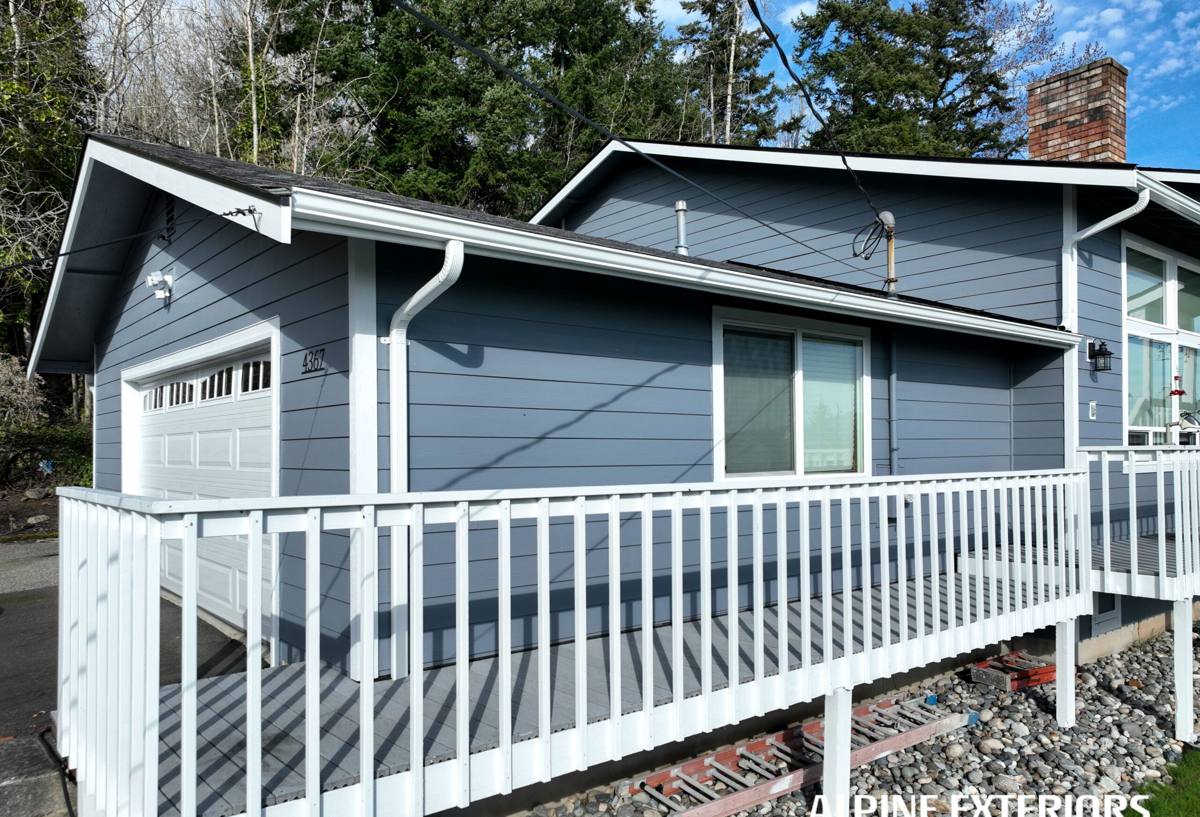
When Repair Isn't Enough: Signs Sehome Homes Need a Full Replacement
Not every roof problem calls for a full tear-off, but in this climate, patch jobs on an aging roof tend to buy less time than homeowners expect. A few signs it's time to talk replacement instead of another repair:
- Granule loss heavy enough that shingles look patchy or bald in spots, especially on south- and west-facing slopes that take the most weather
- Shingles curling, cupping, or cracking at the edges — a sign the underlying material has aged past the point of sealing properly
- Moss mats thick enough to hold water against the roof surface rather than just growing on top of it
- Soft or spongy spots underfoot, or daylight visible through attic sheathing — both point to deck damage, not surface wear
- Repeated leaks in the same area after more than one repair attempt
- A roof already past 20-25 years old, which is a common practical lifespan for asphalt roofing in this kind of shade-and-moisture environment
If a roof is showing one or two of these signs, a repair might still make sense. If it's showing several at once, or if the decking underneath has already started to soften, replacement is usually the more honest recommendation — repairing a roof that's structurally compromised just delays a bigger repair bill later.
What a Correct Roof Replacement Actually Involves
Tear-Off and Deck Inspection
A proper replacement starts with a full tear-off down to the deck, not an overlay. That's the only way to actually see what's underneath — soft plywood, rot around old flashing, or moisture trapped by a prior installation that skipped proper underlayment. Any damaged decking gets replaced before anything new goes down; skipping this step is one of the most common corners cut in this trade, and it's the reason a new roof can still leak within a few years.
Underlayment and Flashing Built for Wind-Driven Rain
Given how much of Whatcom County's rain arrives sideways off the water, underlayment and flashing detail matter as much as the shingle or panel on top. That means synthetic or ice-and-water underlayment at eaves, valleys, and around every penetration — not just felt paper — and flashing that's properly stepped and sealed at chimneys, walls, and skylights rather than caulked over as an afterthought.
Ventilation Integration
New roofing has to work with a balanced intake-and-exhaust ventilation system, not just sit on top of whatever venting already exists. We check this as part of every replacement, because a roof installed over poor ventilation traps moisture in the attic — which shows up later as premature aging from underneath, regardless of how good the shingles are.
Material Options for Salt Air, Rain, and Moss
There's no single "best" roofing material for Sehome — the right choice depends on budget, roof pitch, and how much long-term maintenance a homeowner wants to take on. Here's how the common options actually compare in this climate:
| Material | Moss & Moisture Behavior | Salt Air Durability | Typical Lifespan | Maintenance Burden |
|---|---|---|---|---|
| Architectural asphalt shingle | Moss-resistant granule options help, but still needs periodic cleaning on shaded slopes | Good with quality granules and proper fasteners | 20-25 years | Moderate — benefits from moss treatment every few years |
| Standing seam metal | Sheds moisture fast; moss struggles to gain a foothold on smooth panels | Very good with coated or corrosion-resistant fasteners and flashing | 40-50+ years | Low |
| Synthetic/composite shingle | Resists moisture absorption well; moss growth is slower than on standard asphalt | Good | 30-40 years | Low to moderate |
We're honest about trade-offs rather than pushing one product. Metal costs more upfront and is less forgiving of installation mistakes — flashing and fastener detail matter more, so it's worth confirming a crew has real experience with it before choosing it. Asphalt remains the most budget-friendly option and performs well here as long as moss maintenance is part of the plan. Synthetic and composite products split the difference for homeowners who want lower upkeep without a metal-roof budget.
Ventilation and Moisture: The Part Homeowners Don't See
Most roof failures we see in this area aren't caused by the shingles themselves — they're caused by moisture that had nowhere to go. Attics that trap warm, humid air against a cold roof deck create condensation, and condensation left unchecked rots sheathing from underneath regardless of what's installed on top. Ridge vents paired with proper soffit intake, and baffles that keep insulation from blocking airflow, are basic but frequently overlooked details.
Ice-and-water shield at eaves and valleys matters for a related reason: those are the spots where wind-driven rain backs up under shingles during a hard storm, and where moss mats tend to hold water longest. Getting this detail right during a replacement is far cheaper than fixing rot after the fact.
Our Roof Replacement Process, Start to Finish
Inspection and Estimate
We start with a full roof and attic inspection — not just a walk-around from the ground — so the estimate reflects what's actually happening with the deck, flashing, and ventilation, not just the visible shingle wear.
Material Selection and Permitting
We walk through material options honestly, including what each one costs to maintain over time, and handle the permitting required for the work before anything starts.
Tear-Off and Installation
Full tear-off to the deck, replacement of any damaged sheathing, new underlayment and flashing, ventilation correction where needed, and installation of the chosen roofing material to manufacturer specification.
Cleanup and Final Walkthrough
Full site cleanup including a magnetic sweep for nails, followed by a walkthrough so the homeowner can see the finished work and ask questions before we consider the job complete.
Cost Factors for a Sehome Roof Replacement
Every roof is priced individually, but a few factors consistently move the number up or down:
| Factor | Why It Matters |
|---|---|
| Roof size and pitch | Steeper roofs take longer to work safely and require more material overlap |
| Layers of old roofing to remove | Multiple layers mean more tear-off labor and disposal cost |
| Deck repair needed | Rot or soft sheathing found during tear-off adds material and labor not visible in the initial estimate |
| Material choice | Asphalt, synthetic, and metal carry different upfront costs and installation labor |
| Ventilation upgrades | Adding or correcting intake/exhaust venting is a smaller add-on cost with a large long-term payoff |
| Access and tree canopy | Mature trees common near Sehome Hill can require extra care or trimming coordination for safe access |
We break these out in writing so a homeowner can see exactly what's driving the price, rather than getting a single lump-sum number with no explanation behind it.
What to Look For When Hiring a Roofing Contractor in Sehome
Roofing draws its share of storm-chasing crews that show up after bad weather and leave town once the work's done. A few things worth confirming before signing anything:
- Active Washington state contractor license and liability insurance — ask to see the number and verify it, don't just take it on faith
- A written, itemized scope of work, not a verbal estimate or a single total price
- A specific plan for ventilation and moisture, not just "we'll put new shingles on"
- References or a track record of work in Bellingham and Whatcom County specifically, since local climate experience matters more here than a national brand name
- Clear terms on warranty coverage — both the manufacturer's material warranty and the contractor's workmanship warranty, in writing
- A cleanup plan that includes debris haul-off and a nail sweep, not just "we'll tidy up"
Any contractor unwilling to put these details in writing before starting work is worth a second look.
Why Local Experience in Sehome Matters
Sehome's mix of mature tree cover, older housing stock, and proximity to the bay means a roofer who mostly works elsewhere is often making assumptions that don't hold up here. Knowing which streets have branch cover heavy enough to shorten a roof's lifespan, which older homes were built with ventilation that predates current standards, and how to schedule around this area's rain patterns isn't something that transfers automatically from a crew based somewhere drier or less shaded. We work in this neighborhood regularly enough to plan around all of it, rather than learning it on the job at a homeowner's expense.
If you're weighing repair against replacement, or just want a straight answer on what your roof actually needs, we're happy to take a look. The estimate is free, there's no pressure to move forward, and you'll get a clear, itemized picture of the work and the cost before you decide anything — just fill out the form below.