 Bellingham Roofing
 Siding Installation in Fairhaven: A Job That Depends on the Details
Fairhaven homes sit close to Bellingham Bay, and that location puts real demands on any siding installation. Salt-tinged marine air, rain that arrives sideways more often than straight down, and a moss season that can stretch across most of the year all work on an exterior continuously, not just during the occasional bad storm. Installing siding correctly here isn't just about the material you choose. It's about how that material gets put on the wall: the sequence of steps, the flashing details, the fastening pattern, and the water-management system underneath the visible siding. Get those wrong and even a good product will underperform. Get them right and a well-built wall assembly can handle decades of Whatcom County weather without drama.
This page focuses specifically on what a siding installation job for a Fairhaven home should involve, from the first assessment to the final walkthrough, and why the installation process matters as much as the product itself.
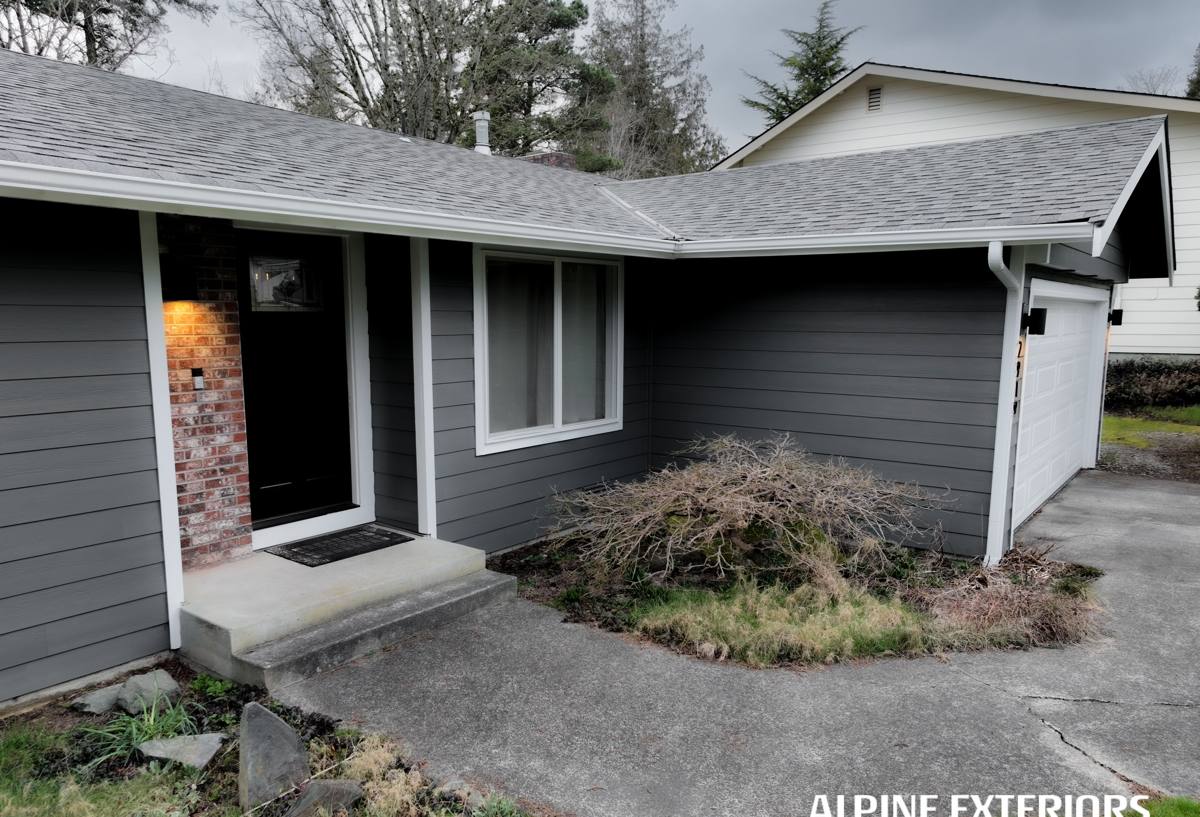
What Fairhaven's Climate Actually Demands From an Installation
Salt Air and Long-Term Material Exposure
Homes near the bay sit in a steady drift of mildly corrosive, moisture-laden air most of the year. That kind of exposure doesn't announce itself the day siding goes up. It shows up years later, in fastener corrosion, degraded caulk lines, and finishes that fade or chalk ahead of schedule. An installation crew working in this environment needs to choose fasteners, sealants, and finish systems that are actually rated for sustained salt exposure, not just general-purpose products that happen to be on the truck.
Wind-Driven Rain at Seams and Penetrations
Fairhaven's proximity to open water means rain regularly comes in at an angle instead of falling straight down. That changes where water actually tries to get behind a wall. Lap joints, trim seams, and every point where a window, vent, or hose bib penetrates the siding become entry points that a calmer, drier climate's standard install practices weren't really built to handle. Correct flashing and lap detail at these spots matters more here than it would forty miles inland.
Moss, Shade, and Slow Drying Time
Mature tree cover and consistently damp conditions extend moss and mildew season well beyond what drier parts of the state deal with, especially on north-facing walls that stay shaded most of the day. A siding system and installation approach that trap moisture, or that don't give a wall enough of a drainage gap to dry between rain events, invite exactly the kind of growth and slow material breakdown that shows up first in the spots homeowners check least.
Why We Install Only James Hardie Fiber Cement
We don't stock a range of siding brands and let price steer the decision. Every installation we do uses James Hardie fiber cement, and that's a deliberate, professional standard, not a default.
- Non-combustible core: Fiber cement doesn't feed a fire the way wood-based products can, which matters for household safety and can matter for insurance as well.
- Factory-applied ColorPlus finish: The color coat cures under controlled factory conditions rather than being brushed on at the jobsite, which gives it meaningfully better resistance to fading, chalking, and moisture intrusion over time.
- Climate-engineered HZ product lines: Hardie's HZ5 formulation is built for regions with sustained moisture exposure, a closer match to coastal Whatcom County conditions than a generic national-spec product.
- Dimensional stability: Fiber cement doesn't swell, cup, or warp the way engineered wood products can after repeated wet-season moisture cycling.
- A strong transferable warranty: backed by Hardie, provided installation follows their published spec, which is exactly why we install to that spec on every job.
What Other Products Trade Off in This Climate
LP SmartSide, vinyl, Cemplank, Allura, primed spruce, and cedar are all legitimate products, and other contractors install them competently. We chose not to. Engineered wood products like LP SmartSide are more sensitive to moisture at cut edges and fastener penetrations than fiber cement, which matters in a climate this consistently wet. Vinyl is affordable but can warp in direct sun, crack in a cold snap, and trap moisture behind the panel if the water-resistive barrier underneath wasn't installed carefully. Cedar and primed spruce look great but need ongoing painting or sealing, and in a climate that stays damp this much of the year, that maintenance schedule tends to slip, which shortens the material's real-world life well below its rated potential. We'd rather install one system we fully understand and stand behind than offer options with trade-offs we'd have to explain away later.
What a Correct Installation Involves, Step by Step
Tear-Off and Substrate Inspection
Before any new siding goes up, the old material comes off and the wall sheathing underneath gets inspected. This is where hidden problems, rot, soft sheathing, old moisture damage, actually get found. Installing new siding over a compromised substrate just hides a problem that will keep getting worse behind the new wall.
House Wrap and Water-Resistive Barrier
A water-resistive barrier goes on the sheathing before siding, and it needs to be lapped correctly, top over bottom, so water sheds outward instead of working its way in. This layer is doing most of the real waterproofing work; the siding itself is the first line of defense, but the barrier behind it is what actually keeps a wall dry if water gets past a seam.
Flashing at Windows, Doors, and Penetrations
Every window, door, vent, and utility penetration needs flashing that integrates with the house wrap and the siding around it, not flashing installed as an afterthought. This is one of the most common failure points we find on older homes, and it's a detail that's easy to rush and hard to catch just by looking at a finished wall.
Fastening Pattern and Clearances
Hardie siding has a specified fastening pattern, nail or screw type, and minimum clearance from grade, roofline, and decks. Those clearances aren't arbitrary. They keep the bottom edge of the siding from sitting in standing water or snow, which is one of the fastest ways fiber cement, or any siding material, starts to fail prematurely.
Joint Treatment and Caulking
Butt joints and trim seams need to be treated with the right sealant, applied correctly, not just caulked over as a finishing step. In a climate with this much wind-driven rain, a joint that looks sealed but wasn't detailed correctly underneath will eventually let water through.
Trim, Corners, and Final Inspection
Corner boards, trim, and any transitions between siding and other exterior elements get installed and sealed last, followed by a final inspection against Hardie's installation spec before we call the job done.
Our Process, From Estimate to Final Walkthrough
- Site walk and assessment: We look at the existing siding, wall condition, trim detail, and site access before writing a scope, not after.
- Written scope and product selection: You get a scope that specifies flashing and house wrap details, not just "new siding installed," along with a straight answer on which Hardie profile and color fit the house.
- Material order and lead time: We confirm timing with you before tear-off starts, so your home isn't sitting exposed longer than necessary.
- Tear-off and disposal: Old siding comes off, substrate gets inspected, and any damage gets flagged and discussed before we move forward.
- Installation to spec: House wrap, flashing, fastening, and joint treatment follow Hardie's published installation requirements, not shortcuts.
- Final walkthrough: We walk the finished job with you and address anything that doesn't meet our standard before we consider the project complete.
Installation Cost Factors in Fairhaven
| Factor | What It Affects | Why It Matters Here |
|---|---|---|
| Home age and trim complexity | Labor time and material takeoff | Fairhaven's older housing stock often has more trim detail and roof intersections where wind-driven rain can work its way in |
| Tear-off vs. install over existing siding | Labor scope and substrate access | Full tear-off is usually the right call this close to the bay, since it's the only way to check for hidden moisture damage |
| Substrate repair needs | Cost before new siding goes on | Years of trapped moisture behind aging siding can rot sheathing before it's ever visible from the outside |
| Site access and slope | Staging, scaffolding, and setup time | Sloped lots common near the waterfront can add setup complexity |
| Siding profile and color | Material cost and finish longevity | ColorPlus factory finishes hold up against salt air and UV exposure far better than field-applied paint |
Every one of these factors depends on the specific house, which is why we walk the property in person before quoting instead of pricing off square footage alone.
What to Check Before Hiring a Siding Installer
- Confirm an active Washington state contractor license and current insurance
- Ask which siding brand and product line they install, and why they chose it
- Ask them to walk you through their installation process, not just the material specs
- Ask how they handle hidden substrate damage found during tear-off
- Get a written scope that specifies flashing and house wrap details, not just "new siding installed"
- Ask whether the crew installing your siding is the same crew that quoted the job
Why a Crew That Already Works Fairhaven Matters
A crew that installs siding throughout Whatcom County regularly sees how salt air, wind-driven rain, and moss actually behave on real walls over a full year, not just how a product performs on a spec sheet. That experience shows up in small decisions on install day: where to spend extra time on flashing, which wall orientations stay damp longest, and which shortcuts simply aren't worth taking in this climate. Fairhaven's closeness to the bay and its mix of older and hillside housing stock aren't identical to conditions elsewhere in Bellingham, and an installer with real local experience accounts for that instead of running the same generic process on every job.
If you're planning a siding installation for a Fairhaven home, or just want an honest opinion on whether your current siding was installed correctly, we're happy to take a look. Reach out using the form below to schedule a free, no-pressure estimate.