 Bellingham Roofing
 Why Barkley Siding Takes More Abuse Than It Should
Barkley is a well-established part of Bellingham, and like every neighborhood in this corner of Whatcom County, its homes sit inside a weather pattern that's rougher on exterior surfaces than most homeowners expect. Salt-tinged air drifting in off Bellingham Bay, driving rain that comes in sideways more often than straight down, and a moss season that can stretch from fall through spring all put steady pressure on siding. None of that is dramatic on its own. It's the accumulation over years, working on seams, fasteners, and unprotected edges, that turns small weaknesses into real repair jobs.
Whether a Barkley home was built recently or has been standing for a few decades, the siding on it has been absorbing that pattern the whole time. A repair that looks cosmetic on the surface is often the first visible sign of something that's been happening behind the panel for a while. Understanding that is the difference between a patch that lasts and one that fails again in a year or two.
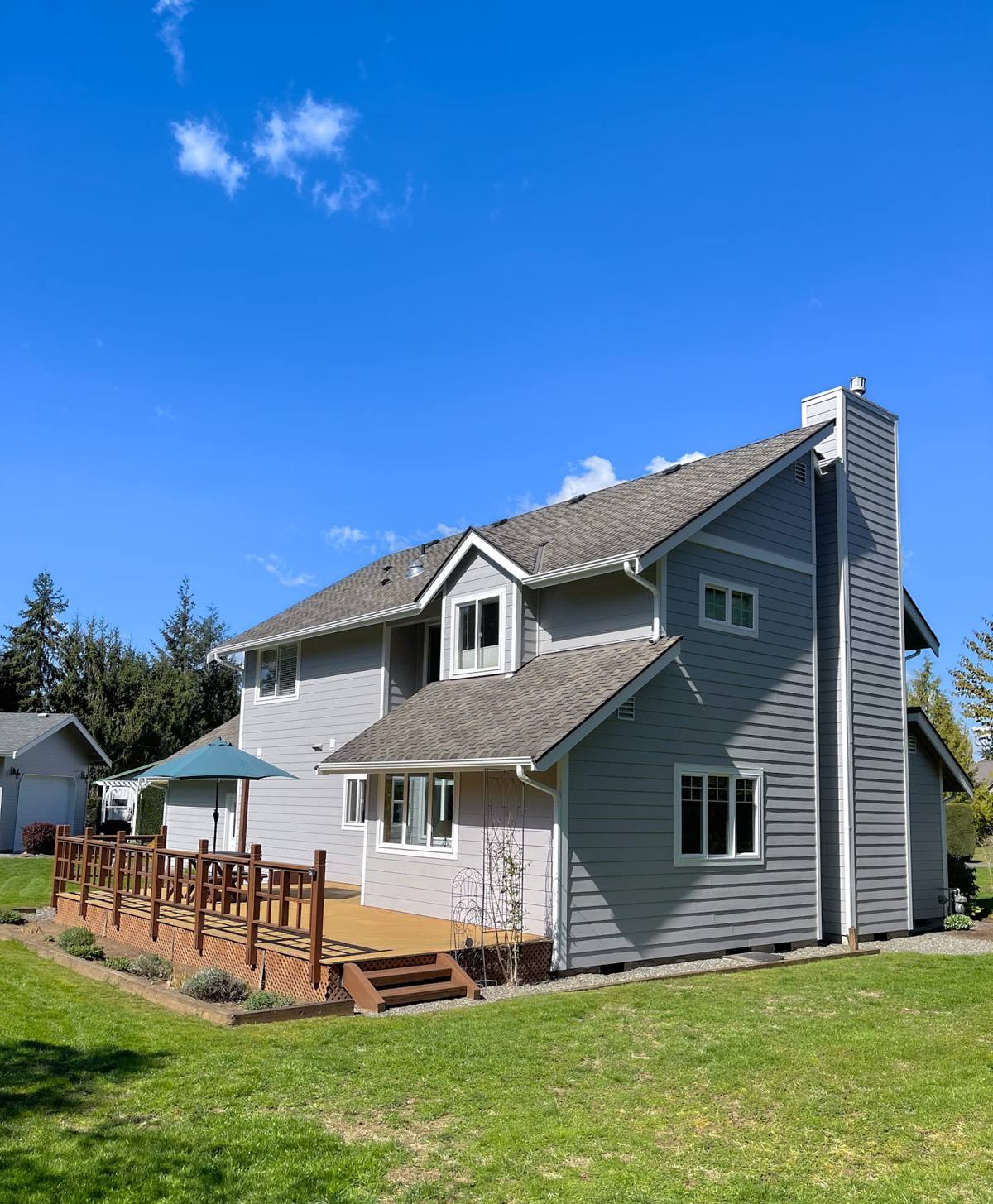
What Salt Air, Driving Rain, and Moss Actually Do to Siding
Salt Air and Coastal Moisture
Homes throughout Bellingham live with airborne moisture and salt that don't evaporate off surfaces the way they would in a drier inland climate. On siding, that means finishes wear faster, metal fasteners and flashing corrode sooner than their rated lifespan suggests, and any gap in the paint or coating becomes an entry point for moisture that doesn't fully dry out between rain events.
Driving Rain and Wind-Driven Water
Wind-driven rain doesn't behave like a gentle shower. It gets pushed sideways and upward under laps, around trim, and into joints that were never designed to shed water from that angle. Over time this is what causes staining, soft spots, and rot at butt joints, corners, and anywhere caulking has started to pull away.
The Long Moss Season
Whatcom County's damp, shaded stretches of the year let moss and algae establish on siding, especially on north-facing walls and areas shielded from direct sun. Moss holds moisture directly against the surface far longer than open air would, and on the wrong material that constant dampness accelerates decay right at the point of contact.
Common Siding Problems We Find on Barkley Homes
The repair calls we see in this part of Bellingham tend to fall into a handful of recurring categories:
- Soft, swollen, or crumbling panels near the ground, at corners, or under windows where water collects and lingers
- Cracked or failed caulking at seams, trim, and penetrations that let water behind the siding instead of shedding it
- Moss and algae staining that's more than cosmetic — a sign moisture is sitting against the wall for extended periods
- Warped, cupped, or separating panels from repeated wet-dry cycling
- Rust streaking from corroding fasteners, especially on older installations
- Gaps and buckling from panels that were never properly fastened or flashed to begin with
Some of these are purely surface issues. Others are early warning signs of moisture that's already reached the sheathing or framing behind the siding, which is why a proper inspection matters more than a quick visual patch.
What a Correct Siding Repair Actually Involves
Diagnosing the Real Cause
Before any panel comes off, the goal is figuring out why that section failed in the first place. If a repair just replaces the visible damage without addressing a bad flashing detail, a missing weather barrier lap, or a drainage problem, the same spot fails again — usually faster the second time, since the underlying structure is already weakened.
Matching Materials the Right Way
A repair should blend into the wall, not stand out as an obvious patch. That means matching profile, reveal, and finish as closely as possible, and planning cut lines and fastener patterns so the new section performs the same way structurally as the surrounding siding, not just visually.
Flashing, Weather Barrier, and Fastening
This is the part that doesn't show once the job is finished, and it's also the part that determines whether the repair actually lasts. Proper flashing at penetrations and horizontal joints, an intact weather-resistant barrier behind the panel, and correctly spaced, correctly driven fasteners are what keep water moving out and away from the wall instead of finding a way back in.
Repair or Replace? How We Help Barkley Homeowners Decide
Not every damaged section calls for a full re-side, and not every isolated problem stays isolated. Here's how we generally weigh it:
| Factor | Leans Toward Repair | Leans Toward Replacement |
|---|---|---|
| Extent of damage | Limited to one or two sections or elevations | Spread across multiple walls or the majority of the home |
| Underlying structure | Sheathing and framing are sound | Rot has reached framing or is found in multiple areas |
| Age of existing siding | Siding is mid-life and otherwise performing well | Siding is at or past its expected service life |
| Material match | A close visual and structural match is achievable | Original product is discontinued, faded, or a poor long-term fit |
| Root cause | Cause is localized and correctable | Cause is systemic — poor original installation or drainage |
We'll walk you through which category your home falls into and explain the reasoning, not just hand you a bid.
Our Local Repair Process
- Inspection. We look past the visible damage to check moisture levels, flashing details, and the condition of the framing behind affected sections.
- Honest scope. We tell you plainly whether this is a targeted repair, a larger section replacement, or something that warrants a broader conversation.
- Correct removal. Damaged material comes off carefully to avoid widening the problem into sound surrounding siding.
- Rebuild the assembly. Weather barrier, flashing, and fastening are corrected or replaced as needed — not just covered over.
- Match and finish. New material is installed to match profile and reveal, with attention to how it reads against the rest of the wall.
- Walkthrough. We go over the completed work with you before we consider the job done.
Why We Repair and Rebuild With James Hardie Fiber Cement
Our crew only installs James Hardie fiber cement siding, and that standard carries into repair work too. When we're replacing a damaged section, we use Hardie product matched to your existing lines wherever possible, because it's a material that's engineered specifically for climates like this one — the HZ5 product line is formulated for the kind of wet, freeze-thaw-adjacent conditions Whatcom County sees, and the factory-applied ColorPlus finish resists the fading and moisture intrusion that plain-painted materials struggle with over time.
If your current siding is a different material entirely — vinyl, LP SmartSide, cedar, or a primed wood product — we'll be straightforward with you about what a like-for-like patch will and won't hold up to compared to a Hardie repair, and about what your options look like if you're already weighing a fuller re-side. We'd rather give you the honest picture than sell a quick match that doesn't solve the underlying moisture problem.
Why a Barkley-Based Crew Matters
Siding repair isn't a one-size-fits-all trade. A crew that already works regularly in Barkley and the surrounding Bellingham area has a working sense of how homes here typically fail — where moss builds up fastest, which elevations take the worst of the driving rain, and what a rushed original installation tends to look like once it starts coming apart. That local pattern recognition speeds up diagnosis and keeps us from guessing at causes.
It also means faster scheduling and follow-up. A contractor working from across the region can't respond the same way to a callback or a fast-moving leak as a crew that's already in the area on a regular basis.
Signs You May Need Siding Repair Now
You don't need to wait for visible rot to call. Watch for these signs:
- Soft or spongy spots when you press on the siding
- Paint that's peeling, bubbling, or failing faster than the rest of the wall
- Persistent moss or dark staining that keeps returning after cleaning
- Visible gaps, cracks, or warping in panels or trim
- Water stains or musty odor on interior walls near exterior siding
- Caulking that's cracked, shrunk, or missing at seams and joints
- Rust streaks below fasteners or trim pieces
Any one of these on its own may be minor. Several together, or any sign paired with interior symptoms, usually means it's worth a proper look sooner rather than later.
Keeping Repaired Siding Performing Long-Term
Once a repair is done right, a little upkeep keeps it that way. Rinse siding periodically to keep moss and grime from re-establishing, especially on shaded, north-facing walls. Keep gutters clear so overflow isn't running down the wall face. Trim back vegetation that's holding moisture against the siding, and do a quick visual check after major storms for anything that's come loose. None of this is heavy maintenance — it's the kind of routine attention that lets correctly installed Hardie siding go the distance in this climate.
If you're seeing any of the warning signs above, or you just want a straight answer on whether a section of your Barkley home needs a repair or something more, we're happy to take a look. Reach out for a free, no-pressure estimate using the form below.