 Bellingham Roofing
 Why South Hill's Climate Is Hard on Siding
South Hill sits above downtown Bellingham with views out toward Bellingham Bay, and that same exposure is what wears siding down faster here than in more sheltered parts of Whatcom County. Salt-laden air off the bay works into seams, fasteners, and paint film over time. Driving rain off the Sound hits west- and south-facing walls at an angle, forcing water into any gap that isn't properly flashed or lapped. And the mature tree canopy that gives many South Hill lots their character also means longer periods of shade and dampness on north- and east-facing walls — the two conditions that let moss and algae take hold and stay put for months at a stretch.
None of this is unusual for a Pacific Northwest hillside neighborhood, but it adds up. Siding that's marginal on a sunny, open lot in a drier part of the state often fails years earlier on a shaded South Hill property facing the bay. The right material and the right installation details matter more here than in most places.
Warning Signs It's Time to Replace, Not Repair
Not every siding problem calls for a full replacement, but South Hill's combination of moisture and shade tends to turn small issues into structural ones faster than homeowners expect. Watch for:
- Soft or spongy spots when you press on the siding, especially near the bottom courses or under windows
- Paint that's bubbling, peeling, or won't hold a new coat no matter how well it's prepped
- Boards that have visibly cupped, buckled, or separated at the seams
- Moss or dark streaking that returns within weeks of being cleaned off
- Caulk joints that keep cracking or pulling away year after year
- Visible rot or discoloration at corner boards, trim, or anywhere siding meets a roofline or deck
If you're seeing two or more of these on the shaded or bay-facing sides of a South Hill home, it's worth having someone look underneath the siding, not just at the surface — the damage is often further along than the exterior suggests.
Why We Only Install James Hardie Fiber Cement
We standardized on James Hardie fiber cement for every siding job we do, including replacements on South Hill, and we don't install vinyl, LP SmartSide, or unfinished wood siding. That's not a marketing position — it's a practical one, based on how those materials hold up in exactly the conditions this neighborhood sees.
Vinyl can warp and gap in temperature swings and doesn't stand up well to long-term UV and salt exposure without chalking. Engineered wood products rely on a factory coating over a wood-based substrate, which means any breach in that coating — a fastener hole, a cut edge, a small impact — gives moisture a path into the material itself. Bare or primed wood siding needs a maintenance schedule most homeowners can't realistically keep up with in a climate where it rains most of the year.
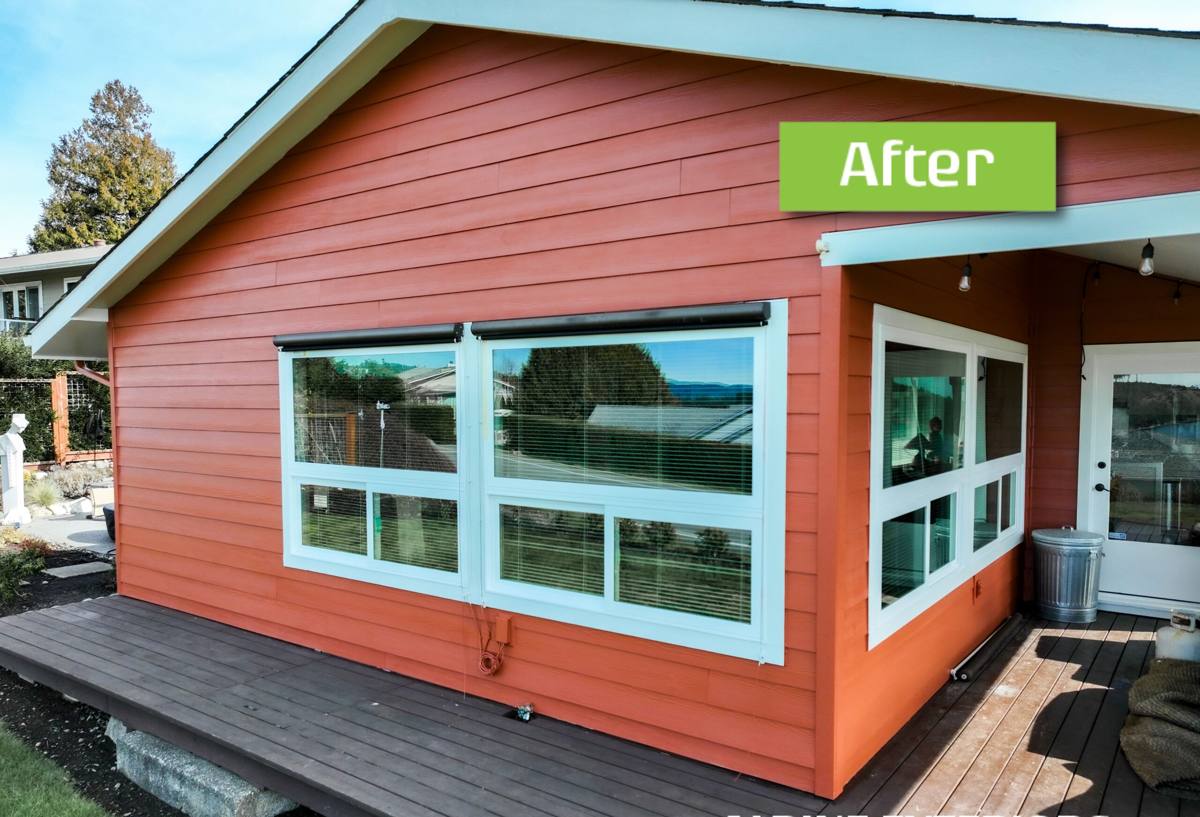
James Hardie fiber cement is cement, sand, and cellulose fiber — it doesn't rot, it's not a food source for moss or mildew the way wood is, and it's non-combustible. Hardie also engineers specific product lines by climate zone (HZ5 and HZ10), so the boards installed here are formulated for the moisture and temperature range Western Washington actually sees, not a one-size-fits-all product. Paired with the factory-applied ColorPlus finish and installed to Hardie's published specifications, it's the material we're willing to put our name behind on a hillside, tree-shaded, bay-facing lot like the ones common in South Hill.
What This Means in Practice
It means every South Hill replacement we do uses the same product system: HZ10-rated Hardie panels or lap siding, factory-finished trim, and manufacturer-specified fasteners and flashing details — not a mix-and-match approach based on what's cheapest that week.
What Correct Siding Replacement Actually Involves
Siding replacement is more than pulling off old boards and nailing up new ones. In a climate like this, most future problems trace back to details that were skipped during installation, not the siding material itself. A correct job includes:
- Full tear-off of the old siding and a hands-on inspection of the sheathing underneath for rot, soft spots, or hidden water damage
- Repair or replacement of any damaged sheathing before anything new goes up
- A continuous weather-resistive barrier, lapped correctly at every seam and penetration
- Proper flashing at every window, door, and roof-to-wall intersection — the single most common failure point on rain-heavy exteriors
- Correct fastener type, spacing, and depth per James Hardie's installation instructions
- Appropriate gaps and clearances at trim, corners, and the bottom of the wall so water has somewhere to go instead of sitting against the material
Skipping any one of these doesn't show up as a problem on day one. It shows up two or three winters later, after enough driving rain and enough freeze-thaw cycles have found the weak point.
Our Process, From Estimate to Final Walkthrough
We keep the process straightforward and give you a clear picture of scope before any work starts:
- An on-site walkthrough to assess the current siding, sheathing condition, moisture exposure on each side of the home, and any trim or detail work involved
- A written estimate that breaks out material, labor, and any sheathing repair as a separate line so there are no surprises mid-project
- Product and color selection, matched to the home's exposure and the surrounding tree cover
- Tear-off, sheathing repair where needed, and installation of the weather barrier, flashing, and new Hardie siding
- A final walkthrough with you before we consider the job done, covering caulking, trim, and any touch-up
We schedule around the wetter stretches of the year where we can, since fiber cement and its finish install best in dry conditions — something that takes local scheduling experience to manage well in Whatcom County.
Choosing Products and Colors for a South Hill Home
Most South Hill homes we work on sit under partial tree cover with at least one side facing toward the bay, so we typically recommend HZ10-rated lap siding or panel products with ColorPlus factory finish — the coating is baked on and warranted separately from the substrate, which matters on a home that spends a lot of the year damp rather than sunbaked and dry. Darker colors read well against the tree canopy common to the neighborhood, but any ColorPlus color option is engineered to handle the same UV and moisture exposure, so the choice comes down to what fits the house rather than which color holds up better.
Trim details — corner boards, fascia, window casing — matter as much as the field siding on an older or character-style home, and we match Hardie trim products to the plank or panel siding so the whole system expands, contracts, and weathers together.
Cost Factors for South Hill Siding Replacement
Every home is different, but these are the factors that most often move the price up or down on a South Hill project:
| Factor | Why It Affects Cost |
|---|---|
| Home size and wall complexity | More square footage and more corners, gables, or dormers mean more material and labor time |
| Sheathing condition | Rot found during tear-off has to be repaired before new siding goes on — this is the most common source of mid-project cost changes |
| Existing siding layers | Homes with siding installed over older siding take longer to strip down to a clean substrate |
| Trim and detail work | Older or more architecturally detailed homes need more custom trim fitting than a simple box shape |
| Site access | Steep driveways, tight side yards, and hillside lot grading — common on South Hill — can affect staging and scaffolding time |
| Moisture damage extent | Long-neglected moss or water intrusion can mean framing repair, not just sheathing, in worse cases |
Why Hiring a Crew That Already Works South Hill Matters
A lot of what makes a siding job hold up here isn't in the product spec sheet — it's judgment calls made on-site. A crew that's already worked hillside lots in this neighborhood knows to expect tighter access and plans staging accordingly, knows which wall orientations typically show the worst hidden moisture damage before they even open up the sheathing, and knows how Whatcom County's permitting and inspection process works so a project doesn't stall waiting on paperwork. That familiarity translates into fewer surprises and a more accurate estimate up front, rather than change orders discovered halfway through tear-off.
Protecting Your Siding After Installation
James Hardie siding is low-maintenance compared to wood or vinyl, but "low-maintenance" isn't "no-maintenance," especially in a moss-prone, tree-shaded neighborhood. A short annual routine keeps a new installation looking and performing the way it should:
- Keep gutters and downspouts clear so water isn't overflowing directly onto siding or trim
- Trim back branches and shrubs that keep a wall shaded and damp, especially on the north side
- Rinse off moss or algae buildup before it has a chance to stain the finish
- Walk the exterior once a year and check caulk lines at trim, windows, and corners for cracking
- Address any impact damage or chipped paint promptly rather than letting moisture get behind the finish
If your South Hill home is showing signs of aging siding, or you just want a straight answer on whether repair or full replacement makes sense, we're happy to take a look. Fill out the form below for a free, no-pressure estimate.